The Best-Kept Secret of the Eastern Mediterranean
When the mercury drops below sweltering thirties and beachgoers abandon the docks of Piraeus for the north, Athens finally breathes with its own lungs. This is the moment when the millenarian metropolis stops acting as a mere archaeological waiting room for cruise tourists and reclaims its everyday, vibrant, and highly cultured rhythm. The golden, oblique light of October bathes the weathered neoclassical buildings of Exarchia and the wooded slopes of Filopappou in a luminous melancholy that the blazing, bustling months of July and August conceal beneath a layer of smoking asphalt.
Amidst this seasonal shift, the city becomes a sanctuary for those seeking to understand contemporary Greece beyond postcard clichés. The terraces of Pangrati and the literary cafes of Kolonaki fill once more with locals debating politics, art, and gastronomy with the characteristic urgency of Athenians. Far from summer lethargy, autumn marks the beginning of the cultural year: independent theatres reopen their doors, contemporary art galleries inaugurate bold exhibitions, and neighborhood bistro kitchens return to slow-simmering pots, fresh olive oil, and volcanic wines from boutique wineries that are rarely exported.
Agapi Sbokou’s Vision: Hospitality with Memory
To understand this seasonal metamorphosis, few testimonies are as authoritative as that of Agapi Sbokou, co-chair of Phāea Resorts and one of the most respected figures in contemporary Greek hospitality. Sbokou, whose family background is tied to the reinvention of tourism in the country, argues that true luxury in Greece no longer lies in summer isolation or accelerated consumption, but in deep connection with the territory and its people during the shoulder months.
Seasonal tourism has exhausted a model that no longer serves either local communities or the desires of the conscious traveler. As Sbokou explains, the Athenian autumn offers a unique opportunity to experience genuine Greek hospitality—the celebrated concept of philoxenia—stripped of the commercial urgency of summer. In this season, city hotels and boutique properties cease to be mere transit points and integrate into the neighborhood fabric, allowing visitors to understand how a city that has been continuously inhabited for over three millennia truly beats.

Geography of an Urban Metamorphosis
Exploring Athens in autumn requires abandoning linear routes and embracing urban drift. From the esplanade of the Stavros Niarchos Foundation Cultural Center (SNFCC), designed by Renzo Piano, to the labyrinthine alleys of Plaka, the city unfolds as an architectural palimpsest where classical antiquity, postwar modernism, and vanguard urban interventions coexist. The sea breeze rising from the Saronic Gulf softens walks along the Unified Archaeological Promenade, allowing visitors to contemplate the Ancient Agora and Kerameikos without the urgency of dehydration.
In recent years, traditionally industrial or commercial neighborhoods like Kerameikos and Metaxourgeio have established themselves as enclaves of artistic creation and independent design. Here, architectural studios, contemporary ceramic workshops, and cafe-bookshops coexist with traditional repair shops and centuries-old tavernas. It is within this creative friction that the autumnal charm of the capital resides: an unusual mix of romantic decay and urban dynamism that seduces both solo travelers and cultural researchers.
The Unhurried Pace of the Acropolis
Visiting the emblematic monument of Hellas when the thermometer is agreeable radically transforms the experience. Free from the suffocating pressure of cruise crowds collapsing the Propylaea at midday, ascending the sacred rock at dusk takes on an almost ritualistic character. Pentelic marble, free from the vertical midday sun, reflects pink and ochre hues beneath a sky slowly fading over the gulf.
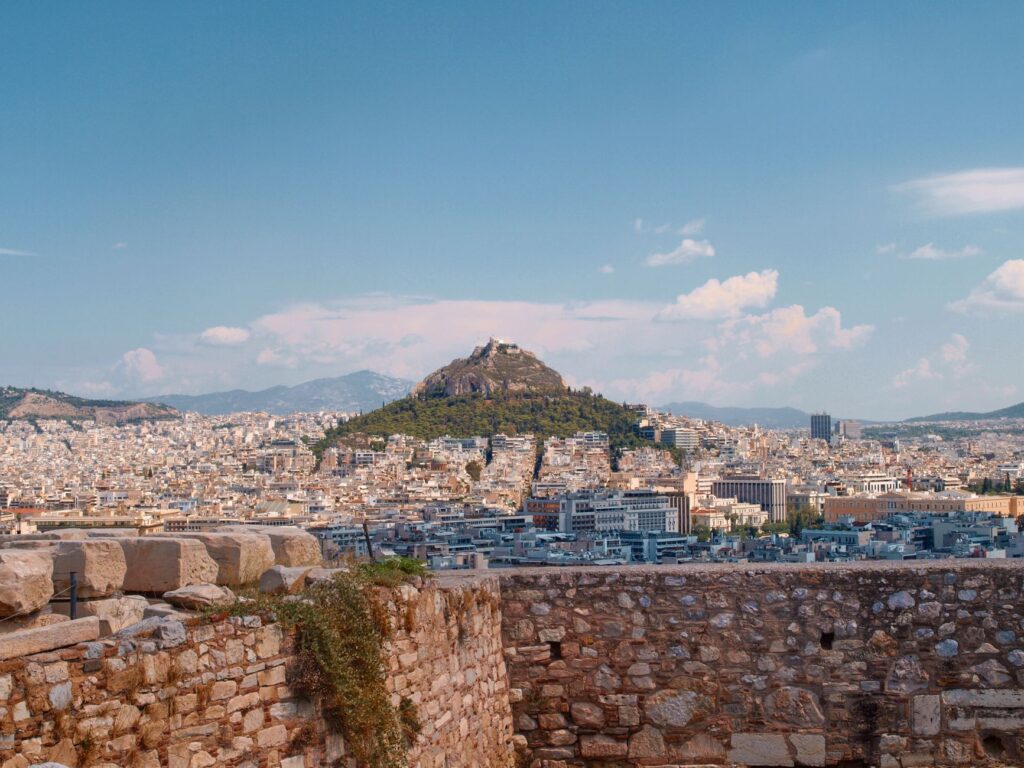
Slowness is not an aesthetic luxury, but the only valid method to decipher the layers of history overlapping at the site. Local guides and resident archaeologists recommend dedicating at least a full morning to the Acropolis Museum before exploring the southern slopes at leisure, stopping at the Theatre of Dionysus and the Odeon of Herodes Atticus, where echoes of classical tragedies still seem to float in the cool evening air.
The Culinary Revolution of Food Markets
The arrival of autumn revitalizes the city’s gastronomic markets, starting with the bustling Central Market (Varvakeios) on Athinas Street. There, fresh meat and fish stalls share space with merchants offering the season’s first olives, wild herbs gathered from Mounts Parnitha and Hymettus, and nuts roasted over wood fires.
Local chefs, energized by this transitional larder, are rediscovering traditional recipes from mountain Greek cuisine and Asia Minor refugees. Comforting dishes such as fasolada (thick white bean soup), game stews with sweet spices, and wild green savory pies (pita) take center stage on the menus of the boldest restaurants in Psirri and Koukaki, proving that Athenian gastronomy is far more than moussaka and souvlaki.
Design and Contemporary Art Take the Floor
Over the past decade, Athens has established itself as one of southern Europe’s most stimulating artistic capitals. Autumn coincides with the inauguration of major exhibition seasons at benchmark institutions such as the National Museum of Contemporary Art (EMST), housed in the former Fix brewery, and the recently renovated National Gallery.
This cultural ecosystem is nourished by an international community of artists, curators, and designers who have found in the city an environment of creative freedom rarely found in the saturated circuits of London, Paris, or Berlin. Independent galleries in Koukaki and Metaxourgeio open their doors with proposals that engage directly with the social and political tensions of contemporary Europe, turning every stroll into an exercise in intellectual acuity.
The Sanctuary of Literary Cafes and Independent Bookshops
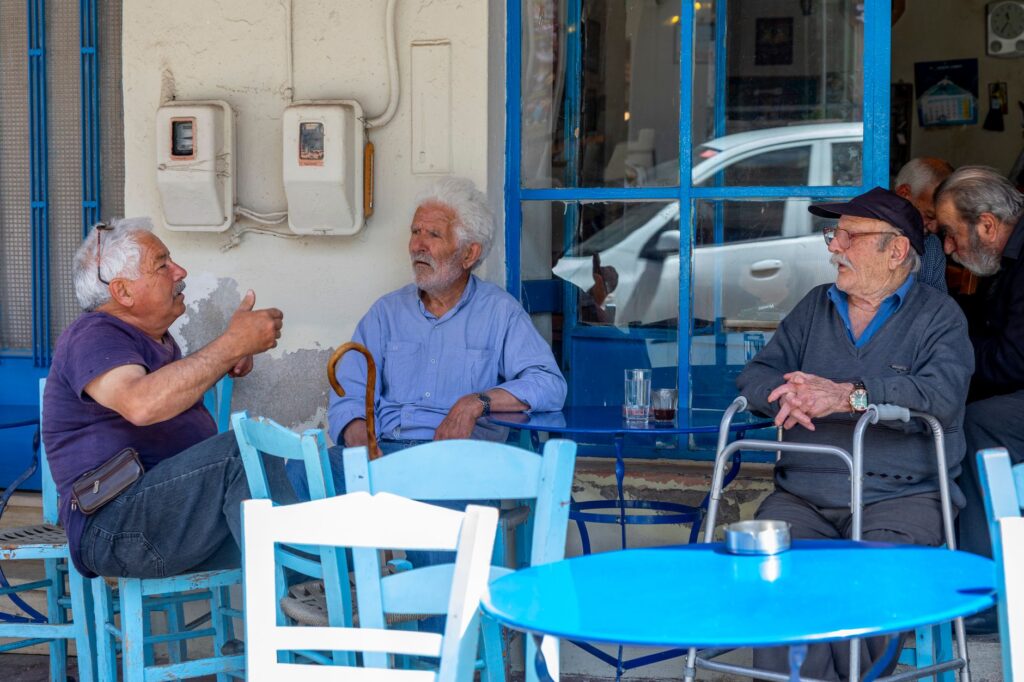
When the first autumn rains dampen the marble sidewalks of Syntagma Square, Athenian life retreats into its historic cafes and bookstores. These spaces, direct heirs to early 20th-century cafe culture, function as modern agoras where intellectuals, students, and travelers share dark wooden tables and steaming cups of Greek coffee.
Establishments like the classic Cafe Avissinia in Monastiraki or specialized bookstores in Exarchia offer a perfect counterpoint to the fast pace of global tourism. In these corners, time seems to slow down amid bilingual poetry volumes, political philosophy essays, and unhurried conversations that stretch well into the afternoon.
Practical guide
Getting there: Eleftherios Venizelos International Airport operates daily connections from major European capitals. Metro Line 3 and the X95 express buses connect the airfield to the city center in approximately 40 minutes.

Where to stay: To experience contemporary Athens, boutique hotels in Kolonaki, Pangrati, and around Agias Irinis Square offer a seamless balance between vanguard design and local rootedness.
When to visit: October and November offer optimal walking temperatures (between 18°C and 24°C), an absence of massive crowds, and a fully active cultural calendar.
Getting around: Athens’ historic center is largely pedestrianized. For longer distances, the metro, tram, and trolleybus network is efficient, affordable, and safe.
Recommended reading: Athens: The City Biography by Thomas Gallant and modern architecture guides published by the municipal cultural center.
The Luminous Memory of a Sunset at Cape Sounion
To conclude the journey with a truly memorable perspective, it is wise to temporarily leave the Athenian asphalt and take the coastal road winding south, bordering the Saronic Gulf toward Cape Sounion. In autumn, the light bathing the Temple of Poseidon acquires an almost supernatural intensity, free from summer haze that often blurs the sea horizon.
As the sun sinks slowly into the dark waters of the Aegean, casting long shadows over Doric columns erected two and a half millennia ago, one understands Agapi Sbokou’s profound intuition: traveling to Greece off-season is not an economic alternative, but an aesthetic revelation. It is the moment when the country ceases to be a set for tourists and reclaims its status as a homeland of light, thought, and unpretentious hospitality.
Source in EN: Condé Nast Traveler