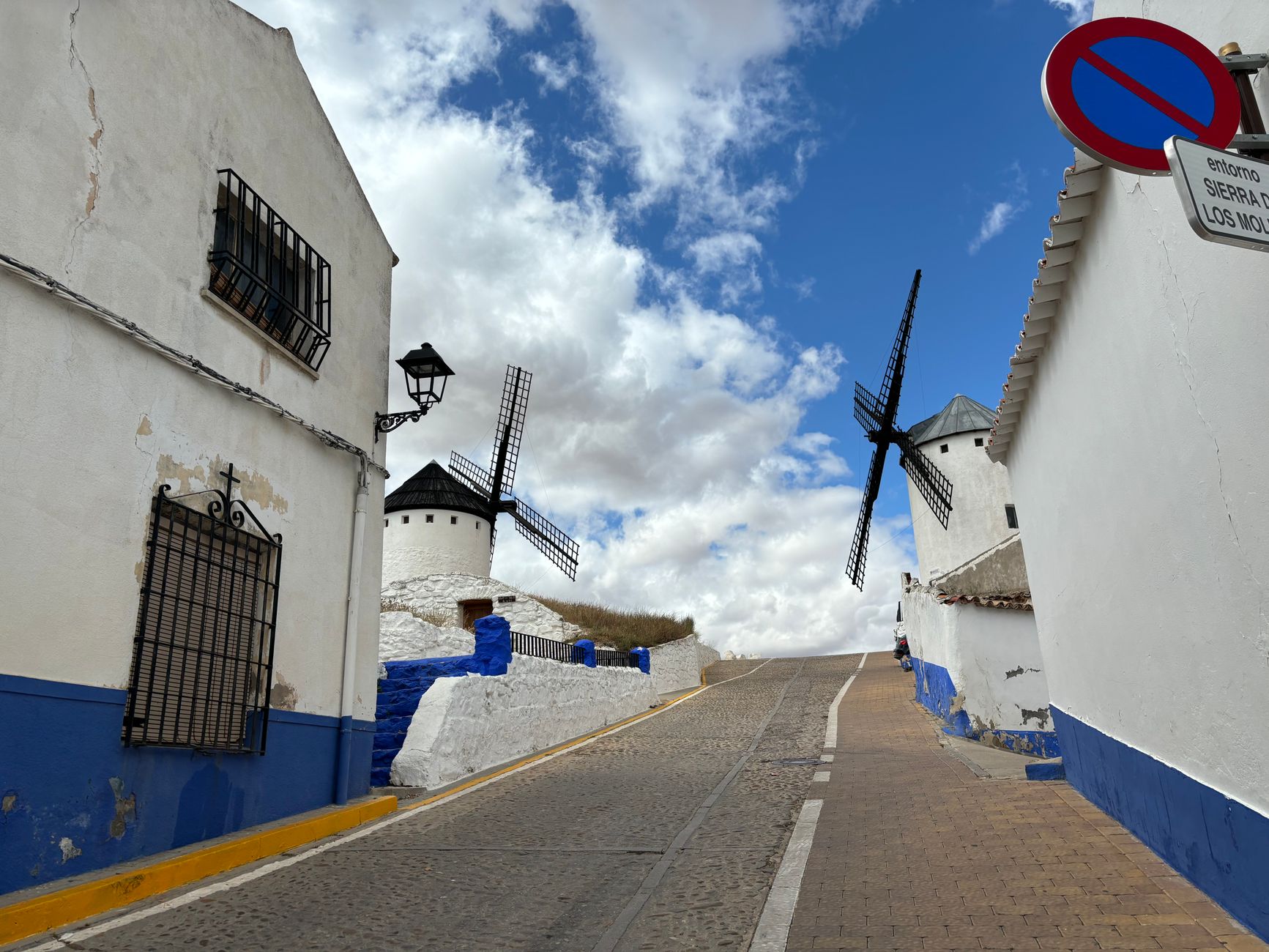

The hidden coordinates of a literary geography
There are geographies that do not appear on official maps, but rather within the intimate folds of printed pages. When David Martínez Álvarez, known artistically as Rayden, decided to temporarily park his musical stages to delve into long-distance narrative, he could not imagine that his novel The blind man who described the world would become a map of emotional highways. This feature article was born with the purpose of retracing that path of ink, asphalt, and silence, conversing with the author to understand how the physical landscapes of Spain’s geography shape the doubts, discoveries, and epiphanies of his characters.
The journey proposed by the Madrid-born artist does not seek the superficial impact of major tourist postcards, but rather the harsh, melancholic truth of interior villages, depopulated gas stations at dusk, and endless straight roads where the horizon seems to dissolve time. Traveling across the peninsula through this narrative means accepting an invitation to detour, to travel along secondary routes where slowness becomes a form of resistance against contemporary haste.
The starting point: Madrid as a scar and springboard
Every journey of escape or discovery needs an origin point. In Rayden’s narrative universe, Spain’s capital functions as a magnetic mass from which it is necessary to escape in order to observe it with perspective. It is not the Madrid of grand displays, but rather that of diffuse peripheries, hot August asphalt, and subway stops that smell of goodbyes. Conversing with the creator in one of those urban gears helps one understand the urgency of changing musical tempo for narrative cadence.
The contrast between metropolitan noise and the silent immensity of the Castilian high plateau anchors the opening beats of the book. The national highway emerges here as a character with its own will, a conduit that absorbs daily frustrations and transforms them into a promise of reinvention. Rayden explains that choosing these routes responds to a need for geographical authenticity, fleeing from artificial sets to embrace the rawness of real landscapes.
Why the inner journey demands a stripped-down exterior landscape
As the protagonist of the novel moves forward without a fixed destination, the landscape strips itself of superfluous elements. Lush forests and bustling coasts give way to infinite plateaus, clay hills, and skies of such pristine blue that they overwhelm. This visual austerity is no accident; it acts as a mirror of the psyche of characters seeking to shed guilt and external expectations.
The landscape ceases to be a mere decorative background to become the scalpel that cuts open the protagonist’s certainties, forcing him to look at himself directly without the safety net of routine.
Traveling through these exact enclaves today allows one to verify the fidelity with which the author transferred real topography to fiction. There are no excessive poetic licenses in the description of ghost towns or highway inns where time seems to have stopped in the nineteen-eighties. Each stop responds to a prior experience, to a memory treasured during years of musical tours that now find their definitive channel in literature.
Architecture of silence: gas stations, roadside inns, and milestone markers
The infrastructure of road travel possesses a very particular poetics that Rayden’s novel captures with surgical precision. Nighttime service areas, with their electrical buzz and lukewarm coffee served at a zinc counter, constitute meeting points where temporary outcasts share their minimal stories. Here, the functional architecture of Spain’s mid-century development is transformed into the setting for everyday epiphanies.

- Old service stations of the State Road Network converted into shelters for motorized walkers.
- Traditional inns where the daily menu maintains spoon-dish recipes unchanged for half a century.
- County crossroads marked with ancient stone milestones measuring impossible distances.
- Agrarian colonization villages that retain a rigorous geometric layout and an almost cathedral-like silence.
Stopping at these enclaves requires adopting the leisurely pace of the traveler who does not chase mileage records, but rather moments of mindful attention. Rayden’s gaze upon these spaces devoid of commercial glamour demonstrates deep empathy toward those forgotten by the map, rural territories resisting depopulation through the dignity of the everyday.
The weight of memory in villages no longer found on road signs
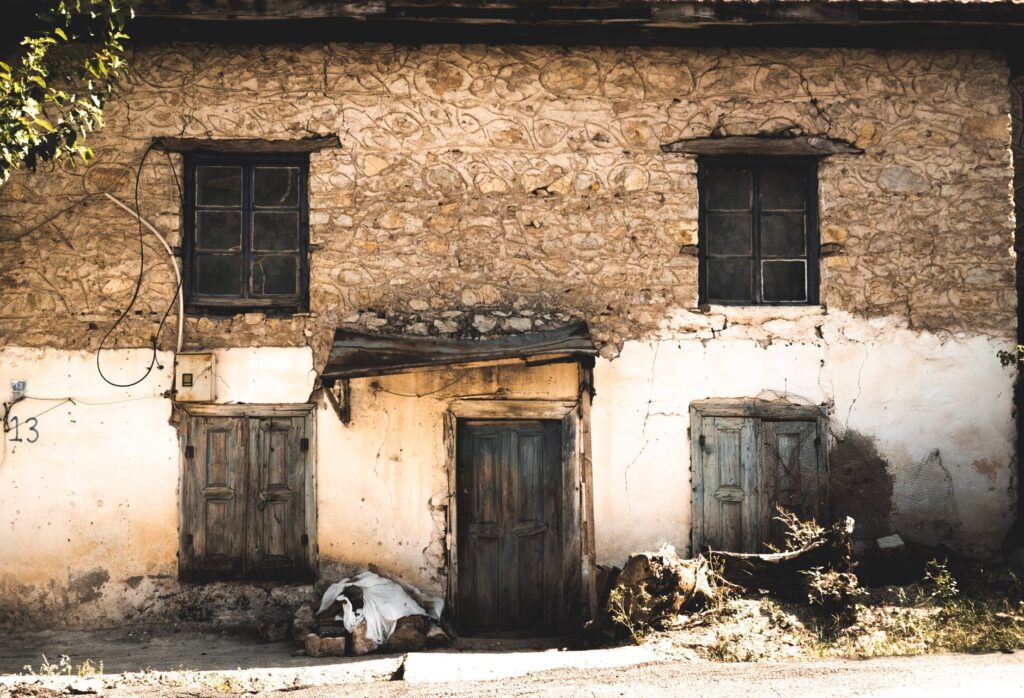
One of the most notable findings of the book is its ability to rescue tiny localities from anonymity, villages barely holding on with a handful of elderly residents. During the drafting of the novel, the author traveled through these hamlets accumulating entire notebooks of annotations on dilapidated facades, closed schools with yellowed signs, and main squares where church bells echo like elegies.
Collective memory in these places functions within the plot as an anchor preventing characters from completely fading away. For Rayden, writing about empty Spain is not an exercise in staged nostalgia, but an urgent vindication of a human heritage at risk of extinction in silence. Every kilometer advanced on these county roads is a reminder that beneath modern asphalt beats an ancient and complex history.

The invisible soundtrack of the journey
Although this is a strictly literary work, it is impossible to separate Rayden’s prose from his melodic sensitivity. The rhythm of the sentences, the measured use of pauses, and the choice of certain adjectives betray a creator who understands writing as a form of musical composition without instruments. During the documentary journeys that inspired the novel, the silence of the cabin was only interrupted by the distant murmur of local medium-wave radio stations.
This transfer of languages—from singer-songwriter music to long-form storytelling—enriches the reader’s experience, endowing the text with a sharp internal musicality. Nighttime crossings under the light of a full moon acquire an almost spiritual tone, where the protagonist’s existential doubts merge with the steady purr of the engine in fourth gear.
Practical guide
For those readers wishing to physically retrace the settings that inspired ‘The blind man who described the world’, it is advisable to plan a flexible itinerary that avoids major toll highways and prioritizes secondary roads across the Northern Plateau.

How to get there: The ideal starting point is located in the foothills of the Sierra de Guadarrama, taking the M-601 road toward the Navacerrada mountain pass and subsequently descending toward the provinces of Segovia and Ávila via county roads.
When to travel: The autumn months and early spring offer the most cinematic light and avoid the extreme temperatures of the Castilian summer, ideal for silent contemplation of open landscapes.
Where to stop: It is recommended to stay overnight in rehabilitated rural inns and seek traditional roadside inns away from major communication hubs to savor local gastronomy without haste.
Reading tips: It is essential to carry a copy of the novel to reread specific fragments in front of the exact landscapes that gave rise to them, thus completing a perfect circle between fiction and geographical reality.
The visual close: the horizon as a definitive destination
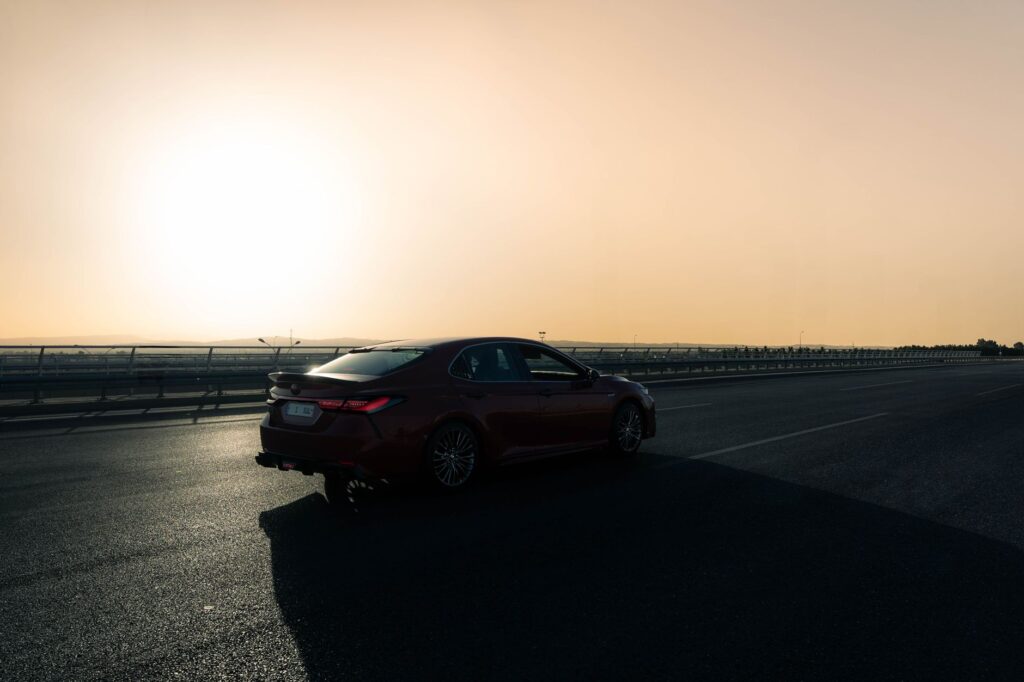
At the end of the road, when strength wanes and initial questions have mutated into serene acceptance, the landscape offers its final and most beautiful lesson. Crepuscular lights dye the fields of Castile in fire, and the vehicle stops on the shoulder before the immensity of a limitless horizon. There are no definitive answers in Rayden’s novel, just as there are none in real travel; only the comforting certainty that what matters is not reaching a specific destination, but having had the courage to set out.
With this report, inspired by the pages and shared experiences of the Madrid-born artist, the power of literature to transform a simple displacement into a journey of self-knowledge is demonstrated. Spanish asphalt, viewed through this contemporary sensibility, recovers its status as a mythical territory, an open space where every traveler can write, in their own way, their unique story of search and redemption.
Source: Condé Nast Traveler Spain – Rayden takes us on a road trip in the novel “The blind man who described the world”.