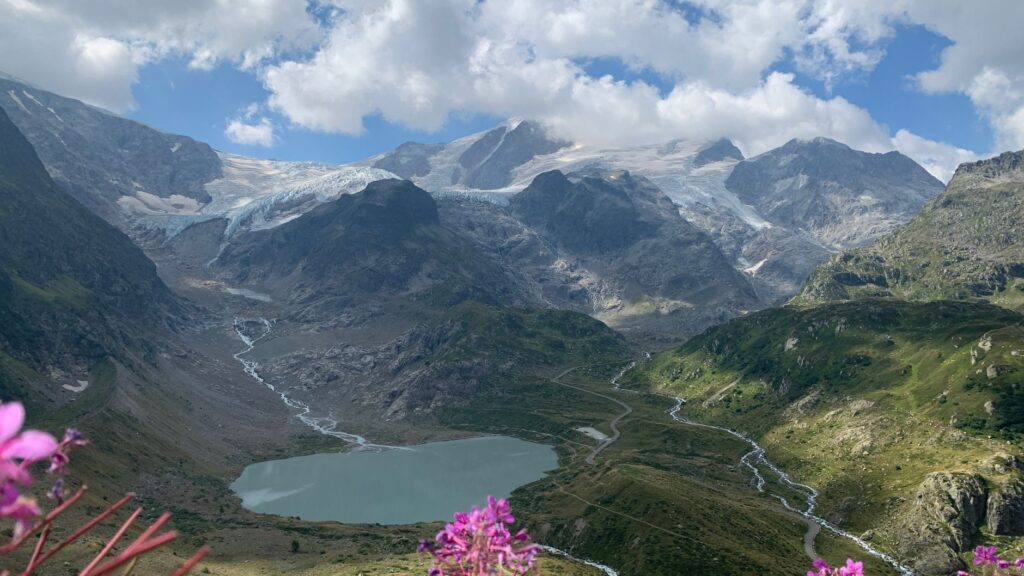
High alpine terrain is conquered not only through the verticality of its peaks or the millimeter-plus precision of its rack railway networks. At over fifteen hundred meters above sea level, deep within the recesses of the Swiss canton of Valais, water accumulated from summer snowmelt and contained by colossal retention walls gives rise to unusual transport infrastructures. The Mauvoisin reservoir, dominated by its imposing arch dam—one of the highest in Europe—is the setting where inland navigation serves a function as utilitarian as it is fascinating. Far from the conventional tourist routes of the large Swiss lakes, the vessels operating in these glacial waters respond to a complex network of industrial maintenance, regional connectivity, and water resource management.
Analyzing mobility in the Mauvoisin basin requires understanding the delicate symbiosis between extreme geography and twentieth-century human intervention. Access to the foot of the dam from the village of Fionnay demands a feat of road engineering that snakes through tunnels carved into living rock and relentless gradients. Once past the threshold, the body of water stretching over five kilometers long becomes a vital communication route for hydroelectric plant operators, geologists monitoring slope stability, and the few hikers venturing into high-mountain refuges. Navigation in this environment is driven strictly by public service discipline and industrial safety rather than mass leisure.
The Genesis of the Landscape: Monumental Engineering in Val de Bagnes
Val de Bagnes, carved by the Dranse de Bagnes river, represents one of the most extensive and rugged glacial valleys in the Western Alps. For decades, local communities suffered the ravages of flash floods caused by hanging glacier detachments, particularly the Giétro glacier. To tame this natural fury and harness its potential for clean energy, Swiss authorities designed the Mauvoisin dam in the mid-twentieth century. Reaching a height approaching two regulatory scales for European concrete monoliths, the structure blocks the valley, creating a reservoir whose water levels fluctuate drastically between winter and late summer.

The construction of this monumental civil engineering feat forced a complete rethinking of regional transport logistics. Without conventional roads flanking the future artificial lake’s edges, the use of light vessels and cargo pontoons became the sole efficient means to transport heavy machinery, turbine replacement parts, and technical personnel to the most remote work fronts. Today, although underground gallery networks and service tracks have improved land connectivity, lake transport remains indispensable for bathymetric surveys, submerged wall inspections, and emergency transport under adverse weather conditions.
High-Altitude Fluvial Logistics: Service Vessels at Mauvoisin
Operating a vessel at nearly two thousand meters of altitude poses notable technical challenges that differ radically from traditional river or maritime navigation. Lower air density directly affects internal combustion engine performance, prompting the gradual electrification of the auxiliary fleet using high-capacity batteries powered by hydroelectric energy generated within the complex itself. Furthermore, alpine weather imposes a tightly constrained navigation window, typically running from late June to early October, when the lake surface remains entirely free of floating ice sheets.
The vessels used at Mauvoisin are modular aluminum catamarans specifically designed to withstand concentrated loads without compromising transverse stability. These hulls allow the safe transport of up to six tons of heavy equipment or a contingent of twenty technicians with their corresponding high-mountain tooling. Piloting precision is absolute; captains must contend with unpredictable katabatic winds descending violently from surrounding peaks, as well as logs and sediment swept down by tributary torrents during sudden flood episodes.
The energy sovereignty of alpine valleys is measured not only in kilowatt-hours generated by underground turbines, but in the logistical capacity to maintain these aquatic arteries alive deep within the rock.
The Smugglers’ Route and Historic Trade of Minor Mountain Passes
Before cement and steel transformed Val de Bagnes’ topography, high-mountain passes connecting the region to neighboring Italian valleys were seasonal trade routes. Shepherds, smugglers, and transhumant merchants used bridle paths bordering the current reservoir to exchange livestock, salt, and textile goods. The memory of these journeys lingers in pass names and local chronicles documenting the titanic effort required to survive in an environment where geographical isolation was the norm during long winter months.
With the advent of hydroelectric projects, these ancient human transit routes were integrated into industrial infrastructure. Many current service paths and pedestrian tunnels allowing visitors to traverse the lake’s perimeter utilize the routes of old mountain trails. Modern navigation has taken over from human and animal traction, modernizing the concept of the alpine crossing while leaving intact a reverential respect for the surrounding landscape’s scale.
The true luxury for contemporary travelers in the Alps lies not in hotel comfort ostentation, but in the privilege of accessing remote confines where engineering and nature establish a millimeter-precise pact of mutual respect.

The Glacial Freshwater Ecosystem: Biodiversity and Extreme Adaptation
Immersing oneself in the reality of the Mauvoisin basin also means examining a uniquely fragile aquatic ecosystem. Waters feeding the reservoir stem directly from the melting Giétro and Durand glaciers, loaded with what geologists call rock flour: extremely fine mineral sediments in suspension that impart the lake’s characteristic milky turquoise hue and drastically reduce sunlight penetration.
Despite extreme conditions of low temperature, high pressure, and limited nutrient availability, local flora and fauna have developed fascinating adaptation mechanisms. Cold-water adapted fish species, such as brown trout, populate torrent discharge zones, while migratory birds use the water body as a temporary resting area along their transalpine routes. Cantonal authorities and energy management companies maintain strict environmental control protocols to ensure service vessel traffic does not disrupt the delicate ecological balance of riverbanks and peripheral wetlands.
The Energy Transition and the Future of Sustainable Alpine Mobility
Within Europe’s ecological transition context, historic hydroelectric infrastructures like Mauvoisin are undergoing profound modernization. The goal goes beyond optimizing peak electricity generation efficiency for Swiss Plateau urban centers; it involves rethinking low-impact mobility in protected valleys. Current projects include integrating ultra-fast charging points for the lake fleet and developing advanced telemetry systems allowing vessels to operate semi-autonomously during transition seasons when land access is excessively hazardous due to avalanche risks.

This technological evolution consolidates Valais as an open-air laboratory where high-mountain engineering engages in direct dialogue with sustainability. Experiencing these industrial waters offers rigorous travelers an unusual perspective: an intimate understanding of how human technology, far from aggressively dominating nature, embeds itself within folds of rock to guarantee connectivity and energy supply for an entire nation without sacrificing landscape preservation.
Practical guide
How to get there: Primary access to the region is via train to Le Châble station on the TMR (Transports Martigny et Régions) network. From Le Châble, regular postal bus lines connect to the village of Fionnay and the base of the Mauvoisin dam during the summer months.
When to travel: The optimal season for touring Val de Bagnes and observing reservoir operations spans from early July to late September, ensuring pedestrian tunnels remain open and local transport services are fully operational.
Navigation and access regulations: The Mauvoisin reservoir is a restricted industrial infrastructure. Commercial or private recreational navigation is prohibited; only authorized technical vessels operated by the management company Forces Motrices de Mauvoisin (FMM) are permitted on the water. Visitors may walk marked trails bordering the lake at their own risk, paying close attention to weather warnings.
Accommodation and services: Fionnay features historic inns and traditional alpine refuges offering overnight stays and local Valais gastronomy. Advance booking is essential due to high demand from hikers tackling the Tour des Combins route.
Equipment recommendations: High-mountain weather is extremely changeable. Technical mountain footwear, windproof waterproof clothing, and high-spectrum sun protection are required, even on the warmest summer days.