The tyranny of the thermometer and the pursuit of lost warmth
Every year, when the days grow shorter and the mercury begins to plunge across the plateaus and northern regions of the Iberian Peninsula, an almost instinctive reflex activates among travelers: looking toward the south. The pursuit of winter sunshine is not merely an aesthetic whim, but a biological necessity for those who suffer the relentless ravages of cold weather. However, escaping low temperatures usually implies crossing international flight paths, managing complex logistics, or shouldering high budgets. Facing this premise, the peninsula guards geographical exceptions that defy generalized seasonal logic.
Within this climatological context, a specific corner of the Málaga province stands out brightly, having transformed its atmosphere into its primary hallmark. This is not a recent advertising strategy, but a finding backed by continuous meteorological studies that place this municipality on the podium of the mildest temperatures across Europe during the winter months. Speaking of this refuge means delving into a territory where geography acts as a protective shield against northern weather fronts.
The traveler arriving for the first time experiences a subtle sensory disorientation. In the dead of January, strolling across an open-air terrace without the need for heavy winter coats completely alters the standard European winter imagery. Beyond its thermal statistics, the location offers a blend of Moorish heritage, agricultural landscapes where avocados and loquats replace traditional olive groves, and a coastal facade that dialogues permanently with the Alboran Sea.
Geography of an exceptional microclimate
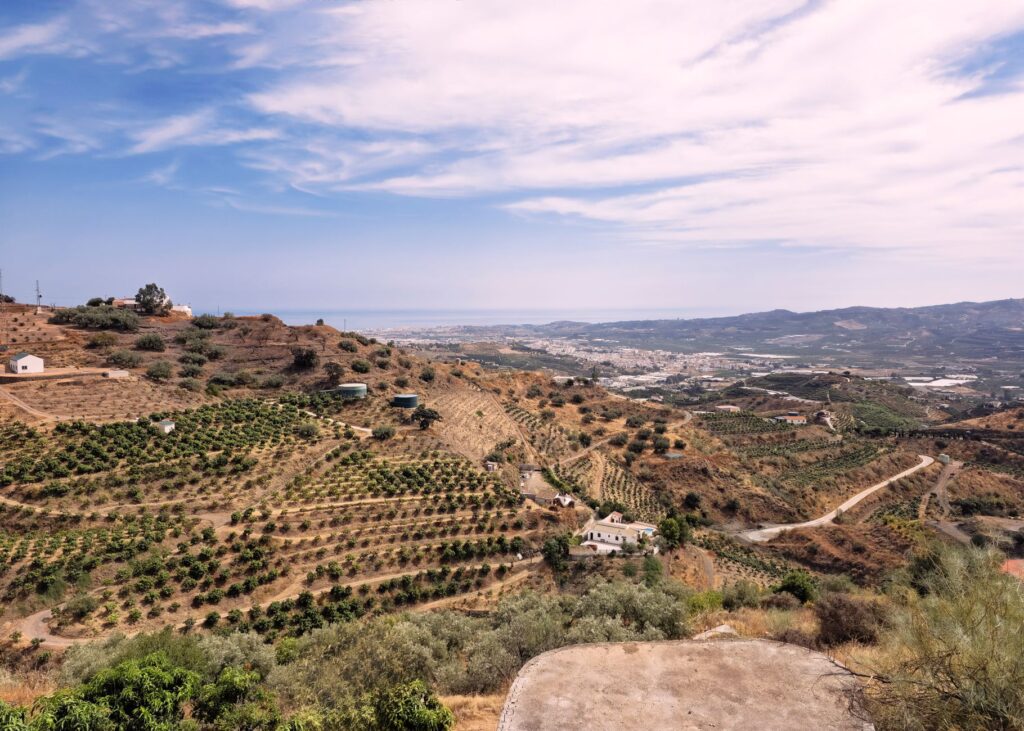
To understand why this Málaga municipality enjoys such singular conditions, one must examine the surrounding geographical features. Located within the Axarquía region, the municipal territory is sheltered by a natural wall of mountains—the foothills of the Sierra de Almijara—which halts cold winds originating from the northern interior.
This orographic barrier acts as an open-air greenhouse. Simultaneously, the proximity of the Mediterranean Sea exerts a fundamental thermoregulating role. Water masses absorb heat during the summer months and slowly release it during winter, softening thermal oscillations. The result is an average annual temperature hovering around 18 degrees Celsius, with winter highs frequently exceeding twenty degrees during the central hours of the day.
Local meteorologists and regional observatories have spent decades recording these data, which consistently place the municipality at the top of continental climate rankings. Far from being an isolated phenomenon, this pleasant weather is steady, allowing residents and visitors to enjoy uninterrupted outdoor living throughout the entire year.
Two nuclei, two converging realities
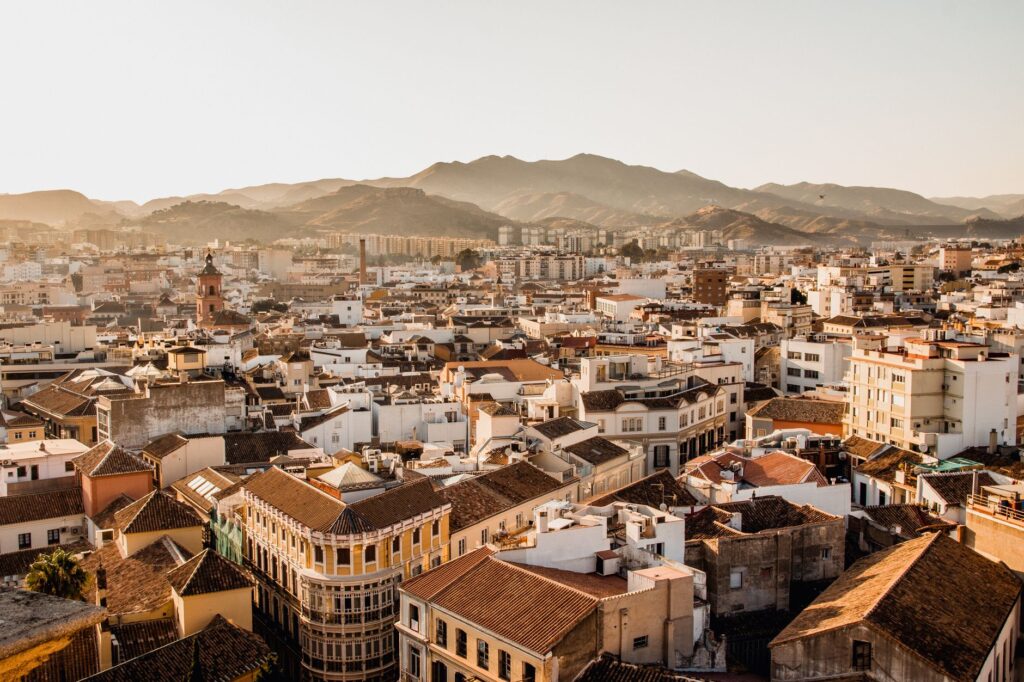
The urban structure of this destination presents a fascinating duality reflecting its historical evolution. On one hand lies the traditional core, situated inland and gently perched upon a hill ascending from the valley. On the other hand, the coastal strip, known as Torrox Costa, concentrates tourist and maritime activity along several kilometers of beaches and promenades.
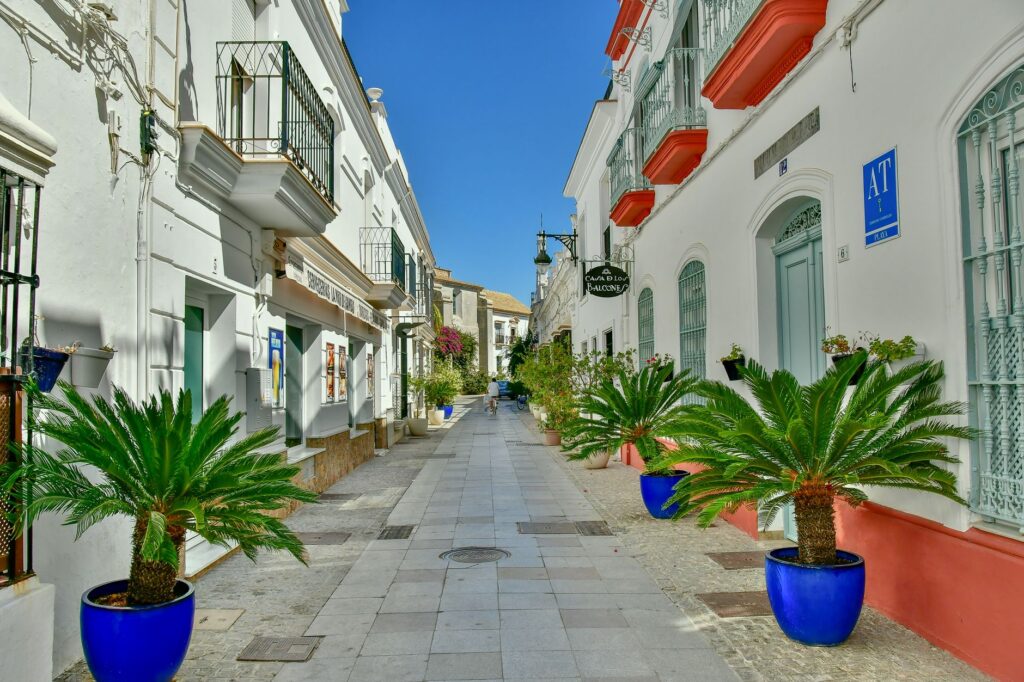
This physical separation of barely four kilometers between the historic center and the coastline allows visitors to alternate between two complementary worlds in a single day. While the upper section retains the labyrinthine layout of Andalusi origin, featuring narrow streets, whitewashed facades, and pots overflowing with geraniums, the coastal zone offers total openness to the marine horizon.
Connecting both spaces is already a small travel ritual. In the past, farmers and fishermen traversed steep rural paths to exchange their goods; today, a network of secondary roads and country lanes demonstrates how mountain and sea form an indissoluble economic and cultural unit in this sector of the eastern Costa del Sol.
Traces of an Andalusi and Roman past
The historical heritage of the municipality is not limited to its picturesque appearance; it holds first-rate archaeological sites testifying to the strategic importance of this enclave since antiquity. In the El Morche area and near the coast lies the Faro Archaeological Park, a complex comprising a Roman villa, a salting factory crucial to the economy of Hispania Baetica, and associated pottery kilns.
The Roman presence proves that the enclave was valued two millennia ago for its marine resources and accessibility. Following the fall of the Empire, the area experienced profound development during the Nasrid period. The old town preserves the memory of that era in its urban DNA: steep slopes designed for defense and water channeling, and secluded little squares where community life continues to revolve around the murmur of fountains.
During the Alpujarras rebellion in the sixteenth century, the municipality witnessed turbulent episodes that deeply marked its demographics and agrarian culture. Subsequent repopulation with families from other peninsular regions shaped the hospitable and hardworking character that defines its people today.
The economy of subtropical flavor
The privileged climate not only benefits human well-being but has radically transformed the agricultural landscape of the region. Historically devoted to dry-farming vineyards, almond trees, and olive groves, the territory spearheaded a veritable green revolution in recent decades with the introduction of subtropical crops.
Today, the slopes descending toward the Mediterranean are carpeted with plantations of avocados, mangoes, and custard apples. This agricultural shift has turned Axarquía into a unique pantry on the European continent, capable of producing high-quality subtropical fruits without relying on artificial greenhouses.
For the traveler, this circumstance translates into a differentiated gastronomic experience. Local markets and area restaurants integrate these products into traditional recipes, fusing extra virgin olive oil and fresh bay fish with the creaminess of avocado or the sweetness of mango in salads and warm creams.
Strolling through the historic center in the middle of winter, accompanied only by the murmur of water and the scent of orange trees, completely dissolves everyday urgency.
Popular culture, traditions, and devotions
The social life of the municipality beats to the rhythm of deeply rooted festivities combining religious fervor with the celebration of local produce. Among them, the Torrox Migas Festival stands out prominently; recognized as a Festival of Tourist Interest in Andalusia, it gathers thousands of visitors every December around giant communal pans.
This humble recipe, made with semolina flour, water, olive oil, garlic, and salt, originated as the warm sustenance of shepherds and farmworkers during the coldest days. Today, it has become a symbol of collective identity, where neighborly hospitality is manifested in the free distribution of thousands of portions accompanied by muleteer salad and local wine.
Other events, such as the patron saint festivities in honor of the Virgin of the Snows and Saint Roch or Holy Week celebrations, showcase a community anchored in its roots, capable of preserving its intangible heritage against globalized tourist homogenization.
The coastal territory and its visual landmarks
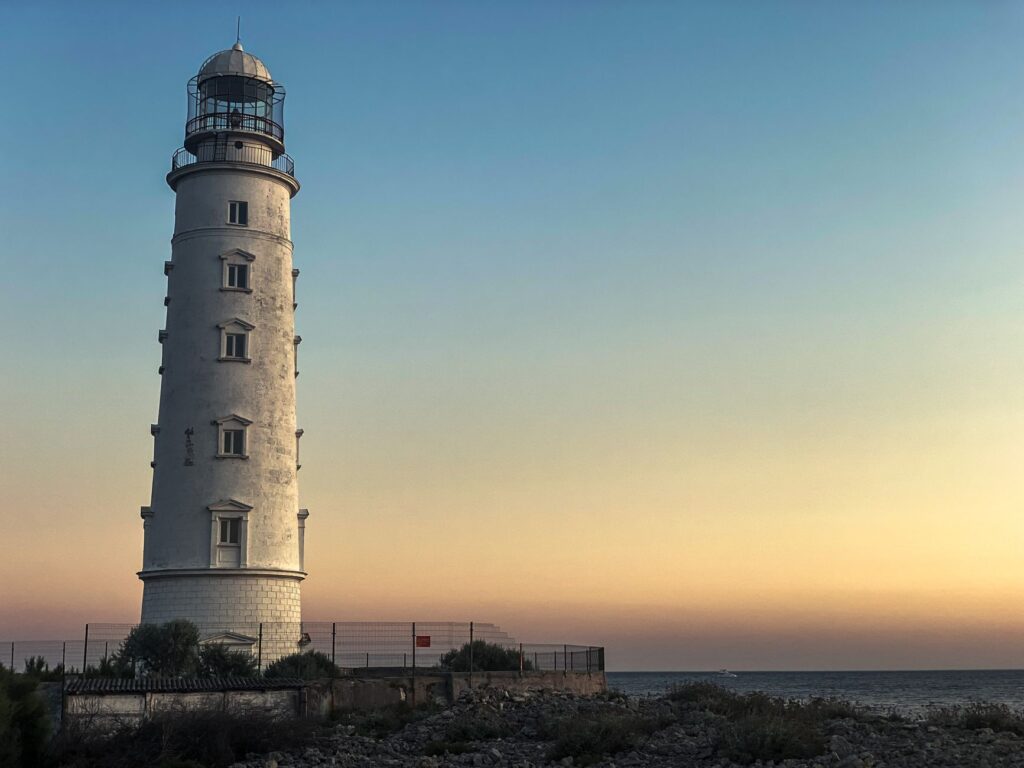
Descending toward the coastline, the landscape opens up and acquires a maritime dimension. The most emblematic element of the coast is its lighthouse, built in the late nineteenth century and currently housing the Torrox Maritime Museum, a cultural space reviewing the maritime and underwater history of the area.
The promenade stretching from El Morche to the mouth of the Torrox River offers several kilometers of clean, well-equipped sandy beaches. Unlike other overcrowded points on the Málaga coast, the pace here remains unhurried. Traditional beach bars continue serving sardine skewers and fried fish with direct views of a horizon where the winter sun sets, painting the sky in ochre and violet tones.
The integration between the urban space and the natural environment allows for shoreline walks even on the shortest days of the year, enjoying a mild marine breeze that invites contemplation and unhurried rest.
Practical information for the traveler
Planning a getaway to this southern destination requires keeping in mind some basic logistical aspects to make the most of the experience:
- How to get there: Located in the Axarquía region, the most direct flight access is through Málaga-Costa del Sol Airport, situated about 50 kilometers away. From there, visitors can rent a vehicle or use the interurban bus network connecting the capital with the eastern Málaga coast.
- When to go: Although the microclimate persists year-round, the months from November to March are ideal for escaping peninsular cold without enduring summer tourism crowds.
- Where to stay: Accommodations are divided between charming boutique hotels and rehabilitated rural houses in the historic core, alongside tourist apartments and beachfront hotels along the coastal strip.
- Essential gastronomy: Visitors should not leave without tasting traditional migas, ajobacalao, soup ears, and seasonal subtropical fruits harvested in the neighboring valleys.
The true luxury of this Málaga corner lies not in artifice, but in the climatic certainty of enjoying the outdoors when the rest of the country takes shelter indoors.
The value of everyday life as a destination
At a time when tourist destinations compete to offer increasingly strident and complex experiences, Torrox proposes a model based on authenticity and elemental well-being. There is no need to fly across oceans or seek complex all-inclusive resorts to find thermal and mental respite.
The secret of this Málaga municipality lies in its ability to maintain a leisurely pace of life, where the climate is not merely a statistical figure, but the guiding thread of an existence tied to the land and the sea. A constant reminder that, sometimes, the best refuges are much closer than we imagine, patiently waiting to be discovered without rush or grand headlines.
Source in EN: Diario del Viajero