Introduction to Faroese Isolation and Wind Geography
The archipelago of the Faroe Islands, situated in the heart of the North Atlantic between Scotland and Iceland, represents one of the most formidable challenges for contemporary civil aviation. Confined within a rugged volcanic topography, battered by unpredictable ocean currents, and subjected to a regime of hurricane-force winds that shift direction without warning, these eighteen islands have historically depended on seamanship and, in the modern era, on a transport infrastructure as fragile as it is vital. The steep orography prevents the development of large expanses of asphalt, forcing engineers and aviation authorities to devise surgical solutions to maintain a steady flow of passengers, medical supplies, and emergency services.
Understanding mobility in this environment requires stripping travel of any superficial romanticism to delve directly into the operational manuals of regional airlines. Here, a delay is not a mere logistical inconvenience, but the direct consequence of a crosswind gust exceeding structural tolerances or a thick fog bank rolling down from the cliffs within minutes. The system is not sustained by large commercial wide-body fleets, but by a microscopic network where every takeoff and landing is negotiated face-to-face with the laws of atmospheric physics.
The Milestone of Vágar: Engineering and Meteorology on a Single Strip
The archipelago’s sole commercial airport, located on the island of Vágar, stands as an eloquent testament to technical audacity. Originally constructed by British engineers during the Second World War and subsequently modernized to accommodate single-aisle jetliners, Vágar defies conventional aeronautical logic. Its runway, flanked by steep mountains and deep marine abysses, generates severe wake turbulence and wind shear, known in aviation jargon as rotor winds. Pilots operating at this airfield must undergo specific simulators and rigorous certifications before taking the controls during visual approaches assisted by high-precision instrumentation.
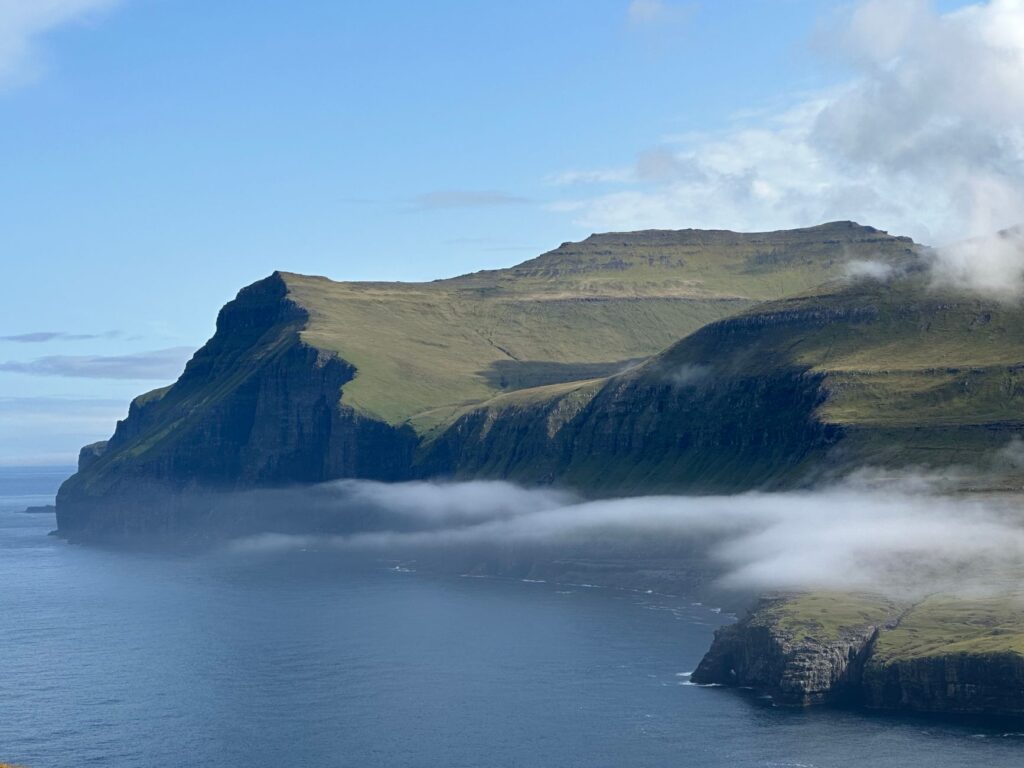
The runway extension and the installation of advanced beacon systems have drastically reduced days of total closure, but nature continues to enforce its laws. Airlines connecting Copenhagen, Reykjavik, or Edinburgh with Vágar operate with extremely strict fuel margins, always carrying additional reserves to return to the point of origin in case a marine fog bank suddenly closes the valley. This reliance on a single international entry point turns Vágar into the critical bottleneck of the entire insular economy, forcing authorities to constantly plan intermodal contingency alternatives.
Atlantic Airways’ Helicopter Network: The Social Umbilical Cord
When roads and subsea tunnels fail to reach the most remote islets, and when ferries are immobilized by North Atlantic swells, the helicopter service operated by Atlantic Airways comes into play. Far from constituting a tourist luxury or an exclusive service for executives, this network subsidized by the Faroese government functions as a genuine public service aerial bus. It connects islands such as Mykines, famous for its puffin colonies and extreme climatic vulnerability, with the administrative and health centers of the archipelago.
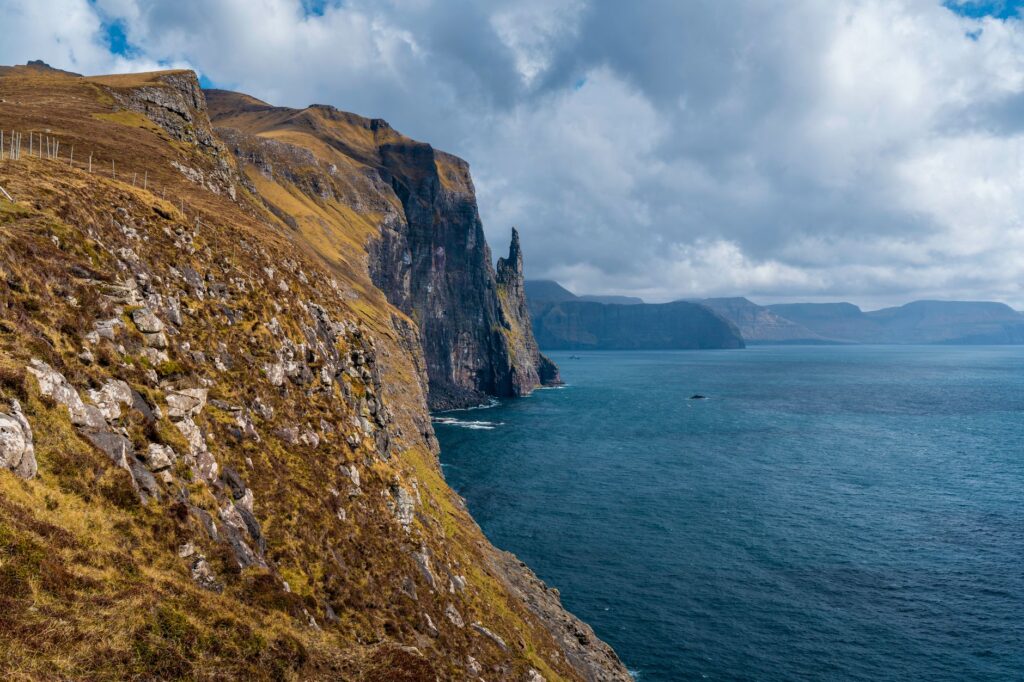
The helicopter fleet operates under a strict public service contract that mandates prioritizing local residents in seat allocation, ensuring that inhabitants of communities numbering barely a dozen people can visit the doctor or receive fresh supplies during winter months. Pilots in this division operate under visual flight rules adapted to narrow canyons and shifting weather conditions, demonstrating exceptional technical expertise. For the curious traveler, flying aboard these aircraft offers an unparalleled perspective of the basalt cliffs, though absolute priority remains the strict logistical functionality of the archipelago.
Transport in the Faroe Islands is not a matter of commercial convenience, but a daily exercise in survival and territorial cohesion where aviation acts as the true pulse of the community.
Subsea Tunnels and Ferries: The Surface Alternative
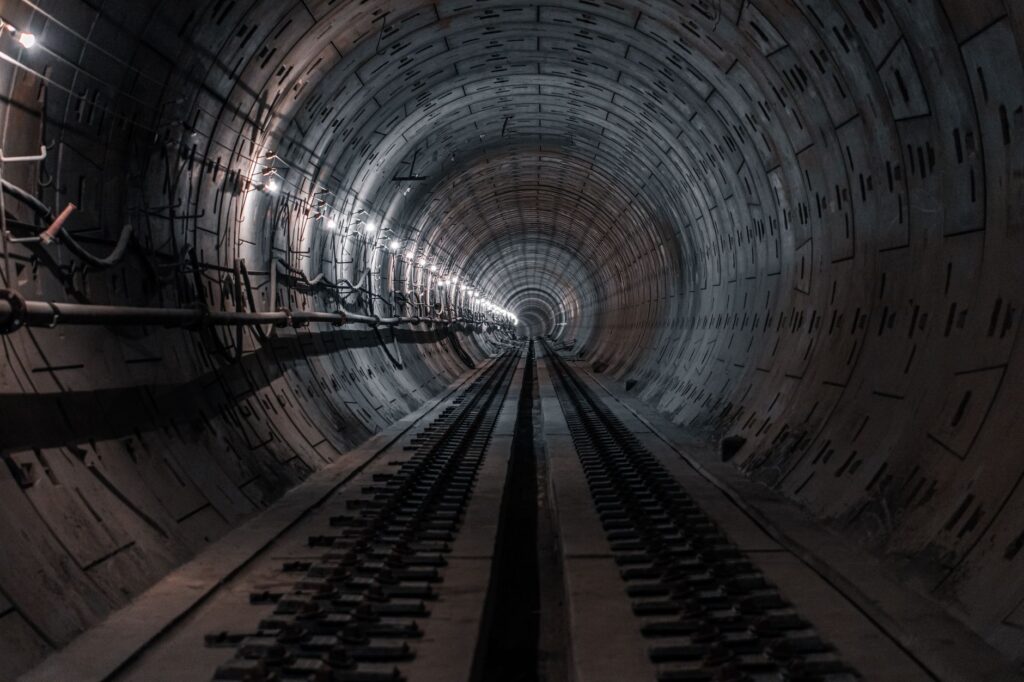
To mitigate extreme dependence on airspace, the Faroese government has invested heavily over recent decades in a pharaonic network of subsea tunnels equipped with roundabouts illuminated by local artists, connecting major islands like Streymoy, Eysturoy, and Vágar. These subterranean infrastructures have radically transformed the travel-time map, allowing thousands of citizens to glide beneath the seabed at depths exceeding one hundred meters. However, these road arteries do not resolve connectivity with peripheral islets, where submarine geography renders any tunneling project unfeasible.

This is where ferries operated by the state-owned Strandfaraskip Landsins assume an irreplaceable role. These robust vessels, designed to withstand heavy seas and dock at piers exposed to open swells, transport both passengers and heavy vehicles. The synchronization between the schedules of these vessels and flights at Vágar or helicopter services constitutes an intermodal clockwork mechanism put to the test every dawn. A failure in a ferry’s docking system due to silt buildup or tidal force can destabilize the food distribution chain of an entire island.
The Impact of Climate Change on Regional Operations
In recent years, transport operators across the North Atlantic have detected significant alterations in traditional weather patterns. The frequency of Atlantic storms with hurricane-force winds outside the usual winter season has increased cancellation rates at both Vágar’s runway and helicopter routes. This phenomenon compels airlines and port authorities to rethink their safety protocols and invest in high-resolution localized meteorological prediction technologies.
The resilience of the Faroese system is tested with every cycle of deep low-pressure systems. The introduction of more advanced satellite navigation systems allows safer approaches in zero-visibility conditions, narrowing the margin of human error. Nonetheless, experts agree that no technological innovation can completely eliminate the vulnerability inherent to an oceanic archipelago. Risk management remains the fundamental pillar upon which all island transport policy rests.
Planning and Operational Advice for the Rigorous Traveler
Anyone setting out to navigate the transport system of the Faroe Islands must adopt a philosophy based on absolute flexibility. Rigid planning of minute-by-minute itineraries typically fails at the first weather alert. It is strongly recommended to book helicopter tickets months in advance if visiting specific islands like Mykines during the summer season, though travelers should always retain a buffer of at least forty-eight hours before catching a return international flight at Vágar Airport.
Likewise, checking official traffic and route status applications before embarking on any road or sea journey is imperative. Wind warnings for light vehicles on elevated bridges and real-time updates from Strandfaraskip Landsins are indispensable tools. The intelligent traveler does not compete against Faroese meteorology; instead, they learn to read it and integrate it into their own travel pace, understanding that slowness and waiting are legitimate parts of the insular experience.

Conclusion: The Fragile Balance Between Isolation and Connectivity
The transport system of the Faroe Islands stands as a fascinating model of applied engineering and logistical management under extreme conditions. From the complex instrumental approach to Vágar’s single runway to the pinpoint precision of public service helicopters, every link in this chain responds to the imperative need to sustain communities that refuse to succumb to geographic isolation. It is not a network designed for mass tourism, but an organic structure conceived to withstand the onslaught of the ocean.
Ultimately, the true value of this infrastructure lies in its capacity to preserve the identity of a people nestled at the edge of the habitable world. Keeping the skies and channels of this archipelago open demands millionaire resources, political will, and unyielding professional courage from operational teams. For any attentive observer of regional aviation and intermodal transport, the Faroe Islands remain the ultimate laboratory where human technique demonstrates absolute respect before the indomitable grandeur of nature.
True mastery in North Atlantic logistics does not consist of defeating the elements, but of designing a system flexible enough to dance to the rhythm of the storm.