
Introduction to the Atlantic Labyrinth of Nine Islands
In the vast expanse of the North Atlantic, halfway between continental Europe and the North American mainland, the Azores archipelago unfolds as a cluster of isolated volcanic peaks separated by hundreds of miles of deep ocean. Portugal’s sovereignty over these nine islands has historically depended on an inescapable common denominator: connectivity. Unlike other island enclaves where mass tourism has spawned colossal airports, the Azorean airport system reflects a fragmented architecture designed equally to guarantee territorial cohesion for its residents and to absorb an influx of visitors increasingly demanding of environmental sustainability.
Analyzing the aviation network of the Azores means understanding a logistical landscape where meteorology acts as a sovereign force. Crosswinds, sudden fog, and rapidly shifting Atlantic fronts impose severe operational limitations on aircraft commanders. Each of the main islands features its own airport infrastructure, creating an ecosystem of short runways, rugged topography, and absolute reliance on instrumental approach technology. This report examines the backbone of aviation in this Macaronesian outpost, breaking down engineering challenges, intermodal integration, and the delicate balance between isolation and openness to the world.
Ponta Delgada Infrastructure: São Miguel’s Transatlantic Gateway
João Paulo II Airport (PDL), located on the island of São Miguel, is the undisputed epicenter of Azorean connectivity. Featuring a paved runway exceeding two thousand five hundred meters in length, it is the only entry point capable of receiving wide-body aircraft from continental Europe and the North American east coast without severe weight or range restrictions. However, its geographic position does not exempt it from the archipelago’s meteorological complexities. The surrounding volcanic peaks generate wake turbulence and wind shear that demand constant technical proficiency from commercial flight crews.
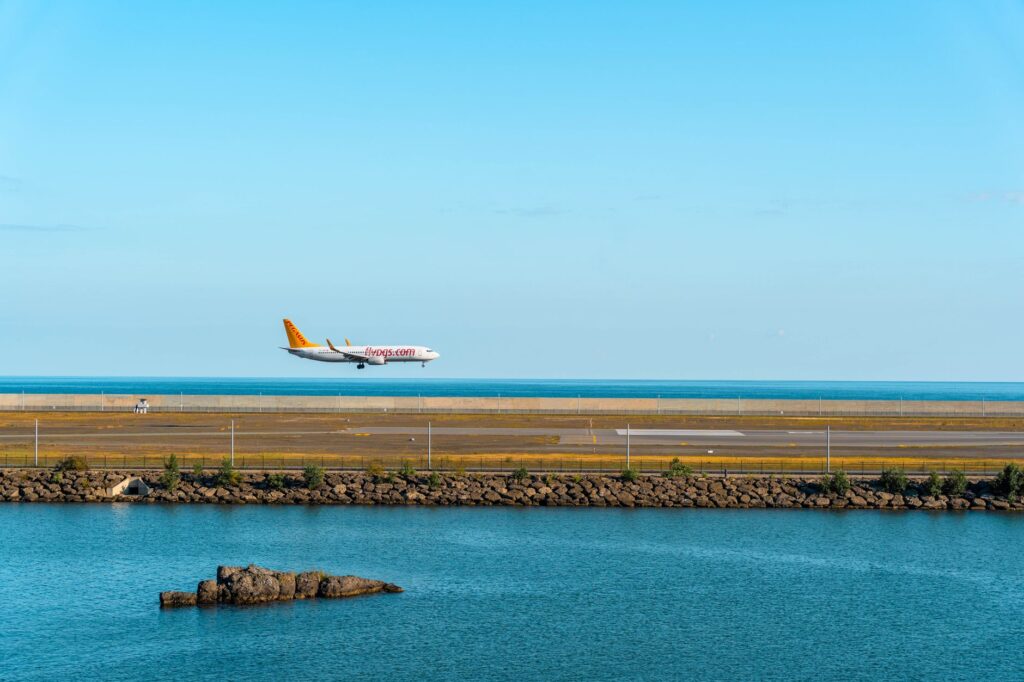
In recent years, airport operator ANA Aeroportos de Portugal has undertaken several expansions of the passenger terminal and parking aprons to accommodate seasonal demand surges. Nonetheless, PDL’s growth is carefully managed to prevent the saturation of local resources. The integration between aeronautical infrastructure and São Miguel’s road network enables the rapid distribution of travelers toward Ponta Delgada or rural parishes, consolidating a model where the airport functions as the primary economic engine of the largest island.
Lajes and Terceira: The Dual Nature of Military Strategy and Civilian Travel
Situated on Terceira Island, Lajes Air Base (TER) represents a unique case of dual-use infrastructure: military and civilian. Its main runway, one of the longest and most robust in the mid-Atlantic, has historically served as a technical stopover for transoceanic flights and as an operational base of significant geostrategic importance. For local residents and visitors, the civilian terminal integrated into the military complex offers a solid alternative for direct connections to Lisbon and select North American hubs, reducing exclusive reliance on São Miguel.

Managing Lajes requires meticulous coordination between the Portuguese Air Force, the United States military branch, and the commercial airlines operating the route. Safety protocols and the shared use of taxiways and navigation aids make this airport a highly complex operational node. For aeronautical engineers, maintaining Lajes’ pavement against the relentless salt corrosion of the Atlantic is an ongoing maintenance challenge requiring major periodic capital investments.
Secondary Runways: Approach Challenges in Flores, Horta, and Santa Maria
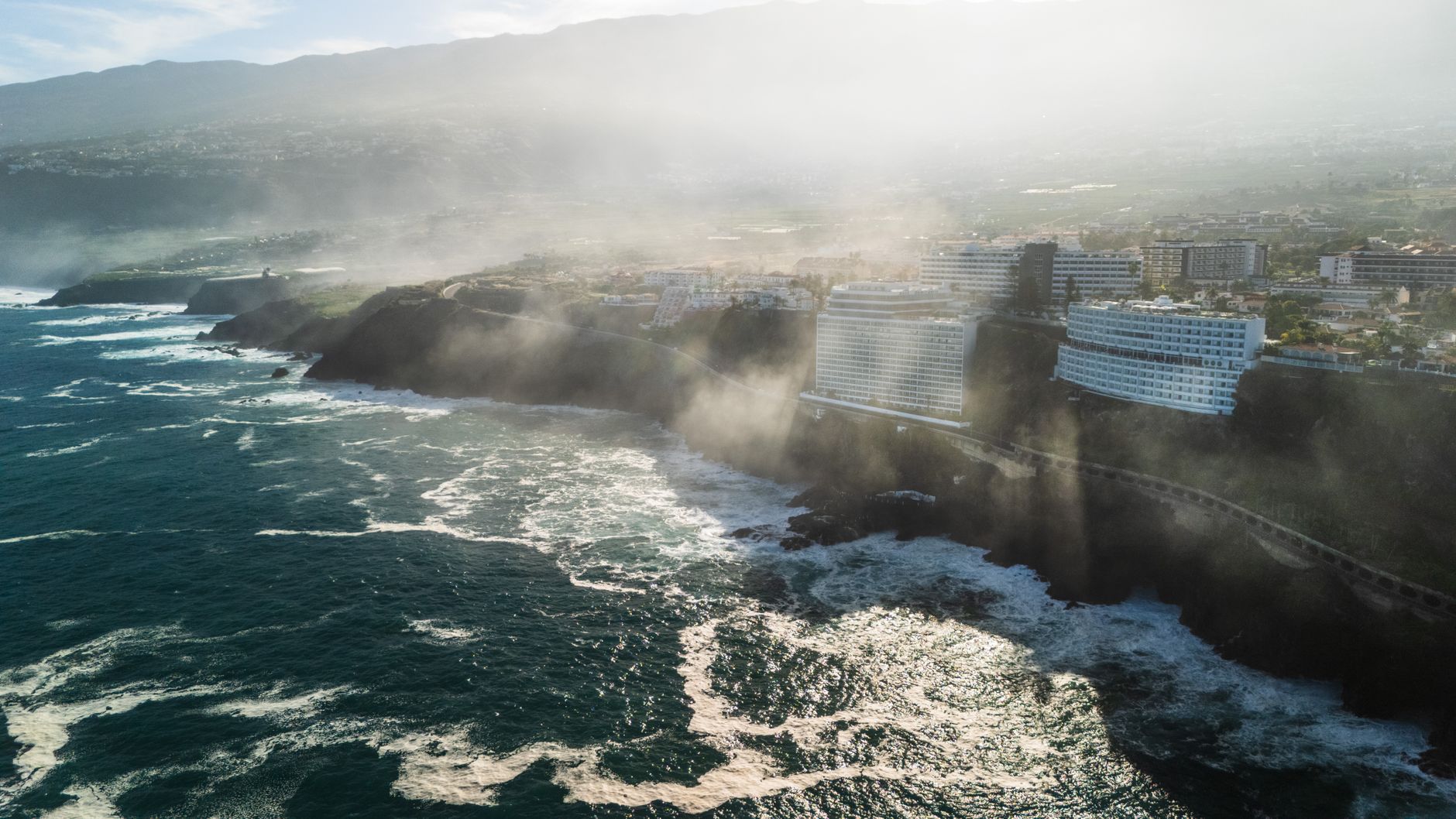
Beyond the major islands, the true pulse of Azorean aeronautical engineering is experienced in secondary terminals. Horta Airport (HOR) on Faial Island; Flores Airport (FLW) on the westernmost edge; and Santa Maria Airport (SMA) on the southernmost island form a network of runways where the margin for error is minimal. In Flores, for instance, the runway extends parallel to sheer marine cliffs, forcing pilots to contend with unpredictable updrafts caused by crashing waves and trade winds hitting the basaltic rock.
Aviation in the Azores is not merely a transport service; it is the invisible thread sustaining daily life, healthcare, and the economy of communities separated by oceanic abysses.
Santa Maria, meanwhile, possesses a fascinating history tied to transatlantic air traffic control. Its area control center manages one of the largest oceanic airspace regions in the world, guiding thousands of aircraft crossing daily between Europe and America. Although its passenger traffic is lower compared to São Miguel, its technical infrastructure remains a foundational pillar for international air navigation safety in the northern hemisphere.
SATA Air Açores and Azores Airlines: The Logistics of Insular Cohesion
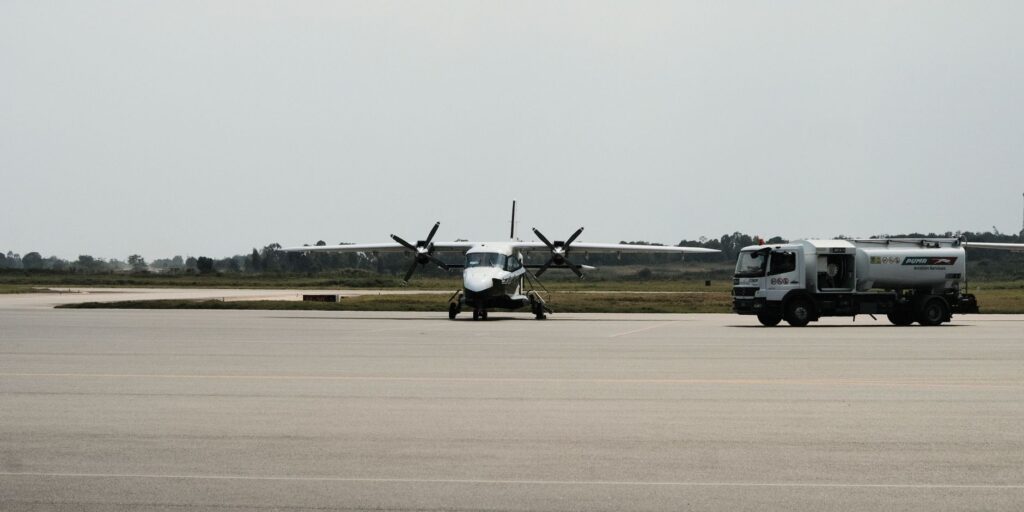
No analysis of Azorean air connectivity would be complete without examining the role of the regional airline group, SATA Group, divided into its insular branch (SATA Air Açores) and its international arm (Azores Airlines). Operating a fleet of mid-sized turboprop aircraft to connect all nine islands requires extreme operational flexibility. Inter-island flights, popularly known as frog-jumping hops, are the sole realistic alternative to maritime transport, which is frequently suspended for weeks at a time due to winter storms.
The punctuality of these inter-island routes depends as much on pilot expertise as on the reliability of instrumental landing systems (ILS) installed in complex airfields such as Pico or São Jorge. The state-backed carrier thus fulfills an unavoidable public service role, ensuring that residents of islands with fewer than ten thousand inhabitants maintain daily access to reference hospitals, higher education institutions, and supply markets on the main islands.
The Environmental Dilemma and Tourist Carrying Capacity
The sustained surge in international tourism toward the Azores has sparked a profound debate regarding the carrying capacity of its airport infrastructure. Unlike continental destinations where runway expansions are resolved relatively easily by expropriating flat terrain, in the Azores volcanic topography drastically limits the physical growth of airports. Extending a runway on islands like Faial or Pico would entail monumental offshore engineering works or the irreversible alteration of protected coastal ecosystems.
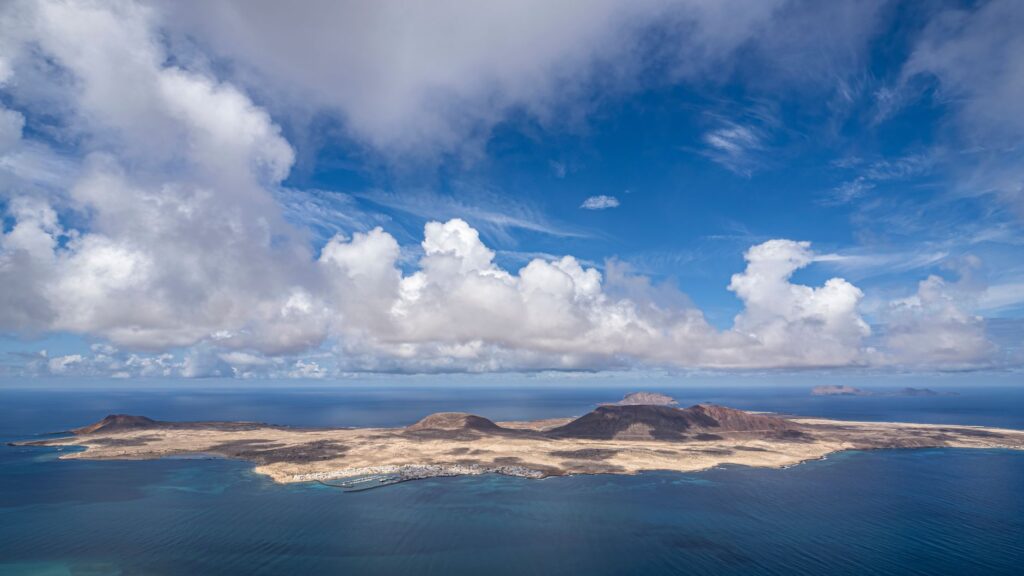
Facing this reality, regional authorities and tourism operators have shifted toward a demand-management strategy. Rather than promoting uncontrolled frequency increases that would saturate fragile terrestrial transport networks and insular water resources, priority is given to attracting higher-value travelers with lower ecological impact. The digital optimization of airport slots and the deployment of newer-generation fleets, quieter and more fuel-efficient, have guided the sector’s trajectory over the past decade.
Practical Information for Travelers in Transit Through the Archipelago
Planning an air itinerary across the Azores requires a clear understanding of the region’s logistical specifics. First, it is highly advisable to book inter-island tickets months in advance during the peak summer season, as aircraft capacity is limited and local demand takes priority. Furthermore, travelers should always allow a buffer of at least twenty-four hours between a connecting flight from a minor island and the transatlantic return flight to the mainland, thereby mitigating the risk of weather-related delays.
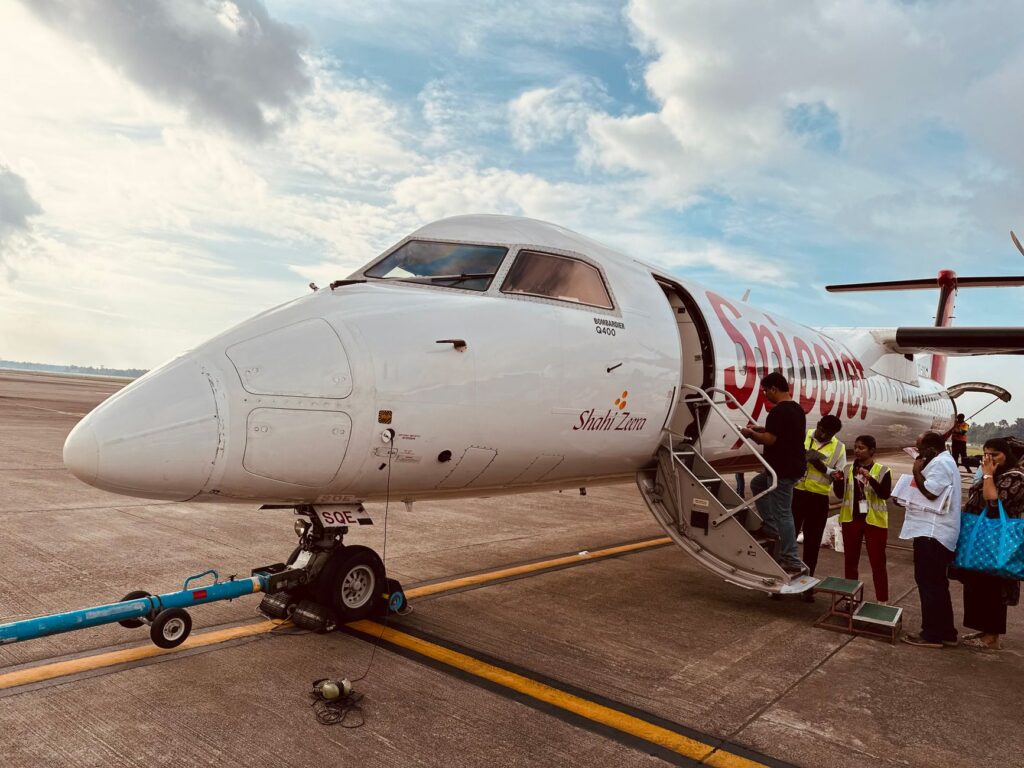
The intermodal transport system at major airports is completed by car rental services and local bus lines connecting the terminals to nearby urban centers. There are no railway networks on any of the islands, meaning rental cars or local taxi services remain indispensable for completing final journeys to rural accommodations or mountain trailheads.
Conclusion: The Permanent Balance Between Isolation and Connectivity
The Azorean air connectivity system stands as an eloquent testament to how human engineering and institutional resilience can weave a secure bridge across the vastness of the ocean. Far from constituting a standardized network, each airport in the archipelago possesses a distinct personality shaped by volcanic geology and the fury of the North Atlantic. Future challenges do not lie in the construction of massive airport hubs, but in consolidating an intelligent, sustainable, and technologically advanced network.
Maintaining the fragile balance between global openness and the preservation of insular identity is the great legacy that future generations of aviation managers must safeguard in the middle of the ocean.
Ultimately, flying over the Azores and gazing down from the cabin window at blue-green volcanic calderas and basaltic cliffs reminds the contemporary traveler that modern accessibility remains subordinated to the rhythms and caprices of nature. Ensuring that this connection remains open, secure, and respectful of the environment is the great logistical victory of an archipelago that continuously defies its own geographic isolation.