
Introduction to the Railway Journey Toward the Deep North
The railway line linking modern Stockholm with the freezing latitudes of Narvik on Norway’s Atlantic coast represents one of the masterworks of transport engineering in Europe. Popularly known as the Arctic train, this overnight service operated by Swedish railway companies is not merely a conventional means of transport, but a vital lifeline defying the extreme geography of Scandinavia. Over more than a thousand kilometers of track, travelers experience a gradual transition from the urban bustle of the Baltic to the majestic solitude of sub-arctic landscapes, crossing endless boreal forests, rushing rivers, and the imposing Scandinavian mountain range.
Planning this journey requires understanding the complex logistics of a line that operates under adverse weather conditions for much of the year. Sub-zero temperatures, unpredictable blizzards, and long winter nights—which contrast radically with weeks of perpetual daylight during the boreal summer—demand rigorous maintenance of the infrastructure. This report examines the technical, historical, and human reality of a route where movement on rails becomes an exercise in introspection and profound connection with Europe’s wild nature.
History and Strategic Purpose of the Northern Railway
The origin of this route was not driven by tourism, but by a purely industrial and geopolitical necessity. In the late 19th century, the exploitation of iron ore deposits in the northern Swedish region of Kiruna completely transformed the economy of the Scandinavian north. To transport the valuable mineral from the bowels of the mountains to international markets, it was imperative to open a direct outlet to an ice-free port in the North Atlantic. Thus was born the famous iron ore line, known in its Norwegian section as the Ofoten line and connected to the main Swedish network through the legendary Northern Railway.
For decades, heavy freight transport prioritized the route over passenger traffic. However, over the years, travelers’ demand to discover the remote landscapes of Lapland led to the integration of highly thermally efficient passenger cars. Today, the line combines with millimeter precision the circulation of gigantic mineral-laden convoys with passenger trains carrying both locals and international travelers in search of geographic authenticity.
Railway Engineering in High Mountain and Permafrost Environments
Building and maintaining railway tracks in latitudes close to the Arctic Circle poses monumental technical challenges. The terrain is dominated by ancient rock formations, impenetrable swamps, and layers of frozen soil known as permafrost. 19th-century engineers and modern maintenance crews continually contend with ground expansion and contraction due to extreme freeze-thaw cycles. To mitigate these risks, track ballast and drainage systems require constant supervision and satellite-based monitoring technology.
As the train ascends toward the border between Sweden and Norway, the topography turns vertical. Steel bridges defy deep chasms carved by glacial torrents, while tunnels bored directly into living rock allow the convoy to advance protected from winter avalanches. The electrification of the line, completed in past decades, marked a technological milestone that drastically reduced emissions and provided the necessary traction to overcome the steepest mountain grades without sacrificing speed or stability.
The Onboard Experience: Interior Architecture and Comfort in Motion
Traveling on the night express toward Narvik means immersing oneself in a travel philosophy where time recovers its essential value. Modern trains offer a range of accommodation options tailored to both tight budgets and those seeking superior privacy and comfort. Private compartments with integrated bathrooms compete in popularity with berths in shared compartments, designed with Scandinavian ergonomics that maximize available space without sacrificing a sense of openness.

The train is not merely a vehicle to reach a destination; it is a moving observation platform where civilization recedes to make way for the silence of the taiga.
Interior design prioritizes thermal and acoustic comfort. Special insulation panels and double-glazed windows protect passengers from the outside cold while allowing them to enjoy panoramic views of the Scandinavian wilderness. On board, the atmosphere is quiet and respectful, encouraging reading, contemplation, or quiet conversation among travelers from all corners of the planet who share the same awe at the immensity of the northern landscape.
Kiruna: The Moving City and the Mining Heart of the Route
One of the most fascinating stops on the journey is Kiruna, located in Sweden’s far north and globally famous both for its underground iron mines and for an unprecedented urban planning process: the physical relocation of an entire city. Due to ground subsidence caused by mining extraction, historic buildings, infrastructure, and the homes of thousands of citizens are being relocated stone by stone several kilometers to the east.
For the traveler, this stop offers a unique opportunity to understand the complex relationship between industrial prosperity and the preservation of heritage. Kiruna’s iconic wooden church, a masterpiece of Neo-Gothic and Sami architecture, is an unmissable point of interest before the train resumes its journey toward the Norwegian border. Guided tours of the world’s largest underground mine complete an indispensable perspective on the economic engine keeping this railway line alive.

The Riksgränsen Border Crossing and the Descent Toward the Ofoten Fjord
The geographical highlight of the journey is reached at Riksgränsen, the border station situated high in the mountain range separating Sweden from Norway. Here, the landscape leaves behind dwarf birch forests and opens onto an alpine plateau of snow-capped peaks, glacial lakes frozen for much of the year, and a sense of absolute isolation. It is in this stretch that passengers typically press their faces against the windows to capture the immensity of an environment that seems to belong to another planet.
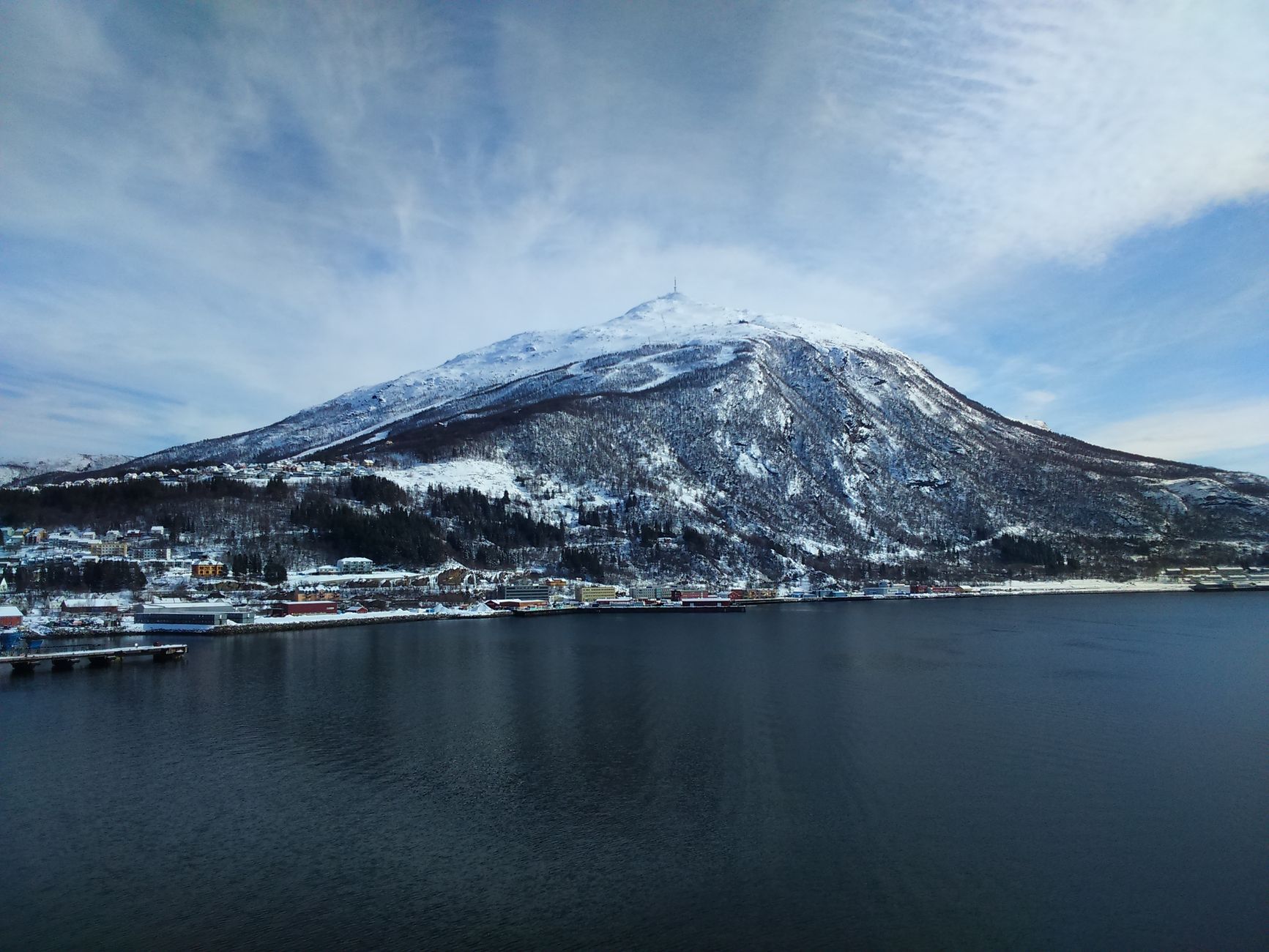
After crossing the border, the train begins a dizzying and spectacular descent to sea level. The track winds along the slopes of the steep Ofoten valley, offering breathtaking aerial views of the dark blue fjord stretching all the way to the Atlantic Ocean. This final leg of the journey, literally carved into vertical cliffs by engineering pioneers, culminates at Narvik station, a strategic port surrounded by rugged peaks marking the end of the railway line.
Practical Information for Planning the Journey
Planning this trip requires advance preparation and operational knowledge of Nordic railway networks. Essential logistical aspects are detailed below:

Ticket Reservation: Tickets for long-distance night trains in Sweden go on sale approximately ninety days in advance. It is essential to book private compartments early if traveling during the peak summer season or the Arctic winter.
Connections and Frequencies: The primary service operates daily from Stockholm Central Station (Stockholm C) to Narvik, with a travel time of approximately eighteen to nineteen hours.
Luggage and Weather: Although the train interior features efficient heating, bringing appropriate layered clothing for station stops and outdoor destination excursions is indispensable.
Onboard Dining: The trains feature a classic restaurant car offering simple Nordic-inspired dishes, though bringing personal provisions for long stretches is recommended.

Sustainable Tourism and the Value of Slow Travel in the Modern Era
Facing the immediacy and environmental impact of regional air transport, the renaissance of night trains in Europe represents a fundamental pillar for sustainable tourism. The Stockholm-to-Narvik express proves that crossing continental distances while minimizing carbon footprint is possible without sacrificing comfort or the richness of travel experiences. This travel mode fosters more conscious tourism, where the journey ceases to be an annoying formality and becomes a central, enriching part of the adventure.
Furthermore, the steady flow of visitors to these remote regions directly contributes to local community economies, supporting small hotels, nature tour guides, and regional transport operators who respect the fragile ecological balance of the Arctic Circle.
Visual Closure: The Persistence of the Arctic Horizon
When the convoy finally halts on Narvik’s platforms, the prevailing sensation among passengers is having crossed an invisible border—not only geographical, but temporal. The crisp air of the North Atlantic and the immensity of mountains plunging into the sea welcome those who have chosen slowness and contemplation. The railway tracks ending abruptly in front of the fjord symbolize the confines of a network linking Sweden’s industrial heart with the edge of the world, reminding us that the true luxury of contemporary travel lies in the capacity to marvel at nature’s monumental scale.