Introduction to Northern Spain’s Metric-Gauge Corridor
Spain’s northern fringe, wedged tightly between the Cantabrian Sea and the formidable barrier of the Canturian Mountains, has historically posed a monumental challenge for transport engineering. Unlike the major radial lines connecting Madrid to the coast across flat plateaus, northern Spain demanded a bespoke solution: a narrow-gauge railway network capable of threading through coastal cliffs, deep river valleys, and continuous estuaries. The Transcantábrico Railway is not merely a tourist conveyance, but the culmination of a complex process unifying small mining and industrial lines that, throughout the twentieth century, successfully stitched together a territory fragmented by geography.
Understanding the scale of this infrastructure requires setting aside conventional high-speed metrics. Here, average speed yields center stage to territorial penetration. The metric gauge permits much tighter turning radiuses, adapting minutely to the topography without requiring the excavation of kilometer-long tunnels for every single obstacle, though the route still features stretches of notable technical complexity. This report analyzes the operational reality, the history of its layout, and the practical keys to traveling along one of Western Europe’s most distinctive scenic rail lines.
Historical Background and the Genesis of Narrow Gauge
The origins of the Transcantábrico are rooted in the industrial fever of the late nineteenth and early twentieth centuries. Coal basins in Asturias, iron ore deposits in Biscay, and steelworks in Cantabria demanded swift, direct outlets to northern ports. Private local companies constructed isolated sections with reduced track widths—primarily metric gauge (1,000 millimeters)—optimized to lower construction costs over rugged terrain.
Over the decades, the nationalization of these lines under FEVE (Narrow-Gauge Railways) enabled the interconnection of disparate segments. Originally built to transport coal, minerals, and regional freight, the infrastructure gradually transformed into a backbone of social cohesion and, in its most famous incarnation, a luxury and medium-distance tourism corridor. Subsequent integration into Adif and Renfe preserved the technical specificity of the network, maintaining a gauge that remains a case study in Spanish civil engineering for its ability to survive in extreme orographic zones.
Orographic X-Ray: The Struggle Between Steel and Cliffs
The Transcantábrico route spans over six hundred kilometers of uninterrupted track between the Basque Country, Cantabria, Asturias, and Galicia. From a technical perspective, the greatest challenge facing the infrastructure is transverse hydrography. The numerous rivers cascading steeply from the Picos de Europa and the Canturian Mountains toward the sea necessitate a constant deployment of metal bridges, ashlar masonry viaducts, and consolidated embankments.
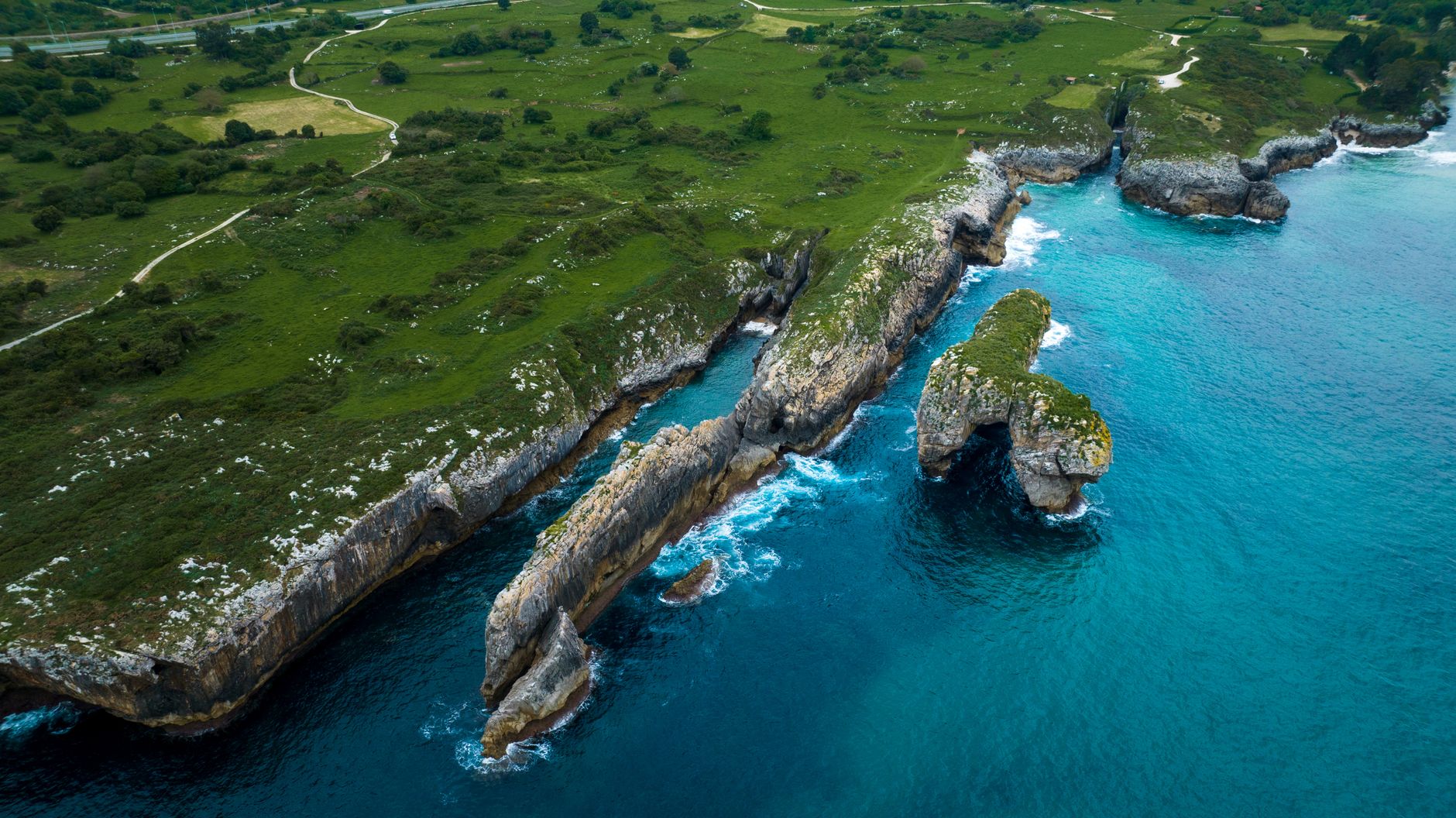
Along the Asturian section, the alternation of tunnels excavated directly through limestone rock and gorges where tracks are suspended above riverbeds highlights the skill of the original surveyors. Engineers had to contend with constant terrain instability, rockfalls, and marine corrosion resulting from the narrow distance between the tracks and crashing waves along certain points of eastern Asturias and western Cantabria.

Rolling Stock and Technological Evolution
The modernization of the service has required a deep technological overhaul of the rolling stock. The old steam locomotives that dominated the line until the mid-twentieth century gave way to diesel railcars specifically adapted to the reduced loading gauge of the metric track. These vehicles, engineered to provide a low center of gravity and excellent traction on steep gradients, guarantee safety on a route where slopes reach critical adhesion values for steel-on-steel contact.
Similarly, signaling and communications systems have evolved from traditional pilot staves to centralized configurations of telephone block and computerized traffic control. Despite modernization, the survival of this infrastructure depends on intensive, continuous maintenance, as the natural environment exerts relentless erosive pressure on the ballast bed, rails, and partial catenary systems.
Regional Connectivity and Socioeconomic Cohesion
Beyond its undeniable appeal for specialized travelers, the Transcantábrico fulfills an irreplaceable unifying function for local communities. Numerous coastal towns and interior valleys rely on these medium-distance and commuter services as their sole direct rail connection to major urban centers such as Bilbao, Santander, Oviedo, or Ferrol.

Intermodal integration remains one of the greatest ongoing challenges and achievements at key transit nodes. Narrow-gauge stations frequently coexist in the same urban centers with Iberian-gauge or standard-gauge networks, facilitating transfers that structure northern Spain. However, extended travel times resulting from the winding layout limit its competitiveness against road transport over long distances, consolidating its role as a facilitator of local mobility and a leisurely travel experience.
The narrow-gauge railway in northern Spain does not compete in speed with high-speed lines; instead, it engages directly with the territory, adapting to its relief without attempting to conquer it through colossal engineering monuments.
Trip Planning: Routes, Frequencies, and Ticketing Options
Organizing a journey aboard the northern metric-gauge network requires logistical rigor. Unlike main high-speed lines, daily frequencies may be reduced on intermediate sections, especially when crossing from one autonomous community to another. Single tickets or Renfe regional rail passes offer great flexibility for those wishing to travel in stages, disembarking at stations of heritage or natural interest.
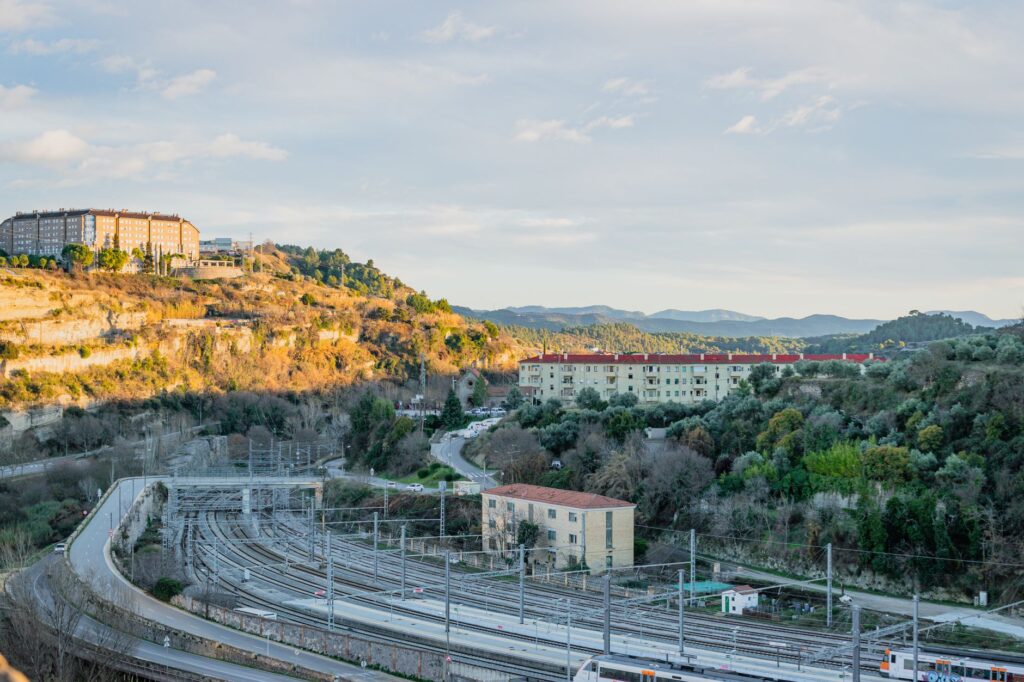
For travelers opting for the luxury tourist product commercially known as El Transcantábrico (in both its classic and Grand Luxe iterations), planning involves all-inclusive packages featuring onboard accommodation, specialized guides, and scheduled cultural excursions. On regular services, checking timetable updates is essential due to periodic modernization works executed by Adif across various stretches of the infrastructure.
Practical Guide for the Independent Traveler
To explore the northern corridor independently, it is recommended to divide the itinerary into at least four operational segments: San Sebastián-Bilbao, Bilbao-Santander, Santander-Oviedo, and Oviedo-Ferrol. Each segment offers distinct landscape and logistical peculiarities.
- Documentation and Reservations: Although commuter and medium-distance trains do not require advance seat reservations, allotments for long-duration tourist packages must be arranged months in advance.
- Airport Connections: Bilbao (BIO), Santander (SDR), Asturias (OVD), and A Coruña (LCG) airports serve as ideal entry points to connect with terminal or intermediate stations on the network.
- Luggage: Given the nature of narrow-gauge railcars, bulky luggage space is limited compared to high-speed trains, making compact suitcases or technical backpacks advisable.
- Seasonality: Spring and early autumn offer the most stable weather conditions and optimal light to enjoy the transition between sea and mountain without the crowds of the summer peak.

Infrastructure and Operational Safety
Maintaining a century-old railway line in a high-rainfall zone like northern Spain demands stable budgets and constant technical deployment. Unstable slopes and invasive vegetation represent latent operational risks requiring preventive logging and slope stabilization using geogrids and retaining walls.
Machinists operating on this line must complete rigorous specific qualification processes due to the complexity of the layout: very tight turning radiuses, numerous level crossings, and sections where visibility is severely impaired by fog or orography. This technical specialization guarantees high safety standards, positioning northern narrow-gauge networks as a model of logistical resilience and continuous adaptation.
The survival of these routes proves that transport efficiency is not measured solely in kilometers per hour, but in the ability to keep vital arteries alive that connect geographically isolated communities.
Visual Closing and Future Outlook
Upon arriving at the ría of Ferrol or contemplating the deep blue of the Cantabrian Sea from a railcar window, the feeling that pervades the traveler is that of having journeyed through a territory that rejects uniformity. The future of this infrastructure relies on the gradual modernization of the fleet, the improvement of digital signaling systems, and the consolidation of its dual role: as an essential public service for the local population and as a European benchmark for sustainable rail tourism. In an era obsessed with immediacy, the Transcantábrico stands as a tangible reminder that the journey, when designed in harmony with the landscape, retains irreplaceable cultural value.