
The Green Pulse of the Peninsula
On the eastern coast of the Jutland Peninsula, Aarhus stands as the core of urban and industrial activity that coexists closely with extensive forest systems and protected wetlands. With a population exceeding two hundred and eighty thousand residents in its municipality, Denmark’s second-largest city faces the constant challenge of balancing demographic growth with the preservation of its terrestrial and aquatic ecosystems. Far from being merely an ornamental appendage, the surrounding nature constitutes an essential ecological infrastructure that regulates the water cycle, mitigates urban heat island effects, and provides shelter to numerous species of native flora and fauna.
The forests bordering the urban limits, such as the historic enclaves of Riis Skov and Marselisborg Skov, represent living laboratories where forest science and community participation go hand in hand. In these landscapes, modern management has moved away from the exclusively timber-oriented criteria of the past to adopt an approach based on complex systems ecology. Aarhus University plays a fundamental role in this mechanism, coordinating long-term monitoring programs that assess soil health, carbon retention, and tree resilience against increasingly extreme weather events. The collaboration between biologists, urban planners, and neighborhood collectives enables the early detection of any symptoms of water stress or the proliferation of invasive species threatening understory balance.
Citizen Science as a Conservation Tool
One of the most notable aspects of environmental governance in Aarhus lies in the active integration of citizens into scientific observation protocols. Through digital platforms and workshops organized by community centers and local museums, thousands of residents participate annually in bird censuses, pollinator mappings, and phenological records. This participatory approach not only exponentially expands the volume of data available to university researchers but also generates a deep sense of belonging and collective responsibility toward shared natural spaces.
blockquote>The conservation of urban biodiversity does not depend solely on restrictive regulations, but on a community’s capacity to recognize the ecological value of every square meter it inhabits in daily life.
Data gathered by volunteers serve to substantiate the political decisions of the Aarhus City Council, guiding budget allocations toward the restoration of piped river channels and the creation of ecological corridors connecting urban parks with peripheral forests. This constant flow of information between citizens and institutions ensures that conservation policies respond to real, verifiable needs, avoiding the disconnection that often arises between government offices and the reality of local ecosystems.
Water Management and Stream Protection
Water is the guiding thread running through the history and morphology of Aarhus. The Aarhus Å river, which empties into the port after crossing the urban fabric, has been the subject of ambitious renaturalization projects in recent decades. Formerly confined within concrete channels to facilitate industrial development and road traffic, the riverbed has recovered its original meandering profile in several stretches, allowing riparian vegetation to resume its purifying function and act as a habitat for fish and amphibians.
This river restoration integrates into a broader flood risk management strategy, aggravated by rising sea levels and the increased frequency of torrential rainfall associated with climate change. Instead of relying exclusively on high-investment grey infrastructure, municipal engineers and ecologists lean toward nature-based solutions, such as the creation of temporary floodplains and the depaving of surfaces in new urban developments. These measures reduce surface runoff velocity and favor the recharge of underground aquifers, ensuring water supply and quality over the long term.
Marine and Coastal Biodiversity in the Bay
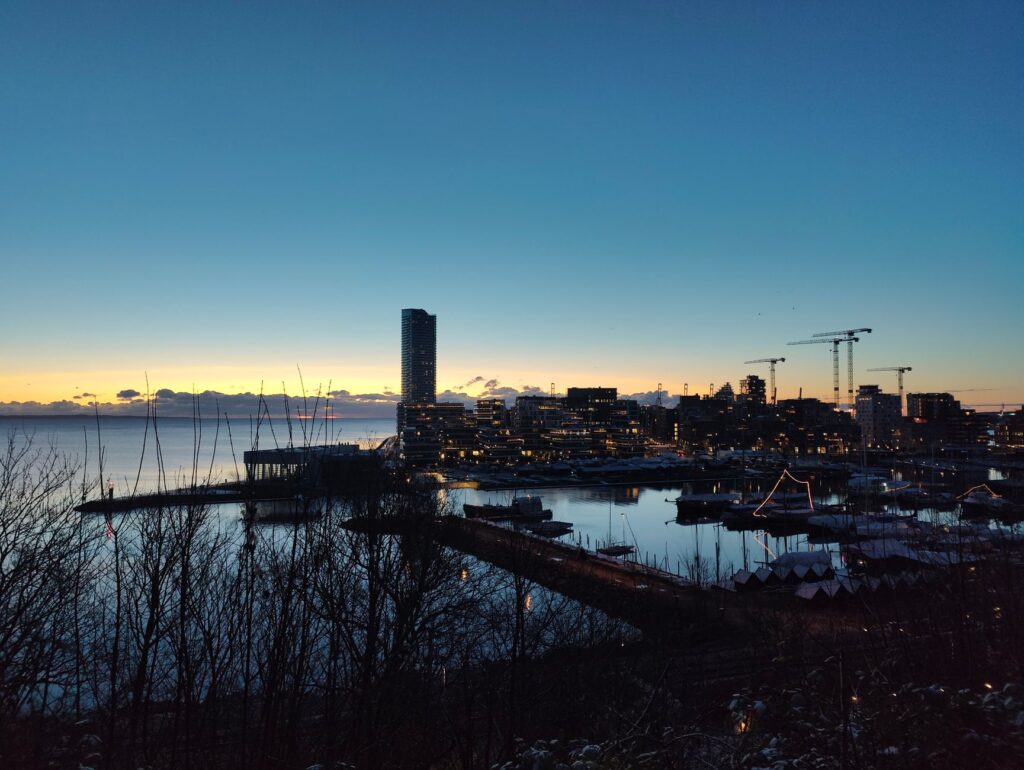
Beyond terrestrial limits, the coast of Aarhus and the waters of its bay face significant environmental pressures arising from port activity, historical fishing, and agricultural nutrient runoff originating from the interior of Jutland. To counteract eutrophication and the loss of eelgrass meadows (Zostera marina), considered authentic underwater lungs, regional authorities collaborate with oceanographic institutes on marine ecological restoration programs.
These initiatives include the installation of artificial reefs built with biocompatible materials and the strict regulation of fishing gear in nursery zones for commercial and protected species. Likewise, educational programs are promoted for recreational boaters and sport fishers, fostering good practices that minimize disturbance to the seabed. The health of the Bay of Aarhus is measured not only in terms of physical-chemical water quality but also by the gradual return of stable populations of harbor porpoises and seabirds using the coastline as a migratory stopover.
Energy Transition and Municipal Footprint Reduction
The environmental commitment of Aarhus also extends to the fields of energy and waste management, fundamental pillars for mitigating greenhouse gas emissions at the local scale. The municipality has set ambitious targets to achieve climate neutrality, promoting the modernization of its district heating network through the use of renewable sources, sustainable forest biomass sourced from the region’s managed forests, and low-enthalpy geothermal energy.
blockquote>The transition toward a sustainable energy model requires rethinking material and heat flows at the metropolitan scale, turning waste into resources within a truly circular economy.
Municipal buildings and public transport fleets are undergoing a gradual electrification process, supported by a charging infrastructure fed largely by onshore and offshore wind farms located near the Danish coast. These measures are complemented by awareness campaigns aimed at the commercial and residential sectors to optimize energy consumption and encourage source separation of municipal solid waste, drastically reducing the volume destined for incineration or landfill.
Architectural Heritage and Landscape Integration
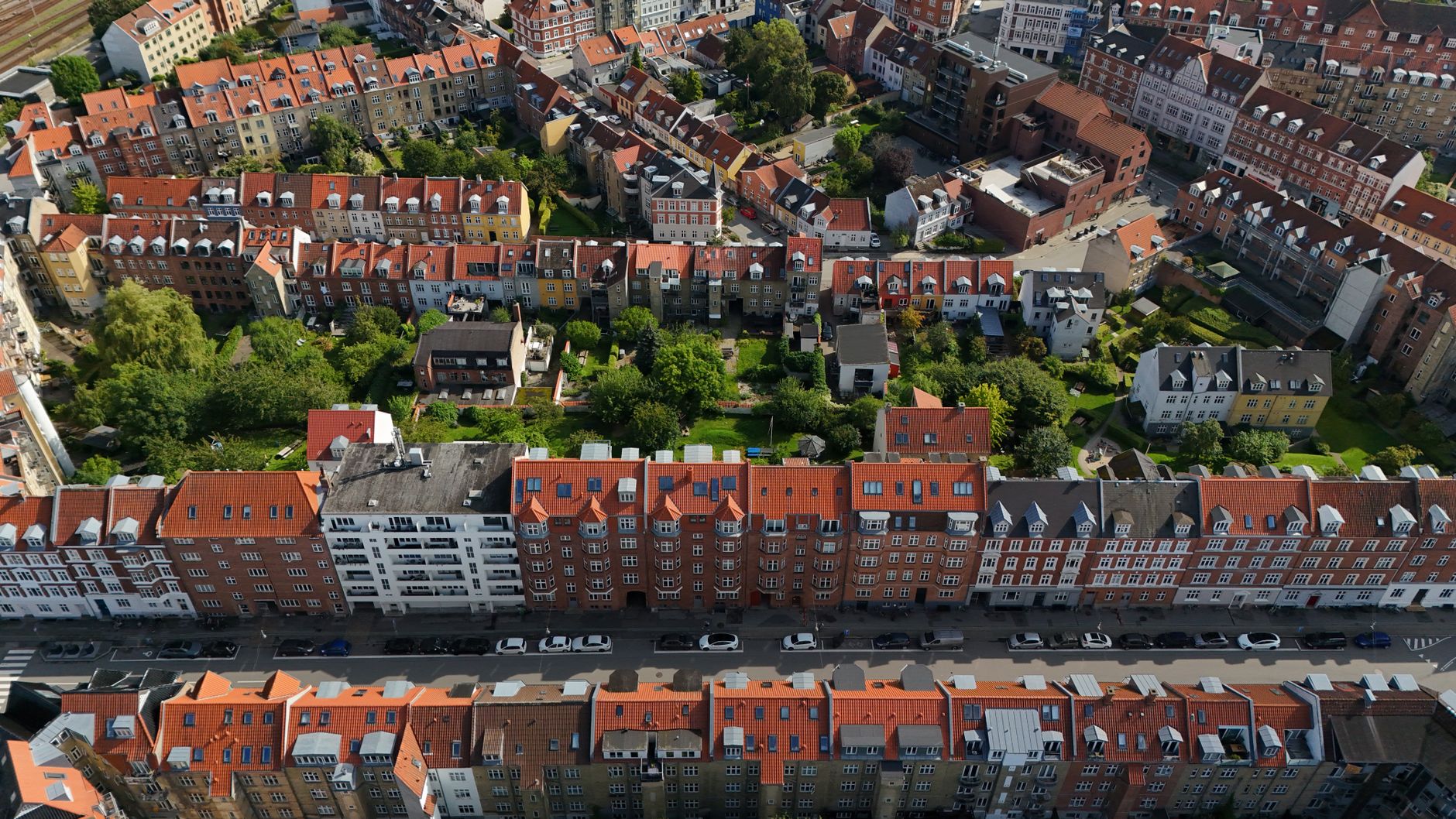
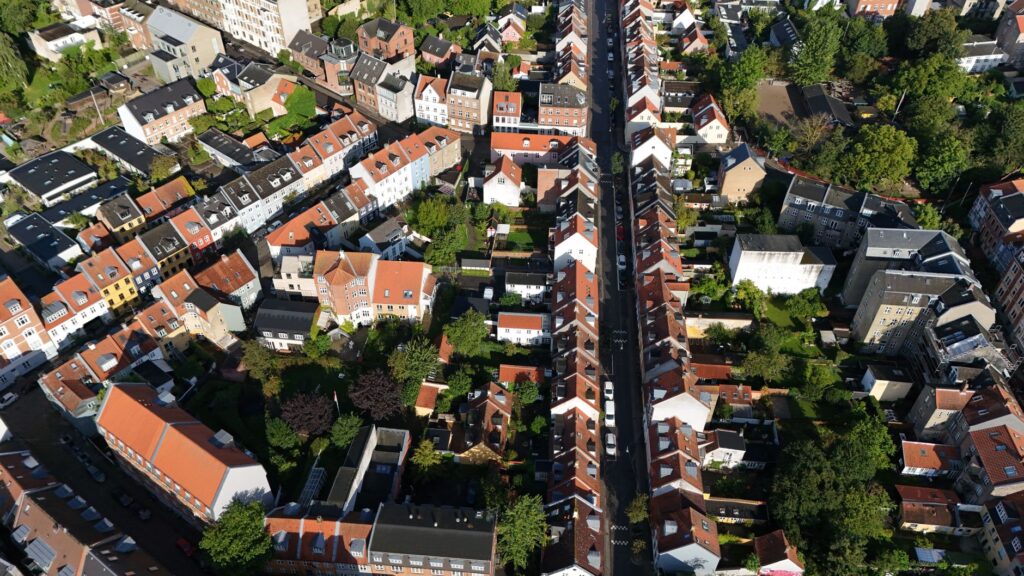
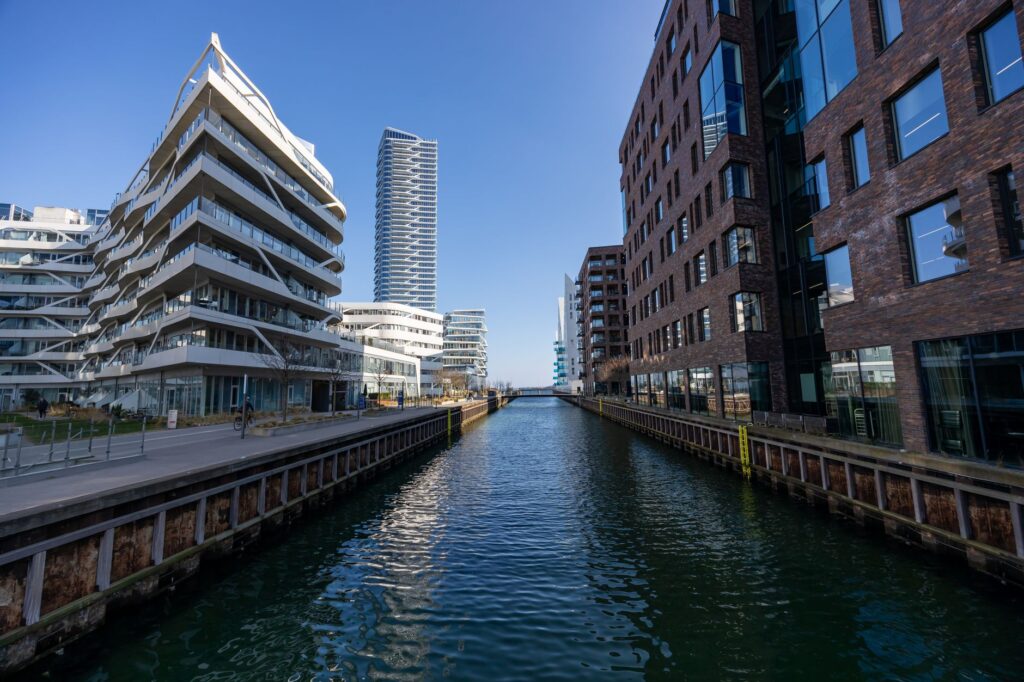
The contemporary urban development of Aarhus demonstrates that demographic density and the protection of historical heritage do not need to conflict with sustainability criteria. Disused industrial areas, such as the old port zones of Aarhus Ø, have been transformed into new residential neighborhoods where bioclimatic architecture, high energy efficiency standards, and the design of accessible public spaces prioritize resident well-being and visual integration with the sea.
Local architects and urban planners prioritize the use of locally sourced and recycled materials, such as certified timber and traditional Danish brick, reducing the carbon footprint associated with the transport of construction supplies. These new enclaves incorporate green roofs, rainwater harvesting systems, and extensive pedestrian zones that discourage private car use, consolidating a compact and polycentric city model where daily trips are resolved on foot, by bicycle, or through an efficient and electrified public transport network.
Practical guide
How to get there: Aarhus Airport (AAR) connects with several European destinations, though most international travelers arrive via Copenhagen Airport and continue their journey by direct train (approximately three hours) or long-distance bus networks.
When to visit: Spring and summer months (May to August) offer optimal weather conditions for exploring natural spaces and urban forests on foot or by bicycle, with extended daylight hours.
Getting around: Aarhus features an excellent network of cycle lanes and an integrated public transport system including city buses and light rail (Aarhus Letbane). The historic center is pedestrianized and highly accessible.
Accommodation: Choosing establishments certified with official ecolabels (such as the EU Ecolabel or Green Key certificate) located in both the center and peripheral residential areas is recommended.
Good practices: Respect signage in nature reserves and protected forests, avoid littering outside designated containers, and maintain a safe distance from local wildlife.
Final Reflection on Territorial Balance
The experience of Aarhus illustrates the complexity and urgency of rethinking the relationship between human settlements and the ecosystems that sustain them. Through the combination of scientific rigor, community participation, and long-term planning, this city on the Jutland Peninsula demonstrates that it is possible to transition toward development models more respectful of the natural environment without sacrificing social and economic dynamism. The future of these territories will depend on their capacity to keep communication channels open between science, administration, and citizens, ensuring that every decision preserves resource integrity for future generations.