
Introduction to the Roof of the Giants
In the southern heart of Norway rises a territory where Norse mythology and extreme geomorphology converge under a single mantle of rock and ice: Jotunheimen, the home of the giants. This mountainous massif, which concentrates the highest peaks in northern Europe outside the Caucasus and the Alps, is not merely a repertoire of rugged peaks and hanging valleys, but an open-air geological archive where every ridge and moraine holds the memory of the planet’s grand climatic cycles. Far from the overcrowding of traditional alpine destinations, this national park represents a high-mountain sanctuary where long-distance trekking intertwines with rigorous environmental management, becoming a living laboratory to study the resilience of boreal ecosystems.
The park’s boundaries, formally established in 1980 although protected in their core areas for decades prior, encompass more than fifteen hundred square kilometers of rolling plateaus, gorges carved by the ancient action of water, and glaciers clinging tenaciously to northern slopes. Here, the scale of the landscape imposes a logic of absolute respect. The traveler who ventures along its routes does not seek speed or artifice, but a deep understanding of an environment where plant and animal survival depends on extraordinary evolutionary adaptations against relentless winters and fleeting summers.
Geological Origins: The Imprint of the Caledonian Orogeny
To understand the current topography of Jotunheimen, it is necessary to travel back hundreds of millions of years, to the Silurian and Devonian periods, when the collision between the ancient continents of Baltica and Laurentia gave rise to the Caledonian orogeny. This titanic tectonic clash lifted mountain ranges comparable in magnitude to the current Himalayas. What we observe today in Jotunheimen is the deep basement of that ancient mountain chain, subsequently exhumed and sculpted by fluvial erosion and, decisively, by the successive glaciations of the Quaternary.
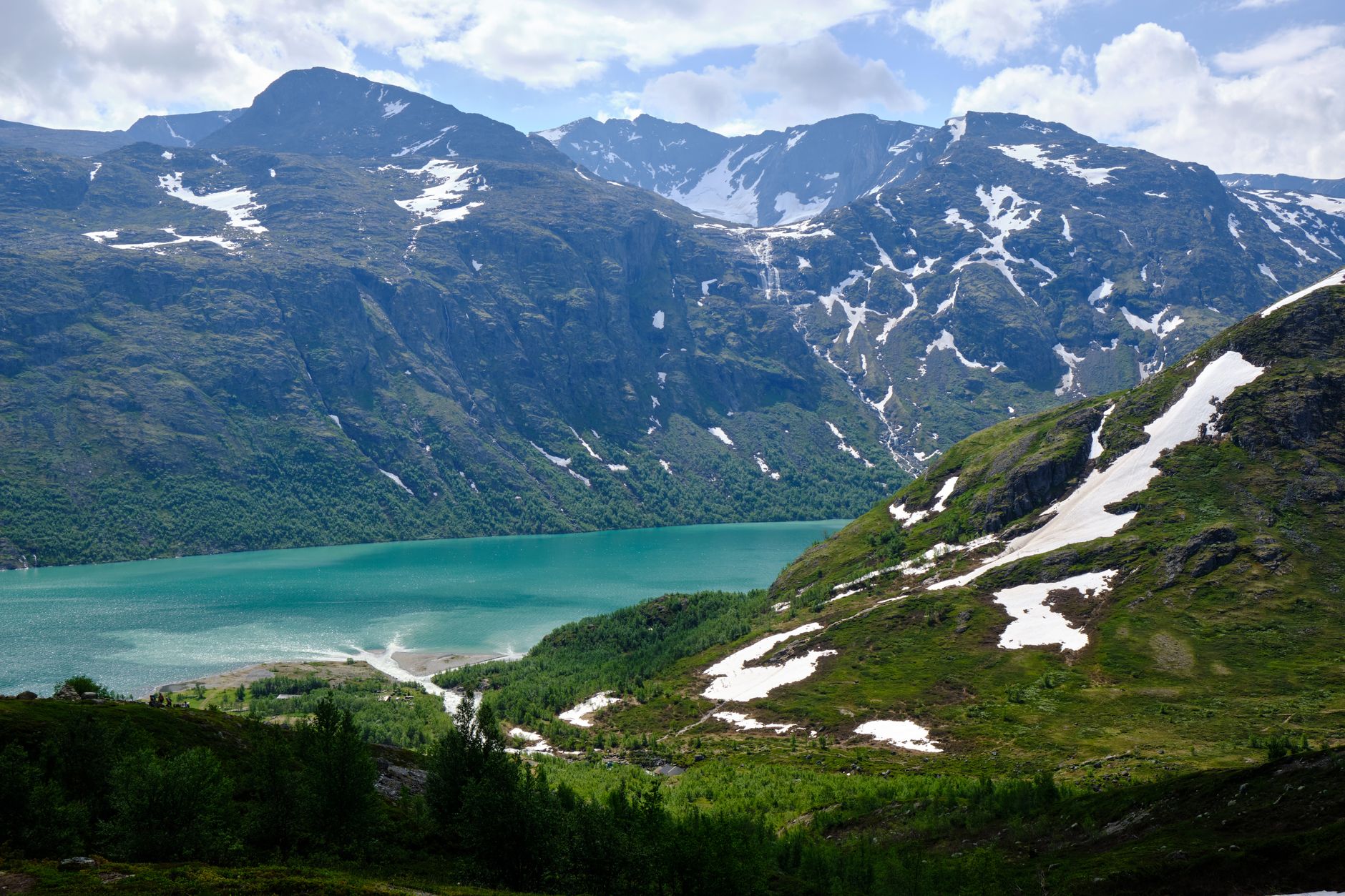
Unlike other calcareous regions where karstic forms predominate, the substrate of Jotunheimen is dominated by exceptionally resistant igneous and metamorphic rocks, such as gabbro and anorthosite. These rock formations explain the dark and severe tone of emblematic summits like Galdhøpiggen, the country’s highest point at two thousand four hundred and sixty-nine meters above sea level, and Glittertind, its eternal rival. The hardness of these minerals has allowed the peaks to maintain their altitude against meteorological abrasion, while the U-shaped valleys, traversed by milky torrents laden with glacial flour, bear witness to the colossal passage of ice tongues.
Glaciology and Climate Change in Northern Scandinavia
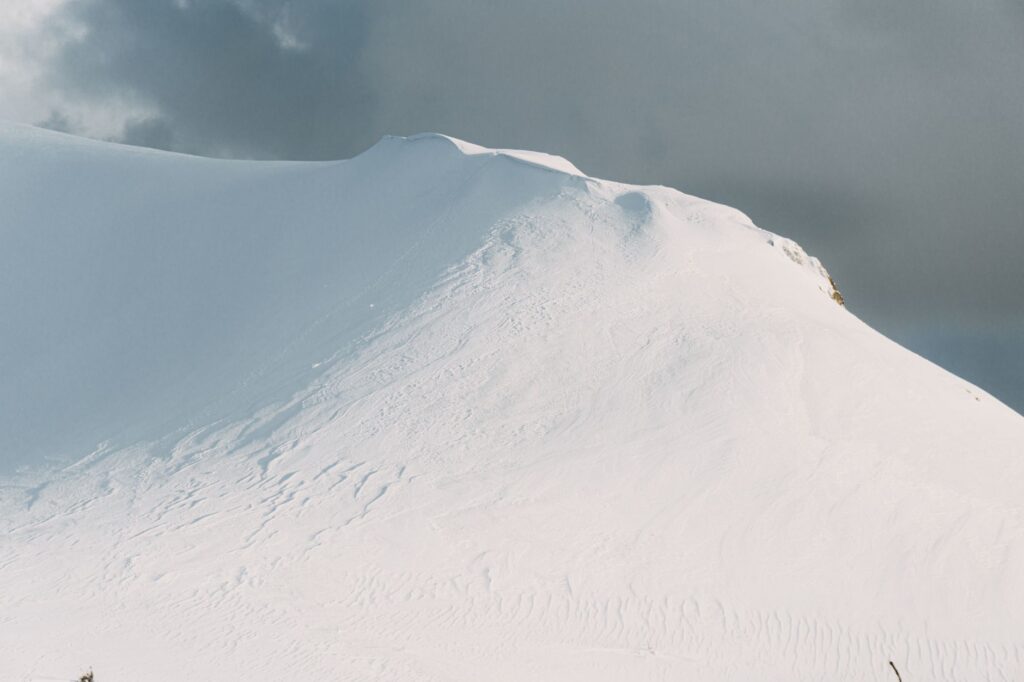
The glaciers of Jotunheimen are the most sensitive thermometers of climatic variations in northern Europe. Iconic tongues like Styggedalsbreen or Bøverbreen are not static relics, but masses in constant dynamic movement of accumulation and ablation. However, scientific records accumulated over the past three decades show a concerning trend toward generalized recession, a phenomenon driven by rising summer temperatures and reduced winter solid precipitation.
Glaciological monitoring in this region, coordinated by Norwegian research institutions, provides crucial data for understanding the global mass balance. When ice retreats, it exposes front and lateral moraines devoid of vegetation, initiating a slow process of primary ecological succession. This dynamism exposes the fragility of the local hydrological cycle, as meltwater feeds major river systems and surrounding fjords, regulating marine salinity and temperature on Norway’s western coasts.
The Alpine Tundra: Biodiversity and Survival Strategies
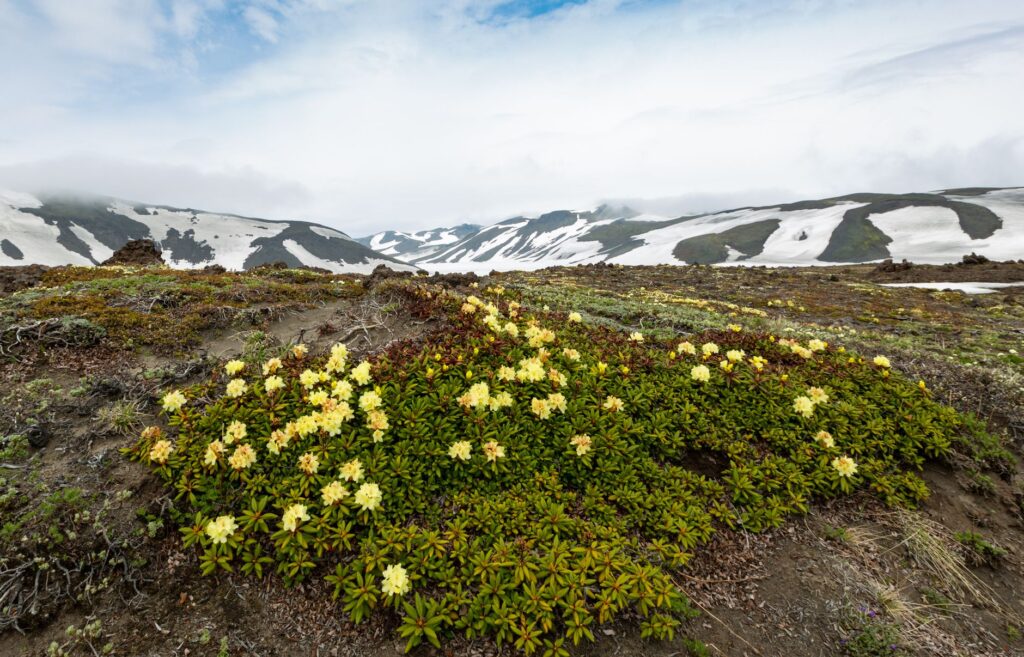
Above the timberline, traditionally dominated by dwarf birch and artistic willows, extends the alpine tundra of Jotunheimen. This seemingly austere habitat hosts a rich community of flora adapted to hurricane-force winds, poor soils, and a growing season barely exceeding ten weeks. Species such as the glacier buttercup, capable of flowering even among persistent snowdrifts through cellular thermogenesis processes, and various varieties of crustose lichens carpet the rocks, fixing the first organic nutrients in the mineral substrate.
The mountain does not yield its secrets easily; it demands of the traveler a patient attention and a profound understanding that every stone stepped upon forms part of a fragile millenary balance.
The region’s fauna is equally specialized. The wild mountain reindeer, Rangifer tarandus tarandus, finds in these open plateaus its last truly wild strongholds in Western Europe. These animals undertake seasonal migrations between summer pastures in the high zones and sheltered valleys during winter. The conservation of their migratory corridors is one of the greatest management challenges for park authorities, as habitat fragmentation induced by tourism infrastructure threatens the genetic viability of native populations.
History of Hiking and the Mountain Hut Network
The modern exploration of Jotunheimen is intimately linked to the founding of the Norwegian Trekking Association, the DNT, in the late nineteenth century. Alpinists and scientists responded to the aesthetic call of national Romanticism, mapping peaks and establishing the foundations of a culture of friluftsliv, the Norwegian concept of outdoor life that values respectful contact with nature above material comfort.
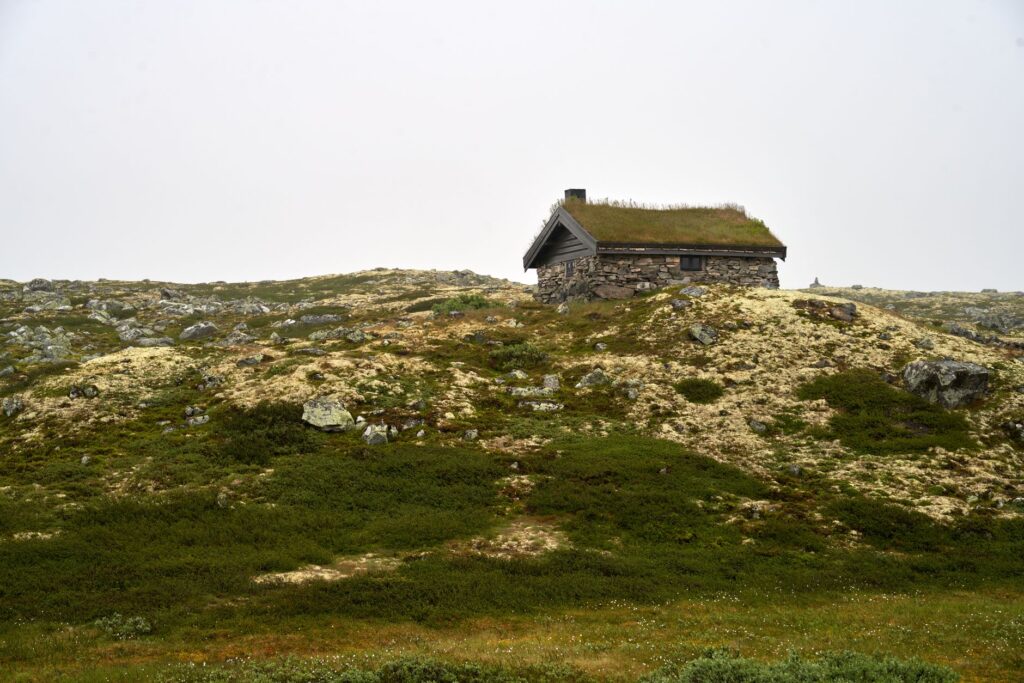
Today, this philosophy materializes in an exemplary network of staffed lodges and self-service cabins strategically distributed along main routes, such as the classic traverse between Gjendesheim and Fondsbu. These accommodations do not seek hotel luxury, but rather to offer safe shelter, wood stoves, basic food supplies, and a temporary community based on mountaineering camaraderie. The maintenance of these infrastructures under strict criteria of energy sustainability and waste management is an international reference model for protected wilderness areas.
The Classic Trail: Besseggen and Landscape Aesthetics
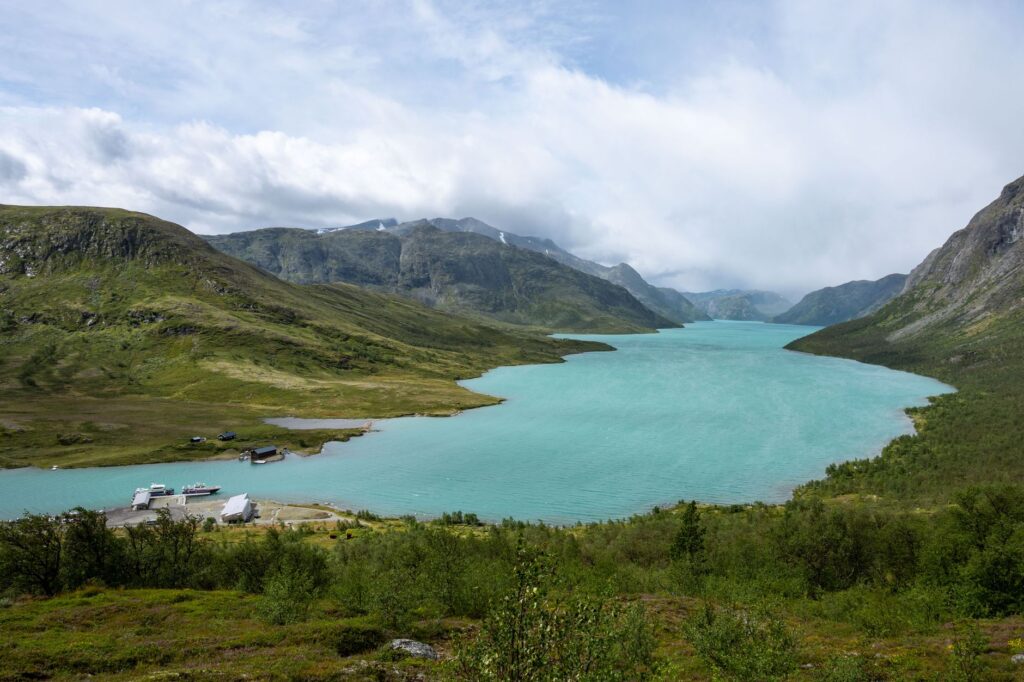
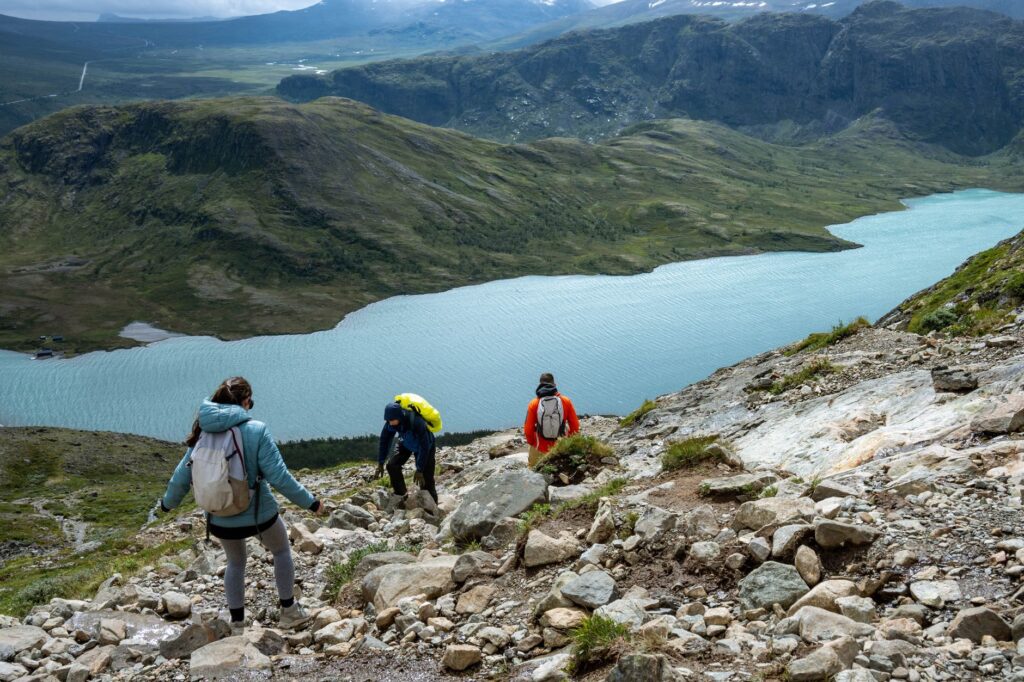
Among all the park’s routes, the Besseggen ridge occupies a mythological place in the Norwegian collective imagination. This narrow rocky edge rises dramatically between two lakes of unparalleled chromatic contrast: Lake Gjende, of a deep emerald green due to suspended glacial sediments, and Lake Bessvatnet, of an intense and crystalline blue located several hundred meters higher.
Walking Besseggen requires caution and adequate physical preparation, especially in sections where the trail requires using hands in simple scrambles over firm rock. The influx of visitors during peak summer months has forced the implementation of measures to channel the flow of hikers to prevent slope erosion and the degradation of fragile organic soil. Park rangers constantly monitor the condition of trails, promoting awareness campaigns on Leave No Trace principles.
Environmental Management and the Challenge of Sustainable Tourism
The balance between strict biodiversity conservation and the public right of access to nature—enshrined in Norwegian legislation under the principle of Allemannsretten—constitutes a permanent challenge in Jotunheimen. Unlike fenced national parks in other parts of the world, access here is free, which transfers a great ethical responsibility to every visitor.
Current management strategies focus on intelligent tourism dispersion by promoting alternative, less saturated routes, limiting the visual impact of transport infrastructure, and supporting traditional traditional sheep farming, whose controlled grazing helps maintain open pastures and prevents the shrub encroachment derived from global warming. Collaboration between scientists, local communities, and tourism operators is the pillar upon which the long-term preservation of this unique landscape rests.
Practical Information for the Responsible Traveler
Planning an expedition to Jotunheimen requires meteorological rigor and precise logistics. The optimal season for high-route trekking extends from early July to mid-September, when most winter snow has melted in the main valleys and staffed lodges are open.
- Getting There: The main access is by road from Oslo or Bergen to strategic starting points such as Lom, Gjendesheim, or Tyin. Regular long-distance bus connections operate during the summer season, linking the main gateways to the park.
- Accommodation: Advance booking is essential at staffed DNT lodges. For unstaffed cabins, having the standard DNT key and honestly registering overnight stays and food consumption is necessary.
- Equipment: The weather in Jotunheimen is extremely fickle; technical layered clothing, high-quality waterproof and windproof membranes, mountain footwear with high-traction soles, printed topographic map, and compass must be carried, as sudden fog can reduce visibility to zero.
- Safety: Mobile communications are not guaranteed in all valleys. It is recommended to always inform lodge staff of the planned route and check local weather forecasts before starting any high-mountain stage.
Epilogue: The Permanence of Rock and Ice
Jotunheimen remains an eloquent reminder of geological scale that transcends ephemeral human existence. In its wind-swept summits and valleys silenced by immensity, time seems to acquire another density. Visiting this roof of Norway is not merely an exercise in alpine leisure, but a reflective immersion into the fundamental dynamics of the planet, an invitation to contemplate the austere beauty of a world where nature still retains its sovereign and unaltered voice.
Preserving the integrity of Jotunheimen is not merely about protecting a natural habitat, but about safeguarding our own capacity for wonder in the face of Earth’s untamed grandeur.