
Arusha sits in northern Tanzania at around 1,400 metres above sea level, and its name comes up in almost any conversation about safaris. Yet the city is far more than a gateway: it has a market that supplies much of the region, an administrative history visible in its buildings, and a daily life organised between the nearby mountain and the roads that connect it to the rest of the country.
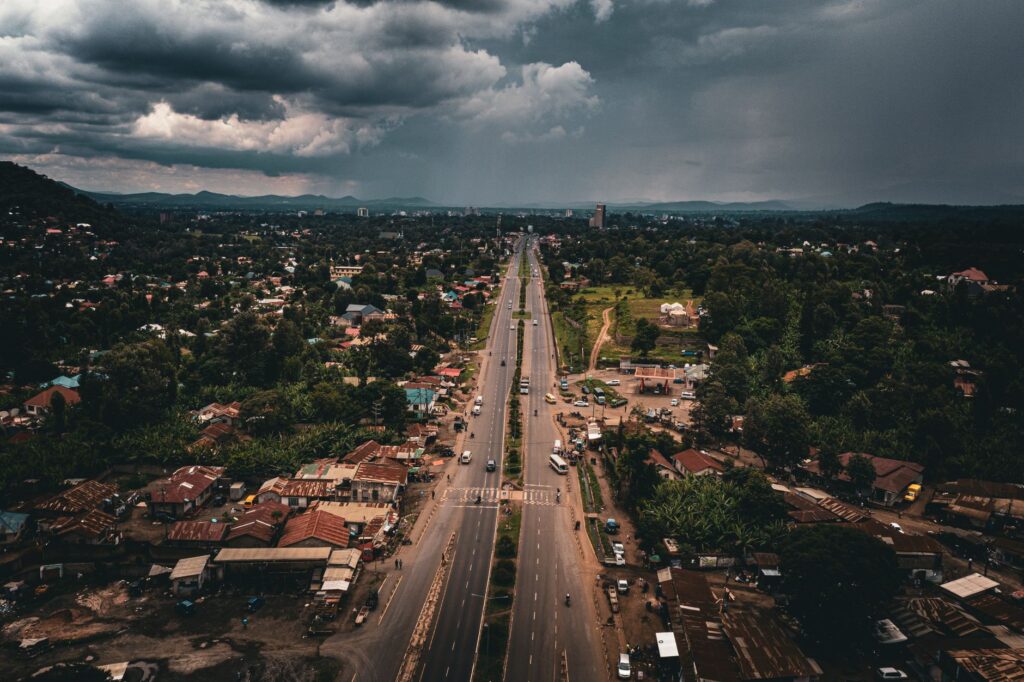
This report looks at Arusha for what it is: a mid-sized Tanzanian city with irregular streets, a centre where offices, shops and street stalls mix, and a relationship with the natural environment that shapes both its economy and its everyday life. There is no luxury itinerary here, but an invitation to understand how a place that many visit in passing actually works.
A city best understood from its market
The central market is the best starting point for understanding Arusha. It is not just a place to buy fruit and vegetables: it is a space where growers from nearby rural areas, neighbourhood traders and buyers from across the region meet. Activity starts early and is organised into aisles, with a logic that takes a while for a visitor to decipher.
The produce reflects the climate and geography of the surroundings: bananas, tomatoes, onions, avocados and a range of leafy greens that changes with the season. There are also stalls selling spices and grains, and an area for kitchen utensils and household goods. Walking through without rushing, and with respect for the people working there, makes it clear that Arusha does not live on tourism alone: its everyday economy rests on trade and on farming in the surrounding area.

The historic centre and its administrative imprint
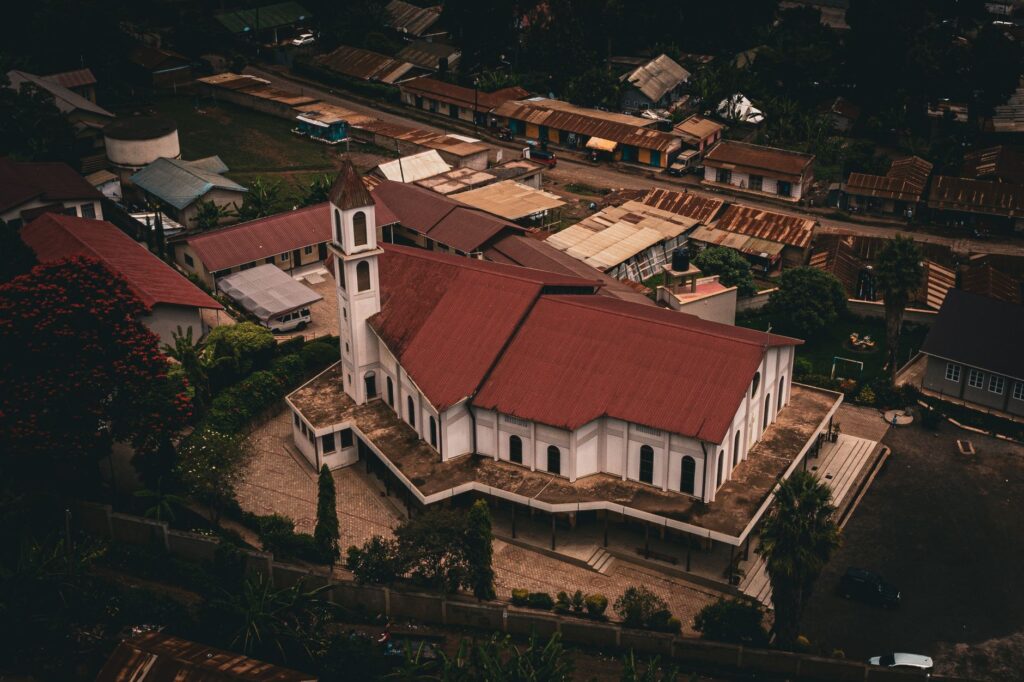
Arusha’s centre keeps buildings that recall its role as the administrative seat of northern Tanzania. Some colonial-era structures are still in use, adapted for public or commercial purposes, while others have been replaced by newer buildings. Walking the streets near the administrative area reveals the mix of styles and periods that characterises many mid-sized African cities.
The city’s history is tied to its strategic position between the coast and the interior, and to its role as a service centre for rural areas and the protected zones of the north. That function explains the presence of offices, hotels and shops aimed at both residents and visitors. For the traveller, the interest lies not in searching for a grand monument but in observing how the city has grown around those functions without entirely losing its human scale.
Arusha is not explored like a museum: it is understood as a place of work and exchange, where visitors must adjust their pace to the city’s own.
The mountain as a daily reference
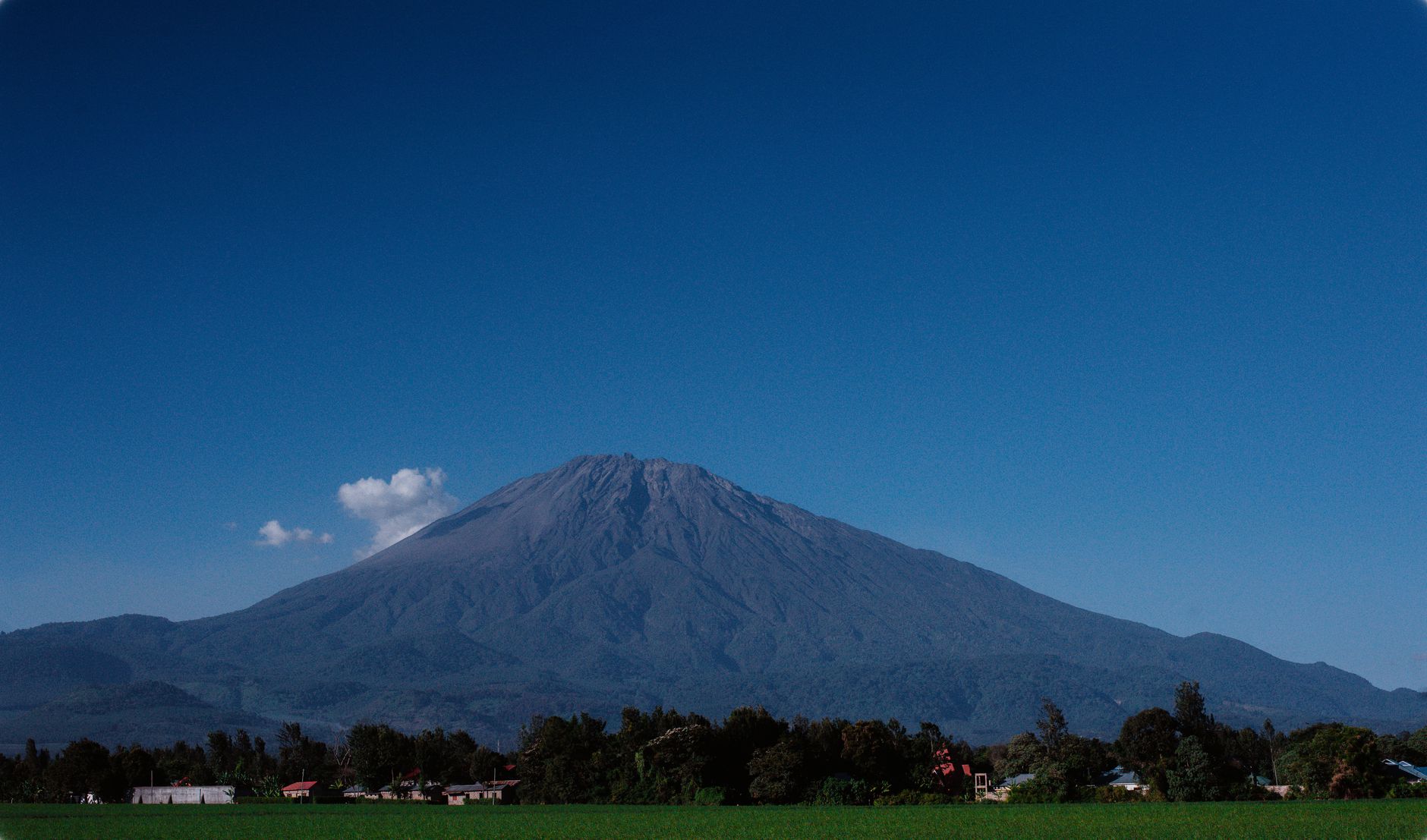
On clear days, Mount Meru rises above the city’s skyline. This is no small detail: the mountain is part of the mental landscape of residents and of the identity of the place. Many have climbed its lower slopes at some point, and the routes leading towards it are also paths of farm work and supply.
For visitors, the mountain offers a different perspective on Arusha: that of a city surrounded by highlands and small rural settlements that depend on them. Walking in the surrounding area, always with local guides and respecting access rules, helps explain the relationship between the city and its environment. This is not a high-mountain expedition but a way of reading the territory.

Neighbourhoods, streets and everyday life
Beyond the centre, Arusha is organised into neighbourhoods with their own character. Some have paved streets and newly built houses; others keep a more irregular layout and an intense neighbourly life, with small shops, workshops and food stalls. The city is expanding outwards at a pace that reflects population growth and the arrival of people from rural areas.
Exploring those neighbourhoods takes time and a willingness to walk without a fixed goal. Street names are not always visible, and orientation depends more on local references than on a map. That way of moving, which can feel awkward at first, is also a way of coming into contact with daily life: minibus transport, conversations at stops and the movement of neighbourhood markets.
Cultural heritage and local memory
Arusha has spaces dedicated to memory and culture, such as the National Museum of Natural History, which holds collections of scientific and educational interest, and the monument commemorating the signing of the 1960s agreements, a significant episode in the region’s political history. These are not major tourist attractions, but they offer context and help explain the city’s role in the country’s history.
There are also galleries and art workshops, especially on the outskirts of the city, where wood carving and painting are practised. Some of these spaces are aimed at visitors, but others are part of the local economy. Buying directly, without intermediaries and at agreed prices, is a way of supporting that work and taking home a piece with a story.
Eating, moving and deciding with care
Arusha’s food is based on fresh produce and simple recipes: rice, beans, vegetables, grilled meat and cooked bananas. Food stalls and small neighbourhood restaurants serve generous portions at affordable prices. For visitors, the advice is to choose places with a good turnover of customers and, if you have a sensitive stomach, to avoid raw food that cannot be peeled.
Urban transport is built around minibuses and motorcycle taxis, which run fixed routes and allow low-cost movement. For longer distances, there are taxis and ride-hailing services. It is important to agree the price before getting in and to keep in mind that timings can vary with traffic and demand. Walking is possible in the centre but requires attention to traffic and uneven pavements.
The best way to get to know Arusha is to accept that the city is not designed for the hurried tourist: it reveals itself to those who walk, ask and wait.
Responsible choices: water, waste and respect
As in many cities in the region, access to drinking water and waste management are sensitive issues. Visitors can contribute with simple decisions: carry a reusable bottle and refill it in safe places, avoid excessive single-use plastics and do not leave litter in public spaces. It is also advisable to learn about local rules before photographing people or places, and to ask permission when necessary.
Tourism in Arusha is closely tied to safaris and the protected areas of the north. To make that activity sustainable, choose operators that respect conservation rules, employ local guides and do not promote interactions with wild animals outside established circuits. That choice, repeated by many visitors, has a direct effect on the economy and the environment.
Practical guide
When to go: Arusha has a temperate climate thanks to its altitude. Dry seasons are usually more comfortable for walking and outdoor activities, although the city can be visited year-round. Check the forecast before travelling and bring layers.

Getting there: The city has a regional airport with connections to other parts of Tanzania and limited international flights. It can also be reached by road from other cities in the country. To move around the city, minibuses and motorcycle taxis are the cheapest options.
Where to stay: There are options for different budgets, from simple accommodation in the centre to larger hotels on the outskirts. Choosing a place near transport routes makes getting around easier.
What to bring: Comfortable shoes, sun protection, insect repellent and a reusable bottle. If you plan excursions, bring warm clothing for mornings and evenings.
Language and currency: Swahili and English are the most widely used languages in urban settings. The local currency is the Tanzanian shilling, and it is advisable to carry cash for markets and small shops.
Safety and respect: As in any city, it is wise to learn about areas to avoid and to keep the usual precautions. Respect for local customs and for people’s work is an essential part of the experience.
A city worth a second look
Arusha does not try to seduce with grand monuments or a perfect postcard. Its interest lies in the mix of functions, the coexistence of urban and rural, and a daily life sustained by trade, farming and the work of its residents. For travellers willing to pause, the city offers a lesson in scale and rhythm: the chance to understand a place without reducing it to its role as a gateway.
At the end of the day, when the market empties and the streets recover a quieter pulse, Arusha shows itself as it is: a Tanzanian city that works, remembers and keeps growing. Taking away that image, rather than a photograph, is perhaps the best way of having been there.