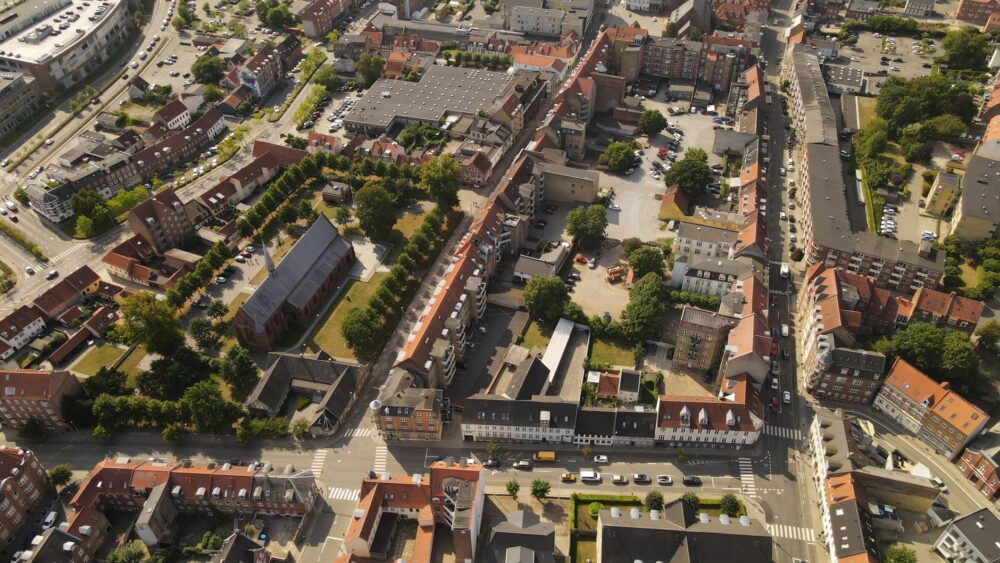

Leeds does not give itself away at first glance. Anyone arriving from the railway station is met with a wide square, trams that no longer run and a succession of commercial buildings that seem to tell a different story from the one you might expect. But walk a few minutes north, cross City Square and step into the streets around Kirkgate Market, and you discover that beneath the appearance of a northern English financial centre lies a city made of layers: dark brick and pale stone, warehouses turned into offices, and passages that still carry the echo of loaded carts.
Leeds, in the United Kingdom, is England’s third-largest city by population and the administrative centre of West Yorkshire. Yet reducing it to a number would be a mistake. Its identity is built on the tension between what it was — a textile and commercial hub that supplied the world — and what it is today: a city that attracts investment, students and visitors without entirely abandoning its neighbourhood markets, its old pubs and its cobbled streets that resist the passage of time.
A city that grew around its market
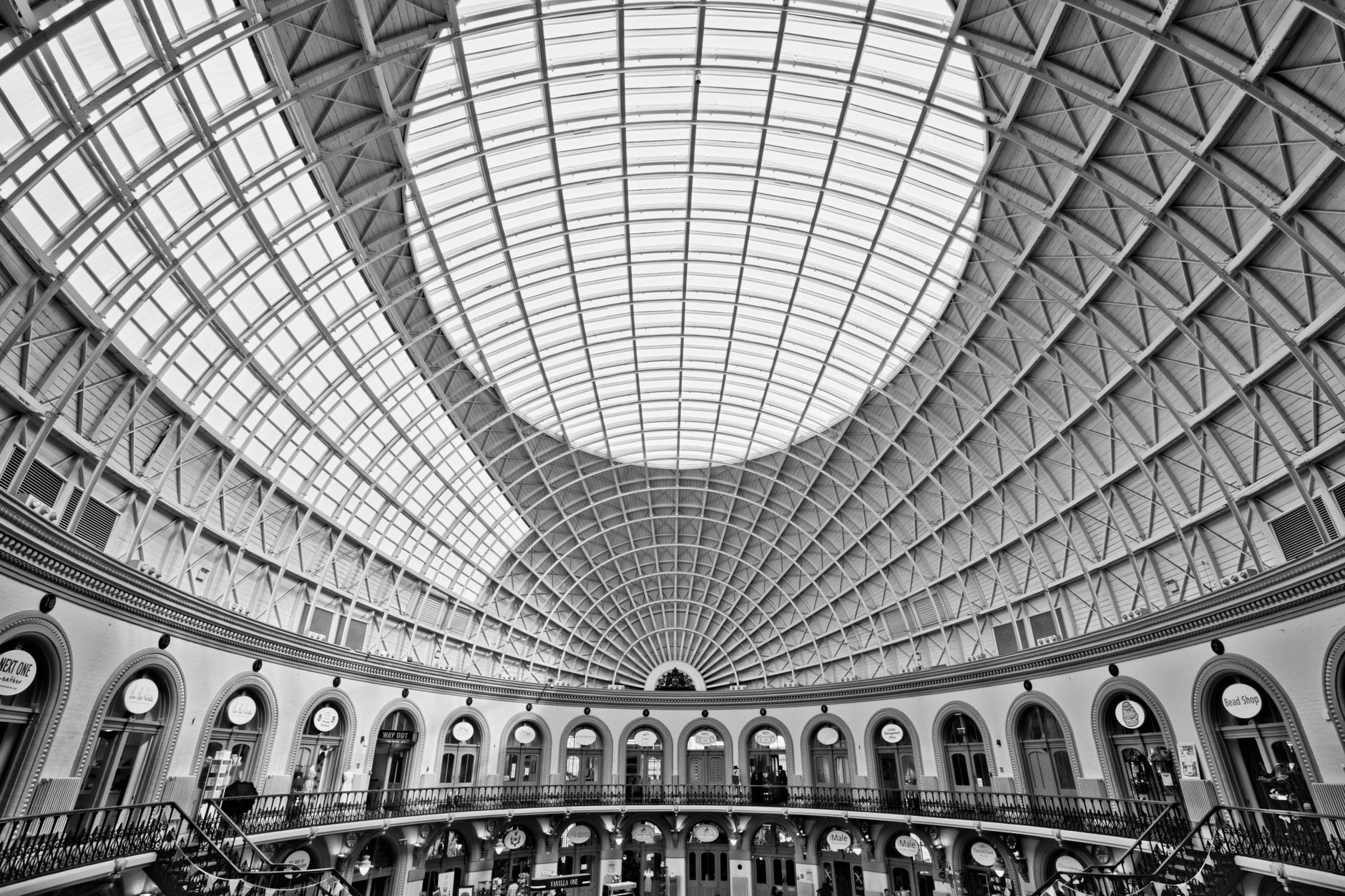
Kirkgate Market, in the centre of Leeds, is one of those places that explain a city better than any museum. Open since the Middle Ages, it occupies a Victorian building of iron and glass that still holds stalls selling fruit, fish, cheese and flowers. This is not a tourist market: it is a real one, where locals do their shopping and traders call out to passers-by. Its existence reminds us that Leeds was not born as a financial centre, but as a meeting point for farmers and merchants coming down from the Yorkshire valleys to sell their produce.
A few metres away, the fish market and the vegetable market complete a circuit that has been running since early morning for centuries. Anyone who wants to understand the city should start here. There are no explanatory signs or audio guides, but there are conversations, smells and a routine that has repeated itself for generations.

Leeds is not explained by its skyscrapers, but by the stalls of a market that still opens every morning.
The neighbourhood that turned warehouses into homes
South of the centre, between the River Aire and the Leeds and Liverpool Canal, lies one of the city’s most interesting districts: Holbeck Urban Village. Here, the old warehouses and textile mills of the 19th century have been transformed into offices, design studios and apartments. The result is a hybrid landscape, where red brick and chimneys coexist with modern windows and glass terraces.
This is not a museumified neighbourhood: people live, work and drink coffee on its corners. The conversion began in the late 20th century and continues today, with varying degrees of success. Some buildings retain plaques recalling their original function; others have lost any trace of their industrial past. Visitors can walk it in under an hour, but it is worth pausing over the details: initials carved into walls, loading doors now serving as office entrances, iron bridges crossing the canal.
Arcades, passages and an architecture that does not give up
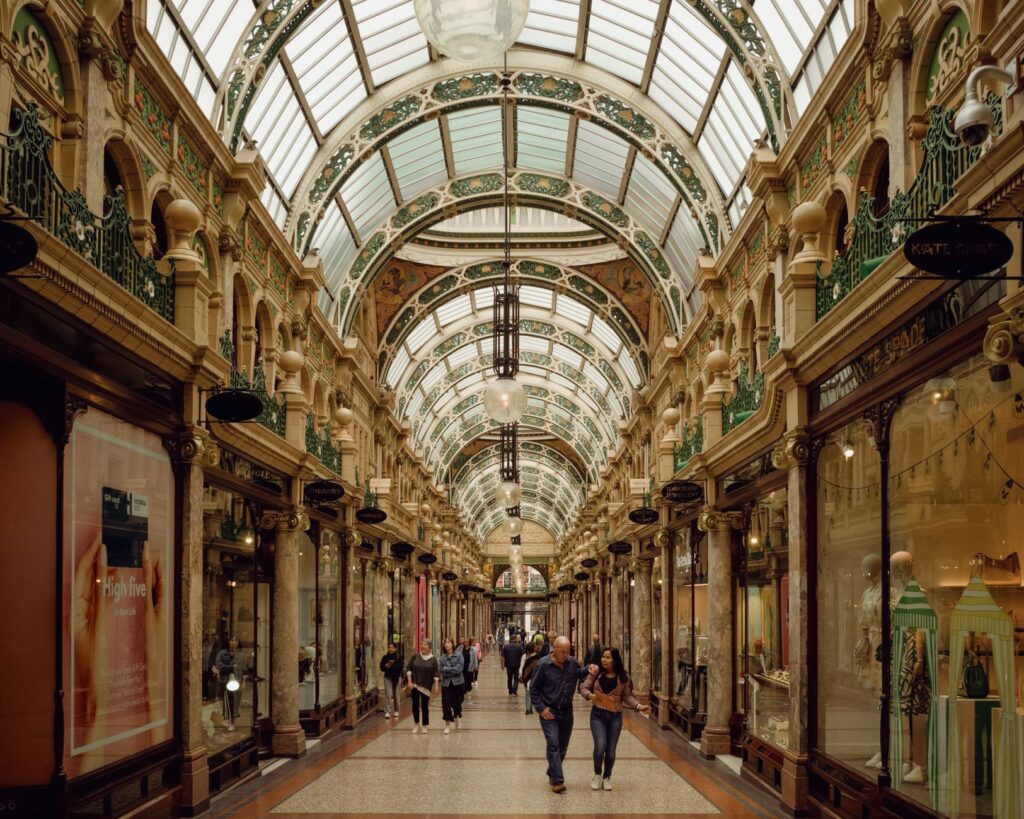
Central Leeds is a maze of arcades and covered passages connecting main streets with side alleys. The best known is the County Arcade, built in the late 19th century and restored in the 1990s. Its interior, with marble floors, glass domes and wrought-iron balconies, evokes the commercial splendour of the Victorian era. But it is not a frozen space: it houses clothing shops, jewellers and cafés that attract both locals and visitors.

Other arcades, such as the Grand Arcade or the Queen’s Arcade, offer a similar experience with fewer crowds. Walking through them is a way to understand how Leeds wanted to present itself to the world: as a modern, elegant city capable of competing with London or Manchester. That ambition is still present in today’s skyline, where cranes and scaffolding are part of the everyday landscape.
The museum that keeps the memory of work alive
For anyone wanting to dig deeper into Leeds’s industrial history, the Leeds Industrial Museum at Armley Mills is an essential stop. Housed in what was the world’s largest woollen mill in the 18th century, the museum preserves textile machinery, workshops and exhibitions on the lives of workers. It is not a large or spectacular place, but it is rigorous and well documented.
The visit helps explain the impact industrialisation had on the city: the arrival of workers from across England and Ireland, the construction of canals and railways, the growth of working-class districts such as Hunslet and Armley. Today those neighbourhoods are something else, but they retain churches, pubs and brick houses that speak of that past.
Eating, drinking and looking: life in pubs and cafés
Leeds has a pub and café culture that deserves attention. In the centre, Whitelock’s Ale House, in Turk’s Head Yard, is one of the city’s oldest pubs and retains a dark wood and mirror interior that invites you to stay. In the neighbourhoods, local pubs remain meeting places where Yorkshire beer is served and conversation flows without hurry.
The food scene has grown in recent years, with restaurants combining local produce and modern techniques. Kirkgate Market remains the best place to buy cheese, bread and charcuterie, but there are also specialist coffee shops and bakeries. For visitors, the advice is simple: avoid the chains and look for the small establishments, the ones that have been in the same spot for years and know their customers by name.
Parks, canals and a river that is centre stage again
The River Aire crosses Leeds from west to east and, after decades of industrial neglect, has recovered some of its prominence. The Leeds and Liverpool Canal, which links the city with Liverpool, offers a pleasant walk between locks, bridges and old warehouses. In summer, waterside terraces fill with people; in winter, the landscape is more austere but equally interesting.
North of the centre, Roundhay Park, one of the largest in Europe, offers a green breathing space with lakes, gardens and a miniature railway. It is not a tourist park but a space locals use daily for running, walking or taking the children. That blend of everyday use and scenic beauty is a constant in Leeds: the city does not separate what is for visiting from what is for living.

An identity built with bricks and decisions
Leeds is not a city stuck in its industrial past. Nor has it erased it. The tension between conservation and development is visible on every corner: historic buildings carefully restored, others demolished to make way for office towers, neighbourhoods gentrifying and others waiting their turn.
For the responsible visitor, the key is to look twice. Not to stop at the façade of the shopping centre or the main square. To enter the markets, walk the southern neighbourhoods, sit in a local pub and listen. Leeds does not offer easy answers, but it does offer a rich and complex urban experience, where heritage is not an ornament but an active part of everyday life.
The city that was once the workshop of the world is still working, but now with other materials: culture, education and memory.
Practical guide
- Getting there: Leeds has a well-connected railway station with London (approximately 2 hours 15 minutes), Manchester, York and other northern English cities. Leeds Bradford Airport is about 11 kilometres from the centre.
- When to go: Spring and autumn are the most pleasant seasons for walking. Summer can be busy but offers more outdoor activities. Winter is cold and dark, but pubs and museums compensate.
- What to see: Kirkgate Market, the city-centre arcades (County Arcade, Grand Arcade), Holbeck Urban Village, the Leeds Industrial Museum at Armley Mills and Roundhay Park.
- Where to eat: The stalls at Kirkgate Market for fresh produce; traditional pubs such as Whitelock’s Ale House; neighbourhood restaurants in Hunslet and Armley.
- Responsible tips: Shop at local businesses, avoid chains and respect market spaces. Public transport (buses and suburban trains) is a good option for getting around without a car.
Leeds is not a city that can be captured in a single visit. It is a place to discover by walking, looking and asking. And, like its markets, it opens every morning.