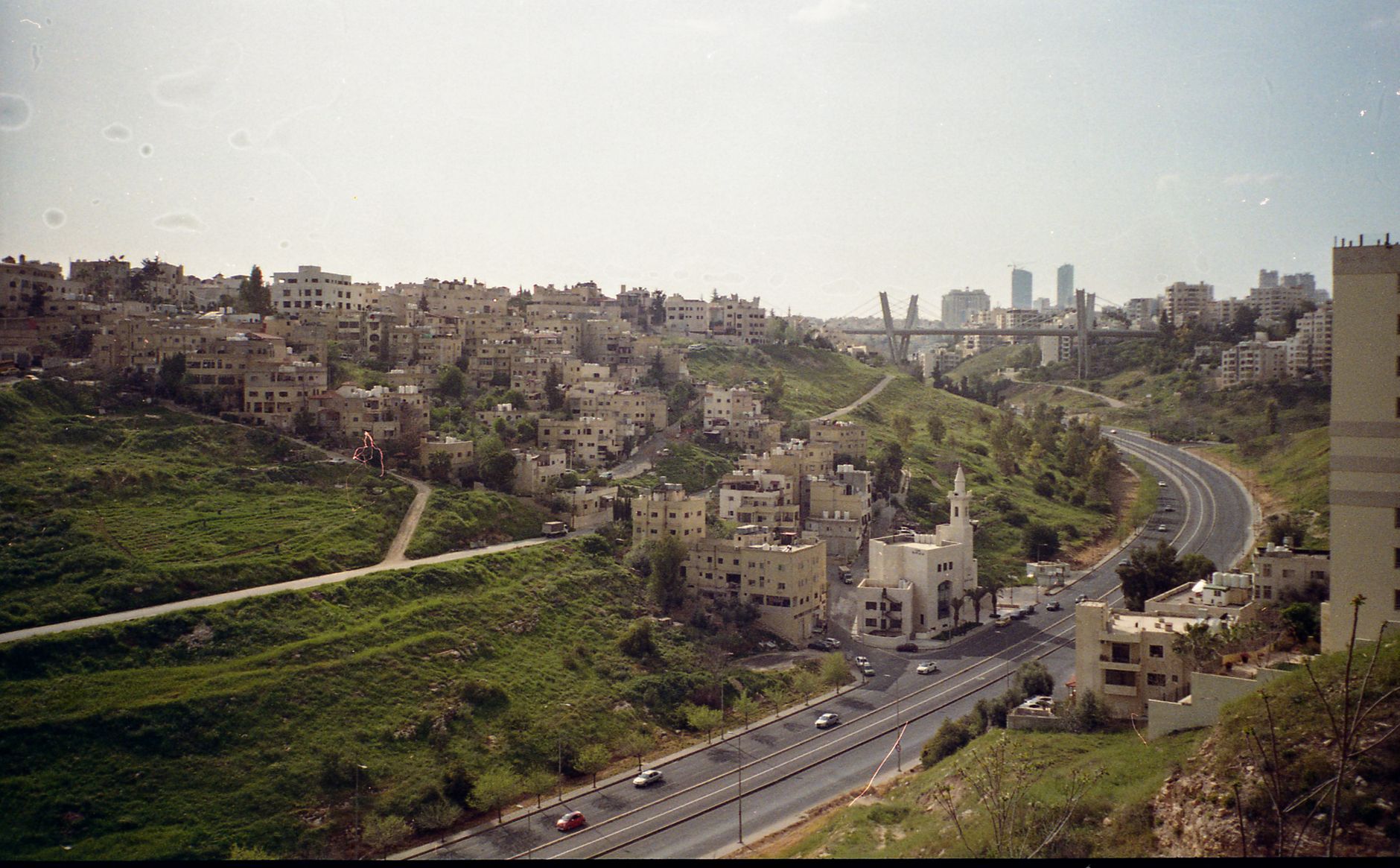

Ar Ramtha does not appear on the covers of travel guides. Some twenty kilometres north of Irbid, at Jordan’s northern edge, this city of more than 150,000 people lives with its back to tourism and its face to a reality that defines it: the proximity of the Syrian border, the memory of the Bedouin routes that crossed the Hauran, and a daily life where every journey is measured in time, money and patience.
Arriving here is not a tourist gesture. It is a glimpse of a Jordan that works, trades and organises itself far from Petra and the Dead Sea. And in that ordinariness, the question of sustainable mobility stops being an imported slogan and becomes a practical matter: how to move better when resources are limited and distances are unavoidable.
A city that grew facing the border
Ar Ramtha sits on a plateau some 536 metres above sea level, in the Irbid Governorate. Its name appears in records with variants that reveal layers of history: Al Ramtha, Er Remtha, El Remteh, Ar Ramtha. Each spelling is a trace of those who passed through: Ottoman administrators, Haurani traders, settled Bedouin families, refugees and workers who arrived in different waves.
The city was not born as a destination but as a crossing point. For decades, its economy depended on cross-border trade, discreet smuggling and the markets that supplied villages in southern Syria. That hinge function shaped its character: here people negotiate, wait and learn to read the context before making a move.
In Ar Ramtha, mobility is not a matter of abstract infrastructure: it is the difference between reaching the market on time or not reaching it at all.
The market as a barometer of daily life
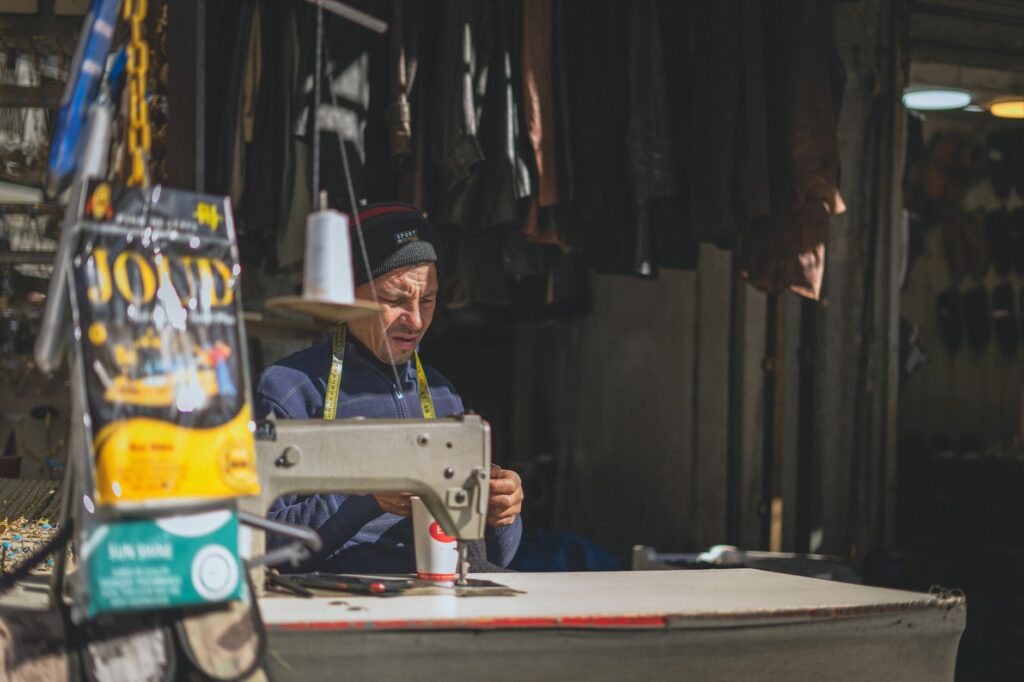
The central souq of Ar Ramtha is not a tourist draw. It is the city’s logistical heart. Produce arrives here from the Jordan Valley, olives from the north, seasonal vegetables, fabrics and spare parts. Vendors know their customers by name and by the hour they usually show up.
The market’s organisation reveals a form of sustainability that is never advertised: proximity. Much of what is sold travels short distances. Farmers from the surrounding area arrive in shared pickup trucks; families buy what they need for two or three days, not for a week. It is an economy on a human scale, inefficient by industrial standards, but resilient.
For the visitor, the lesson is simple: buying here means taking part in a system that prioritises connection over speed. There is no rush to sell, and no rush to consume.
Moving without a car: what you learn on foot
Ar Ramtha is not designed for pedestrians, but it can be walked if you accept its rhythm. Pavements are uneven, crossings are scarce and the summer heat forces you to start early or wait until late afternoon. Even so, walking its streets reveals details the car hides: repair workshops, bakeries that fire their ovens before dawn, cafés where politics and football are debated.
Public transport relies on service vehicles, minibuses and shared taxis that cover fixed routes without strict timetables. There is no app coordinating them, but there is collective knowledge: every resident knows which vehicle passes through their neighbourhood and at roughly what time. It is an informal, imperfect mobility, and surprisingly effective for those who use it daily.
- Minibuses connect Ar Ramtha with Irbid and nearby villages.
- Shared taxis usually wait until seats are filled before departing.
- Distances within the city are walkable in the central neighbourhoods.
Bedouin heritage and the art of hospitality
Ar Ramtha lies within the territory where Bedouin culture remains present, though transformed by urban life. Hospitality is not a folkloric gesture: it is a rule. Offering tea or coffee to whoever arrives is non-negotiable, and refusing it can be read as a slight.
That hospitality has a practical dimension in terms of mobility: when someone needs to travel and has no means, they ask. And someone answers. Neighbourly solidarity partly replaces what formal public transport provides in other cities.
Sustainability here is not measured in emissions: it is measured by whether a neighbour can count on another to get where they need to go.
Discreet heritage: what remains of the old routes
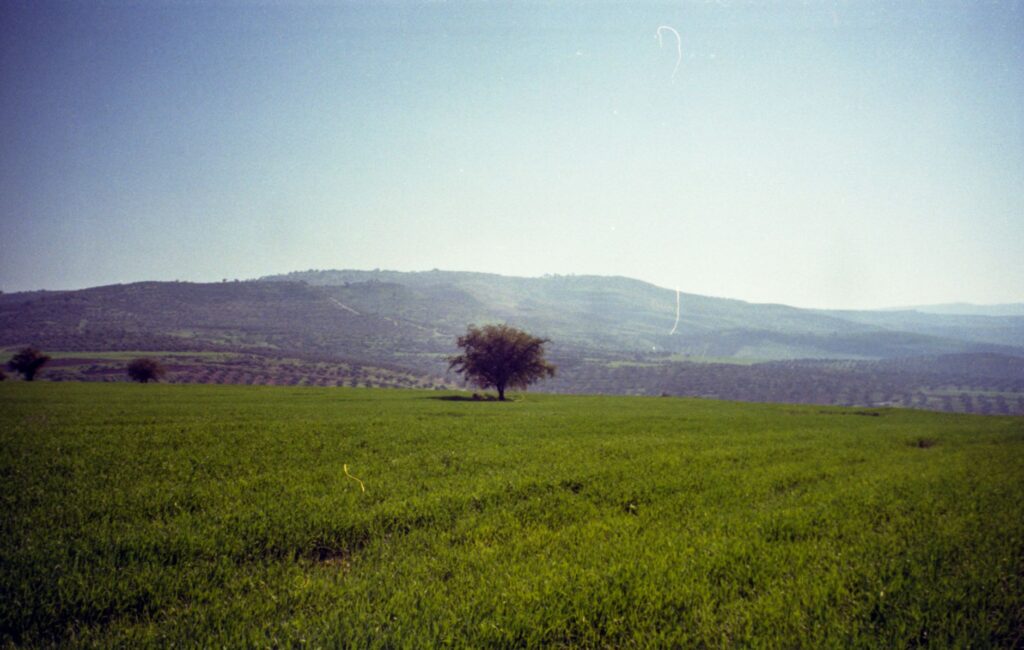
Ar Ramtha preserves no grand monuments. Its heritage is subtler: houses of volcanic stone, traces of ancient paths, neighbourhood mosques and a landscape of basalt hills that recalls how this region was a crossroads for caravans between Damascus, Bosra and the Jordan Valley.
Travellers seeking monumentality will be disappointed. Those seeking context will find clues: the local architecture, the orientation of the streets, the location of the market — all respond to a logic of passage and provisioning that predates the automobile.
Recognising that heritage requires patience and, above all, respect. There are no explanatory signs or interpretation centres. You have to ask, observe and accept that history here is told in conversations, not on panels.
Sustainability without heroics: small decisions, real effects
In a city like Ar Ramtha, talking about sustainability without falling into imported heroics means looking at what is concrete. Water is scarce; recycling is incipient; energy is expensive. The visitor’s responsible decisions are modest but meaningful:
- Spending in local shops rather than chains.
- Reducing single-use plastics, especially bottles.
- Sharing transport whenever possible.
- Respecting community spaces without turning them into a stage.
None of this will transform the city on its own. But in a place where resources are carefully managed, every gesture counts more than in a saturated tourist destination.
What to see and what not to expect
Ar Ramtha is not a weekend destination. It is a city to visit the way you visit someone else’s neighbourhood: with curiosity, without pretension and with time. What is here:
- The central market and its surroundings, especially in the morning.
- The streets of the old quarter, with black stone houses.
- Views towards the Hauran hills on clear days.
- The daily life of a border city that never stops.
What is not here: museums, guided tours, tourist infrastructure. And for a certain kind of traveller, that is exactly the point.

Getting there and when to go
Ar Ramtha is easily reached from Irbid, about 20 kilometres away, and from Amman, roughly two hours by road. Minibuses and shared taxis cover the route with variable frequency. There is no airport of its own; the nearest is Queen Alia International, near Amman.
The best time to visit is spring (March to May) and autumn (September to November). Summer is hot and dry; winter is cold and occasionally rainy. During Ramadan, the city’s rhythm changes completely and visitors should adapt.
Practical guide
Language: Arabic. English is understood in commercial contexts but is not widespread. Learning basic greetings makes interaction much easier.
Currency: Jordanian dinar (JOD). Carry cash; not all shops accept cards.
Clothing: modest, especially in public and religious spaces. For women, covering shoulders and knees is advisable.
Transport: shared taxis and minibuses. Negotiate the price before getting in for non-fixed routes.
Accommodation: limited options. Many visitors stay in Irbid and visit Ar Ramtha as a day trip.
Safety: the area is calm, but check the border situation before travelling. Jordanian authorities strictly control access to areas near the frontier.
Respect: do not photograph people without permission, do not film in sensitive areas and do not treat the city as a backdrop.
A city that does not ask to be seen, but understood
Ar Ramtha does not compete for the traveller’s attention. It has no monument to justify the detour, no postcard to sum up its character. What it offers is something else: the chance to observe how a community organises its daily life in a difficult context, with limited resources and a dignity that is never displayed.
In a world where sustainability has become a marketing label, places like this remind us that the real test is not in strategic plans but in a city’s ability to keep functioning when no one is watching. Ar Ramtha keeps functioning. And that, today, is a great deal.