
There is a railway line in Switzerland that does not compete for speed or records. Its value lies in what it preserves: hand-dug tunnels, limestone viaducts, timber stations, and a route that adapts to the terrain rather than subduing it. The Rhaetian Railway in the Albula and Bernina landscapes, inscribed on the UNESCO World Heritage List in 2008, brings together two historic lines that cross the Swiss Alps through two mountain passes. It is not an open-air museum, but a living infrastructure that still carries passengers and goods between the canton of Graubünden and the Italian border.
The Albula line, opened in 1904, runs 67 kilometres between Thusis and St Moritz. The Bernina line, 61 kilometres long, connects St Moritz with Tirano, already in Italian territory. Together they comprise 55 tunnels and covered galleries, and 196 viaducts and bridges, according to the UNESCO nomination file. That accumulation of structures is not a matter of aesthetic whim, but of the need to overcome extreme gradients, unstable slopes, and snow for much of the year.
A route that reads like a manual of Alpine engineering
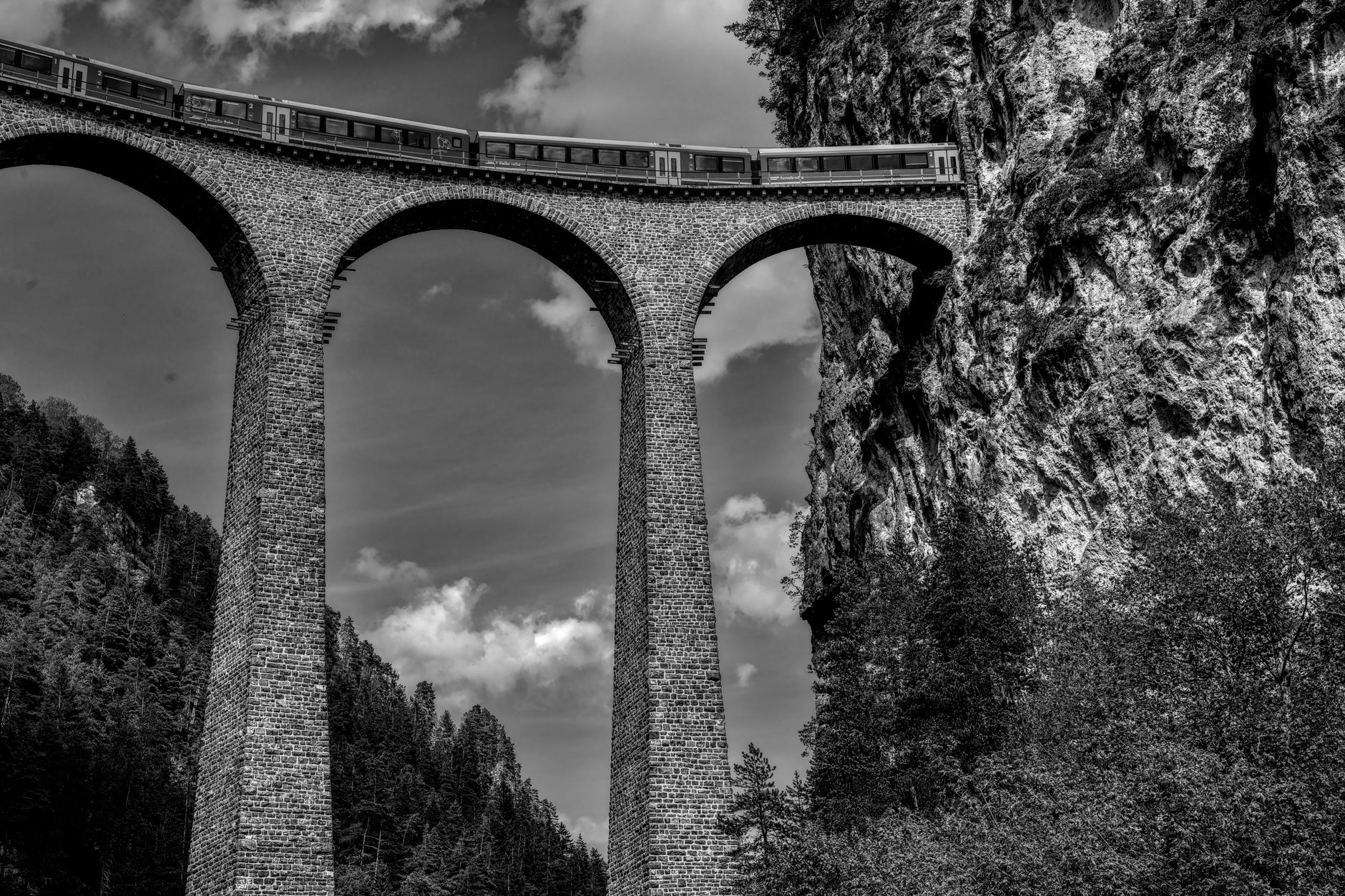
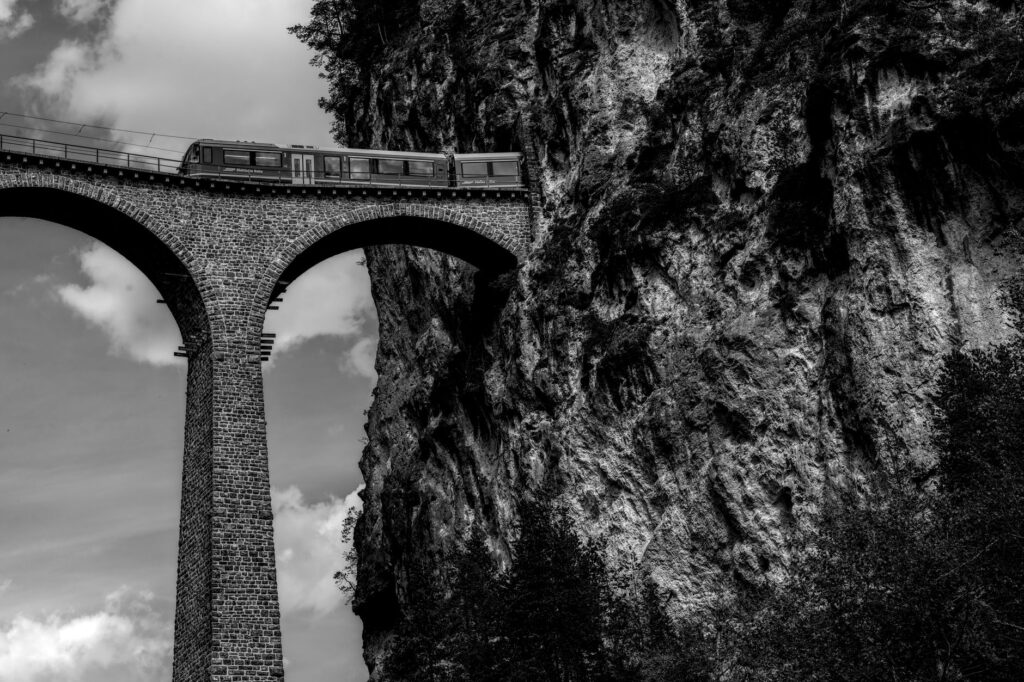
The journey between Thusis and St Moritz reveals how engineers in the early 20th century solved problems that would still be complex today. The Albula line climbs more than a thousand metres in just over sixty kilometres. To achieve this, the route uses wide curves, helical tunnels, and viaducts that appear suspended over gorges. The Landwasser Viaduct, with its six limestone arches and its direct entry into a tunnel, is one of the most cited examples of that harmony between human construction and landscape.
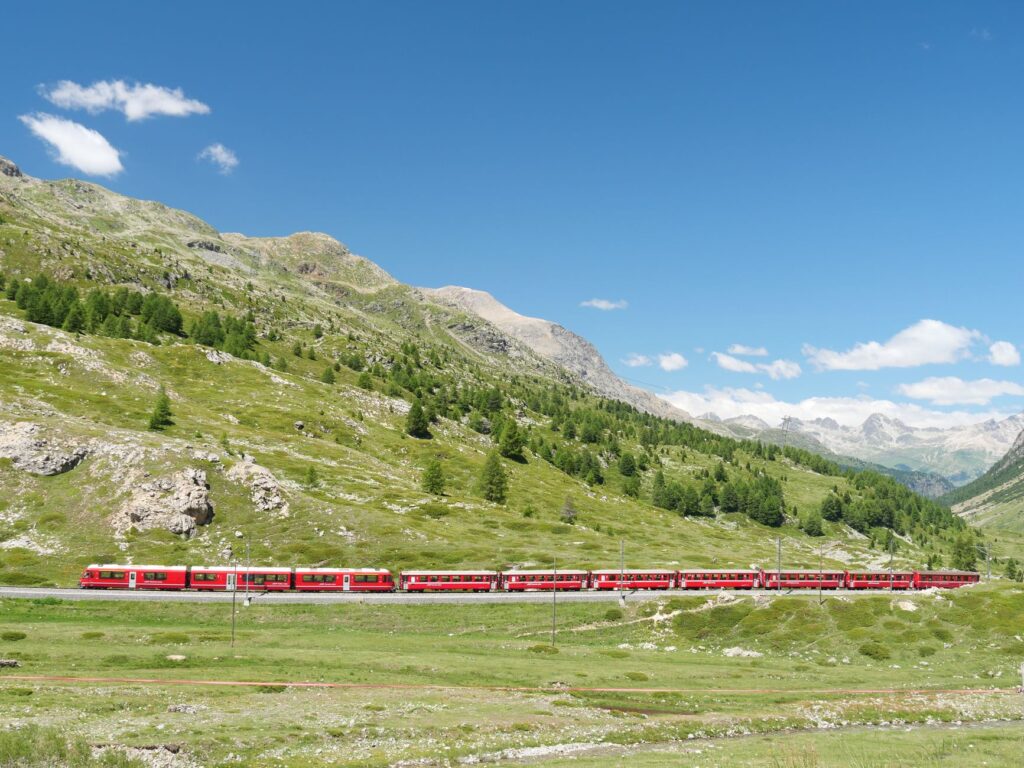
The Bernina line, by contrast, faces a different challenge: altitude. It is one of the few railway routes in Europe that exceeds two thousand metres without relying on a rack system along its entire length. The Bernina Pass, at 2,253 metres, marks the highest point. There, the track coexists with snow, blizzards, and a glacier landscape that requires specific equipment to clear snow from the points.
Stations that explain the life of a valley
Beyond the great viaducts, the heritage of the Rhaetian Railway is evident in its intermediate stations. Stone and timber buildings, with pitched roofs and short platforms, preserve the scale of a railway designed for small communities. In places such as Bergün, Filisur, or Preda, the station remains the reference point of the village: the clock, the notice board, the bar where people wait for the train.
The architecture is not uniform. The stations on the Albula line tend to be more austere, with ashlar walls and broad roofs. Those on the Bernina line, by contrast, incorporate snow-related solutions, such as more pronounced canopies and protected platforms. That variety reflects adaptation to different climatic conditions within a relatively small territory.
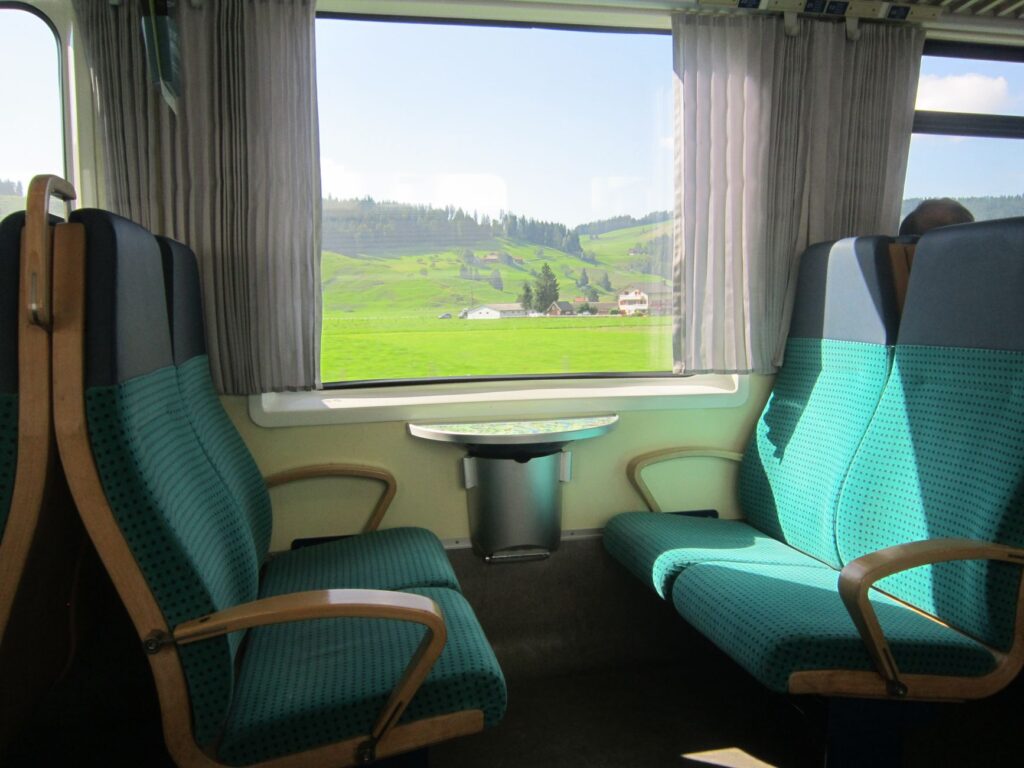
The Rhaetian Railway did not just connect valleys: it changed the way they were inhabited. Where there had once been mule tracks and seasons of isolation, schools, sanatoria, and a tourism industry appeared that still sustains the region’s economy today.
The social impact of a line that came to stay
UNESCO highlights that the Rhaetian Railway in Albula and Bernina is an outstanding example of the use of the railway to break the isolation of the Central Alps in the early 20th century. Before its arrival, many valleys in Graubünden depended on mountain paths that closed with the snowfall. The line made it possible to transport goods, patients, and students throughout the year, and facilitated the arrival of the first tourists interested in mountain air and winter sports.
That impact was neither immediate nor uniform. Some communities saw part of their young population leave for the cities, while others specialised in railway service or hospitality. What remains is the current dependence on the train for daily life: schoolchildren in the valleys use it every day, and many workers in St Moritz or Tirano rely on it as their usual means of transport.
Landscape, snow, and the silent logistics of winter
Keeping a line that crosses two Alpine passes operational requires work that travellers rarely see. In winter, track teams clear snow from the points, inspect tunnels, and monitor slope stability. The Bernina line, exposed to intense blizzards, has protection sections and warning systems that affect operations when the storm intensifies.
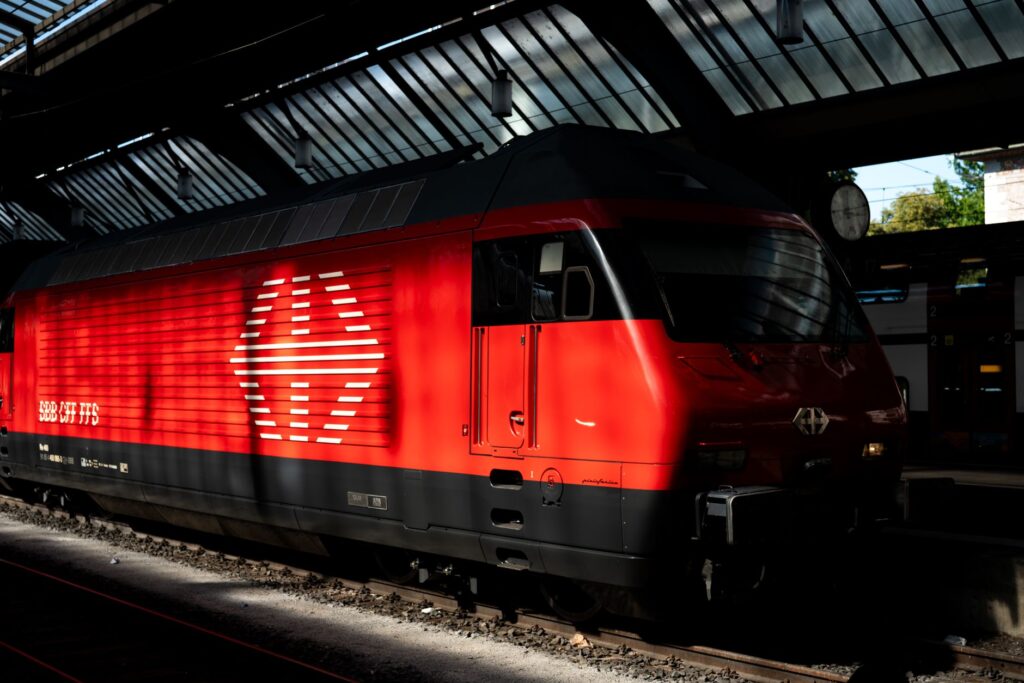
That logistics is not a minor detail: it explains why the Rhaetian Railway remains a functional infrastructure rather than a museum piece. Heritage conservation, in this case, does not mean freezing the past, but maintaining a balance between historic elements and operational needs. Today’s trains, lighter and quieter than the steam locomotives, still use the same alignments and many of the same bridges.
What is preserved and what has been transformed
The UNESCO nomination file acknowledges that the authenticity of the property is based on a technical and architectural ensemble that remains in use. The company managing the lines has introduced changes compatible with that authenticity: new signalling systems, more modern rolling stock, and station improvements, but without altering the route or the main structures. The result is a railway landscape that is perceived as historic without sacrificing reliability.
Visitors travelling the full line notice those layers. In a single journey, they see century-old viaducts, tunnels with stone portals, recent overhead lines, and panoramic trains with large windows. The coexistence is not always visually harmonious, but it is the condition that allows the railway to remain alive.
A journey to read the territory
Travelling the Albula and Bernina line is not just a railway experience. It is a way of reading the Alpine territory: the orientation of the valleys, the altitude of the passes, the location of the villages, and the presence of snow. Every tunnel and every viaduct responds to a specific question about the terrain. In that sense, the train functions as an involuntary guide to Swiss geography.
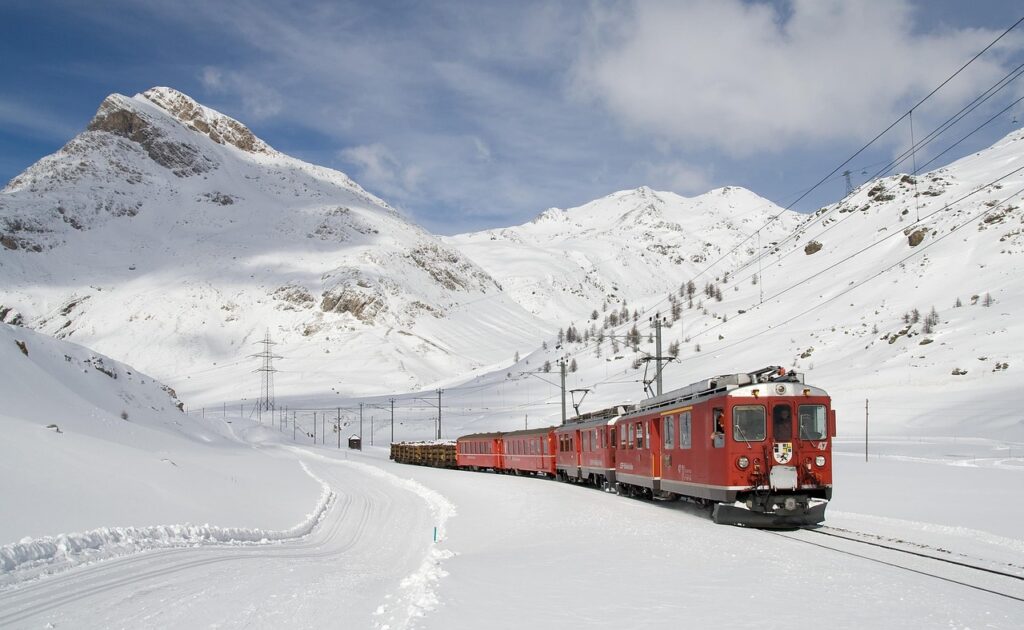
The section between St Moritz and Tirano, in particular, offers a remarkable contrast. It moves from larch forests and mountain lakes to the glaciers of the Bernina and, finally, to the vineyards and milder climate of the Poschiavo valley. It is a change of landscape and cultivation that occurs in just over two hours of travel.
Practical guide
The full route can be done in a day, although it is worth allowing time to get off at an intermediate station. Trains run along the line throughout the year, with more frequent services in summer. In winter, it is advisable to check the status of the line before travelling, as snowfall can cause delays or changes in rolling stock.
- The journey between Thusis and Tirano combines both historic lines and allows you to see the main viaducts and tunnels.
- The stations at Bergün, Filisur, Preda, and Poschiavo are good places for a short stop.
- The Bernina Pass is the highest and most exposed point; warm clothing is advisable even in summer.
- Panoramic trains have larger windows, but regional trains offer an experience closer to local life.
- In Tirano, the connection with the Italian rail network allows onward travel to Milan or Lake Como.
The line does not require mandatory reservations on all services, but in high season it is advisable to check in advance. Tickets can be purchased at stations or through the railway company’s official channels.
A heritage best cared for by travelling
The Rhaetian Railway in Albula and Bernina is not just a destination for train enthusiasts. It is an example of how infrastructure can integrate into a landscape without destroying it and, at the same time, sustain the life of the communities it crosses. UNESCO recognised it for its technical, architectural, and environmental value, but also for its human dimension: that of a train that arrived to connect those living on the margins.
Today, that train still runs between mountains, along the same alignment as more than a century ago. Those who board it do not find a theme park, but a public service that, incidentally, offers one of the most remarkable railway journeys in Europe. The conservation of that heritage depends, in part, on there continuing to be passengers willing to use it.