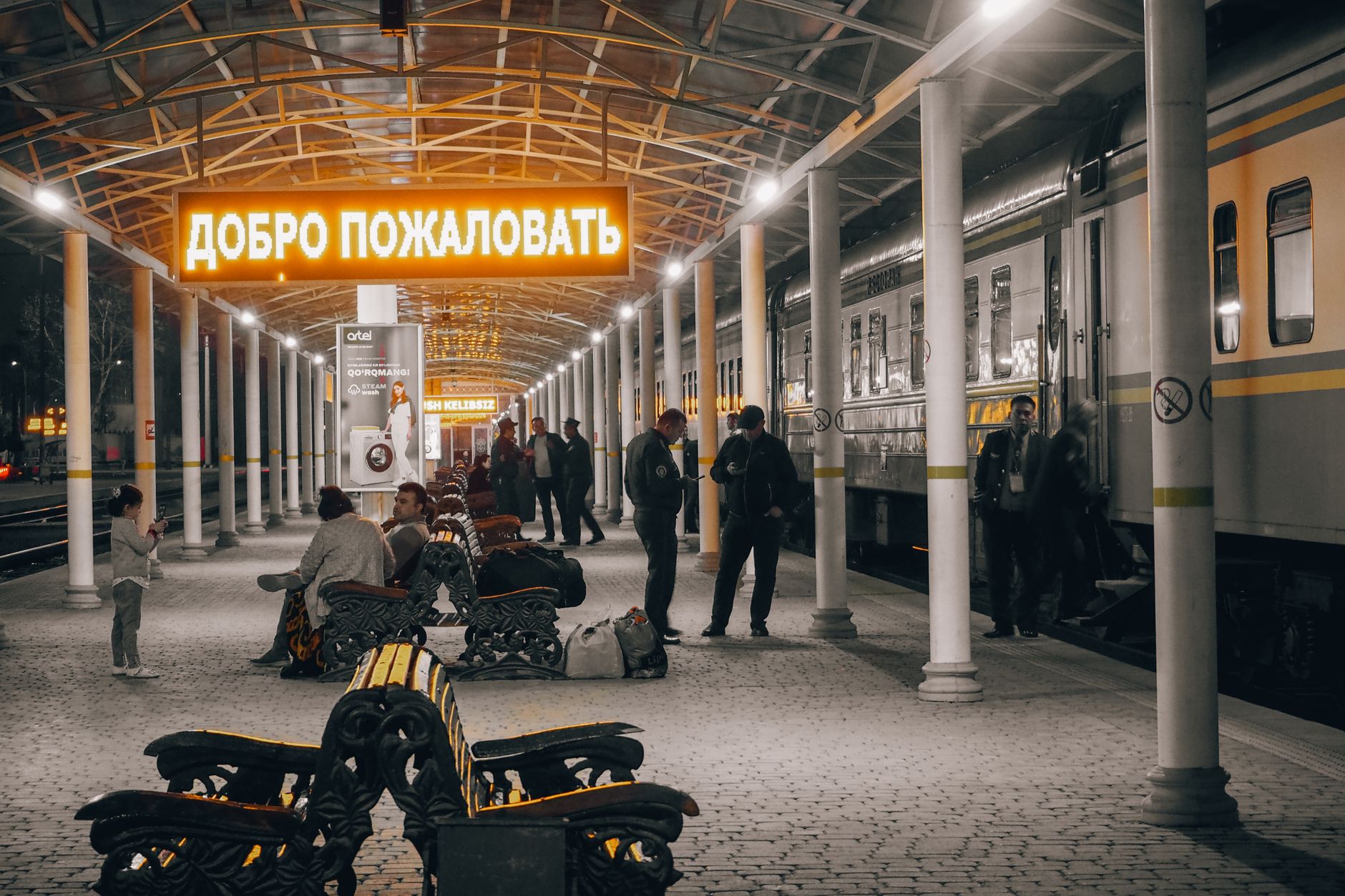

The platform at Stockholm Central Station, at 10:15 p.m. on a Friday in February, smells of fresh snow and hot coffee. A group of travelers with backpacks and heavy coats waits in front of a blue and gray train that seems in no hurry. It is the SJ Nattåg 94, the overnight service covering the 1,300 kilometers between the Swedish capital and Kiruna, deep in Lapland. Over the past decade, this service has gone from a railway relic to a key piece of Sweden’s strategy to reduce the carbon footprint of domestic transport.
This is not a tourist train in the conventional sense. It is everyday transport for students, healthcare workers, miners, and travelers who prefer to sleep while the landscape transforms. State-owned SJ and private operator Vy have renovated their sleeper cars, introduced berths with blackout curtains, and improved soundproofing. The result is an experience that combines Nordic efficiency with a certain railway romanticism, without falling into empty nostalgia.
A country that chooses to sleep on the tracks
Sweden has a geography that invites night trains. With a population density of just 25 people per square kilometer, distances are vast and domestic flights were for decades the fastest option. But the country’s climate commitment has changed the calculus. Since 2019, the Swedish government has applied an aviation tax that has made tickets more expensive, while the railway has received investments to modernize its night fleet. Demand for sleeper berths has doubled in five years, according to data from the Swedish Transport Administration (Trafikverket).
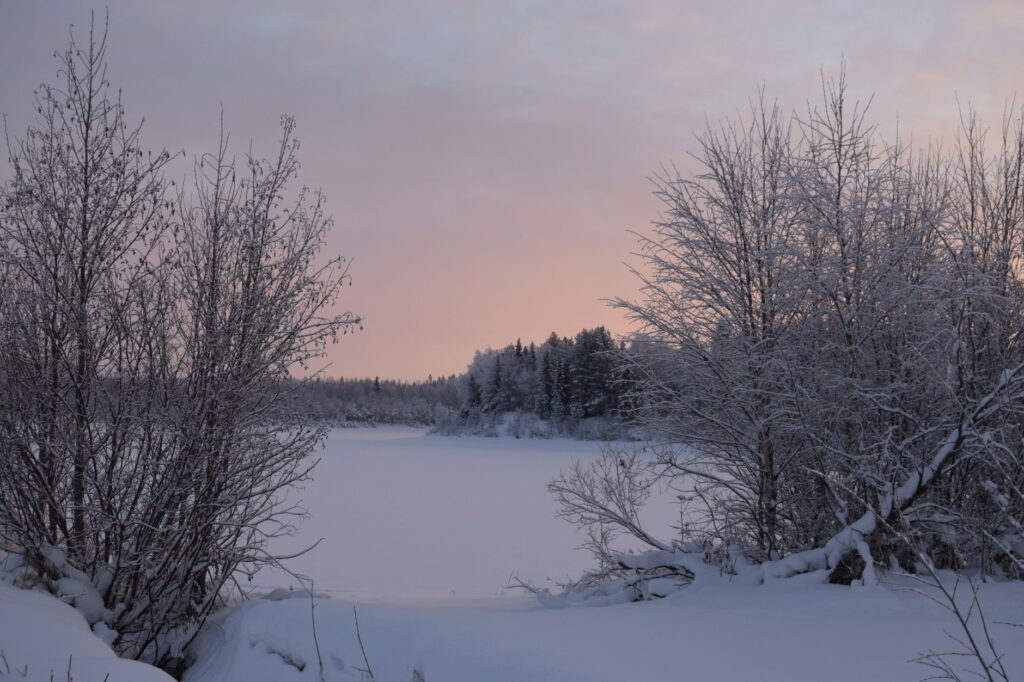
The night train is not just an ecological choice. It is also a way of traveling that gives time back to the traveler. While flying requires arriving two hours early, passing through security, and waiting in terminals, the train allows you to board, settle into a berth, and wake up with breakfast served in the dining car. The key lies in planning: sleeper berths sell out weeks in advance, especially during the northern lights season.
From Stockholm to Kiruna: the landscape as a clock
The train departs on time. At 10:30 p.m., the lights of the capital recede and the convoy enters Uppland province. The first hours pass through birch forests and frozen lakes. The dining car, with light wood tables and large windows, serves a simple menu: salmon with potatoes, meatballs with mash, and a selection of rye breads. There are no white tablecloths or gastronomic pretensions, but the food is honest and comforting.
Around midnight, the conductor passes with a device to adjust the temperature in each cabin. The berths are designed with a functional criterion: a 190-centimeter bed, a small folding table, a power outlet, and a reading light. The individual cabins, called sovvagn, have a tiny sink and a shared shower at the end of the corridor. They are not luxurious, but they serve their purpose: allowing you to sleep through the night while the train moves at 130 kilometers per hour.
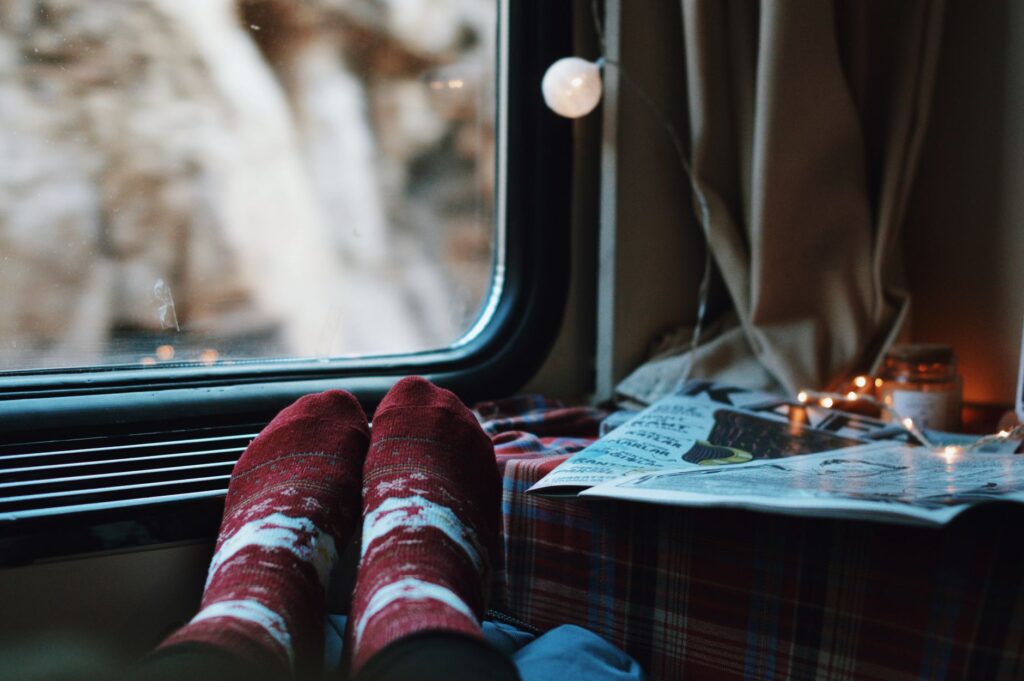
The Swedish night train does not sell luxury; it sells time. And in a country where winter light is a scarce commodity, that time becomes a gift.
The geography changes with latitude
At 6:00 a.m., the landscape no longer resembles the south. The birches have given way to snow-covered pines and stretches of frozen peat. The train crosses the Arctic Circle at 7:45, a moment the conductor announces over the loudspeaker. Travelers who are awake lean toward the windows. There are no signs or ceremonies, just an imaginary line marking the beginning of the true north.
Breakfast is served in the dining car: coffee, bread, cheese, jam, and thick yogurt. The February sun barely rises and tints the snow a pinkish hue. In winter, light is a brief and precious phenomenon. In summer, by contrast, the sun does not set and the train runs under a perpetual brightness that disorients and fascinates in equal measure.
Kiruna, a city on the move
The arrival in Kiruna, at 9:30 a.m., is a good example of how geography conditions urban life. The city, known for its iron mine, is being moved several kilometers east because mining activity is causing ground subsidence. The train arrives at a new station, built with wood and steel, which is part of that process of urban reinvention. From there, buses connect to the center and to accommodations in the area.
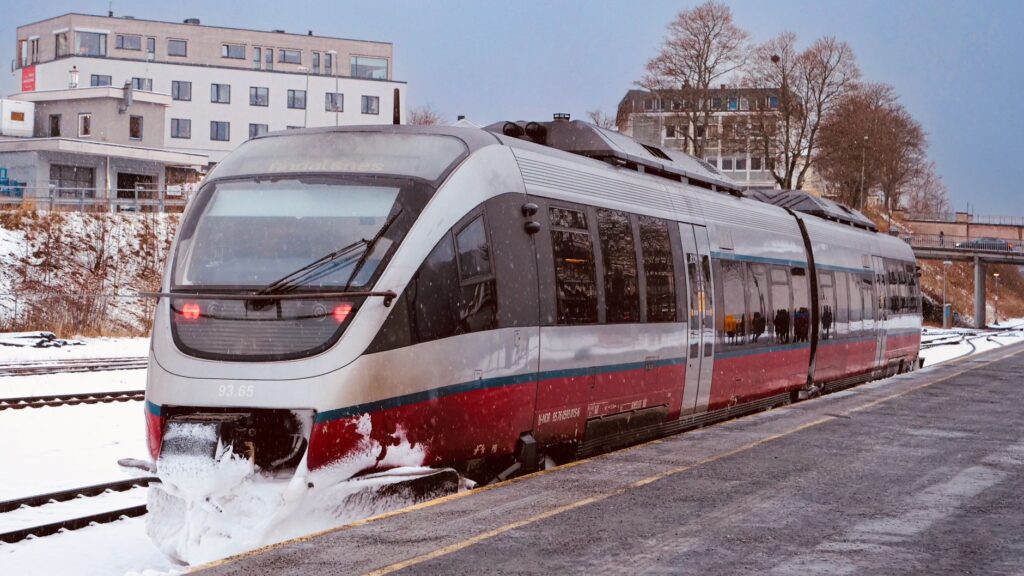
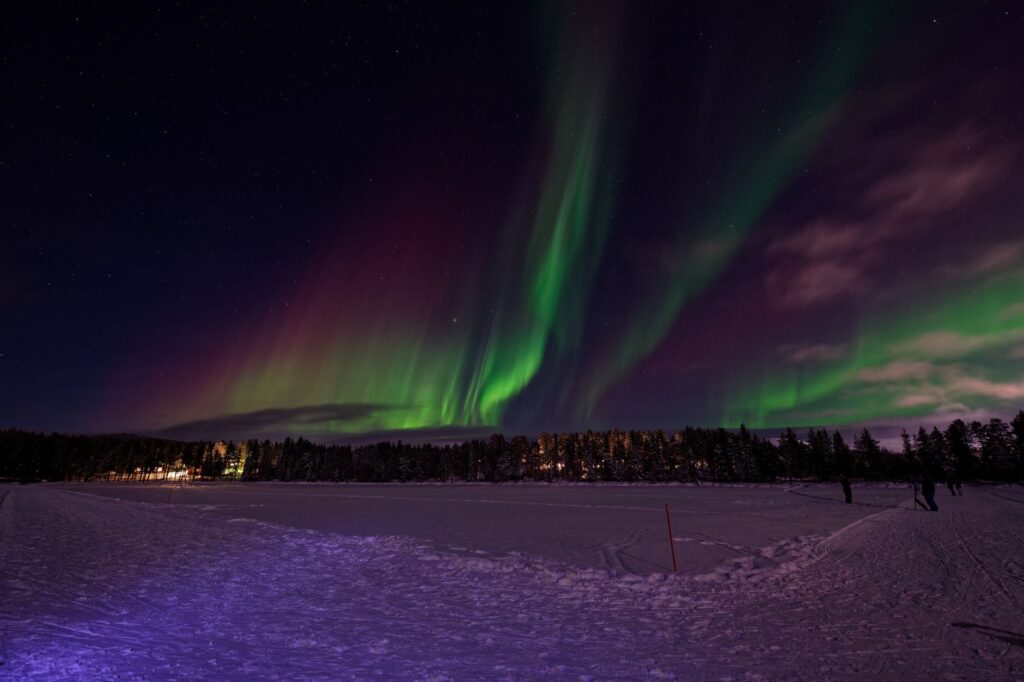
Kiruna is the gateway to Lapland and to activities such as northern lights watching, dog sledding, and snowshoe excursions. But it is also a real city, with supermarkets, libraries, and cafes where locals take refuge from the cold. Tourism coexists with everyday life without swallowing it, something that does not always happen in Arctic destinations.
Beyond Kiruna: the network extends
The night train does not end in Kiruna. Some services continue to Narvik, in Norway, crossing the border and offering a direct connection to the northern fjords. Others branch off toward Luleå, on the Gulf of Bothnia. Sweden’s night train network also covers routes to Gothenburg, Malmö, and the mountains of Jämtland, where skiers flock during the winter months.
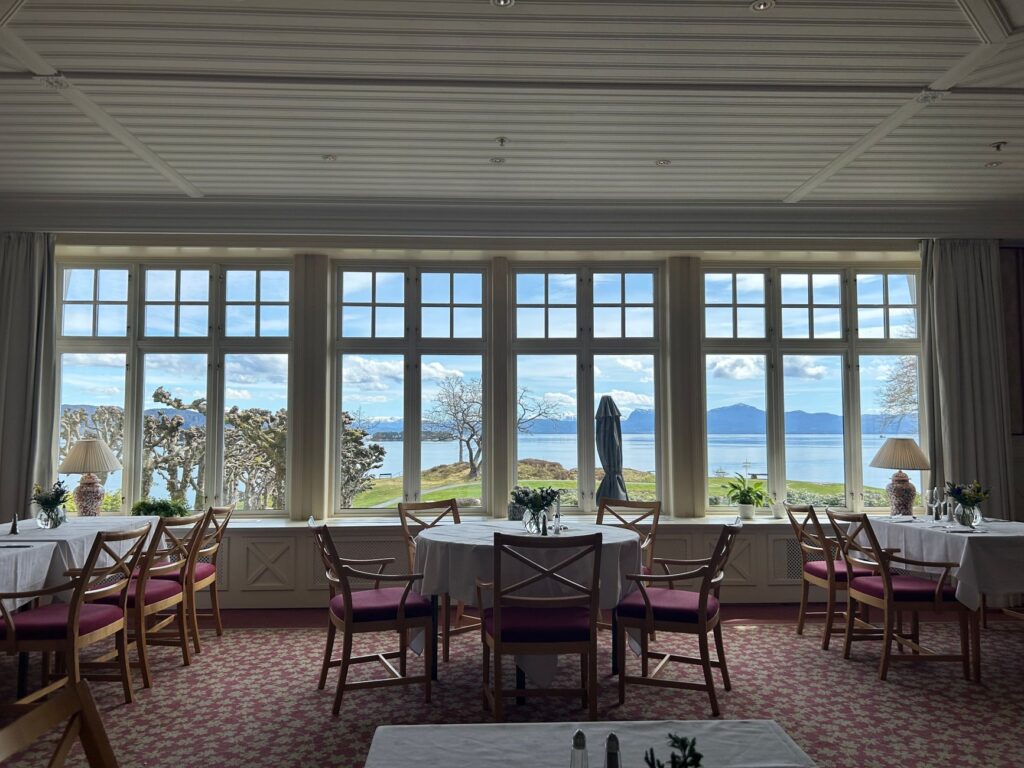
Operator Vy, a subsidiary of the Norwegian Vy group, competes with SJ on some routes and has introduced improvements such as free wifi and power outlets in all berths. The competition has forced both companies to improve service, although prices remain moderate: an individual berth ticket between Stockholm and Kiruna costs between 600 and 1,200 Swedish kronor, depending on how far in advance you book and the season.
The quiet carriage and other unwritten rules
On Swedish night trains, there is an etiquette that travelers respect without the need for signs. From 10:00 p.m., the corridors empty and conversations are whispered. The dining car closes at midnight and reopens at 6:30 a.m. There is no loud music or phones on speaker. It is a agreed-upon silence that forms part of the journey’s appeal.
The conductors, called tågvärdar, play a discreet but essential role. They check tickets, help with luggage, and, in case of delay, provide precise information. There are no military uniforms or rigid protocols, but there is a serene professionalism that contrasts with the informality of other European railways.
The environmental impact as an argument
A night train journey between Stockholm and Kiruna emits approximately 0.01 kilograms of CO2 per passenger and kilometer, according to calculations by the Swedish Environmental Protection Agency. The same trip by plane emits around 0.15 kilograms. The difference is substantial and has been used by the Swedish government to promote the train as the preferred option for medium and long distances.
However, the night train is not exempt from criticism. Capacity is limited and prices have risen in recent years. Some travelers complain that the berths are narrow and that the wifi fails in the most remote sections. But for many Swedes, the night train remains a way of traveling that combines practicality and pleasure, without sacrificing comfort.
This is not about railway romanticism, but about infrastructure designed for the 21st century: efficient, quiet, and connected to people’s real lives.
Practical guide
- Book in advance: Sleeper berths sell out quickly, especially between December and March (northern lights season) and in July (midnight sun). Try to book at least a month ahead.
- Choose your berth wisely: Individual cabins offer more privacy, but berths in two- or three-person compartments are cheaper. All include bed linen and a pillow.
- What to bring: Earplugs, an eye mask, and a water bottle. The train provides blankets, but the temperature can drop during the night.
- Food on board: The dining car serves dinner and breakfast. You can also bring your own food; microwaves are available in some cars.
- Showers: Only first-class cabins have private showers. In second class, there are shared showers at the end of the corridor.
- Connectivity: Wifi is free but patchy in the most sparsely populated areas. Do not count on it for work.
- Luggage: There is limited space in the cabin. Large suitcases are stored in a compartment at the end of the car.
- Arrival in Kiruna: The station is about 3 kilometers from the center. There are local buses and taxis, but check schedules, especially in winter.
The Swedish night train is not a tourist attraction designed for visitors, but a public service that runs with clockwork precision. That is, perhaps, its greatest virtue. It does not promise epic adventures or postcard landscapes, but it offers something more valuable: the possibility of crossing an entire country while you sleep, with a clear conscience and time on your side.