The Twilight of Diesel on the Railway Periphery
For decades, the backbone of European transportation has been fractured into two distinct realities: on one hand, high-speed corridors and electrified main lines, symbols of modernity and efficiency; on the other, secondary and rural arteries that weave the territory together, condemned to the use of highly polluting diesel locomotives. As metropolitan areas adapted to the ecological transition, the countryside, mountain valleys, and coastal regions continued to depend on fossil fuels to keep their most dispersed communities connected. Electrifying thousands of kilometers of secondary tracks via traditional overhead catenaries remains, in the vast majority of cases, economically unviable and environmentally intrusive. Installation costs, visual impacts on protected landscapes, and long execution timelines paralyze any attempt at comprehensive modernization through these classical methods.
It is within this scenario of stagnation that an alternative technology has emerged, poised to redefine the paradigm of regional mobility: the hydrogen-powered train. This is not a futuristic promise relegated to research laboratories, but a rolling reality already transporting passengers on regular commercial lines. Fuel cell technology offers an elegant solution to the dilemma of railway decarbonization, making it possible to eliminate direct emissions of CO2 and nitrogen oxides without the need to erect costly overhead electrical infrastructure along hundreds of kilometers of single-track lines. The challenge, therefore, is no longer technical, but logistical, financial, and territorial.
The Engineering Behind the Fuel Cell
To understand the scope of this revolution, it is necessary to examine the internal workings of units such as the Alstom Coradia iLint, the global pioneer in commercial passenger transport using hydrogen. Unlike a conventional electric train that draws energy from an overhead wire, or a diesel train that burns fuel in an internal combustion engine, the hydrogen train generates its own electricity on board through an electrochemical process. High-pressure gaseous hydrogen storage tanks and fuel cells are located on the roof of the carriages. Hydrogen is combined with oxygen captured from the outside air, generating electricity that powers the lithium-ion batteries and the train’s traction motors.
The sole byproduct of this complex chemical reaction is something as innocuous as vaporized and condensed water. The energy efficiency of this system far exceeds that of traditional diesel engines, while also drastically reducing acoustic pollution—a factor highly valued by residents living alongside railway lines. Furthermore, these trains incorporate regenerative braking systems, capable of capturing and storing kinetic energy generated during decelerations in the batteries, thereby maximizing energy consumption efficiency on routes with frequent stops and challenging topographies.

Lower Saxony and the Pioneering Rollout in Germany
The ultimate testing ground for this technology has unfolded in northern Germany, specifically in the federal state of Lower Saxony (Niedersachsen). In late 2022, the local transport authority (LNVG) launched the world’s first fully commercial fleet composed of 14 Coradia iLint hydrogen trains, operated by the regional company evb (Eisenbahnen und Verkehrsbetriebe Elbe-Weser). These convoys definitively replaced the old fleet of diesel railcars on the picturesque route connecting Cuxhaven, Bremerhaven, Bremervörde, and Buxtehude—a stretch of approximately 100 kilometers where electrification via catenary had been ruled out due to prohibitive economic costs.
The success of this implementation has not been without operational challenges. The rollout required the construction of a dedicated hydrogen refueling station in the town of Bremervörde, developed in collaboration with the industrial firm Linde. This facility features massive storage capacities and compression systems capable of refueling a complete unit in times comparable to those of a conventional diesel train, guaranteeing a daily autonomy exceeding one thousand kilometers. Cumulative data gathered during the first years of commercial operation confirm that the technical reliability of fuel cells is comparable to that of traditional propulsion systems, dispelling initial fears regarding component fragility under adverse weather conditions.
The energy transition in transportation is not merely about substituting one energy source for another in major cities, but ensuring that rural territories are not confined to technological obsolescence.
Autonomy and Operational Challenges in the Secondary Network
One of the greatest attractions of hydrogen-powered trains is their operational flexibility. While an electric train remains inextricably linked to the existence of a catenary and a pure battery train suffers severe autonomy limitations on long journeys without intermediate charging points, hydrogen offers a vastly superior operating radius. A single charge allows for a full day of operation on high-demand lines, facilitating integration into existing schedules and operating frameworks without radically modifying terminal station infrastructure.

However, the hydrogen supply chain presents colossal challenges that railway operators must solve with millimeter precision. For the environmental benefit to be real, the hydrogen used must be classified as «green,» meaning it is produced exclusively via water electrolysis using electricity sourced from renewables such as wind or solar power. Currently, much of the industrial hydrogen available on the market stems from fossil fuels (grey hydrogen), which would negate climate advantages if used massively in the railway network. Consequently, railway companies require suppliers to provide certified contracts with renewable origin guarantees, indirectly driving the creation of a clean hydrogen market on a regional scale.
Refueling Infrastructure: The Industrial Bottleneck
The deployment of any transport technology based on alternative fuels inevitably collides with the chicken-and-egg dilemma: operators will not purchase trains if hydrogen refueling stations do not exist, and energy companies will not invest in stations if there is no sufficient fleet guaranteeing constant demand. Resolving this financial equilibrium requires close public-private collaboration and state subsidies geared toward heavy infrastructure investment. Unlike private automobiles, where service stations are distributed in a capillary network, railways require high-capacity refueling points strategically located at specific railway nodes.
In Europe, secondary transport corridors typically traverse regions with low population density but intense commuter and medium-distance traffic. This forces planners to site hydrogen production and storage plants near existing maintenance workshops. The logistics of transporting the hydrogen itself—either in high-pressure gaseous form via tube trailers or in liquid form at extreme cryogenic temperatures—add a variable of cost complexity that operators analyze meticulously before committing to a complete replacement of their rolling stock.
France’s Strategy and the Commitment to Bimodality
Beyond Germany, other European countries have accelerated the adoption of this technology, adapting it to their particular geographic and railway needs. SNCF Voyageurs, France’s national railway company, has ordered dual-mode units capable of operating both on traditional electrified lines via overhead wire and on secondary routes utilizing hydrogen fuel cells. This versatility allows the same train to run seamlessly from a major metropolitan area into the heart of a rural district, eliminating the annoying transfers that traditionally penalize public transport competitiveness against private vehicles.
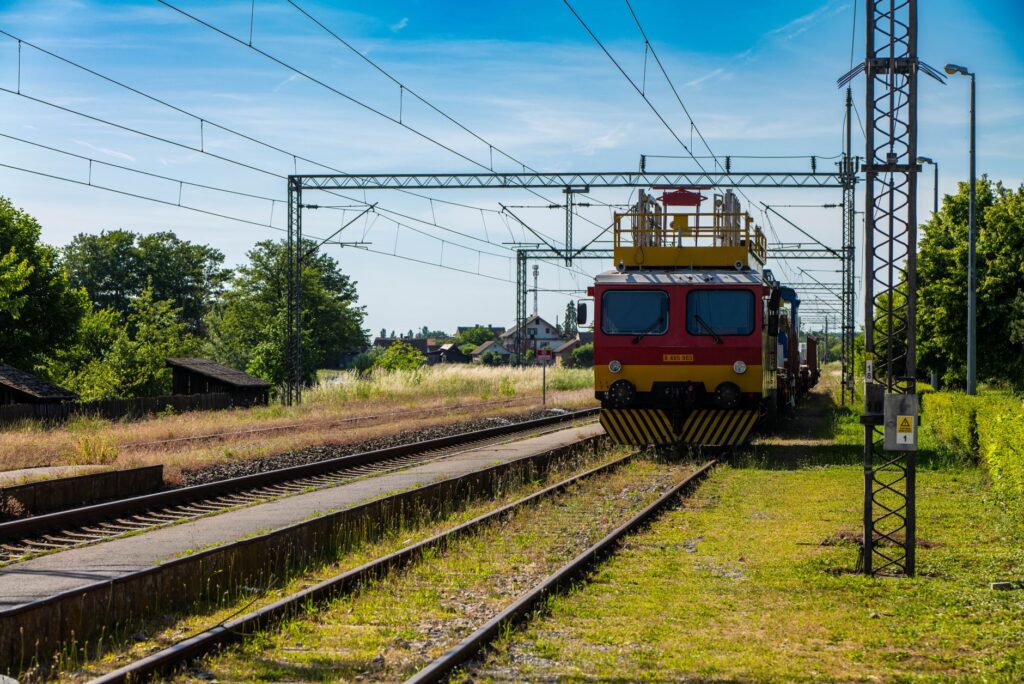
The French regions of Occitanie, Auvergne-Rhône-Alpes, Grand Est, and Bourgogne-Franche-Comté have co-financed the acquisition of these hybrid trains, whose first test units are already running on validation tracks. The French strategy does not seek immediate massive substitution, but a gradual integration that accompanies the development of regional green hydrogen production centers. This phased planning allows engineers to tailor the performance of batteries and fuel cells to the specific demands of French topography, from Pyrenean valleys to eastern plateaus.
Socioeconomic Impact on Rural Communities
The value of sustainable mobility in rural areas goes far beyond mere emission reductions. For many peripheral communities, the railway represents the only reliable link to healthcare, educational, and employment services in provincial capitals. For years, low economic profitability and the high maintenance cost of old diesel trains have led to the constant threat of closure for numerous secondary lines, a process of territorial dismantling that fosters depopulation and isolation.
The introduction of a clean, silent, and modern technology on these lines acts as a catalyst for regional revitalization. The modernization of rolling stock attracts new users, increases the perceived quality of public service, and revalues the territory as a sustainable tourism destination. Likewise, the installation of local green hydrogen production plants generates qualified technical employment in areas traditionally hit hard by youth emigration and a lack of diverse industrial opportunities, closing the circle of social and territorial cohesion.
Economic Challenges and Life Cycle Costs
Despite technological enthusiasm, the financial viability of hydrogen trains remains the subject of rigorous debate in the boardrooms of railway companies. Currently, the acquisition cost of a hydrogen train significantly exceeds that of a conventional diesel railcar, due to the novelty of the components and low industrial manufacturing scales. Nonetheless, economic analysts insist that evaluating this technology exclusively through initial purchase prices is a perspective error; analyzing the total cost of ownership (TCO) is essential.

The TCO calculation must weigh factors such as the predictable long-term cost of fossil fuels—affected by carbon taxes and geopolitical volatility—the lower maintenance costs of electric motors compared to complex internal combustion mechanisms, and the savings derived from avoiding catenary construction in complex terrain. As hydrogen supply chains mature and production volumes increase, cost parity between diesel and hydrogen is projected to be reached before the end of the current decade.
Investing in the modernization of secondary lines through zero-emission technologies is not a budgetary luxury, but a strategic necessity to guarantee equity in accessing twenty-first-century mobility.
The Horizon of Sustainable Rail Transport
The deployment of hydrogen trains on Europe’s regional railway networks marks a turning point in the history of sustainable mobility. Far from being a single, universal solution, hydrogen is consolidating as the missing piece in the decarbonization mosaic, perfectly complementing classical electrification and short-range batteries. Pilot experiences in Baja Sajonia and ongoing developments in France, Italy, and the United Kingdom demonstrate that technical transition is fully viable when political will and industrial collaboration exist.
The true success of this transformation will depend on the capacity of governments and energy companies to guarantee a massive supply of truly green hydrogen at competitive prices. If these economic and logistical hurdles are overcome, Europe’s secondary tracks will cease to be relics of the industrial past and become vanguard corridors for a new era of territorial cohesion, where technological progress and rural landscape preservation finally walk hand in hand.

Practical Information for Travelers and Professionals
Operational Commercial Routes: The Buxtehude–Bremervörde–Bremerhaven–Cuxhaven line in Lower Saxony (Germany) is currently the fully commercial network with the highest mileage operated exclusively by hydrogen trains.
Trip Planning: The schedules for these special services are fully integrated into official German regional transport applications (such as FahrPlaner and the DB website), operated by the regional company evb.
Future Expansions: Advanced testing and orders are underway in regions of France (Occitanie and Auvergne-Rhône-Alpes), Italy (Aosta Valley), and the United Kingdom to incorporate similar units in coming years.
Technical Access: Industry professionals can consult operational performance reports published periodically by LNVG (Lower Saxony Transport Authority) regarding reliability and actual energy consumption.