
The Liquid Artery Defying the Desert
The Nile River is not merely the scenic backdrop that birthed one of human history’s most enduring civilizations; it is, above all, a logistical corridor of colossal dimensions where modern engineering and ancient rhythms coexist in constant tension. Across the nearly one thousand kilometers separating the Aswan High Dam from the Mediterranean Delta, the fluvial transport of heavy cargo constitutes the circulatory system feeding the nation’s heavy industry, cement plants, and power stations. While national highways bear the brunt of endless fleets of trucks and the state railway slowly modernizes its main lines, steel barges and diesel tugboats continue to move millions of tons of granite, phosphates, and coal with an energy efficiency that no land transport can match in the heart of Africa.
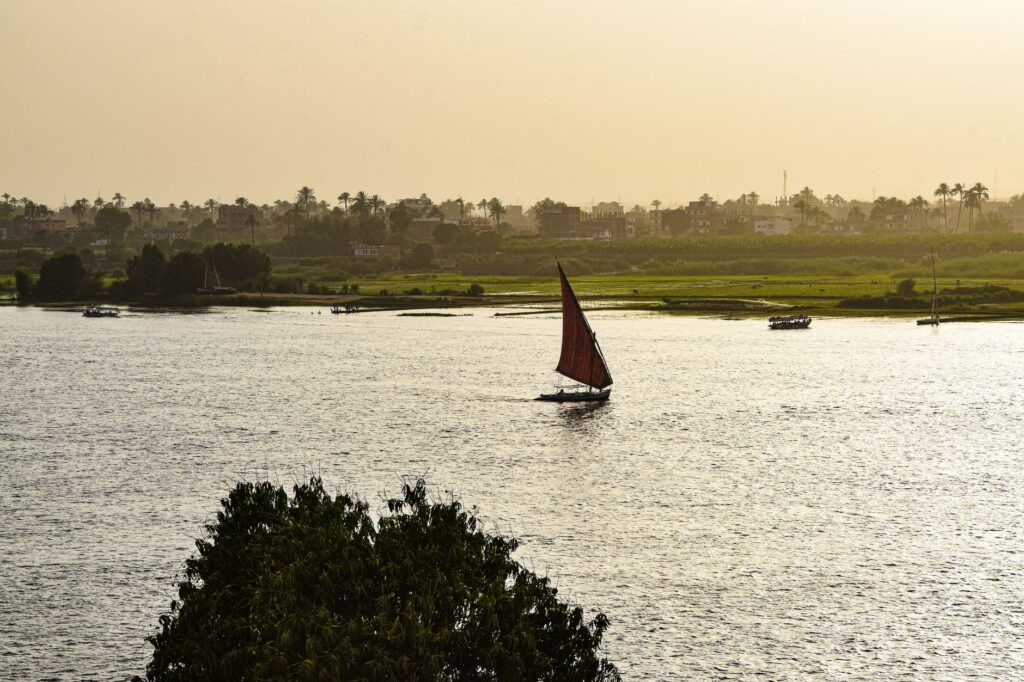
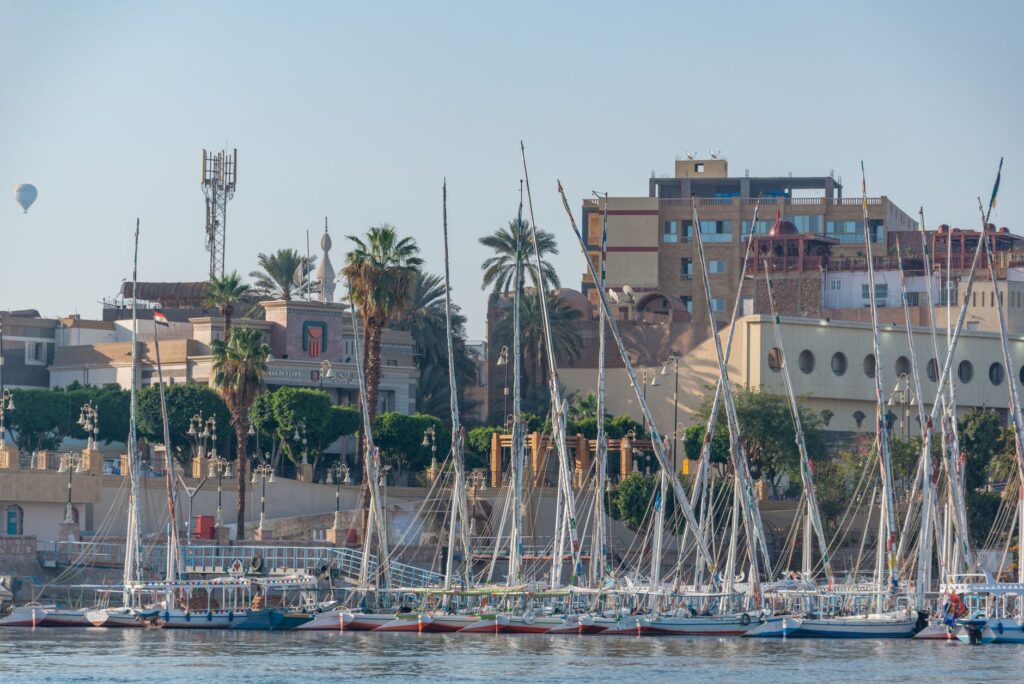
Understanding the scale of this network requires abandoning tourist clichés of lateen-sailed feluccas to delve into the harsh reality of the river merchant marine. Here, currents artificially regulated since the mid-20th century face a continuous topographical challenge: a gradient that must be overcome through a complex web of hydraulic locks. These gates, many operated with technology inherited from the British colonial period but updated with modern electromechanical systems, represent the critical bottlenecks of the entire route. The transit of a barge convoy can take hours as captains calculate exact drafts, water pressure, and the turbulence generated by diversion dam turbines in Esna and Nag Hammadi.
The Engineering of Locks: Hydraulic Architecture in Esna and Nag Hammadi
The passage through the Esna lock is undoubtedly the most demanding technical ritual for any skipper navigating downstream toward Cairo or upstream toward Upper Africa. Originally constructed to mitigate seasonal floods and optimize navigation before the monumental Aswan High Dam, the modern Esna structure allows vessels of up to two thousand tons displacement to be raised or lowered within minutes. Captains must align their ships with millimeter precision in concrete chambers where damp walls exude centuries of humidity and rust. Orders are shouted and transmitted via VHF radio, coordinating sun-baked sailors handling Manila ropes as thick as palm trunks.
The stability of the entire logistical chain on the Nile does not depend on the top speed of its vessels, but on the meticulous discipline with which waiting times at its century-old locks are managed.
This reliance on hydraulic infrastructure generates systemic vulnerability. Any mechanical failure in the main gates of Nag Hammadi or Asyut instantly paralyzes a fleet composed of hundreds of cargo barges. Engineers from the Ministry of Water Resources and Irrigation work in rotating shifts to perform preventive maintenance typically concentrated during the agricultural off-season. During these operational windows, coal and construction material traffic is rescheduled weeks in advance, forcing logistics companies to seek provisional alternatives in multimodal transport, combining barge legs with freight rail lines running parallel to the green riverbanks.
The Logistics of Coal and Heavy Minerals
Far from the bustle of tourist cruise ships carrying travelers between Luxor and Aswan, the commercial traffic of the Nile is dominated by heavy, rusted steel barges carrying industrial coal, limestone, iron, and nitrogen fertilizers. Most of these cargoes originate in the Eastern Desert quarries and Red Sea ports, hauled by truck to river docks in Qena or Edfu before being shipped northward toward consumption centers and processing industries. The economic advantage is unquestionable: a single barge propelled by a medium-powered marine engine can replace up to forty heavy trucks, drastically reducing carbon emissions per ton-kilometer and relieving pressure on an asphalt surface battered by extreme temperatures.
However, the sector faces complex structural challenges related to the obsolescence of its fleet. Many active vessels exceed four decades of service, operating with inefficient propulsion systems and analog navigation tools. Although the Egyptian government has launched tax incentive programs to renew the fluvial merchant fleet, high import costs for electronic components and local currency devaluation hinder large-scale private investment. Despite these limitations, local shipowners demonstrate remarkable resilience, repairing hulls and engines in artisanal shipyards situated on muddy delta banks, where the tradition of naval metallurgy is passed down from parents to children with little more than accumulated experience.
Seasonal Flow Dynamics and Permanent Dredging
The hydrological regime of the Nile has changed radically since the inauguration of the Aswan Dam in 1970. While the threat of catastrophic floods is gone, artificial flow control has caused massive sediment accumulation on the riverbed, reducing navigable depths in critical stretches between Asyut and Beni Suef. To counter this phenomenon, a specialized fleet of mechanical and suction dredges operates uninterruptedly, extracting thousands of cubic meters of sand and silt later utilized by the local construction industry. This constant maintenance is the true life insurance of Egyptian river transport.
Captains must daily consult hydrological bulletins issued by the River Transport Authority. An unexpected drop in water level caused by increased agricultural irrigation demand along riverbanks can strand an entire convoy within hours. Communication between river pilots and lock control stations is a continuous flow of data on minimum drafts, current velocity, and nocturnal traffic density. Night navigation, while technically permitted for vessels equipped with radar and standard lighting systems, requires exceptional skill due to the proliferation of traditional unlit fishing boats and shifting sandbanks that unpredictably alter channel bathymetry.
Multimodal Integration: Where River Meets Rail
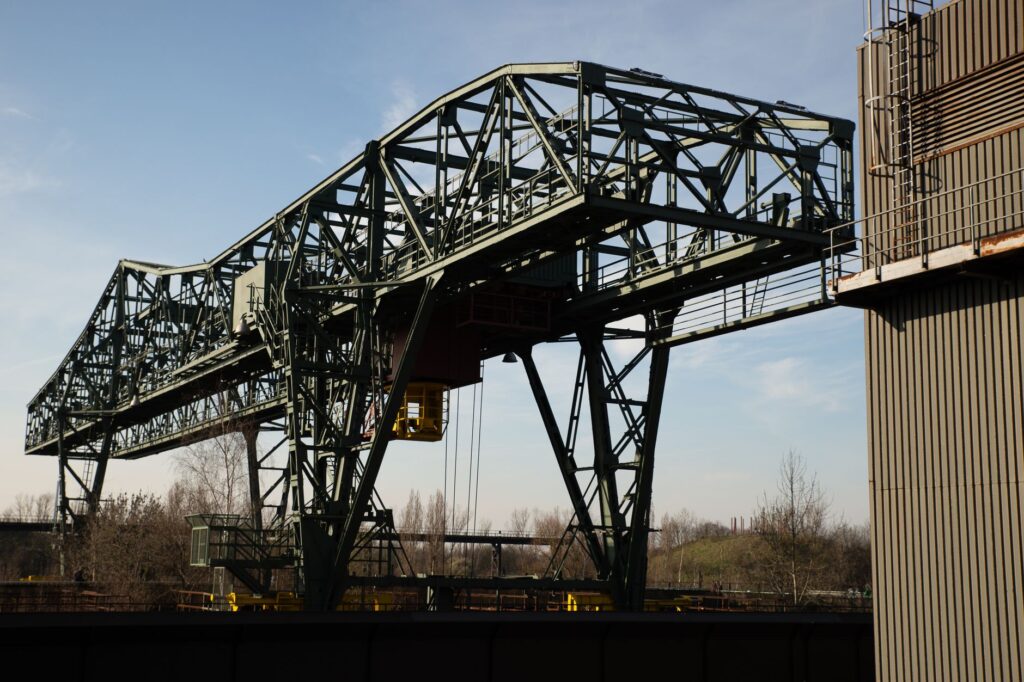
The success of the Nile corridor is understood not as an isolated system, but as the backbone of a broader multimodal network connecting river ports with major rail nodes and desert highways. At the industrial docks of Helwan, south of Cairo, barges unload iron ore and coal directly transferred via gantry cranes to freight cars operated by the national railway company. This precise synchronization between waterway and railway optimizes logistical costs for state-owned corporations dedicated to steel and cement production, strategic sectors for building new administrative cities on desert margins.
The true efficiency of transport in the Nile Valley lies in the fluidity of its transshipments: every ton moving from barge to train represents a victory against Egypt’s chronic road congestion.

Nonetheless, coordination between different ministries and regulatory authorities continues to present bureaucratic friction. While the River Transport Authority manages water and locks, rail branches belong to a separate public entity with distinct budgets and priorities. Private logistics operators have long demanded a single window and digital integration for loading permits to reduce turnaround times at docks. Pilot initiatives implementing GPS tracking across the barge fleet have proven that convoy rotation can double, though definitive rollout advances unevenly due to resistance from traditional small owners.
Ribes Communities and Artisanal Shipyards
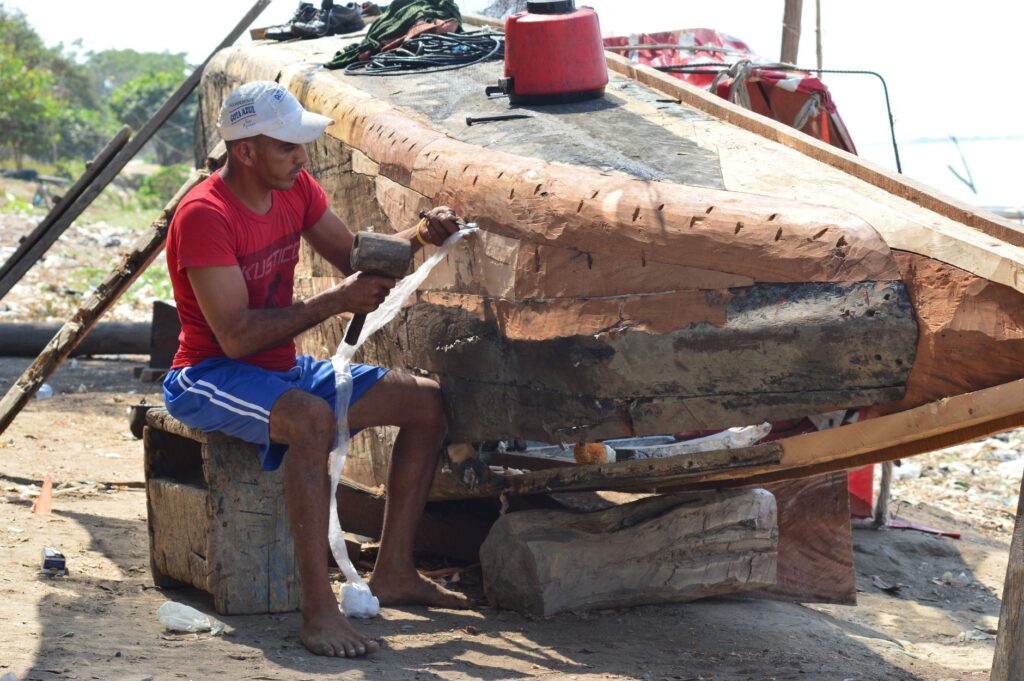
On the outskirts of mid-sized cities like Minya or Sohag, the Nile banks reveal their most human and artisanal dimension. Open-air shipyards continue building and repairing wooden and steel vessels using centuries-old techniques. Unlike the industrialized naval sector of Lower Egypt, these family workshops operate with hand tools, local acacia wood, and electric arc welders powered by noisy generators. The lives of these communities revolve around river rhythms; entire families participate in vessel maintenance, net weaving, and provisioning cargo boats stopping for fresh supplies and mechanical spare parts.
This riparian economy functions as a self-sufficient ecosystem where the river is not merely a commercial route, but the home and livelihood of thousands of families. Children learn to swim among railway bridge piers, and elders watch the silent passage of tugboats from adobe terraces. As regional development policies attempt to modernize transport infrastructure, constant risks emerge of displacing traditional communities guarding practical knowledge of Nile currents, winds, and shoals for generations—an intangible heritage as valuable as the concrete locks regulating its flow.
Practical guide
How to get there: Access to Upper Egypt’s main fluvial logistical nodes is typically achieved from Cairo via the main railway line ascending the valley or through domestic flights to Luxor and Aswan airports. Eastern Desert highways connect the capital with river ports in Qena and Sohag.
When to go: November through February offers the most favorable weather conditions to observe river traffic without the extreme summer desert heat, when temperatures routinely exceed forty degrees Celsius in enclosed valleys.
Documentation and permits: Access to industrial port facilities and major locks requires specific authorizations issued by the River Transport Authority and transport ministries. The zone maintains strict military security controls due to the criticality of energy and water infrastructure.
Local logistics: Following the fluvial corridor route overland requires renting four-wheel-drive vehicles with local drivers, as many secondary roads running parallel to irrigation canals lack adequate signage and feature unpaved segments.
Accommodation: Mid-sized cities like Asyut, Minya, and Sohag offer mid-range hotels geared toward business travelers and state officials. Advance booking is advisable since international establishment options are sparse outside Luxor and Aswan.
Currency and payments: The Egyptian Pound (EGP) is legal tender. Carrying cash from urban ATMs is essential, as credit card payments are not widespread in local markets or small riverbank repair workshops.
Health and safety: Drinking exclusively bottled water is strongly advised, alongside taking precautions against prolonged sun exposure during daytime outdoor journeys along riverbanks.
The Final Whisper of Water in the Delta
When the Nile finally fragments its flow into the historic Damietta and Rosetta branches before merging with the Mediterranean Sea, Upper Egypt’s industrial intensity gives way to a landscape of minor canals, rice paddies, and flooded orchards where navigation slows to a near halt. In this vast amphibious labyrinth, small wooden barges laden with vegetables and agricultural tools continue crossing turbid waters with the same simplicity as millennia ago, ignoring the feverish bustle of highways crossing the delta nearby. Here, at dusk, when desert golden light reflects off stagnant canal surfaces and mosque profiles blur in humid mist, the river reclaims its silent dignity. It is the ultimate reminder that, despite concrete dams, mechanized locks, and modern development urgency, true strength emanates from patient, inexorable waters.