

Introduction to a Masterpiece of Alpine Engineering
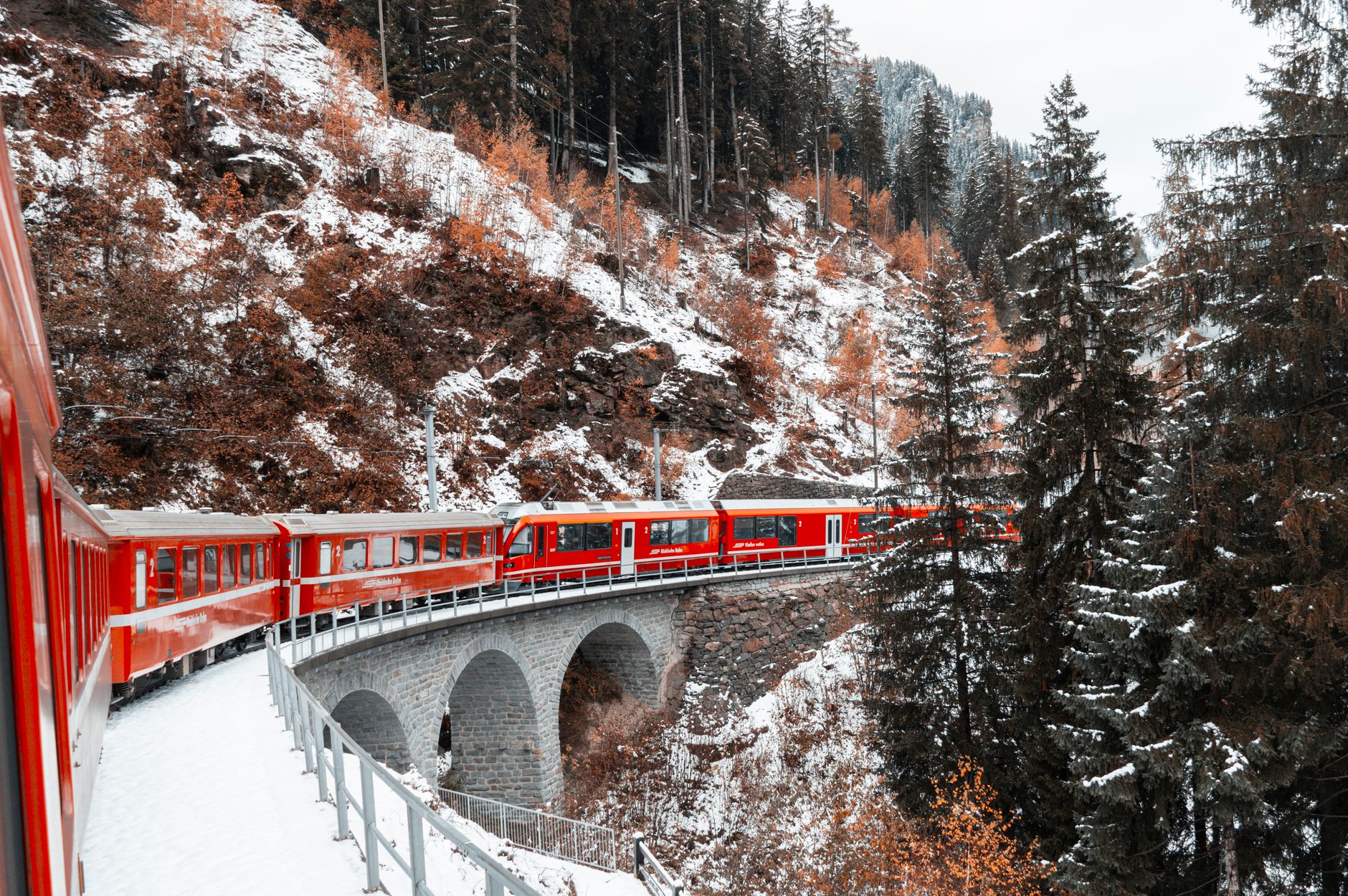
The European railway transport system conceals within its mountainous folds some of the most complex and fascinating engineering solutions in the world. Among them, the Bernina line, operated by the Rhaetian Railway (Rhätische Bahn), stands out not only for its scenic beauty but for its absolute technical rigor. This rail corridor connects the Swiss town of Chur—and by extension the heart of the Grisons—with the Italian municipality of Tirano, crossing the Bernina mountain pass at over two thousand two hundred meters above altitude.
Unlike other high-mountain railways that depend on rack-and-pinion systems to overcome steep gradients, the Bernina line adheres to a principle of pure adhesion. With ramps reaching a maximum gradient of 70 per mille, the trains successfully scale the alpine slopes through a meticulous layout and powerful electric traction. This characteristic makes the journey a fundamental case study on how civil infrastructure can be integrated into extreme natural environments without resorting to intrusive mechanical solutions.
The conception of this route in the late 19th century responded to an urgent need for regional connectivity. At a time when alpine valleys suffered deep isolation during the winter months, the arrival of the train brought a radical shift for commerce, cultural exchange, and the economic development of eastern Swiss cantons and the Italian region of Lombardy.
Historical Context and the Genesis of the Layout
The history of the Bernina line dates back to 1908, when construction works began under the direction of Swiss engineer Friedrich Hennings. Back then, transalpine transport relied almost exclusively on horse-drawn carriages and diligences—a slow, dangerous, and inefficient system during months of heavy snowfall. The Bernina Railway Company was established with the ambitious goal of uniting existing networks in the northern Alps with the southern slope toward Italy.
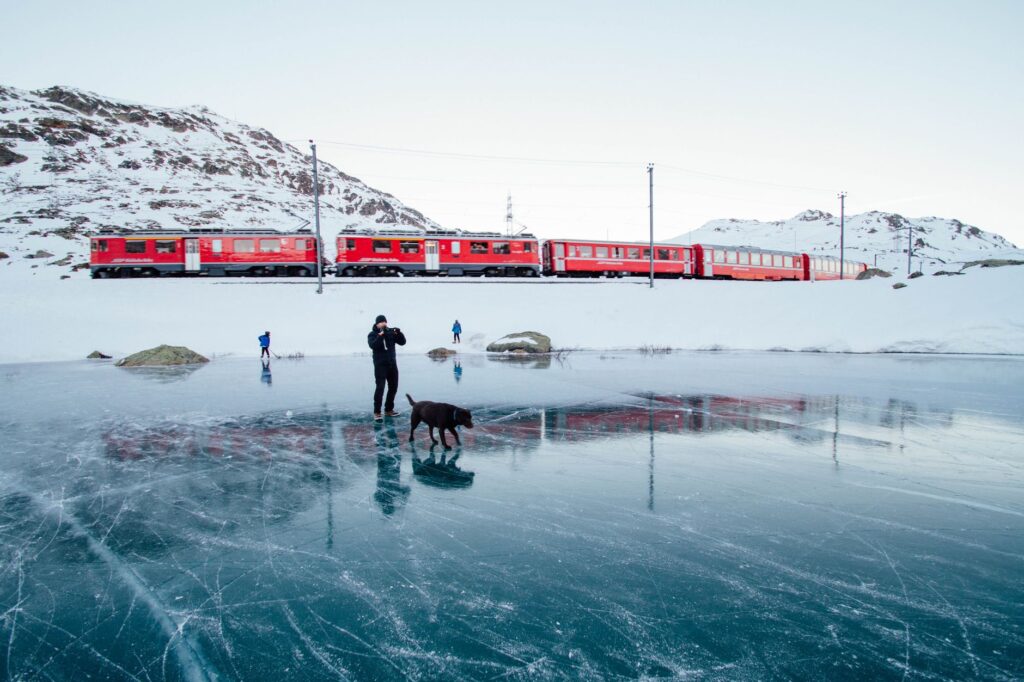
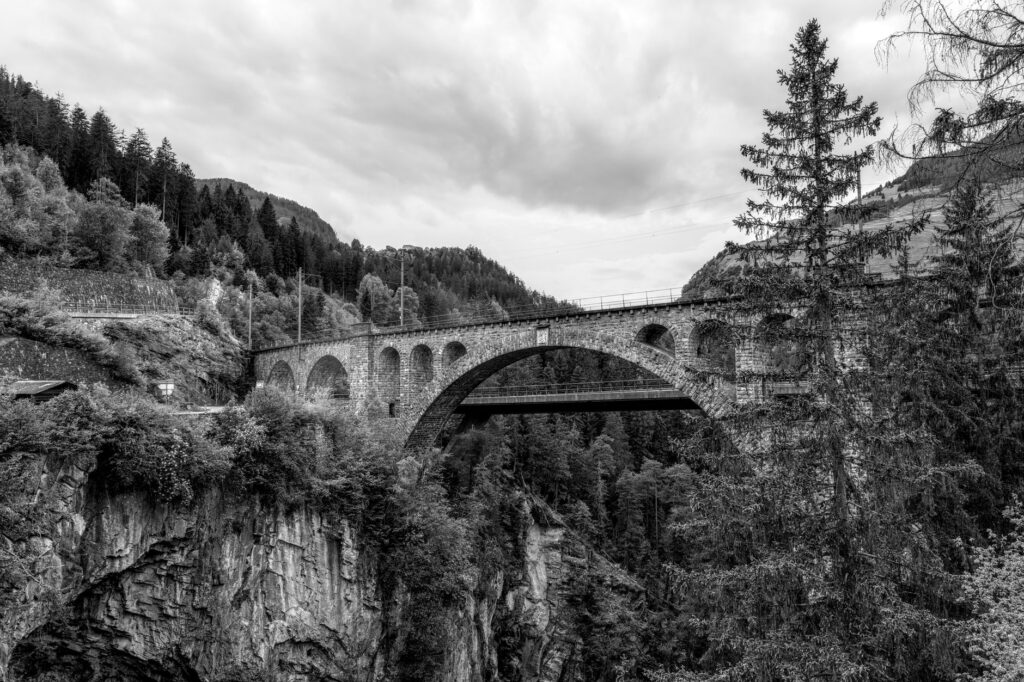
The technical challenges faced by the builders were monumental. Without modern heavy machinery, workers—mostly Italian immigrants—excavated tunnels through live rock, constructed masonry viaducts, and raised retaining walls to protect the tracks from frequent avalanches and rockfalls. The full inauguration of the route in 1910 marked a milestone in international civil engineering.
However, the early years of commercial operation were marked by financial difficulties derived from high maintenance costs and the effects of the First World War. It was in 1943 that the Rhaetian Railway absorbed the line, guaranteeing its long-term economic stability and standardizing its technical operation with the rest of the Swiss alpine network.
Technical Design: Gradients, Curves, and Electrification
From a strictly technical standpoint, the Bernina Railway is a marvel of geometry applied to topography. The line features a meter gauge (1,000 millimeters) and a total length of approximately sixty-one kilometers. What distinguishes this layout is the total absence of rack traction on a route where the altitude difference between the lowest point in Tirano and the highest point at Ospizio Bernina is one thousand eight hundred and twenty-three meters.

To overcome this elevation gain, engineers designed a layout filled with sharp curves and return loops. The most celebrated example of this architectural solution is the Brusio helical viaduct, a circular stone structure spanning 360 degrees that allows the train to gain or lose altitude within a very reduced radius, smoothing the gradient so locomotives maintain adhesion over steel rails.
The electrification of the line was implemented from the outset using single-phase alternating current, an advanced system for its time that minimized energy losses on long mountain journeys. Today, electrical substations along the route are powered almost entirely by hydroelectric energy generated within the alpine valleys themselves, consolidating the line as a benchmark for carbon-neutral mobility.
Cross-Border Connectivity and Geographical Integration
International connectivity is another fundamental pillar of the Bernina line. By connecting Switzerland with Italy, the railway acts as a diplomatic and economic bridge between two different cultural and administrative realities. The station in Tirano is not merely a terminal point, but a strategic transfer hub where travelers can transition into the Italian national railway network operated by Trenitalia.
Despite crossing an international border, operational protocols are designed to ensure exceptional fluidity. Customs controls, when necessary, are managed efficiently thanks to cross-border cooperation agreements between Bern and Rome. This integration demonstrates how transport infrastructure can dissolve complex geographical and political barriers.
Mountain railway infrastructure is not merely a mobility solution; it is a historic pact between human audacity and the geological resistance of the Alps.
The impact of this connection on local economies has been transformative. Communities that previously depended exclusively on subsistence agriculture and seasonal livestock farming have integrated sustainable tourism as a stable economic engine while preserving their architectural and landscape traditions.
UNESCO World Heritage Status: Recognition and Conservation
In 2008, the United Nations Educational, Scientific and Cultural Organization (UNESCO) inscribed the Albula and Bernina lines onto the World Heritage list. The decision recognized the exceptional nature of the layout as an outstanding example of the application of railway technology in a high-mountain alpine environment.
The UNESCO declaration is not a mere honorary title, but a legal and institutional commitment to heritage conservation. The Rhaetian Railway must comply with strict regulations to preserve the surrounding landscape, historic masonry bridges, and original stations—many built at the beginning of the 20th century with a marked regional architectural style.
This international status has increased tourist pressure, which in turn has forced operators to implement rigorous capacity management plans. Protecting the natural environment against overcrowding is a constant challenge addressed through the regulation of frequencies and the promotion of environmentally responsible tourism.

Winter Operations and Resilience Under Extreme Conditions
Operating a railway line at over two thousand meters of altitude during winter months requires logistical and operational infrastructure with zero margin for error. Snowfalls in the Bernina pass can accumulate several meters within hours, blocking roads and isolating entire communities. To keep the track open, the Rhaetian Railway deploys a specialized fleet of snow-clearing equipment.
Among these vehicles, powerful self-propelled rotary snowplows stand out—some historical yet maintained in perfect working order, and others of the latest generation equipped with high-power diesel engines. These machines advance along the track, cutting compact blocks of snow and ice and hurling them dozens of meters away to clear the corridor.
The resilience of the system is tested every season. Engineers and operators constantly monitor slopes using advanced geotechnical sensors that detect ground movement or avalanche risks, allowing rail traffic to be stopped preventively before any safety incidents occur.
Practical Information for Trip Planning
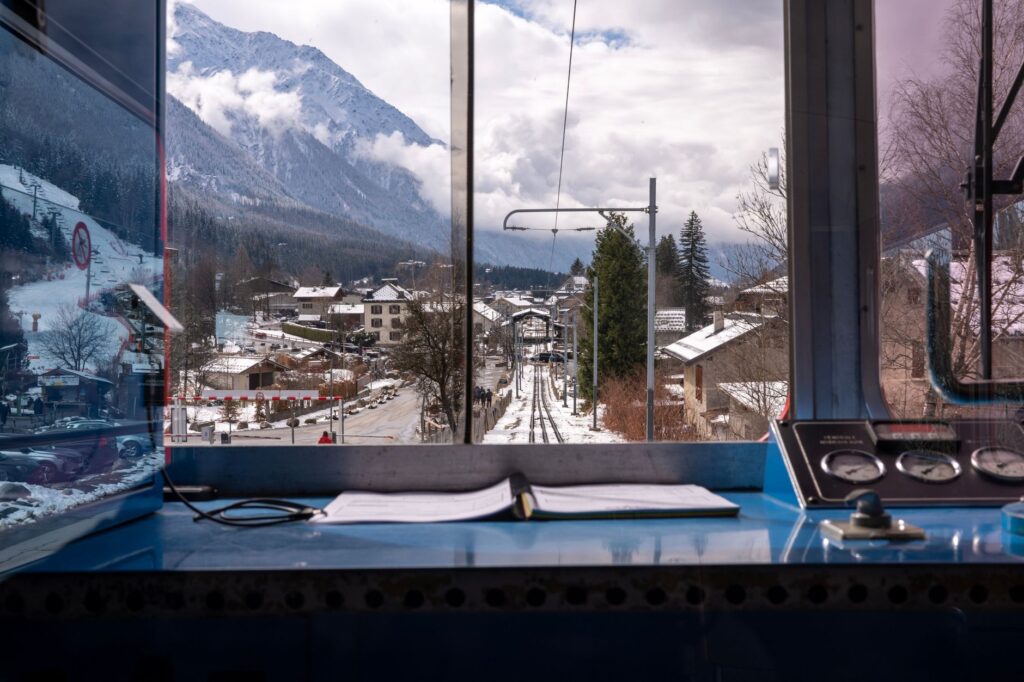
For professionals, researchers, or travelers interested in studying or traveling the Bernina line, rigorous planning that accounts for the operational characteristics of the Swiss rail network is essential.
- Main Route: The complete journey between Chur and Tirano covers approximately 144 kilometers when combined with the Albula line, or travelers can run exclusively the Bernina section between St. Moritz and Tirano (about 50 kilometers).
- Journey Duration: The full trip aboard regional trains takes about two and a half hours for the Bernina section alone, while the famous Bernina Express requires around four and a half hours from Chur.
- Tickets and Reservations: Regional trains accept standard Swiss network passes (Swiss Travel Pass) and do not require mandatory seat reservations. In contrast, the Bernina Express requires prior reservation and the payment of a panoramic seat supplement.
- Connections: In Tirano, there are direct connections with Trenitalia regional trains toward Milan. In Chur and St. Moritz, connections link to the main Grisons and Zurich networks.
- Recommended Season: Although operational year-round, the winter months (December to March) offer the most demanding technical conditions and unique snowy landscapes, while summer allows a clear view of civil engineering details and alpine vegetation.
The Future of Sustainable Alpine Mobility
Looking ahead to coming decades, the Rhaetian Railway continues to invest in modernizing its fleet and improving the energy efficiency of its facilities. The gradual incorporation of latest-generation multiple-unit trains aims to reduce electricity consumption per passenger and improve accessibility for passengers with reduced mobility, adapting historic trains to contemporary inclusion regulations.
Likewise, the digitalization of signaling and traffic control systems optimizes frequencies on a single-track line, increasing transport capacity without needing to double the track layout—which would have caused an unacceptable environmental impact on the fragile alpine ecosystem.
True innovation in alpine transport does not lie in excessive speed, but in the ability to endure while minimizing the ecological footprint on the territory.
In conclusion, the Bernina line stands as a paradigmatic model of how railway engineering can serve regional development, preserve historical heritage, and demonstrate that high-mountain public transport can be efficient, safe, and deeply respectful of the environment.


