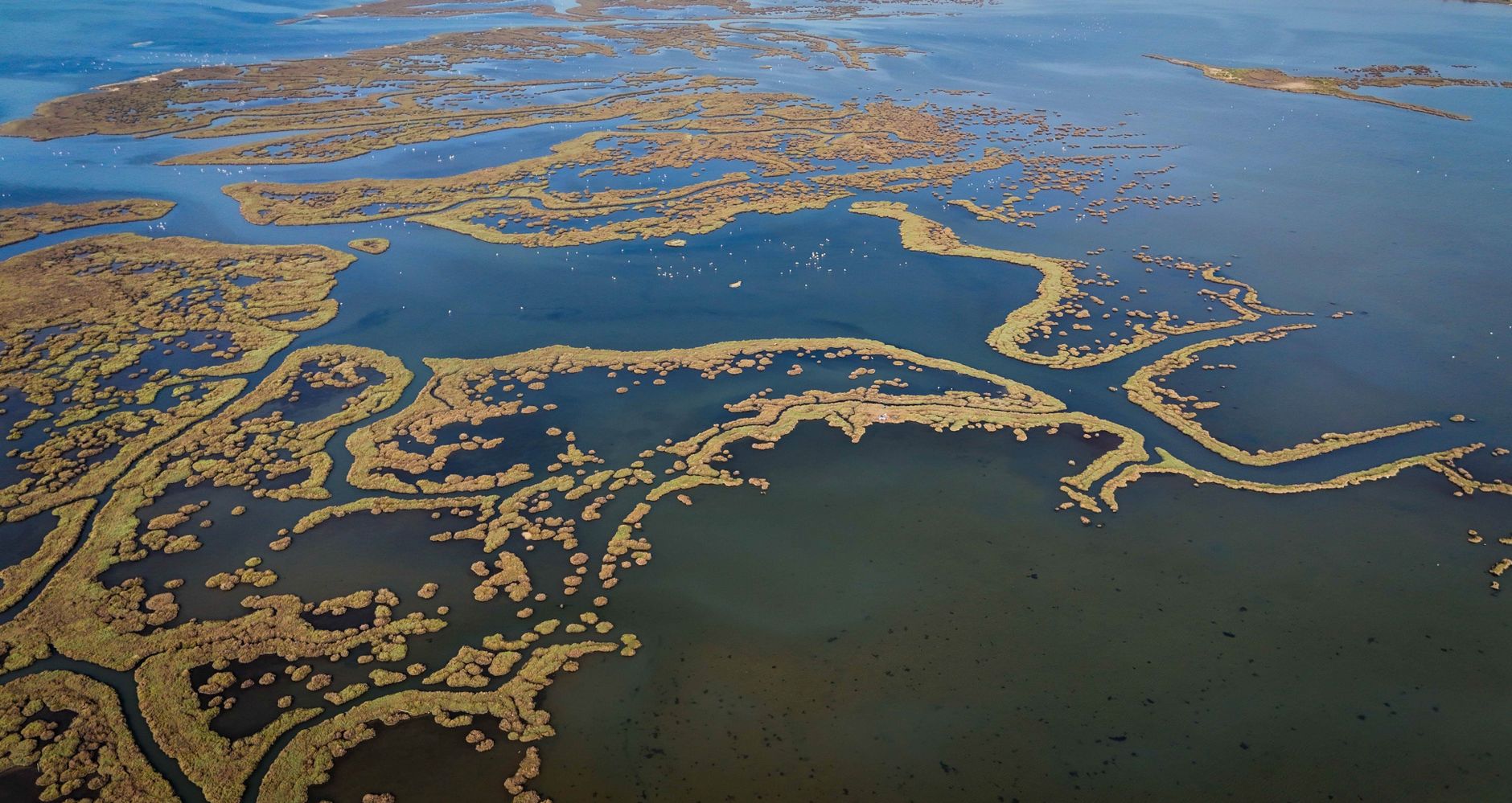

The Okavango Delta is not merely an exceptional geographical feature in the heart of the northern Kalahari; it is, above all, a vast archipelago of land and water where conventional transport engineering rules lose all validity. In this liquid labyrinth spanning over fifteen thousand square kilometers, connectivity is measured neither in kilometers of asphalt nor in rail frequencies, but in the capacity to adapt to the relentless rhythm of seasonal floods. The scarcity of permanent terrestrial infrastructure turns every journey into an exercise in intermodal precision, where fiberglass launches coexist with bush aviation and traditional pole-driven vessels.
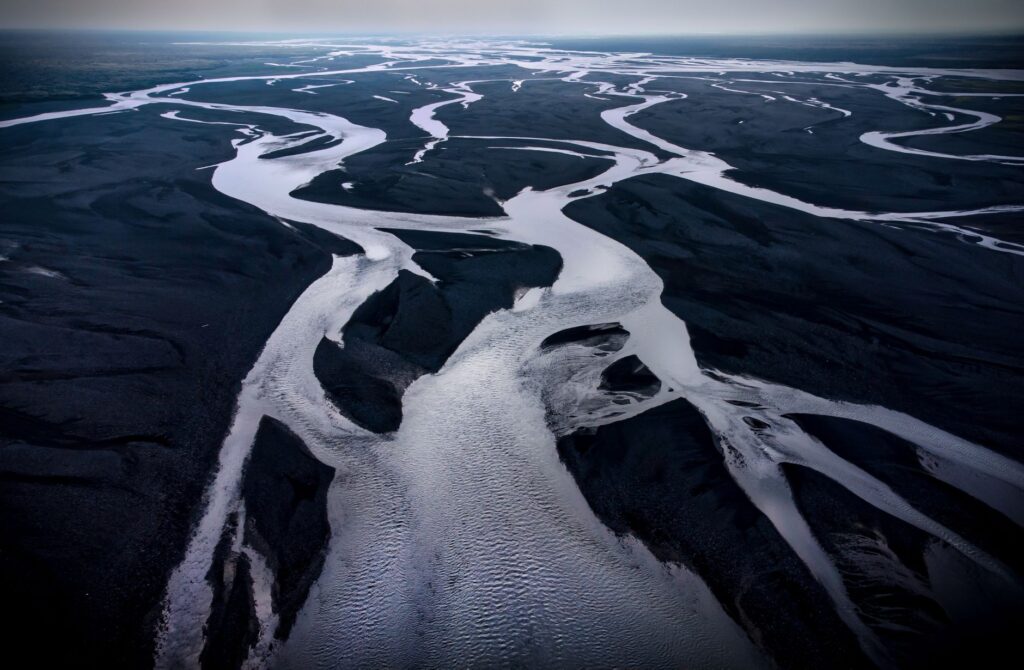
Understanding the logistics of this region requires stripping away Western parameters of mobility. Here, routes shift every few weeks according to the volume of water descending from the Angolan highlands, a hydrological cycle with a months-long delay that transforms dry grasslands into navigable lagoons. The fragility of the ecosystem imposes severe restrictions on any attempt at massive mechanical intervention, forcing tourist operators, local administrations, and indigenous communities to rely on a delicate balance of low-impact transport modes that guarantee both subsistence and access to remote enclaves.
Bush Aviation as the Vital Artery of Isolation
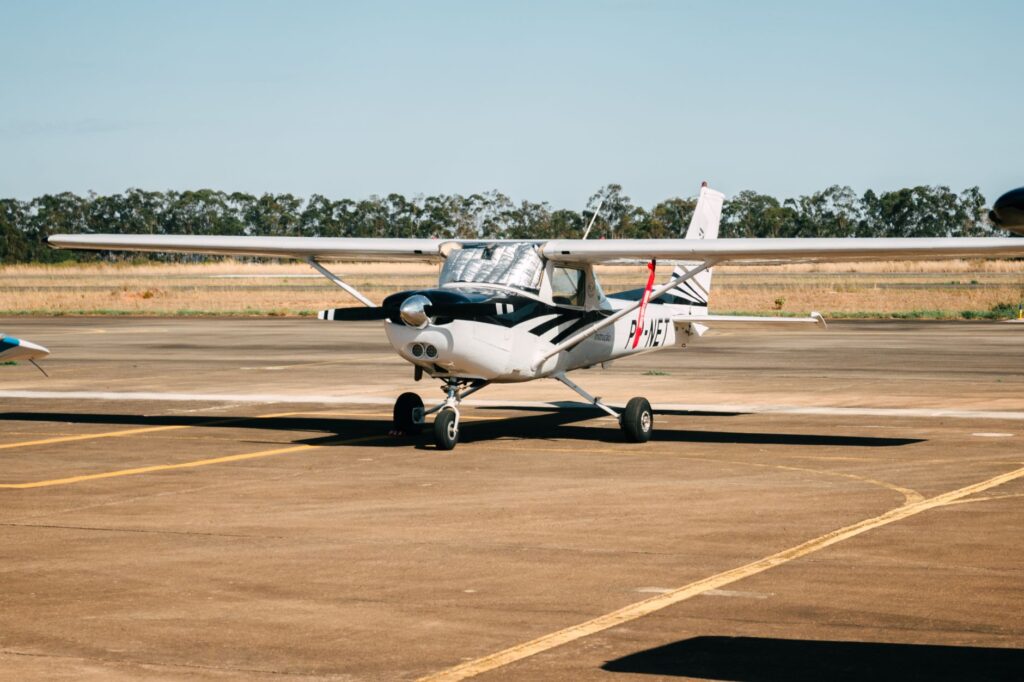
When the waters of the Okavango flood the plains, the dirt airstrips located on the main islands become the sole umbilical cords with Maun, the region’s tourism and logistics capital. Small twin-engine and single-engine aircraft with reinforced landing gear operate continuously, transporting everything from basic medical supplies to international travelers seeking exclusive access to tribal camps and private concessions.
This improvised airport system demands extraordinary technical expertise from local pilots. The airstrips, marked by stakes and frequently inspected to clear wildlife before each touchdown, depend entirely on weather conditions and ground moisture. The shifting meteorology of the basin, marked by sudden summer storms and morning mists over the channels, adds a permanent risk factor that tests the reliability of this high-sabana aerial connectivity model.
Logistics of Fuel and Heavy Supply by Light Aircraft
Supplying a tourist camp or an isolated community deep within the delta poses a titanic logistical challenge. With no drivable roads for half the year, every liter of fuel, every ton of non-perishable food, and every mechanical spare part must be portioned and loaded into the cargo holds of utility aircraft. This model exponentially increases operating costs, turning inventory management into a meticulous discipline where waste has no place.
Air transport cooperatives coordinate their daily routes by strictly optimizing takeoff and landing weights on short, muddy strips. Local operators must navigate stringent conservation regulations to prevent noise pollution and protect the migratory routes of sensitive species such as the African wild dog or the elephant, integrating commercial aviation into the strict environmental management plans of the delta.
The Universe of Mokoros: Ancestral Precision Navigation
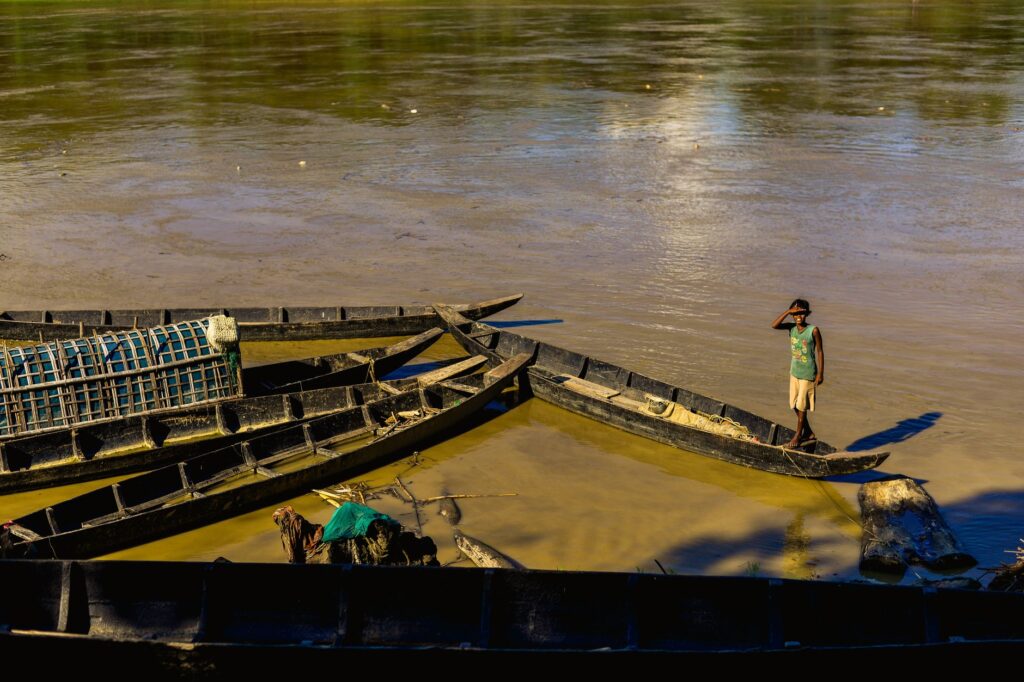
If aviation represents speed and long-haul linkage, the mokoro constitutes the backbone of local mobility in the interior channels. Traditionally carved from the trunks of secular trees such as mahogany or African ebony, these flat-bottomed vessels have largely evolved into fiberglass to protect local forests, yet their propulsion principle remains unchanged: an experienced boatman, known as a poler, propels and steers the craft using a long wooden pole braced against the muddy riverbed.
Navigating a mokoro demands expert reading of currents, submerged sandbanks, and the presence of dangerous wildlife such as hippopotamuses and crocodiles. Local polers act as true route captains, memorizing the changing geometry of channels that reconfigure with each flooding and sedimentation season. This transport medium not only sustains the tourism economy of walking and water safaris, but also serves as the everyday vehicle for riverside villagers visiting neighboring settlements or accessing traditional gathering areas.
The Challenge of Maintenance and Safety in Shallow Waters
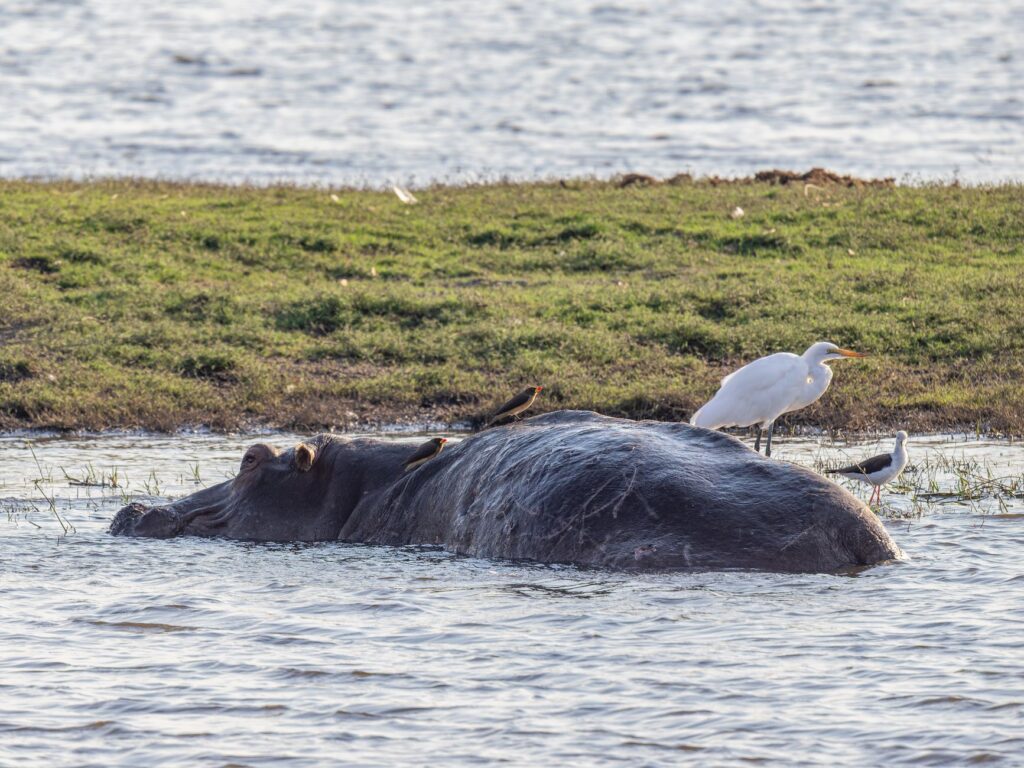
Despite its apparent simplicity, the intensive use of interior channels poses complex operational challenges. Unchecked growth of papyrus and water lilies can block entire routes within weeks, demanding constant manual clearing by communities. Furthermore, the interaction between tourist watercraft and aquatic fauna requires strict protocols to avoid collisions with territorial hippos, a latent threat requiring both environmental respect and tactical reflexes from guides.
The training of new polers is passed down from generation to generation, combining ethnobotanical knowledge with the mental cartography of the delta. Local associations regulate safety standards and tariffs to ensure a fair distribution of revenue generated by this activity, while protecting the intangible heritage tied to small-scale river navigation.
Motorized Barges and Seasonal Heavy Freight
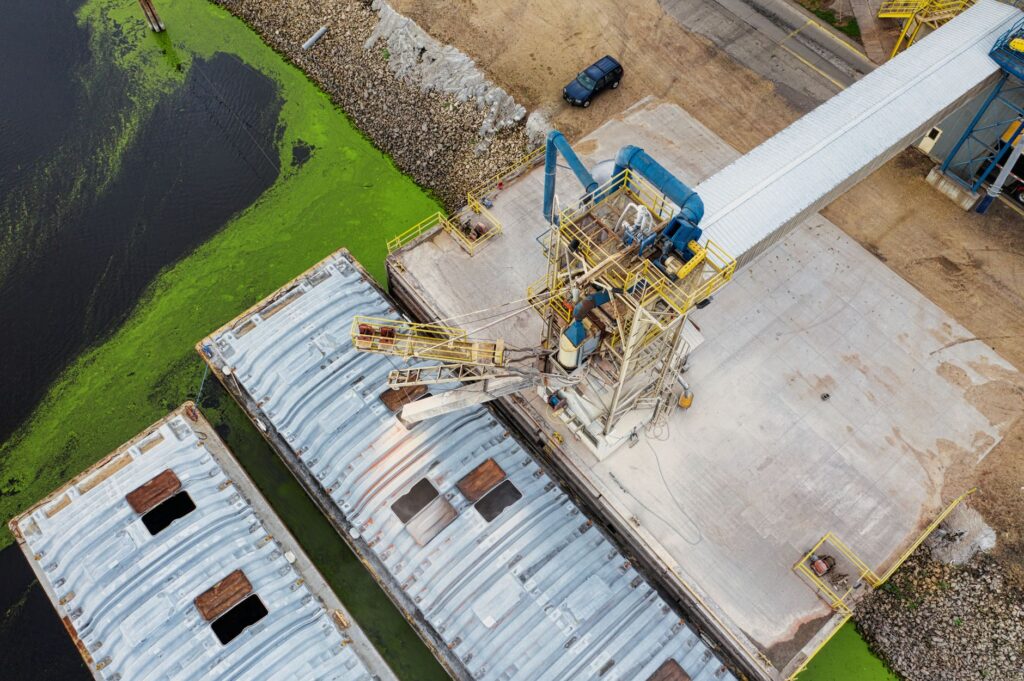
When water levels permit, flat-bottomed steel barges equipped with powerful outboard motors serve as fluvial cargo trucks. These platforms are capable of carrying considerable volumes of construction materials, electrical generators, furniture, and fresh food supplies destined for tourism infrastructure upgrades ahead of the high season.
Operating these heavy vessels requires channels with a minimum depth to prevent grounding in meandering sandbanks. Captains must anticipate interior tides and abrupt water level shifts caused by evaporation and seepage into the Kalahari sands. Intermodal coordination between these barges and the four-wheel-drive trucks waiting at peripheral dry ports is the gear that keeps the regional economy running.
The delta tolerates neither haste nor mechanical imposition; its transport network is a living organism that contracts and expands at the dictation of the Okavango waters.
Cargo transfer points located at the edges of the wetland, known locally as mokoro stations or gabarage points, act as improvised yet highly efficient logistics terminals. At these enclaves, goods arriving from the national road network are transferred to fluvial and aerial transport modes, demonstrating remarkable operational resilience in the face of geographical and climatic adversities.
Socioeconomic Impact on Insular Communities
The reliance on such a fragmented and costly transport system generates profound repercussions on the daily lives of populations residing on the delta’s islands. The cost of groceries, access to secondary educational services, and emergency healthcare are directly conditioned by the availability of fuel for bush planes and motorized barges.
During periods of extremely low water or extreme floods that block both airstrips and navigable channels, communities experience transient episodes of severe isolation. Bostwanan health authorities deploy mobile aerial clinics to bridge these gaps, though structural vulnerability remains a persistent challenge for local development councils seeking to balance environmental conservation with social welfare.
Sustainable Tourism and Logistical Sovereignty
Botsuana’s implemented model of low-volume, high-value tourism development has helped finance part of the transport infrastructure required to keep remote areas connected without compromising the ecological integrity of the habitat. However, continuous debate surrounds the need to diversify supply sources and reduce exclusive reliance on imported fossil fuels for light aviation and motorized boating.
Pilot initiatives centered on solar energy for recharging smaller electric watercraft and optimizing cargo routes through logistical algorithms are beginning to take hold in the most advanced camps. These technological solutions seek to mitigate the carbon footprint of the supply chain while ensuring that delta connectivity remains compatible with the preservation of one of the planet’s most critical wildlife sanctuaries.
Practical guide
- Getting There: The primary gateway to the Okavango Delta is Maun International Airport (MUB), connected via regular flights from Johannesburg and Gaborone. From Maun, transfer to interior camps is strictly conducted via bush planes or specialized 4×4 vehicles depending on the season.
- When to Visit: The peak flood and wildlife viewing season runs from May to October (dry southern winter months with maximum delta flooding). From November to green season brings summer rains, newborn wildlife, and more flexible logistics pricing.
- Documentation and Requirements: Citizens of the European Union and North America do not require a visa for tourist stays under 90 days in Botswana. A valid passport with at least six months validity and sufficient blank pages is mandatory. Malaria prophylaxis is recommended alongside routine vaccinations and yellow fever certification if arriving from endemic areas.
- Currency and Payments: The official currency is the Botswana Pula (BWP). International credit cards are accepted at most establishments in Maun, but on insular camps and for tipping guides or polers, cash in Pula or clean US dollars is indispensable.
- Luggage and Restrictions: Due to space limitations on bush planes, luggage must strictly consist of soft duffel bags (hard-shell suitcases are prohibited), and total weight must generally not exceed 15 to 20 kilograms per passenger, including camera equipment.
Practical guide
The journey across this flooded territory concludes with the certainty that the region’s true wealth lies in its capacity to resist modern homogenization. Here, where every trip is a negotiation with nature, the traveler understands that mobility is not an acquired right, but an ephemeral privilege granted by the waters of the river that never reaches the sea.