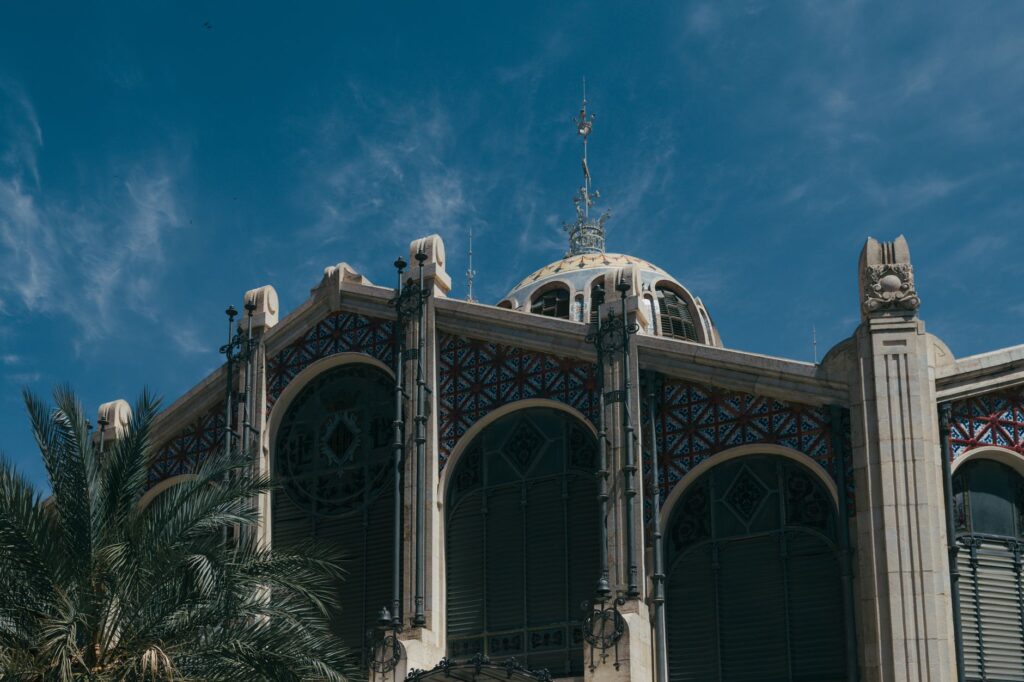
A few miles from the Portuguese border, where the Guadiana River widens its course and traces a plain of endless horizons, the city of Badajoz guards one of the most singular commercial and culinary traditions on the Iberian Peninsula. The Central Food Market, with a structure that combines early 20th-century industrial functionality with the warmth of exposed brick and limestone, is far more than a mere point of economic exchange. It operates as the great living archive of a culture shaped by the heartbeat of the dehesa, survival in a borderland territory, and a reverential respect for seasonal produce. Here, among stalls where the ham cutter’s blade glides with surgical precision and aromas of smoked paprika and wild herbs permeate the air, the gastronomy of Badajoz reveals itself in all its complex and austere dignity.
To comprehend the magnitude of this food sanctuary, one must delve into its social architecture. Early in the morning, when the morning mist still drifts lazily over the Guadiana floodplains, the metal shutters roll up to make way for a precise choreography. Local producers, livestock farmers from the Olivenza region, and small-scale horticulturists from the minor river valleys descend from vans laden with wooden crates holding the treasures of the Extremaduran countryside. There is no shrillness or empty commercial rhetoric; the relationship between vendor and buyer is sustained by decades of mutual trust, an unwritten code where quality is tested by touch and price is sealed with a firm handshake. In this space, time slows down, allowing the visitor to understand that eating here is, above all, an act of belonging to a harsh yet infinitely generous landscape.
The Invisible Geography of the Dehesa and the Iberian Pig
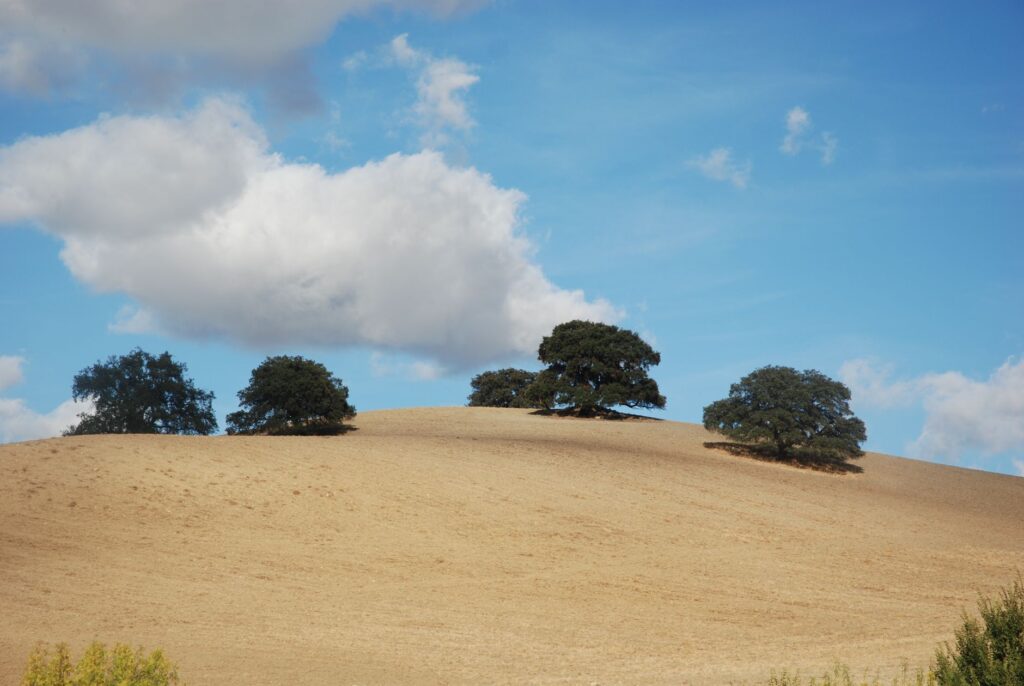
The territory surrounding Badajoz is a vast green and golden ocean dominated by centuries-old holm oaks and cork oaks. This unique ecosystem, the dehesa, constitutes the invisible engine supplying the region’s finest tables and fueling a pork culture without parallel in the western world. During the months of the montanera, Iberian pigs roam freely beneath the tree canopies, fattening exclusively on acorns and fresh grass. This natural cycle, where human patience aligns with nature’s rhythms, transfers intact into the interior of the Central Market, where cured cuts hang from the ceilings like stalactites of deep and persistent flavor.
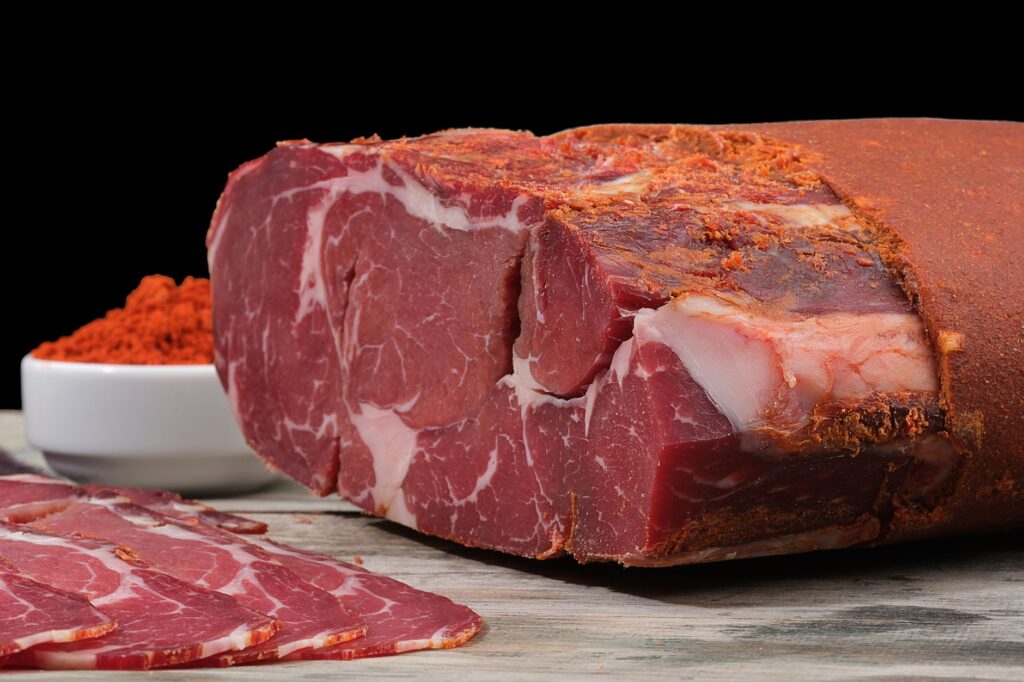
In the market’s specialized stalls, professional cutters practice a sort of secular priesthood. The loin cut, homemade sausage, and, of course, 100% Iberian acorn-fed ham are treated with nearly liturgical reverence. Each vein of marbled fat tells a story of miles traversed under the Extremaduran sun, of slow maturation in natural cellars where mountain winds modulate exact salinity. Conversing with veteran charcuterie vendors reveals subtleties escaping the untrained palate: the subtle difference between an acorn from a young holm oak versus a centenarian tree, or how traditional curing in nearby towns like Jerez de los Caballeros grants an unmistakable complexity to every slice.
The Iberian pig is not merely the economic sustenance of these lands, but the conducting thread uniting the physical geography of Extremadura with its deepest emotional memory.
The Temple of the Orchard and Dry-Land Harvests
Yet the Badajoz market does not live by pork alone. Moving through its central aisles, the chromatic palette shifts abruptly toward earthy tones, intense reds, and vibrant greens from the Extremaduran market gardens. Smooth-skinned Raf tomatoes, generously sized roasting peppers, zucchini grown in traditional terraced plots, and stone fruits emitting an intoxicating perfume coexist in perfect harmony. Local farmers champion native varieties that the globalized commercial circuit has relegated to oblivion, betting on biodiversity sustained by the dedication of entire families devoted to small-scale agriculture.
Among dry-land products, legumes and seasonings anchoring the traditional recipe book stand out. Extremaduran migas, almond-based white gazpacho, and tomato soups find their raison d’être in these ingredients. La Vera smoked paprika, with its unmistakable aroma of oak smoke, and extra virgin olive oil pressed from Manzanilla Cacereña and Cornicabra olives compose the aromatic baseline supporting all local cooking. Each vegetable stall functions as a small lesson in applied botany, with vendors offering advice on the exact ripening stage needed to prepare a memorable sofrito or summer salad.
The River Fish Market and Freshwater Treasures
Although Badajoz sits inland, its relationship with the Guadiana and Caya rivers has historically defined a highly peculiar river-fishing culture, transformed today yet latent in the market’s fish stalls. While traditional river species have evolved due to reservoir regulation, the presence of tencas—the undisputed king of local waters—remains an unquestionable symbol of gastronomic identity. These small river fish, with firm flesh and subtle flavor, are traditionally prepared fried or in a mild escabeche, forming one of the most sought-after tapas in old town taverns.
Alongside tencas, the market’s seafood supply draws directly from the fish markets of Huelva and Portugal, given close geographic proximity to the Atlantic and the Algarve. White prawns, cuttlefish, and fresh fish arrive every dawn to supply households and the city’s most demanding restaurant kitchens. This dual soul—inland and Atlantic-frontier—endows Badajoz gastronomy with a fascinating eclecticism, where the deep flavor of the dehesa engages in frictionless dialogue with the freshness of marine breezes.
The Art of Conventual Pastry and Centenarian Ovens
The journey through the Central Market and its surroundings would remain incomplete without pausing at the chapter dedicated to sweets, deeply influenced by monastic tradition and provincial artisan bakeries. In stalls dedicated to traditional confectionery, aromas of pork lard, sesame, toasted almond, and cinnamon evoke a conventual recipe book remaining virtually unchanged for centuries. Periquillos, wine ring-shaped pastries, sweet bread fritters, and the famous perrunillas are crafted following formulas passed down across generations, where haste is strictly forbidden.

Local bakers, meanwhile, keep wood-fired ovens burning to produce dense-crumbed country loaves and crusty village breads designed specifically to withstand hearty stews and absorb meat juices. Conversing with master bakers reveals profound knowledge of local flours and natural fermentation times, demonstrating that bread here is no mere accompaniment, but the structural foundation upon which all food rests.
The Culture of Neighborhood Grocers and the Vermouth Ritual
Outside the market’s main halls, the gastronomic pulse expands toward historic grocery shops and taverns dotting the arched streets of Badajoz’s historic center. These establishments, with dark wooden shelves crowded with local wine bottles, select canned preserves, and goat cheeses from La Serena or Los Ibores, act as the market’s natural extension. Here, every midday, the sacred ritual of vermouth is celebrated, accompanied by a tapa of aged cheese or olives seasoned with savory and thyme.
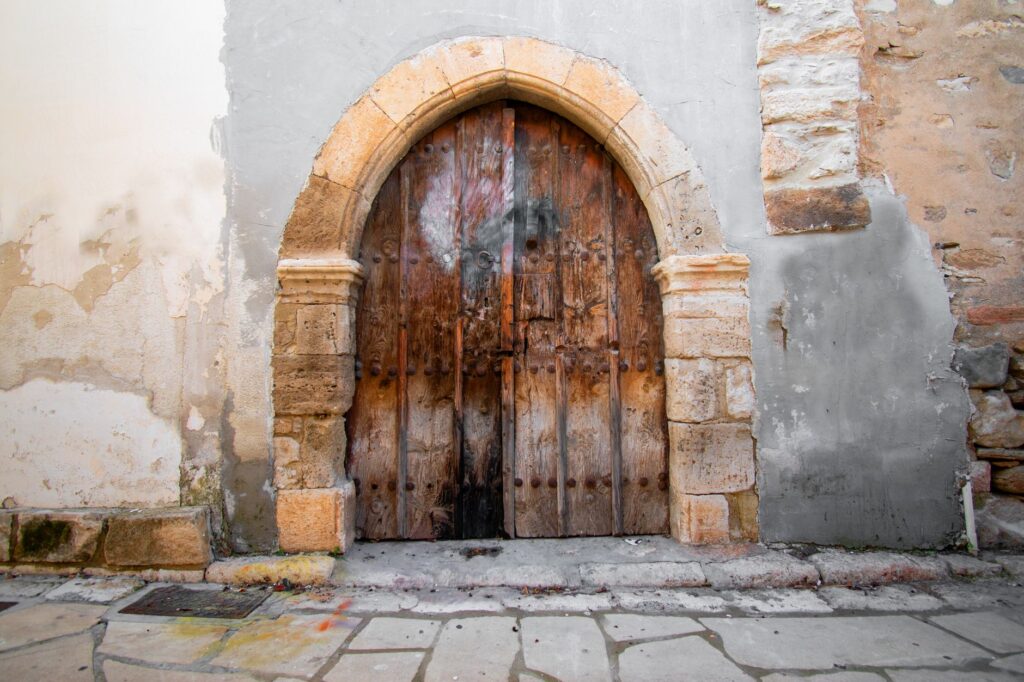
The camaraderie between tavern owners and regular patrons generates an atmosphere of unhurried conversation, debating local politics, football, and, naturally, the state of the harvest or the price of Iberian pork. These informal spaces preserve the authenticity of a city that has managed to retain its frontier character, open to curious travelers yet firmly anchored in rural and livestock roots.
The true wealth of Badajoz does not reside in isolated monuments, but in the seamless continuity between its natural landscape, its markets, and the daily lives of its people.
Practical guide
Planning a gastronomic visit to the Badajoz Central Market and its surroundings requires understanding local times and customs to enjoy the experience to its fullest.
When to go
Ideal months to visit Badajoz span autumn and spring, when temperatures are mild and coincide with key montanera seasons and orchard harvests. The market opens Monday through Saturday from 07:00 to 14:30 hours, with the window between 09:00 and 11:30 seeing the highest commercial dynamism and activity.
How to get there and get around
Badajoz boasts excellent rail connections, including medium-distance high-speed trains linking it with Madrid, Mérida, and Lisbon. The Central Market sits right in the urban core, just minutes on foot from Plaza de España and the Alcazaba, making it exceptionally easy to explore the entire commercial zone on foot.
Essential purchases and tastings include acorn-fed ham with designation of origin, goat and sheep cheeses from Extremaduran pastures, La Vera smoked paprika, and artisan convent sweets. In surrounding taverns, trying fried tencas, Extremaduran migas, and red wines from the Ribera del Guadiana Designation of Origin is unmissable.
The final sigh of this route through the pacense heartland is experienced at dusk, when golden evening light bathes the Moorish Alcazaba’s ancient walls and casts long shadows over arched plazas. In terraces near the market, as aromas of burning wood and traditional stews begin emerging from domestic kitchens, the city submerges into serene stillness. It is the exact moment when the traveler understands that Badajoz’s true essence is not found in conventional tourist guides, but in daily fidelity to a way of understanding life where time, land, and food maintain an indestructible pact of authenticity and mutual respect.