The Echoes of Glass in the Shadows of Guadarrama
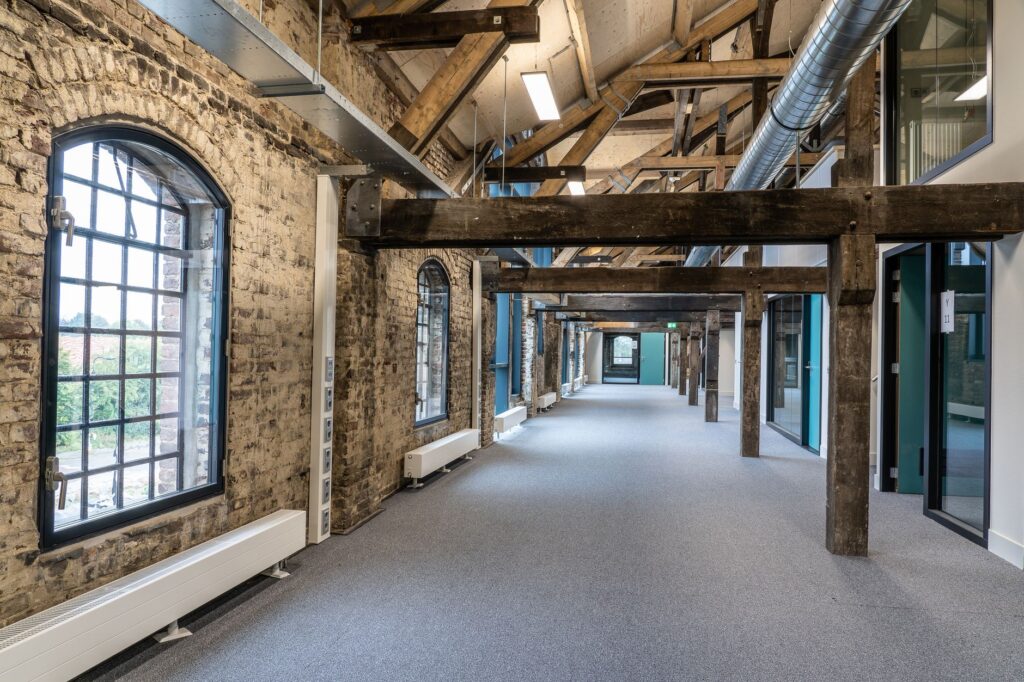
In the heart of the Royal Sites of San Ildefonso, where the granitic stone of the mountain range near Madrid seems to retain the freshness of northern forests, an art persists that defies the fragility of time. The Royal Glass Factory of La Granja is not merely a monument to industrial archaeology, but a living organism where the heat of the furnaces continues to shape matter with the same age-old gestures. Here, fire is not an instrument of destruction, but the medium through which pure silica sand is transmuted into diaphanous surfaces that once reflected the most opulent salons of the European Enlightenment. Walking through these workshops with their colossal ceilings and noble timber beams means entering a territory where the physics of heat and the geometry of light dialogue in perfect balance.
The history of this royal workshop traces its roots back to the 18th century, when the Bourbon monarchy decided to emulate great continental manufactories such as Saint-Gobain in France. King Philip V, fascinated by the luxury and lavishness of European courts, commissioned Flemish master Jean Jacques Plé to weave northern expertise together with the mineral resources of the Castilian plateau. Ever since, the destiny of San Ildefonso has remained inextricably linked to the transparency of glass. Today, the master artisans who populate this complex do not act merely as curators of a static museum; they are direct heirs to a lineage of blowers, cutters, and polishers who have passed down their secrets from generation to generation through rigorous practice and the complicit silence of the workshop.

The Alchemy of Raw Materials and Furnace Geometry
The process that transforms stone into crystal begins long before the blower brings their pipe close to the blazing crucible. The selection of raw materials constitutes the first link in a chain where the slightest error proves fatal. Quartz sand, extracted from carefully tested deposits, is mixed with soda, potash, and metallic oxides in proportions that respond to empirical formulas perfected over centuries. Inside the large reverberatory furnace, the mass reaches temperatures exceeding one thousand two hundred degrees Celsius, melting into an incandescent magma that requires constant monitoring by the workers.
The master glassmaker does not work blindly; their mastery relies on a millimetric reading of the color and viscosity of the molten glass. Through the metal pipe, a hollow and heavy iron tube, the artisan gathers an initial small portion known as the gather, blows the first breath of air to create the matrix bubble, and, through successive additions of paste and calculated turns over the cast-iron marver plate, begins to shape the volume of the piece. The blower’s respiration sets the pulse of the workshop: a measured rhythm that demands exceptional physical condition and absolute mental coordination with assistants who prepare tongs, shears, and fruitwood molds.
The Suspended Gesture: The Art of Freehand Blowing
Observing a master blower at work is equivalent to witnessing a choreography where gravity and centrifugal force act as invisible partners. With the pipe firmly supported on the workbench, the artisan rolls the iron while manipulating the incandescent mass with manual tools that have barely varied since the Renaissance. Steel pliers allow the neck of a large decanter to be constricted, a small axe is used to sever the surplus, and damp beechwood molds confer external symmetry without leaving marks on the polished surface.
This absolute command of the medium admits no improvisations. If the temperature of the piece drops too quickly, the glass shatters with a dry, crystalline sound, forcing the entire process to restart. If, on the contrary, the material remains excessively hot, it loses the consistency needed to support its own weight and collapses onto the workshop floor. It is within this narrow margin that the mastery of La Granja’s workshops lies: in the ability to read the exact instant when matter reaches its peak plasticity in order to eternalize it through controlled cooling in annealing lehrs.
Deep Cutting and Acid Polishing
Once the piece has cooled to room temperature and internal stresses have been eliminated through a slow thermal process, the object, left in its pristine transparency, is transformed through cutting. In the rooms adjacent to the hot workshop, lapidary masters lean over sandstone grinding wheels and corundum disks spinning at high speed. The sound of water mixed with emery powder fills the atmosphere, while the artisan draws complex geometric, floral, or heraldic motifs onto the crystalline surface.
Unlike industrial blown glass, which relies on mechanical molds for its finishes, the historic cutting of San Ildefonso demands a steady pulse and prodigious visual memory. The lapidary has no printed guides on the glass or pitcher; they hold the piece with their bare hands, guiding it against the rotating edge with millimetric pressure. Too much force punctures the vessel’s wall; too little leaves an opaque groove that ruins hours of work. Following the initial rough shaping, the most delicate pieces undergo controlled hydrofluoric acid baths, a chemical procedure that gives the glass a silky touch and an unmistakable satin sheen, highly prized in royal collections across Europe.
Guardians of the Archive and Monumental Restoration
The heritage of La Granja is not restricted to display cases; it also encompasses the conservation and restitution of architectural and historical elements found within national palaces and Spanish cathedrals. Museum conservators and associated workshops carry out constant detective work, analyzing the chemical compositions of broken 18th-century fragments to replicate the exact shades of bottle green, cobalt blue, or lead crystal used by the original workers.

This restoration work includes recovering antique light fixtures, glass chandeliers, and large mirrors that adorn emblematic rooms. To achieve this, artisans combine contemporary spectrometric analysis technology with manual techniques of traditional casting and blowing. Preserving this craft currently faces a double challenge: the scarcity of generational renewal and the difficulty of finding raw materials with the exact controlled impurities that gave ancient glasses their unrivaled texture and unique capacity to refract the natural light of Castilian dusks.
Practical guide
Planning a visit to the Royal Glass Factory of La Granja requires understanding the rhythm of a center that combines active production with rigorous cultural outreach.
- How to get there: San Ildefonso is located just eleven kilometers from Segovia and about eighty from Madrid. Access by private vehicle is via the CL-601 road across the Navacerrada mountain pass, while regular bus services operated by La Sepulcantera connect Madrid (Moncloa interchange) with the municipality in approximately one hour and fifteen minutes.
- Hours and access: The museum and historic workshops are open Tuesday through Sunday during morning and afternoon hours, although live glassblowing demonstrations usually take place during morning sessions and specific weekends. It is advisable to check the furnace firing schedule before planning your trip.
- Tickets and pricing: General admission includes access to the permanent collection of historical pieces, temporary exhibitions of contemporary glass, and the workshop area. Reduced rates are available for students, large families, and visitors over 65, alongside combined options that include visits to the Royal Palace and surrounding gardens.
- Tips for the visit: Visitors should allocate a minimum of three hours to tour the complex with the attention it deserves. During winter months, temperatures inside the industrial naves can be cool, while near active furnaces the heat is intense, so dressing in layers is recommended.
The Everlasting Light of Transformed Matter
At the end of the tour, when the visitor leaves the main nave and crosses the threshold into the historic gardens where monumental fountains emerge, the landscape is no longer perceived in the same way. The surroundings of San Ildefonso thus reveal themselves as a vast stage where water, granite, and glass share a common vocation of permanence against the relentless passage of time. The pieces resting in the display cases, shaped by the anonymous effort of generations of artisans, remind us that civilization is not built solely on grand political feats, but on the infinite patience of transforming primary elements into tangible beauty.
In an era dominated by planned obsolescence and the transience of the virtual, the workshops of the Royal Factory stand as a beacon of material resilience. Here, fire continues to fulfill its ancestral promise of purifying and giving shape to the void, demonstrating that true cultural heritage resides in the human capacity to master matter without subduing it, preserving within every curve, within every bubble trapped inside the crystal, an inextinguishable fragment of collective memory.