
Imperial Origins Beneath the Shadow of Uludağ
In the northern foothills of Mount Uludağ, where beech forests yield to the stepped slopes of the former Ottoman capital, water wells up from the bowels of the earth with a thermal constancy that defies the passing of centuries. Bursa, historically known as Hüdavendigar and the cradle of an empire spanning three continents, has built its identity around a geological resource as subtle as it is powerful: hyper-thermal springs rich in sulfur, bicarbonate, and calcium that emerge at steady temperatures between forty and eighty degrees Celsius. From the era of Byzantine emperors to the consolidation of the Ottoman dynasty in the fourteenth century, these subterranean flows were understood not merely as physical relief, but as a spiritual and architectural axis upon which to structure urban life.
The process of channeling and worshiping steam began to take monumental form when the sultans decided to erect architectural complexes—known as külliye—that integrated mosques, madrasas, hospitals, and public baths into a single urban fabric. The waters of Bursa, praised by Ottoman naturalists and travelers like Evliya Çelebi, possess specific physical-chemical properties that facilitate vascular dilation and the deep relaxation of the central nervous system. Far from the stridency of modern commercial spas, the historic hammams of this city operate under a logic of silence and sacred geometry. The spatial layout of a traditional hammam is far from random: each room fulfills a precise function within a millennial thermal cycle designed to purify both soma and psyche.
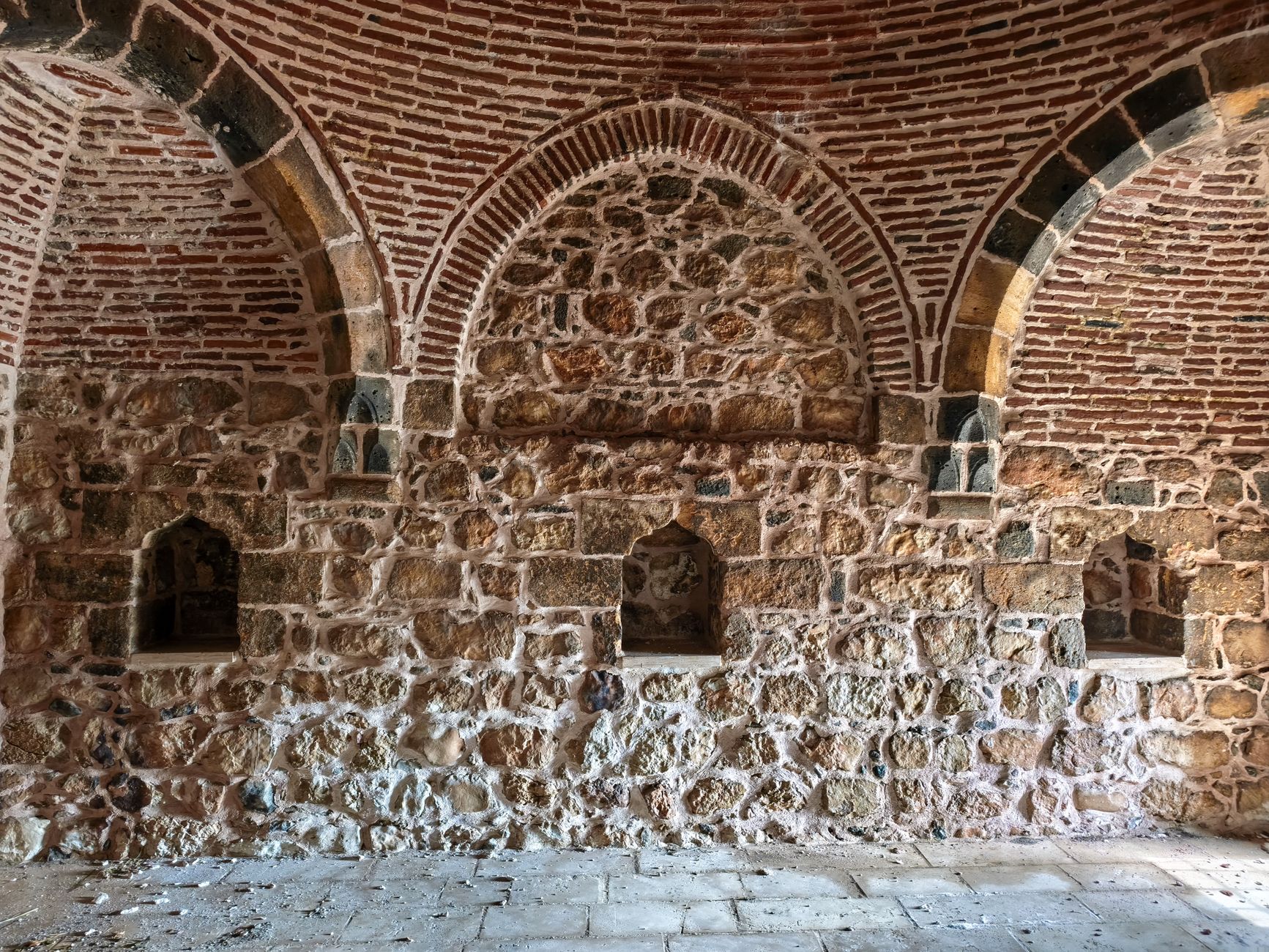
Access to these sanctuaries is customarily gained through a domed vestibule known as the camekân, a transitional space where natural light gently filters through perforated lanterns in the brick cupolas. Here, the visitor sheds the attachments of the outside world, discarding everyday garments to wrap themselves in the pestemal, a lightweight cotton textile that homogenizes social hierarchies. This act of symbolic stripping constitutes the indispensable psychological threshold before stepping into the humid heat. The thermal transition is executed gradually: one traverses the warm room, or ılıklık, where the body begins to acclimatize to the ambient moisture, before stepping into the scorching heart of the building, the hararet.
The Geometry of Stone and the Mastery of Zenithal Light
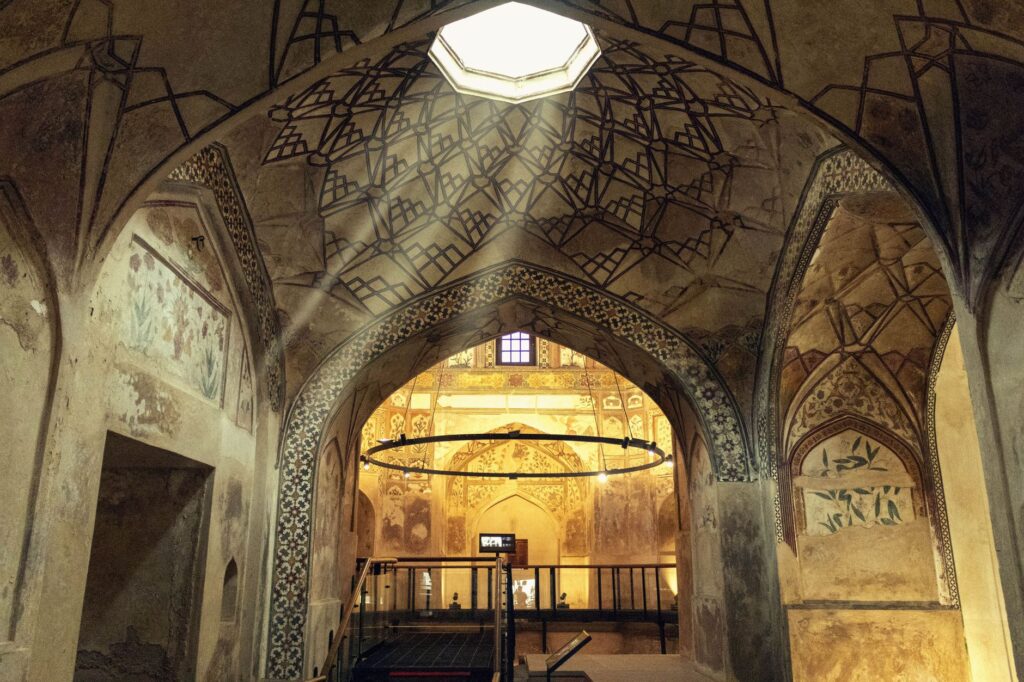
Architecturally speaking, the hammams of Bursa represent a pinnacle of Islamic construction engineering applied to human well-being. Structures such as the Eski Yeni Hammam or the historic Çekirge complex rest upon thick masonry walls and local stone ashlar, designed to retain heat efficiently during winter months while maintaining relative coolness during scorching Anatolian summers. Beneath the grand domes, which are frequently punctuated by star- or hexagon-shaped glazed oculi, sunlight filters in dense beams that pierce the mist of vapor, generating an atmosphere of almost monastic contemplation conducive to deep calm.
The central element of the hot room is the navel stone, known in Turkish as göbek taşı. This is an octagonal or circular platform of solid marble raised a few centimeters above floor level, kept permanently warm by an underground hypocaust system—subterranean hot-air channels inherited and perfected from Roman and Byzantine traditions. Reclining upon this radiant surface induces profuse sweating that mobilizes toxins accumulated in subcutaneous tissues, while muscular rigidity amassed from contemporary stress yields to the steady flow of heat. Gravity, silence, and direct contact with polished stone produce a suspension of time that patrons describe as a state of contemplative wakefulness.
Steam in the hammam does not merely dissolve the body’s tensions; it is an invisible architecture that dissolves the boundaries between the individual and the shared space.
The masseur or masseuse’s intervention—known as the tellak for men or the natir for women—is executed through a choreography of precise movements handed down through generations. This is not invasive massage therapy, but rather deep exfoliation utilizing a rough goatskin mitt called a kese, followed by soaping with natural olive oil emulsions whipped inside large copper bowls into clouds of dense, aromatic foam. This ritual of cutaneous cleansing eliminates dead cells, activates venous return, and stimulates the lymphatic system, completing a physiological sequence endorsed by modern integrative medicine for its capacity to reduce circulating blood cortisol levels.

The Science of Hyper-Thermal Water and Modern Detoxification
On a strictly scientific plane, the therapeutic efficacy of Bursa’s waters lies in their complex mineralization. Hydrological analyses confirm that these springs contain significant concentrations of sulfates, bicarbonates, and trace minerals that act synergistically on the human organism when interacting with the skin through immersion and controlled evaporation. When the body is subjected to this hyper-thermal microclimate, a cardiovascular response akin to moderate aerobic exercise is triggered: heart rate rises slightly, peripheral capillaries expand, and blood flow is redistributed toward the cutaneous surface and emunctory organs.
This controlled hyperthermia stimulates the immune system via the temporary production of heat shock proteins (HSP), cellular molecules that protect cells against oxidative damage and promote the repair of fatigued tissues. Unlike Nordic saunas, characterized by dry air that can irritate upper respiratory tracts, the Turkish hammam combines radiant floor heating with relative humidity approaching one hundred percent, allowing for a fluid opening of pores without generating a sensation of suffocation. Pulmonologists recommend these sessions to decongest the bronchial tree and alleviate symptoms of mild chronic respiratory conditions, always under the supervision of a generally sound physical constitution.
The integration of these ancestral practices into current health itineraries responds to an urgent need for digital disconnection and sensory recovery. Recent research in environmental neuroscience demonstrates that the combination of heat, dim lighting, absence of electronic devices, and primary tactile textures—marble, water, soap, steam—acts as a potent deactivator of the brain’s default mode network, the one activated when we ruminate over future worries or recall past traumas. Inside the hammam, the mind is compelled to anchor itself in the absolute present of bodily sensation, a mindfulness mechanism cultivated intuitively by Sufis centuries ago and rediscovered today by Western science under the concept of the neurobiology of rest.

Water Architecture and Heritage Conservation
The preservation of these functional monuments is not without contemporary challenges. Bursa’s historic baths are not static museum pieces; they are living organisms requiring constant maintenance to prevent persistent humidity from deteriorating secular masonry and hot-water conduction systems. Restorative architects face the complex task of updating subterranean plumbing without altering the original fourteenth- or fifteenth-century aesthetics, replacing rusted lead or iron pipes with modern polymers hidden beneath stone flooring, and ensuring that biomass or natural gas boilers maintain the exact temperature of the springs without compromising the sustainability of the local aquifer.
Likewise, managing visitor flow demands a delicate balance between tourism viability and the safeguarding of the contemplative experience. Many of these establishments have implemented strict entry quotas per time slot to prevent overcrowding and preserve the acoustic silence characteristic of their domes. The acoustics of a traditional hammam, originally designed to amplify the murmur of water and muffle strident echoes, would be irremediably destroyed by the clamor of mass tourism. Therefore, local authorities and traditional operators prioritize a slow-tourism model, where the traveler does not come to fulfill a photographic checklist, but to undergo rigorous cultural and sensory immersion.

This commitment to authenticity has turned Bursa into an international benchmark for heritage wellness tourism. Unlike standardized hotel complexes that replicate a Nordic or Balinese spa in any latitude of the planet, the experience within this city’s baths is untransferable: it is inextricably linked to the stone of Uludağ, the mastery of Ottoman dome-building artisans, and a millennial culture of bodily care that understands hygiene not as a mechanical act, but as a ritual of civic and spiritual purification.
Practical Guide
How to Get There: Bursa is located approximately one hundred and fifty kilometers south of Istanbul. The most efficient and rapid route is the high-speed ferry (İDO or BUDO) crossing the Sea of Marmara from the Istanbul ports of Yenikapı or Eminönü to Güzelyalı or Mudanya, a journey taking roughly ninety minutes. From the ports, shuttle buses and taxis connect directly to Bursa’s historic center in half an hour.
When to Go: Spring (April to June) and autumn (September to November) offer mild temperatures ideal for combining hammam sessions with hikes through the forests of Mount Uludağ. Winter months are especially recommended to enjoy the thermal contrast between the cold mountain exterior and the scorching steam of the baths.
Essential Historic Hammams: The Eski Yeni Hammam, situated in the Çekirge district, stands out for its direct hyper-thermal waters and fourteenth-century architecture. The Kaynarca Hammam complex is celebrated for its healing properties in rheumatic ailments thanks to the high mineral concentration of its springs. Advance booking is advised, along with checking specific gender-segregated schedules, as many establishments alternate shifts or feature independent sections for men and women.
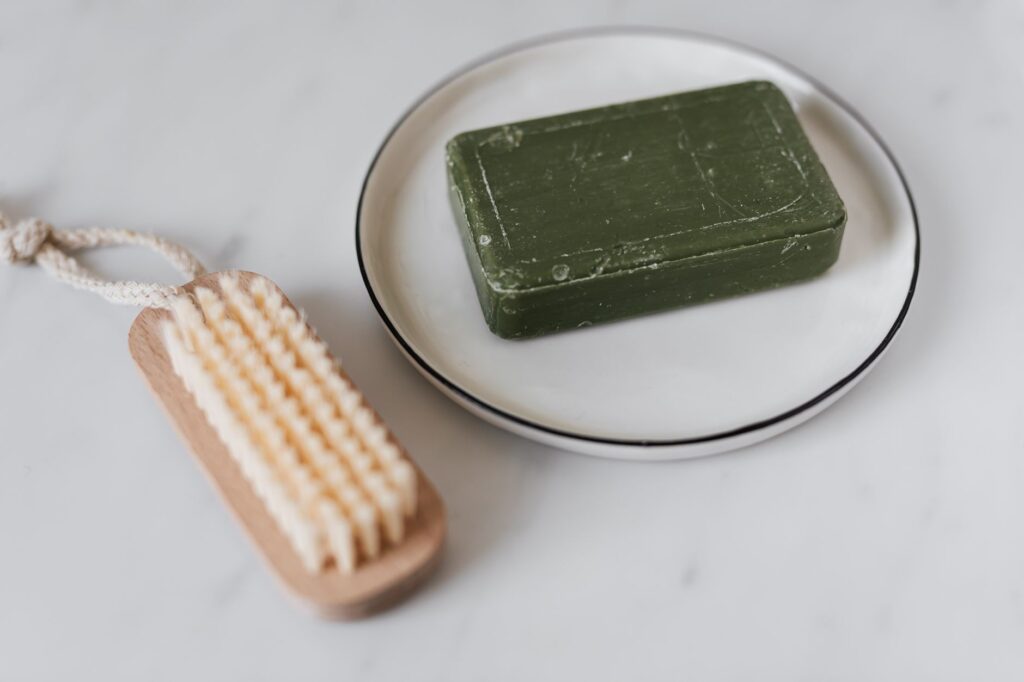
Etiquette Tips: Upon entering the hammam, bringing basic personal toiletries is customary, though traditional establishments provide pestemals, flip-flops, and olive soap. Mobile phones and cameras are strictly prohibited in the wet rooms to guarantee user privacy and silence. Ample hydration before and after the thermal session is strongly advised.
The Echo of Steam in Intimate Memory
When the session concludes and one leaves the warm dimness of the hammam to return to Bursa’s cobblestone streets, perception of the urban environment transforms subtly. The cool evening air, descending heavy with the scent of centennial pines from Mount Uludağ, strikes the skin with renewed sharpness. The body, liberated from toxins and accumulated muscle tension, experiences unusual lightness, as though the weight of daily worries had dissolved beneath the brick and steam domes. In that transitional moment, while the sun dyes the Ottoman minarets cutting across the horizon in golden tones, one understands that the true luxury of these millennial sanctuaries lies neither in marble ornaments nor in hydraulic engineering precision, but in their unalterable capacity to return to human beings the ownership of their own time and the silence of their inner self.