For more than two and a half centuries of self-imposed peace under the Tokugawa shogunate, the movement of people across the Japanese archipelago was not merely an administrative necessity; it was a meticulously choreographed exercise in political control. The imperial court resided in Kyoto, cloaked in sacred ritual, courtly refinement, and centuries of aristocratic tradition, while the actual center of military, economic, and administrative power operated over three hundred miles to the east, in the burgeoning urban expanse of Edo—modern-day Tokyo. To maintain absolute authority over regional lords, the central government instituted the sankin-kotai system, compelling provincial daimyo to alternate their residence annually between their home domains and the shogun’s capital. This constant procession of armed retinues, retainers, merchants, and pilgrims fostered the creation of the Gokaido, the Five Great Highways of Edo Japan, among which two arterials achieved legendary status: the coastal Tokaido and the inland, alpine Nakasendo.
Today, this historical corridor presents one of the most compelling territorial contrasts on earth. While the Tokaido Shinkansen bullet train hurtles hundreds of thousands of passengers daily across the Pacific coast at near three hundred kilometers per hour through a landscape of concrete viaducts and high-voltage catenaries, just beyond the mountain passes of Nagano and Gifu the moss-covered flagstones of the Nakasendo preserve a deep, vegetative silence broken only by mountain streams and the intermittent chime of bear-warning bells. To journey along these historic conduits is not simply to hike a trail or ride a train; it is to witness firsthand how an island civilization tamed rugged topography, elevated vernacular timber architecture into an art form, and engineered a balance between lightning-fast transit and deep temporal preservation.
The Architecture of Motion: From Nihonbashi to the Imperial Heartlands
Every distance measurement across Japan still formally originates from the bronze marker embedded beneath the stone roadway of the Nihonbashi Bridge in central Tokyo. From this pivotal point, first erected in timber in 1603 and rebuilt in Western stone during the late Meiji era, travelers in the Edo period embarked on their journeys toward the western capital after securing official transit documents. The Tokaido charted a maritime-influenced course of approximately five hundred kilometers, divided into fifty-three designated post stations, or shukuba. It hugged the Pacific coastline, skirted dangerous river fords that were deliberately left unbridged for defensive military strategies, and crested the steep, fog-bound ridges of Hakone. It was the dynamic, fast, and mercantile artery of the realm.
In contrast, the Nakasendo—translating literally as the «road through the central mountains»—covered five hundred and thirty-four kilometers through sixty-nine post towns. While longer and substantially more strenuous due to its constant vertical fluctuations through rugged river valleys and high mountain passes, it offered one vital advantage: it bypassed unpredictable sea crossings and torrential coastal floodwaters that could stall travelers for weeks. Because of its safety, the route became the preferred passage for imperial brides traveling from Kyoto to Edo for political marriages with Tokugawa shoguns, earning the romantic moniker Hime Kaido, or the Princess Highway. Both corridors left an indelible imprint on the cultural geography of Japan, establishing standardized infrastructures of roadside inns, military checkpoints, and post-horse stables that remain partially frozen in time today.
The Hakone Pass and the Stone Checkpoints: Relics of the Old Tokaido
Although modern highway networks, commuter tracks, and coastal sprawl have subsumed much of the historical Tokaido, the section traversing the Fuji-Hakone-Izu National Park offers an exceptionally intact window into the Edo-period walking experience. Climbing from the plains of Odawara up toward the volcanic caldera of Lake Ashi, travelers once faced deep volcanic mud that torrential rains transformed into impassable sludge. To resolve this logistical bottleneck, the shogunate paved the trail with rounded basalt boulders known as ishidatami, flanked by sweeping avenues of towering sugi (Japanese cedars) planted to shield travelers from fierce sun and winter gales.
Negotiating these uneven, mossy stone pavers today reveals the sheer physical stamina required of ancient wayfarers. Near the lake sits the reconstructed Hakone Sekisho, a fortified barrier gate that operated as the shogunate’s primary security cordon. Stationed guards enforced stringent regulations centered on an unyielding feudal doctrine: the absolute surveillance over contraband firearms entering Edo and hostage wives attempting to flee the capital. Noblewomen held in Edo as political hostages were strictly forbidden from departing without Imperial seal permits, and unauthorized passage through these heavily fortified wooden gates resulted in immediate arrest or capital punishment.
Entering the Kiso Valley: The Living Preservation of the Nakasendo
To experience the spatial continuity of pre-modern Japan uninterrupted by modern industry, one must turn inland toward the Kiso Valley in southern Nagano Prefecture. Here, nestled in a deep river gorge between the Kiso Mountains and Mount Ontake, eleven consecutive post towns—collectively known as the Kisoji—survived the rapid modernization of the late twentieth century thanks to their sheer geographic isolation and local determination.
In the late 1960s, the residents of Tsumago-juku initiated what would become Japan’s first comprehensive citizen-led townscape conservation campaign. Operating under the binding charter of «do not sell, do not rent, and do not destroy,» the community united to bury power cables out of sight, restrict daytime automotive traffic, and mandate that all architectural preservation utilize traditional joinery, local cypress wood, deep timber lattices (koshi), and stone-weighted cedar-shingle roofs engineered to endure alpine snows.
«The historic highway was never merely a transit line between cities, but an unbroken civic space where shogunate authority, local hospitality, and human endurance established a timeless vernacular order.»
From Magome to Tsumago: Anatomy of an Alpine Post Trail
The most celebrated walking section along the Nakasendo is the eight-kilometer mountain path linking Magome-juku and Tsumago-juku, traversing the Magome-toge Pass at an elevation of nearly eight hundred meters. Magome clings to a dramatic mountain ridge, its stone-paved main street climbing past restored waterwheels fed by cascading mountain runoff. From its upper terraces, expansive panoramas look out across the terraced rice fields of the historic Mino Province.
Crossing the summit of the pass marks the transition into the ancient province of Shinano. The trail descends through tranquil groves of moso bamboo, aromatic hinoki cypress, and wild maple trees. En route, the path skirts the Medaki and Odaki twin waterfalls, immortalized in regional folklore and literature. Cast-iron bear bells stationed periodically along the trail ring rhythmically as hikers strike them to signal their passage through the dense alpine woods. Arriving on foot into Tsumago feels like stepping into a woodblock print by Hiroshige. The absence of neon, asphalt, or overhead wires creates an atmospheric stillness that anchors the traveler firmly in the seventeenth century.
Narai-juku and the Heritage of Lacquer Craftsmanship
Further north along the Kiso corridor, at the base of the formidable Torii Pass, lies Narai-juku, affectionately known in historical records as «Narai of a Thousand Inns» due to its immense density of lodgings. Because it was the final staging post before the most grueling mountain ascent on the Nakasendo, Narai accommodated massive influxes of travelers, expanding into a linear settlement extending over a full kilometer along the highway.
Narai’s preservation is inextricably tied to its centuries-old woodworking and lacquerware heritage (Kiso-shikki). The dense, slow-growing cypress from the surrounding highlands provided exceptional raw timber for delicate turnery and joinery. Along Narai’s wide, stone-guttered street, generational workshops continue to apply coats of natural urushi lacquer to hand-carved bento boxes, combs, and tableware. Overhanging second-story eaves supported by carved wooden brackets showcase the architectural prosperity of an era when thousands required shelter each night.
The Anatomy of an Edo-Period Post Town
Understanding these historical waystations requires recognizing the strict architectural hierarchy enforced by the feudal regime:

- Honjin: The designated official head-inn of the town, reserved exclusively for the daimyo, imperial envoys, and high-ranking court nobility. They featured formal entry gates, tatami audience chambers, and manicured private courtyard gardens.
- Waki-honjin: The secondary official inn, designed to house high-ranking retainers and state officials when the main Honjin was occupied.
- Hatago: Standard commercial inns catering to merchants, wandering scholars, and pilgrims, providing warm evening meals and futon bedding.
- Kichin-yado: Basic, self-catering boarding houses where travelers on a minimal budget paid solely for the firewood needed to boil water and cook their own rice rations.
- Kosatsuba: The public decree board stationed at the town entrance, displaying timber placards engraved with imperial edicts, anti-Christianity prohibitions, and official reward notices.
The Coexistence of the Tokaido Shinkansen and the Mountain Rail Lines
Japan’s relentless technological progress did not eradicate these historical arteries; rather, it layered them into distinct speeds and registers of travel. The Tokaido Shinkansen, inaugurated in October 1964 to coincide with the Tokyo Olympic Games, was built over the general coastal corridor of the old Tokaido, compressing a two-week foot trek into a journey of just two hours and fifteen minutes on the flagship Nozomi service. The Tokaido Shinkansen operates with a precision measured in split-second tolerances and frequency unmatched by any high-speed line worldwide.
Accessing the mountainous Nakasendo, however, involves boarding the JR Chuo Main Line, a masterpiece of alpine railway engineering that winds through steep river valleys and granite tunnels. The Shinano Limited Express trains, equipped with dynamic tilting technology that allows the carriages to lean smoothly into sharp mountain curves without decelerating, connect Nagoya to Nagano, stopping at key trailheads such as Nakatsugawa, Nagiso, and Kiso-Fukushima. This multimodal network empowers travelers to transition effortlessly from ultra-modern high-speed rail to the unhurried cadence of foot travel across packed earth and river stone.
The Ritual of the Ryokan: Kaiseki Dining and Twilight Stillness
Staying overnight within a preserved post town is an essential dimension of the highway experience. At dusk, after day-trippers disperse and shopkeepers slide shut their heavy slatted storm shutters (amado), the streets of Tsumago and Narai settle into an enchanting silence, illuminated only by amber-glowing paper lanterns and rustic timber lampposts.
Inside the heritage ryokan and family-run minshuku, guests slip off street footwear at the raised entry threshold (genkan), don crisp cotton yukata robes, and soak in deep cypress-wood cedar baths fed by mountain spring water. The evening feast, served across woven tatami straw mats, is an ode to local foraging and agricultural self-reliance: whole sweetfish (ayu) salted and grilled over charcoal embers, wild fiddlehead ferns and mountain vegetables (sansai), tender Shinshu beef, and freshly roasted gohei-mochi—skewered rice cakes glazed with a rich, savory paste of crushed walnuts, sesame seeds, and sweet soy sauce.
Essential Logistics: Seasons, Baggage Routing, and Rail Connections
Executing a successful hybrid walking-and-rail journey along Japan’s historic highways requires straightforward yet deliberate logistical planning:
- Optimal Travel Windows: Spring (mid-April to late May) delivers pleasant walking temperatures, wild azalea blooms, and fresh verdant foliage. Autumn (October through mid-November) brings the magnificent spectacle of koyo, when the maple and larch canopies across the Kiso Valley blaze in shades of crimson and amber. Summers are warm and humid with occasional monsoon downpours, while winters bring quiet snowscapes that require micro-spikes for high-altitude passes.
- Luggage Forwarding (Takkyubin): Japan’s seamless luggage forwarding networks allow travelers to ship large suitcases directly between major urban hotels, leaving them free to tackle the trail with a lightweight daypack. In addition, a local seasonal luggage shuttle operates daily between the tourist information centers of Magome and Tsumago between late March and November.
- Transit and Payment: Major IC transit cards like Suica or Pasmo function across the regional rail lines surrounding Tokyo, Kyoto, and Nagoya, but cash remains essential in rural post towns for local community buses, historic inn fees, and neighborhood craft stalls.
The Timeless Art of Slow Movement
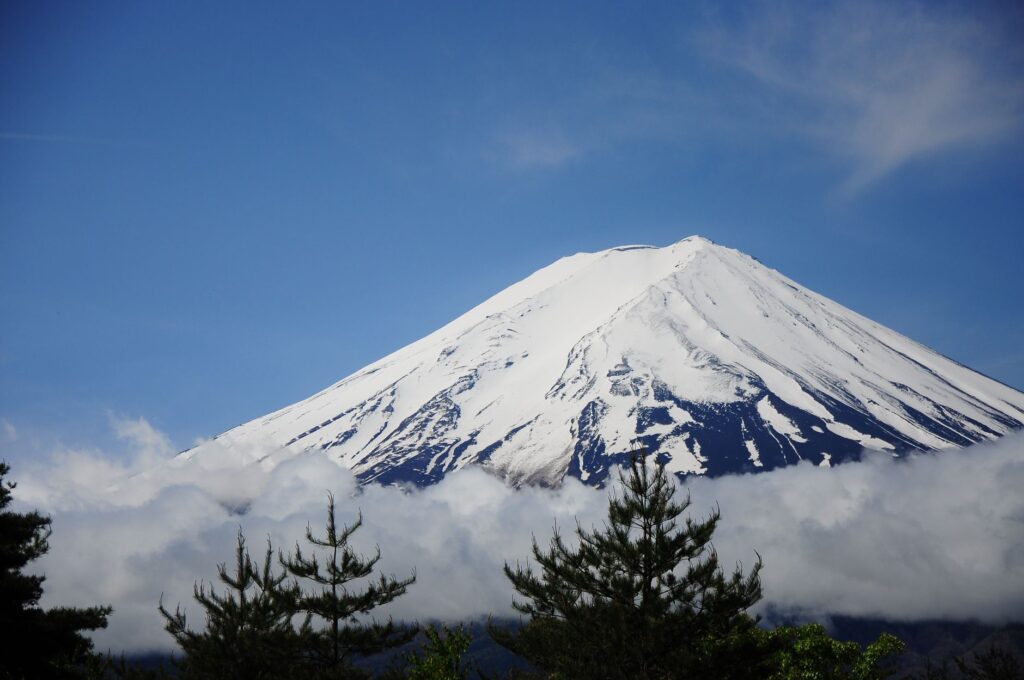
In an era characterized by hyper-connected velocity and non-stop aerial transit, tracing the ancient corridors of Japan offers an instructive return to human-scale exploration. Walking along the worn stones of the Nakasendo or watching Mount Fuji’s snow-capped cone glide across the panoramic window of a Shinkansen are not conflicting experiences, but harmonious expressions of Japan’s deep territorial awareness.
The scrupulous preservation of these post roads affirms that genuine cultural progress honors the physical pathways that bind a nation’s history to its future. To walk down the silent, lantern-lit street of an Edo post town as darkness gathers over the mountains is to realize that the most rewarding journey through Japan is found not only in its gleaming metropolises or grand temples, but in the historic pathways that forever connect them.