
Fifty years of a legend that crosses Catalonia on foot
Dawn at Coll Formic is measured not in hours, but in headlamp flickers and restrained breaths. Beneath a canopy of stars that slowly yields to the first whisper of morning, three thousand souls await the departure signal. This is neither a standard athletic competition nor a speed trial where the stopwatch dictates the outcome. It is the golden anniversary of the Matagalls-Montserrat traverse, an unmissable event that, in its fiftieth official edition, once again stretches the limits of human endurance and hiking romanticism.
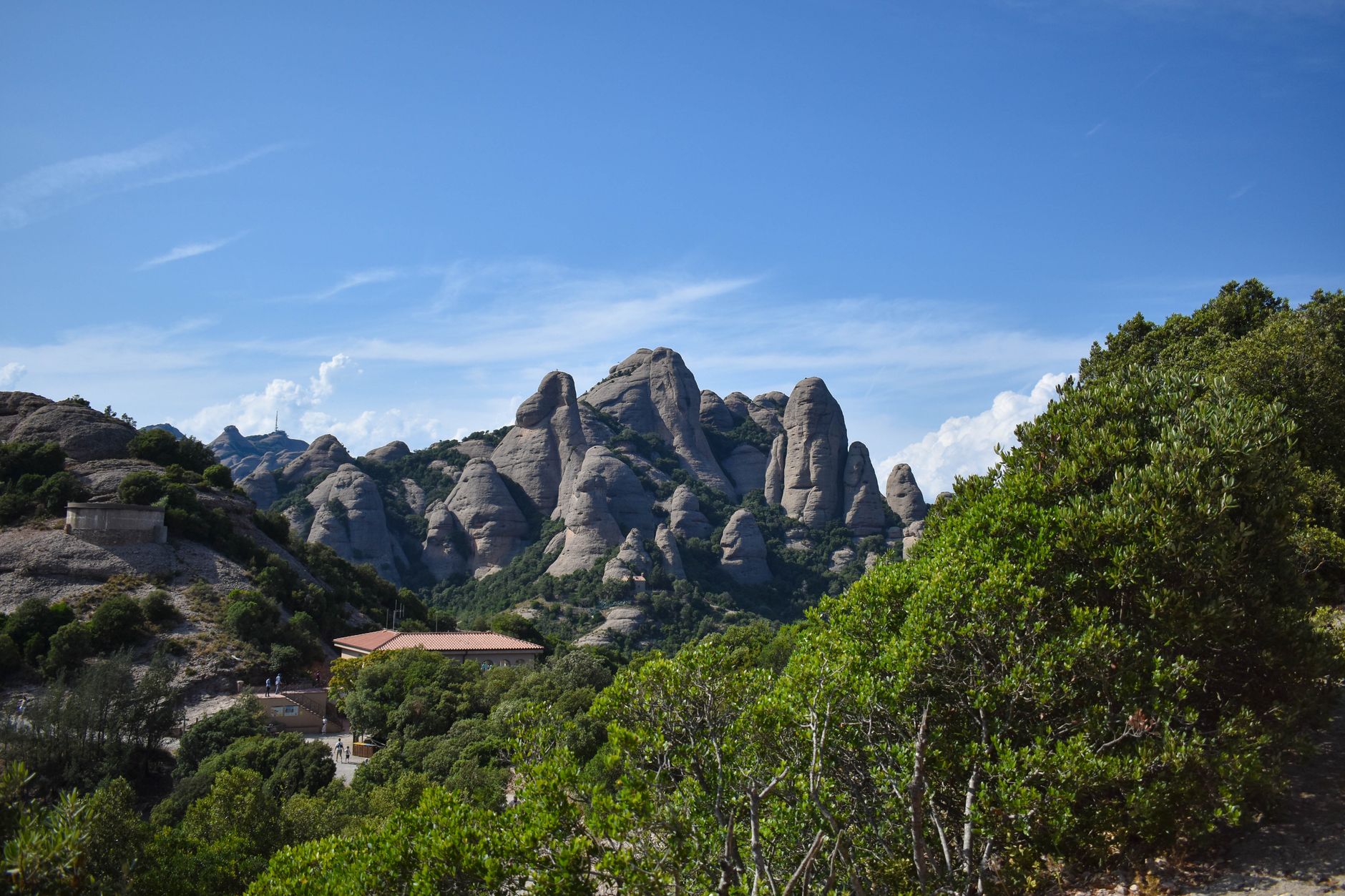
Commemorating half a century of history requires looking back to understand how a mountain challenge transformed into a cultural phenomenon. Ninety-three kilometers separate the peak of Matagalls, in the heart of Montseny, from the ancient sanctuary of Montserrat. A geographical diagonal traversing counties, crossing streams, ascending forgotten cols, and testing both the muscles and mental fortitude of those who lace up their hiking boots. Here, there is no trophy greater than personal effort and communion with the landscape.
The legacy of Jaume Oliveras: when audacity became a path
To understand the current dimension of this route, it is essential to travel back in time to 1904. It was then that Catalan hiking pioneer and respected Pyreneist Jaume Oliveras conceived and completed the itinerary for the first time. In an era when the territory was traversed via bridle paths and modern sporting equipment was virtually nonexistent, Oliveras drew an almost straight line between two geographical and spiritual symbols of Catalonia.
That first journey did not stem from modern athletic ambition, but rather from an exploratory impulse characteristic of early 20th-century Catalan hiking culture, which found in nature a temple of freedom and knowledge. Oliveras demonstrated that inland regions could converse on foot, uniting two completely different geological worlds: the sturdy, granitic silhouette of Montseny with the capricious, stony conglomerate of Montserrat.
Historical hiking did not seek the conquest of the summit, but rather the intimate understanding of the territory through the unhurried effort of the walk.
Over the decades, that individual feat germinated in the minds of hiking clubs and mountain enthusiasts until it was institutionalized into an organized endurance march. Since its revival and formal structuring, the traverse has grown without losing its original essence, attracting generations of walkers who seek in the night and the distance a test of self-improvement.
Anatomy of a route: from the peak of Montseny to the temple of Montserrat
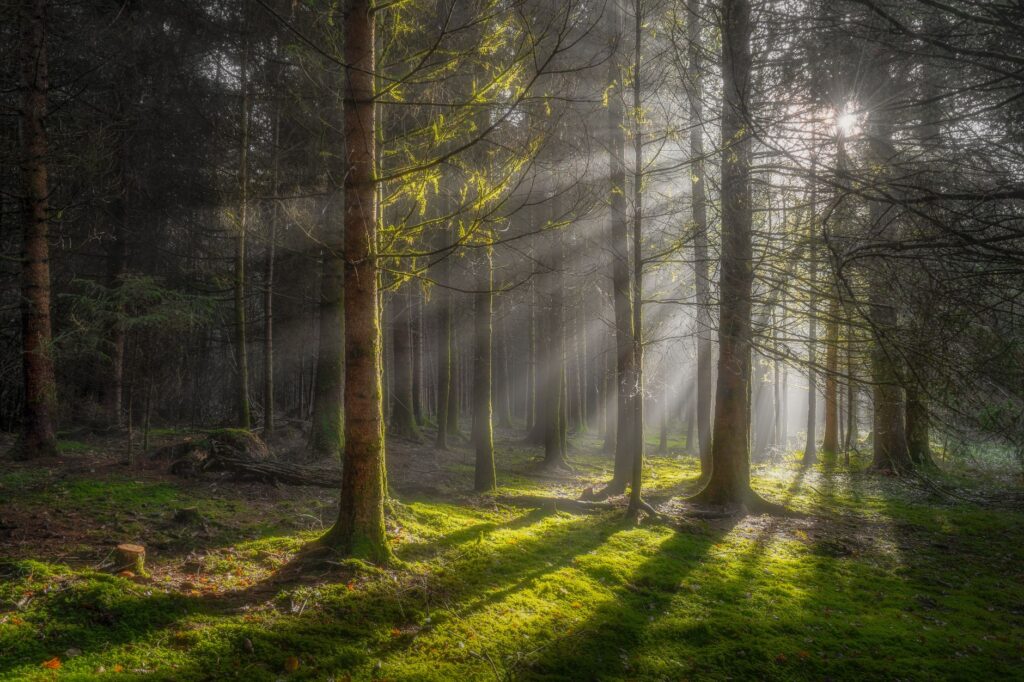
The official layout is not a gentle stroll, but rather a succession of accumulated elevations exceeding five thousand meters of global effort across ascents and descents. The departure from Matagalls (1,697 meters) demands respect. The initial descent toward Aiguafreda and the subsequent climb to the central plateau of inland Catalonia require meticulous energy management. Each kilometer introduces the walker to a changing mosaic of oak forests, centuries-old farmhouses, cultivated fields, and forestry tracks.
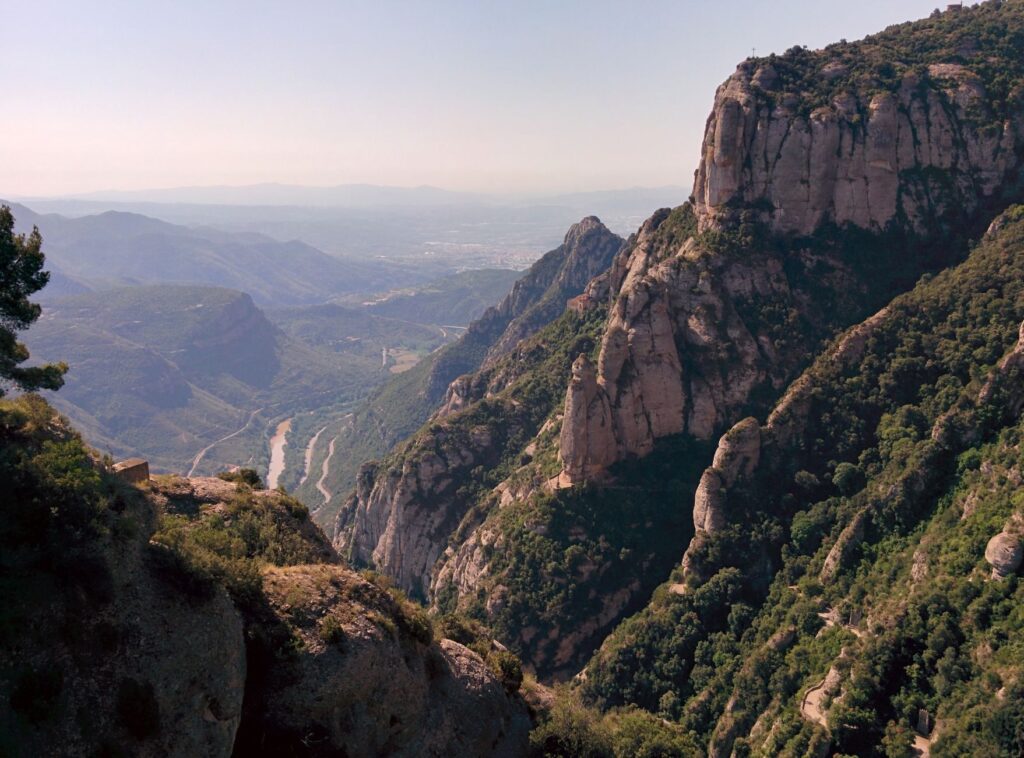
Crossing the Plana de Vic provides physical relief coupled with psychological wear under the daytime sun, before tackling the slopes leading toward Sant Llorenç Savall and the prelude of the Montserrat massif. The geography shifts radically as one advances; soft earth and forest trails give way to limestone rock, gorges, and the imposing presence of stone needles outlining the sacred horizon.
Geographical keys of the journey
- Starting point: Peak of Matagalls (1,697 m), in the Montseny Natural Park.
- Arrival point: Monastery of Montserrat, under the protection of the Moreneta.
- Approximate total distance: 93 uninterrupted kilometers.
- Natural environments: Montseny, Plana de Vic, Moianès, and the Montserrat Mountain Natural Park.
The test of darkness: walking while the world sleeps
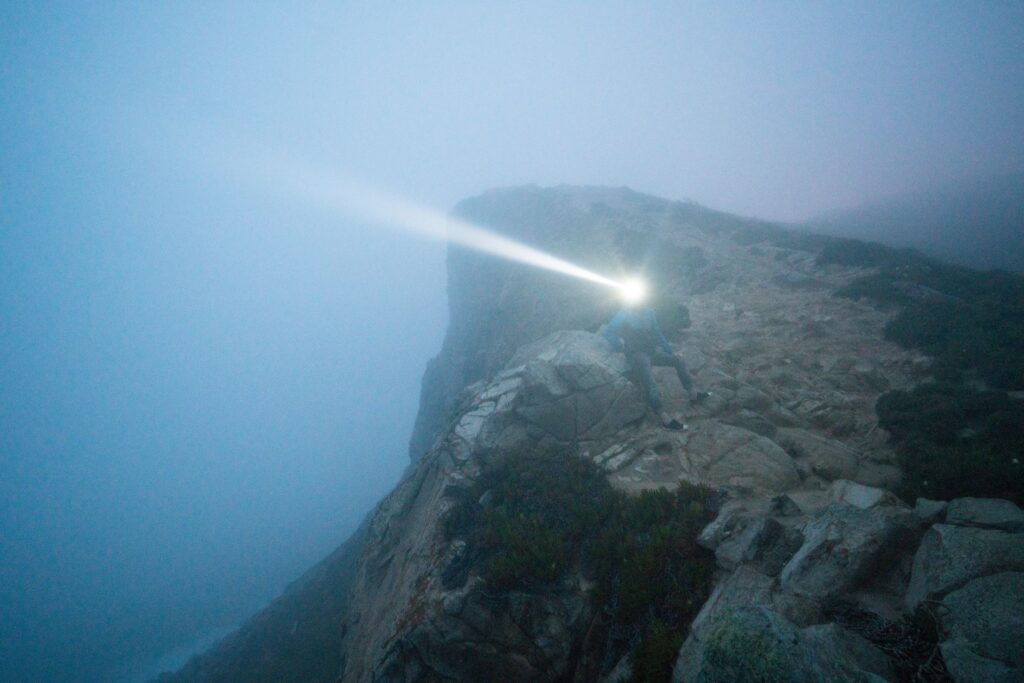
One of the most distinctive and demanding elements of the Matagalls-Montserrat is its nocturnal nature. The departure is usually scheduled at dusk, forcing participants to tackle the first hours of the march beneath the cone of light from their headlamps. Night completely transforms the perception of the surroundings. Familiar mountain profiles become threatening shadows, the sound of the wind takes on an unusual prominence, and the sense of orientation shrinks to the immediate circle of light.
Walking in the small hours requires perfect synchrony between body and mind. Sleep begins to claim its space around three or four in the morning, a critical moment when many participants experience the temptation to quit. However, it is also in those dark hours that the true brotherhood of the traverse is forged. Words of encouragement among strangers, sharing a stretch of trail with someone faltering, and the respectful silence of the night create an unrepeatable atmosphere.
The human fabric: volunteers, aid stations, and invisible logistics
Behind a massive participation of three thousand people lies a colossal logistical machinery, usually coordinated by entities such as the Centre Excursionista de Catalunya (CEC) and backed by hundreds of volunteers. The aid stations, strategically distributed along the ninety-three kilometers, act as oases of human warmth and caloric sustenance.

Hot broth, fresh fruit, bread with tomato, water, and basic medical assistance await walkers at every checkpoint. Yet beyond the food, the differential value of these stations lies in the encouragement projected by the volunteers. A smile at four in the morning inside a municipal sports pavilion or a quick massage on strained calves can work the miracle of restoring confidence to a hiker on the brink of exhaustion.
The strength of the Matagalls-Montserrat lies as much in the legs of its walkers as in the anonymous generosity of those who sustain the checkpoints deep into the night.
Architecture and landscape: the geological contrast of Catalonia
Few routes in southern Europe offer a landscape reading as rich and condensed as this one. In less than twenty-four hours, the walker transitions through radically opposed ecosystems. Montseny, declared a Biosphere Reserve, welcomes the participant with its humid beech forests, monumental chestnut trees, and an atmosphere reminiscent of Central European latitudes. It is a green, dense, and silent landscape.
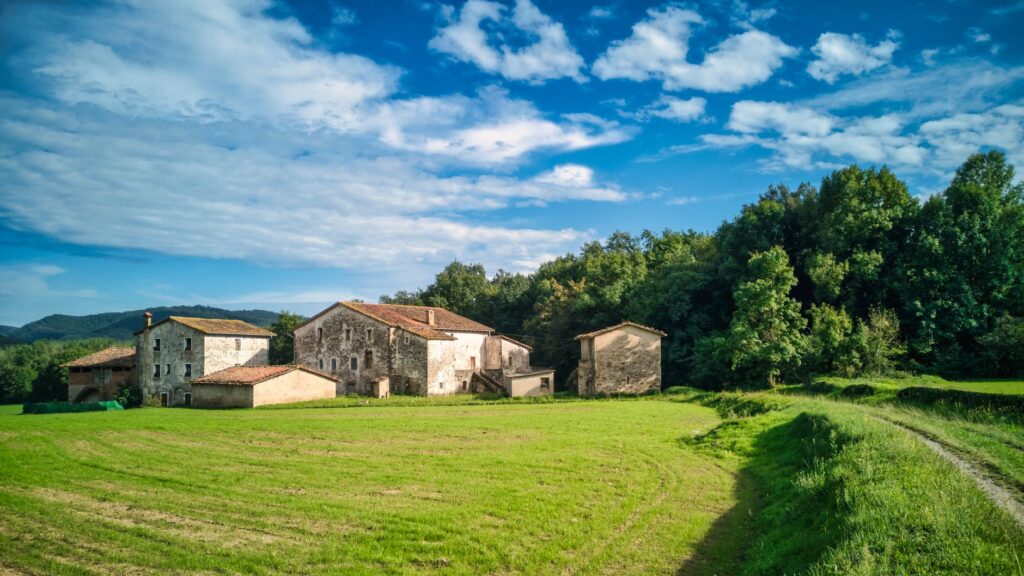
As the route progresses westward, the environment opens up. Dryland crops, dry-stone farmhouses, and small rural hamlets preserving traditional Catalan architecture emerge. Finally, the backdrop of Montserrat bursts forth with its capricious silhouette, sculpted by millennial erosion upon a marine conglomerate elevated by tectonic forces. Reaching the monastery at dusk on the second day, with the rock walls ignited by the last rays of sunlight, constitutes an unparalleled aesthetic reward.
Practical guide
How to get there: Access to the start at Coll Formic is typically arranged via shuttle bus services organized by the event’s organizers from towns such as Vic or Barcelona, as parking in the area is extremely limited due to massive attendance.
Season and participation: The traverse is traditionally held in late summer or early autumn. As an event with limited spots (3,000 bibs) and high demand, registration requires following the official deadlines published by the organizing entities at the beginning of the season.
Mandatory equipment: Well-broken-in mountain footwear is essential, along with technical layered clothing to withstand the thermal amplitude between day and night, a headlamp with spare batteries, a thermal blanket, a whistle, and an adequate hydration system.
Physical preparation: This is not a route for absolute beginners. It requires months of accumulated long-distance training and prior night marches to accustom the body to prolonged effort without conventional rest.
The final heartbeat facing the silhouette of Montserrat
When the first lights of the second day caress the imposing conglomerate walls of Montserrat, the accumulated effort in the legs seems to dissolve before the magnitude of the destination. Arrival at the sanctuary atrium is not merely the finish line of a ninety-three-kilometer march; it is the reunion with a centuries-old tradition that transcends sport to become a metaphor for the human journey: advancing step by step, enduring the darkness, and trusting that at the end of the road, light always reveals the sacred landscape of our goals.
Source in EN: La Vanguardia