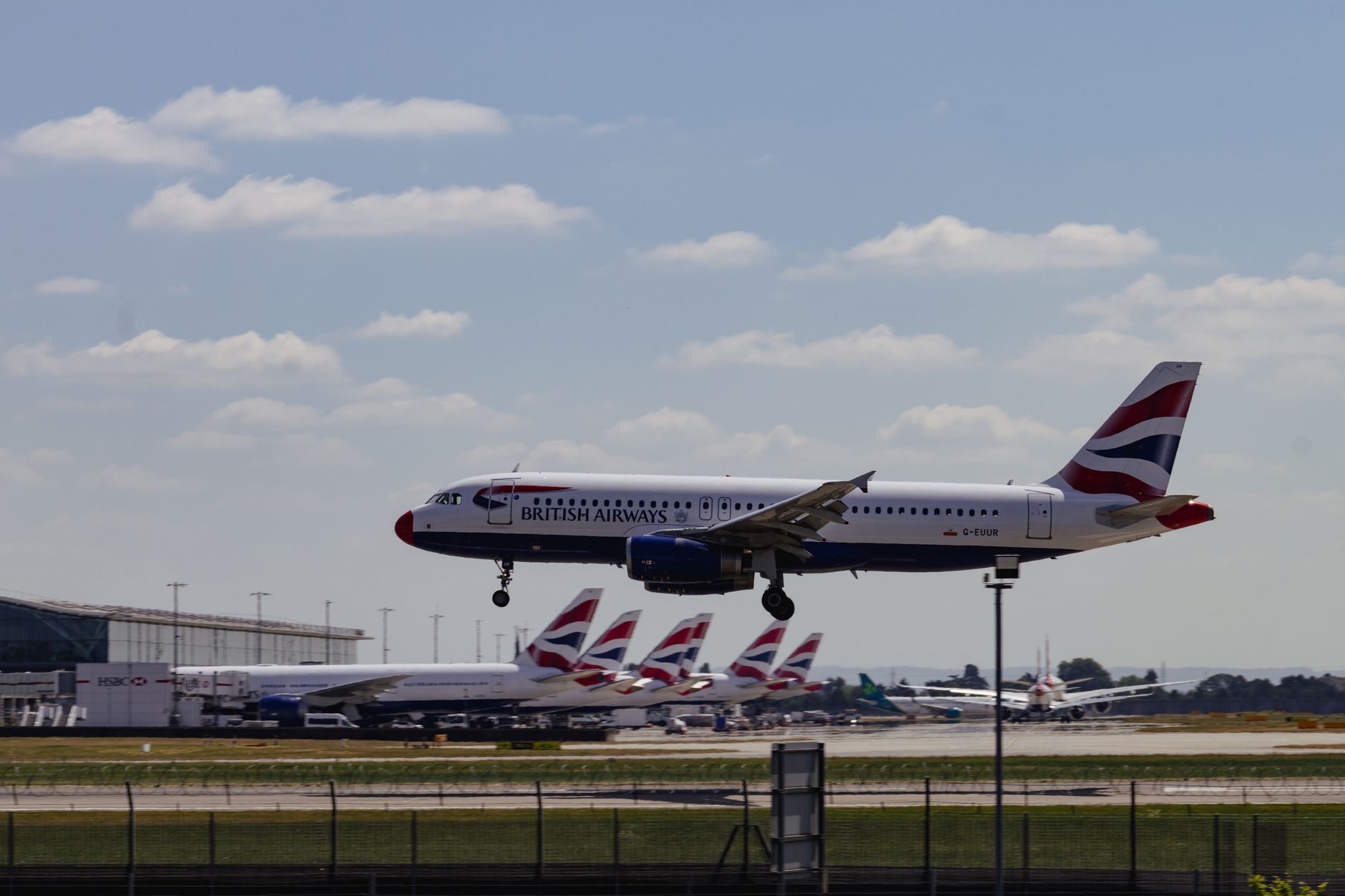

The Morning the Screens Went Blank
Tuesday began like any other routine day in the crowded air traffic control rooms of the United Kingdom. Millions of passengers moved through the terminals of Heathrow, Gatwick, and Manchester, confident in the pinpoint precision that sustains contemporary global mobility. However, early in the morning, a systemic failure in flight data processing paralyzed the operational flow. What initially appeared as a routine delay quickly escalated into a crisis without recent precedent.
Air traffic control screens, designed to plot safety vectors and prevent collisions in one of the world’s most congested corridors, began throwing critical errors. Technology failed, and with it, the capacity to process automated flight plans. The system stopped receiving the necessary information to coordinate safe takeoffs and landings, forcing operators to resort to emergency manual methods that reduced British airspace capacity to a bare minimum.
Within hours, the impact rippled across Europe and major intercontinental hubs. Entire airlines suspended operations preventively, while aviation authorities issued severe restrictions to prevent the saturation of en-route sectors. The initial toll was undeniable: 1,700 cancellations on Tuesday and over 300 additional groundings on Wednesday, affecting hundreds of thousands of people trapped on the ground without a clear exit route.
Anatomy of a Systemic Failure in Air Management
To understand the scale of the collapse, one must look inside the facilities of National Air Traffic Services (NATS). The British air traffic control system routinely manages thousands of aircraft in a compact and heavily regulated airspace. The reliance on integrated software and hyper-connected communication networks makes these infrastructures uniquely vulnerable to hardware failures, update errors, or data synchronization glitches.
Automation is indispensable for maintaining the pace of modern air traffic, but it also eliminates safety margins when technological backups fail simultaneously. During the incident, engineers attempted to reboot primary servers and deploy contingency systems, but the complexity of the code prevented immediate recovery. Every minute of downtime multiplied cascading delays across the entire European network.

Civil aviation experts note that such incidents highlight the urgent need to modernize critical infrastructure for global transport. Unlike airlines, which compete in an open market, air navigation service providers operate as state-run or regulated monopolies, where capital investments in technological renewal often compete with restrictive government budgets and delayed maintenance schedules.
The Human Face of Disruption: Terminals Turned into Camps
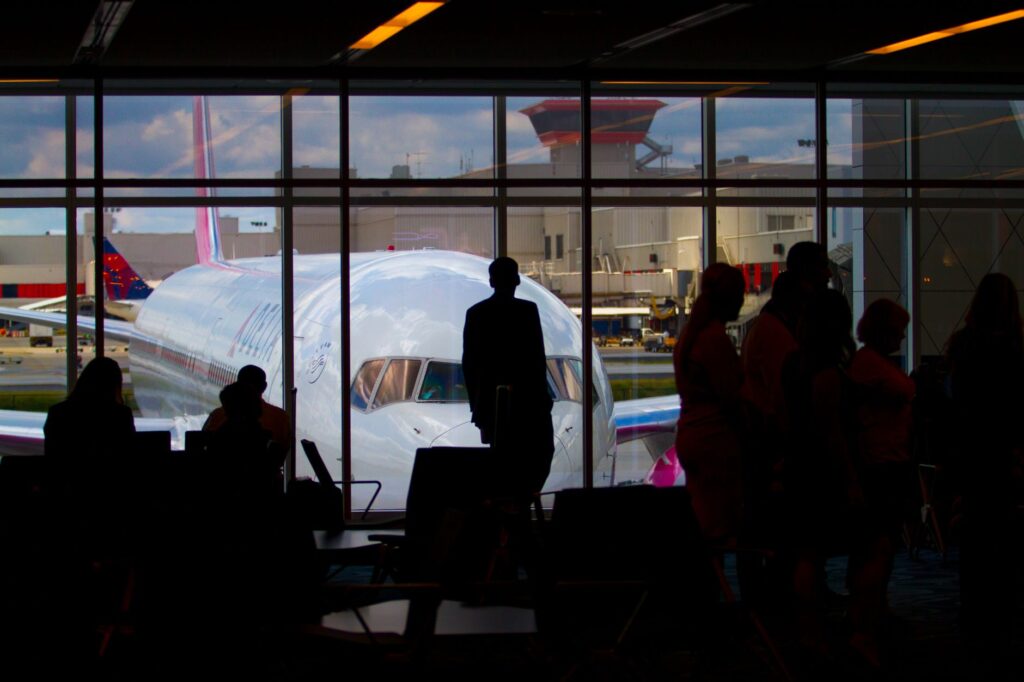
Far from data processing centers, inside British airport terminals, the crisis acquired a deeply human dimension. Thousands of travelers watched their travel plans, business meetings, and family reunions evaporate in a matter of minutes. Customer service desks quickly overwhelmed by tides of passengers demanding answers, rescheduling, or accommodation assistance.
Uncertainty was the common denominator during the first twenty-four hours. Information boards alternated between cancellation messages and indefinite delays, while queues wound through terminal corridors. Families with young children, elderly passengers, and stranded professionals had to improvise beds on the floor using coats and luggage, transforming boarding areas into makeshift urban refugee camps.
Airlines, overwhelmed by the volume of affected individuals, relied on automated messages and mobile applications that frequently crashed due to data traffic. The shortage of available ground staff worsened the situation, leaving travelers without direct intermediaries who could offer tangible logistical solutions or meal vouchers amidst the chaos.
«We were ready to board when staff informed us that airspace was completely closed; nobody knew when we would fly again or who would cover our night in London,» recounted a stranded passenger at Heathrow.
Ripple Effect: The Impact on Supply Chains and European Aviation
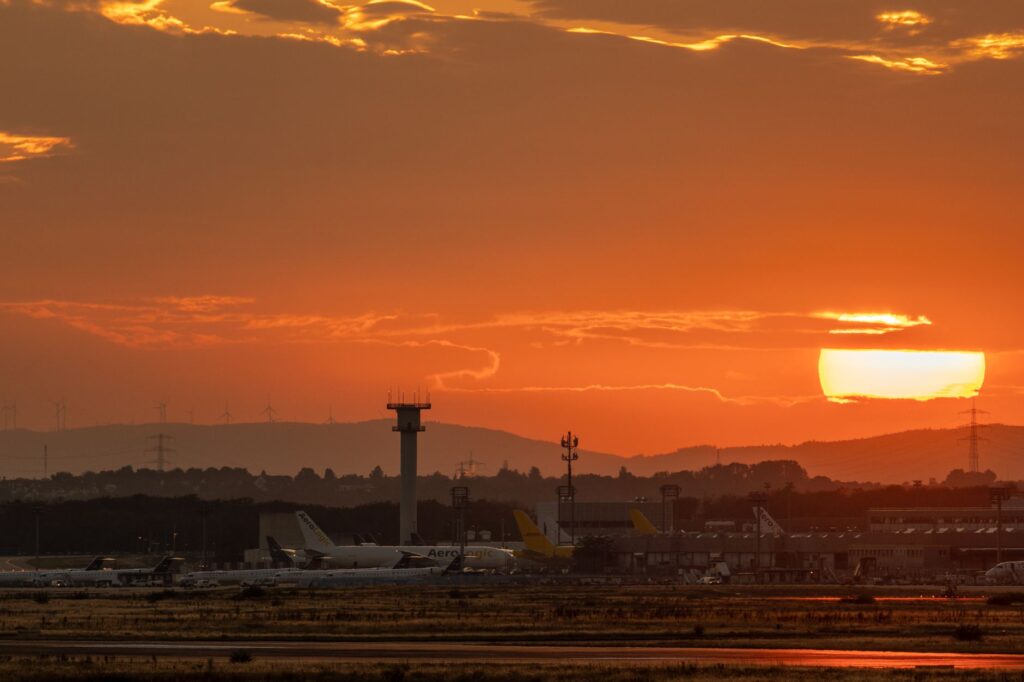
The collapse of British airspace was not confined to UK borders; it triggered a ripple effect affecting airports from Madrid to Frankfurt and Amsterdam. Since a large portion of the European fleet operates multiple daily rotations in continuous schedules, the grounding of an aircraft at a London airport disrupted subsequent flight schedules across the entire continental network.
European punctuality plummeted within hours. Planes scheduled to cover domestic routes in Spain, France, or Germany were stranded on ground because their crews or aircraft originating from London could not depart on time. Low-cost carriers, whose business model relies on maximum aircraft turnaround to keep operational costs low, suffered severe financial losses and logistical alterations.
Similarly, the air cargo sector experienced critical delays. Shipments of medical supplies, urgent mail, and perishable or high-priority industrial components accumulated in sorting centers. Cargo airlines had to reroute or postpone departures, demonstrating how deeply the global economy is integrated with the punctuality of civil air traffic.
Institutional Response and Promises of Review
Faced with public pressure and international media scrutiny, the British government and civil aviation authorities demanded exhaustive explanations from technical operators. An independent investigation was announced to determine the exact causes of the computer failure and evaluate whether there were lapses in preventive maintenance protocols.
Regulators face difficult questions regarding the resilience of national transport systems. Air traffic controller unions seized the moment to denounce chronic underfunding and the daily workplace stress caused by obsolete working tools. The push to adopt artificial intelligence technologies and decentralized systems in air traffic management has become the industry’s central debate.
- Comprehensive audit of NATS hardware and software systems.
- Review of emergency communication protocols between airlines and infrastructure managers.
- Proposals for simplified mandatory compensation for passengers affected by technical failures attributable to infrastructure providers.
Voices from the Tower: The Controllers’ Dilemma
While passengers suffered in the terminals, a silent technical battle unfolded inside control towers and route centers. Air traffic controllers, professionals trained to make critical decisions in fractions of a second, were forced to operate under extreme pressure with degraded tools.
Safety superseded efficiency, a decision that, while operationally correct, multiplied cancellations. Reducing the number of aircraft in the air means spacing them temporally and spatially much further apart than usual, artificially strangling the capacity of air corridors to prevent collision risks in the absence of advanced automation.
Industry workers described grueling shifts marked by the tension of managing unstable screens and the frustration of being unable to offer clear answers to pilots. This episode underscored the mutual dependence between human expertise and digital robustness, reminding us that no amount of training compensates for the sudden loss of electronic eyes watching the sky.
Reflections on the Fragility of Global Hyperconnectivity
The incident in British airspace serves as a warning regarding the systemic risks of modern infrastructure. In a world that assumes instant mobility as an entitlement, the sudden interruption of a key piece in the technological chain demonstrates how fragile the machinery supporting globalization is.
Digital dependence comes with a hidden cost: when centralized systems fail, analog alternatives are slow, costly, and limited. The lessons of this episode transcend the UK and pose urgent questions for infrastructure managers worldwide about the need to design more resilient, redundant networks capable of absorbing catastrophic shocks without complete collapse.
«The speed at which we move across the planet is also the speed at which our mistakes and technological failures can paralyze our collective life,» warns an international transport analyst.
Practical guide
If you find yourself affected by a massive air traffic disruption or a technical failure in transport infrastructure, it is essential to know your rights and act quickly to minimize logistical inconveniences.
- Verify your regulatory rights: Under regulations such as UK261 or equivalent European rules, you are entitled to assistance (food, drink, accommodation) and financial compensation if your flight is canceled or significantly delayed for reasons attributable to the airline or infrastructure manager.
- Keep all documentation: Save boarding passes, confirmation emails, cancellation notices, and receipts for all additional expenses incurred (ground transportation, hotels, meals).
- Communicate through digital channels: Use mobile apps and official airline chats to manage rerouting, as telephone lines and physical desks tend to saturate immediately.
- Know alternative transport options: If flights are grounded for days, research high-speed rail services or ferries to cross borders and connect with operating airports outside the crisis zone.
- Check your travel insurance: Consult your policy coverages for unexpected travel disruption expenses, as many private policies offer faster supplementary assistance than airlines.
The Subsequent Silence on the British Horizon
Days after computer systems were restored and the first test flights once again soared over London skies, the echo of the collapse lingers in aviation’s collective memory. Terminals have recovered their usual rhythm, boards display punctual departures, and misplaced luggage has begun returning to rightful owners, but a sense of vulnerability persists among professionals and frequent flyers.
Observing the horizon from Heathrow’s windows, where aircraft take off once again with metronomic precision, invites reflection on the complex machinery making it possible to cross continents in hours. Behind every commercial route lies an invisible network of trust, technology, and human effort that, while capable of connecting the world, occasionally reveals deep cracks reminding us of the fragility of our conquest of the sky.
Source in EN: The New York Times