

The early hours of September ninth, two thousand and twenty-six, will remain etched in the collective memory of European air transport as the day the British skies held their breath. A critical failure in air traffic management systems brought operations at Heathrow Airport and across the United Kingdom to an abrupt halt. What began as a minor technical glitch escalated within hours into an unprecedented crisis affecting more than two thousand flights, trapping tens of thousands of passengers in congested terminals and redefining, at least temporarily, the perception of modern commercial aviation reliability.
The consequences of this total disruption immediately rippled through the continent’s major connecting hubs, demonstrating the high degree of interdependence characterizing the global transport network. From Frankfurt to Paris, via Madrid and Amsterdam, aircraft slated to cross the English Channel remained grounded on the tarmac, while departure information screens flashed red with cancellations. For industry analysts, the episode is not an isolated event, but rather a warning sign regarding the obsolescence of automated systems supporting daily air traffic.
The anatomy of a systemic failure in the control tower
The origin of the collapse was traced to data processing centers responsible for handling flight plans and aircraft telemetry. Although British aviation authorities immediately activated contingency protocols, the sheer volume of data flow overwhelmed the processing capacity of both analog and digital backup systems. The transition to manual procedures, essential to guarantee safety under low visibility conditions, reduced the operational capacity of terminal airspace to a fraction of its normal throughput.
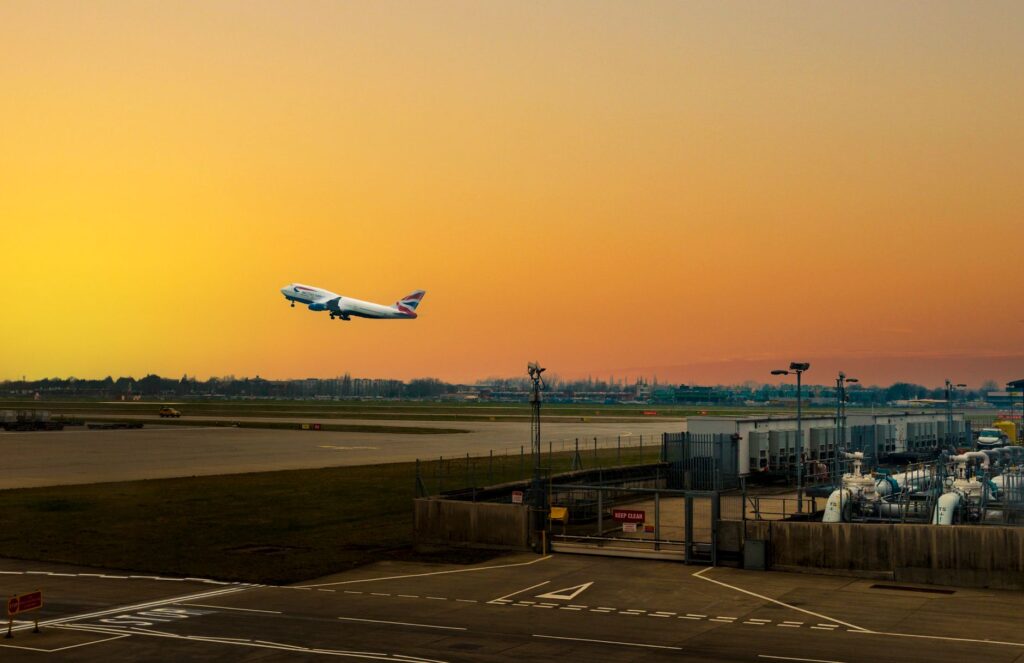
Air navigation specialists have repeatedly pointed out that the pressure to increase air traffic density over southern England creates a dangerously narrow margin for error. Every second, hundreds of aircraft converge in narrow corridors where millimetric synchronization is vital. When the central digital gear fails, the entire system falters with astonishing speed, proving that advanced automation occasionally lacks the human resilience required to absorb large-scale unforeseen events.
The fragility of our air corridors demonstrates that global hyperconnectivity relies on invisible threads that can snap without warning.
During the critical hours of the incident, air traffic controllers operated under extreme pressure, prioritizing the safe separation of airborne aircraft over ground departure management. This prioritization averted safety incidents, but condemned the terminals to a progressive paralysis affecting both legacy carriers and low-cost airlines alike, proving that the crisis made no distinction between business models.
The human face of waiting in London’s terminals
Far from calculation centers and radar screens, the true drama unfolded on the ground, specifically within Heathrow’s vast terminals. Snaking queues stretching for miles across carpeting formed before customer service desks, where overwhelmed agents struggled to provide answers to travelers who had spent entire days without sleep. Families with young children, professionals with unmissable meetings, and bewildered tourists shared a common destination of uncertainty and physical exhaustion.
A lack of fluid, updated information was among the primary complaints voiced by those affected. Public address systems broadcast automated announcements that clashed with the visual reality of overcrowded corridors and baggage claim areas transformed into makeshift dormitories. Plastic chairs, carpeted floors, and departure benches accommodated thousands of people waiting for seat reassignments on flights that, in many cases, would take days to depart.

Due to the saturation of the hotel network within a radius of dozens of miles around London, many passengers chose to spend the night inside the airport facilities themselves. Spontaneous solidarity among travelers—sharing mobile chargers, basic food items, and thermal blankets provided by assistance staff—partially eased the ambient tension during the most critical moments of the lockdown.
Infrastructure at the limit: the debate on modernization
The collapse at Heathrow has forcefully revived the political and technical debate regarding the urgent need to modernize critical British transport infrastructure. Various parliamentary sectors and consumer associations have questioned investment levels allocated to the maintenance and updating of air traffic control systems, arguing that growing demand has far outstripped the technical capacity of existing facilities.
Reliance on legacy computing platforms, some of which have operated continuously for decades, exposes the system to recurring vulnerabilities. Although multi-year renovation plans are on the table, astronomical costs and the technical complexity of upgrading systems without disrupting daily service have delayed effective implementation, perpetuating an operational model experts consider unsustainable in the long term.

Furthermore, the episode highlighted the regulatory rigidity governing passenger compensation and assistance during technical force majeure situations. Airlines, forced to shoulder multi-million-pound costs for rehousing and refunds, are calling for a review of the regulatory framework to share responsibilities more equitably between air operators and navigation service providers.
International echoes: when Heathrow stops, the world waits
The impact of the British paralysis transcended United Kingdom borders within minutes. Heathrow acts as the primary transatlantic bridge between North America and Europe, while crucially linking the European continent with Asia and the Middle East. The mass cancellation of intercontinental routes forced international airlines to divert aircraft to alternative airports in Dublin, Paris, and Brussels.
- Massive diversion of transatlantic flights to continental European airports.
- Temporary congestion at connection hubs in Dublin and Amsterdam due to transit passenger saturation.
- Chain delays across long-haul fleets caused by the unavailability of crews trapped in London.
This chain reaction demonstrated that commercial aviation operates as a living, highly synchronized organism. A localized failure in southeast England is capable of destabilizing the operational schedules of airlines across five continents, disrupting global supply chains and affecting the mobility of thousands of individuals unrelated to the British market.

Economic impact and airline response
Economic losses stemming from the two thousand plus cancellations are preliminarily estimated in the tens of millions of pounds sterling. Major carriers operating at Heathrow announced emergency plans to absorb the backlog of passengers, prioritizing high-density routes and offering absolute flexibility for date changes without financial penalties.
However, airlines’ absorption capacity was severely constrained by strict nighttime takeoff and landing curfew rules enforced at the London airport, as well as regulations regarding maximum crew rest times. This combination of regulatory and operational factors prevented a rapid return to normalcy, prolonging operational chaos for several consecutive days.
Restoring passenger trust demands absolute transparency and firm commitments to invest in the technological robustness of the sector.
Tourism sector representatives warn that episodes of this nature erode the confidence of international travelers, who increasingly value predictability over mere economic efficiency. London’s reputation as a financial and global connection hub faces a reputational challenge requiring tangible demonstrations of improvement in crisis management.
Practical guide
Essential information for handling severe disruptions in international air transport.

- Passenger rights: Under applicable regulations, in the event of cancellations attributable to the carrier or infrastructure failures, passengers are entitled to assistance (food, drink, and accommodation) and a choice between a refund or alternative transport.
- Documentation and receipts: Always retain boarding passes, maintenance expense receipts, and official cancellation certificates issued by the airline to process future claims.
- Official channels: Avoid overwhelming physical desks at the airport; prioritize official mobile applications and customer service web portals to expedite reaccommodation.
- Travel insurance: Verify the coverage of your private policy regarding trip interruption and prolonged delays before embarking on any international travel.
Toward a horizon of resilience and aviation safety
The crisis experienced at Heathrow constitutes a severe yet necessary lesson for the global aviation industry. The technology enabling continents to be connected within hours requires foundations on the ground just as solid as those in the air. The definitive overcoming of this episode will depend not solely on urgent operational patches, but on a profound structural transformation prioritizing resilience and operational safety over mere commercial yield maximization.
As the final affected aircraft return to their regular routes and London’s terminals restore echoes to their open spaces, the certainty remains that the sky, despite its apparent immensity, continues to depend on the fragile precision of human hands and the infallibility of its technological creations.
Source in EN: The New York Times