
Introduction to Eighteenth-Century Alchemy
On the banks of the Elbe River in the German federal state of Saxony, the town of Meissen is home to one of European industrial and artistic history’s most closely guarded secrets. Long before the Industrial Revolution transformed the continent, the mastery of porcelain—then known as white gold—triggered a frenzy comparable to that of precious metals. For centuries, Europe depended entirely on imports from China and Japan, paying exorbitant prices for pieces whose exact composition remained an impenetrable mystery to Western artisans.
The turning point arrived at the beginning of the 18th century under the reign of Augustus II the Strong, Elector of Saxony and King of Poland. Obsessed with owning his own porcelain production, Augustus recruited alchemists and mathematicians, including the young Johann Friedrich Böttger and the scientist Ehrenfried Walther von Tschirnhaus. Following years of seclusion, chemical experiments, and the discovery of pure kaolin deposits in the region, they succeeded in formulating the first true hard-paste porcelain in Europe. This milestone not only gave birth to the famous Meissen Porcelain Manufactory in 1710, but also inaugurated an era of aesthetic sophistication that would forever transform Western decorative arts.
The Birth of a Creative Empire
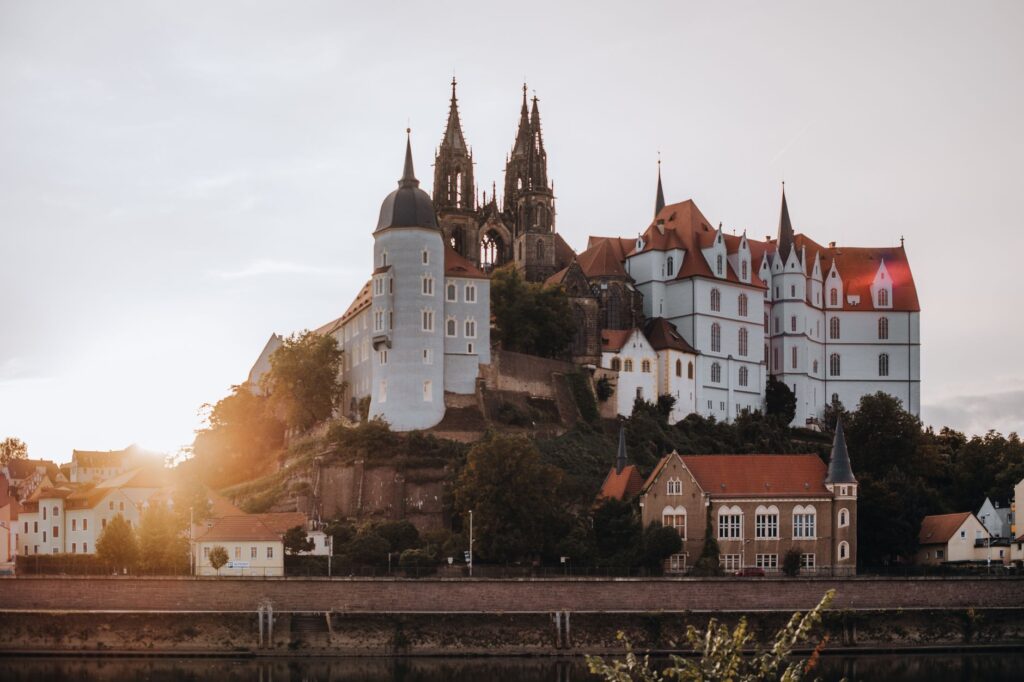
The creation of the manufactory was not without difficulties. Its early years were characterized by absolute secrecy at Albrechtsburg Castle, the medieval fortress in Meissen where the initial kilns were installed to prevent industrial espionage. However, the institution’s true artistic genius took off with the addition of figures such as Johann Gregor Höroldt and the sculptor Johann Joachim Kändler. Höroldt revolutionized the color palette, introducing vibrant, high-temperature-stable enamels that allowed for the depiction of chinoiserie scenes and naturalist landscapes with unprecedented detail.
Meanwhile, Kändler transformed porcelain from a mere display object into a form of high sculpture. His life-scale animal figures, commedia dell’arte characters, and complex centerpieces reflected the theatricality of the Baroque court. The crossed swords mark in cobalt blue, adopted in 1722 as a guarantee of authenticity, quickly became the ultimate status symbol among royalty and aristocracy throughout Europe. Every piece leaving the kilns was a declaration of political power, wealth, and technical mastery.
The Artisanal Process: Unyielding Tradition
Stepping into the Meissen workshops today is like stepping back in time. Unlike modern industrial production, the manufactory maintains an absolute commitment to traditional manual methods. From the extraction of clay in local mines to the final firing, each phase of the process demands years of specialized training and proverbial patience.
Kaolin, feldspar, and quartz are mixed in precise proportions to create the paste. Modelers sculpt original forms in plaster, from which master molds are created. Artisans fill these molds with liquid paste (slip) or press the clay by hand, depending on the complexity of the piece. Once dry, the works undergo a preliminary biscuit firing at low temperatures, preparing them for glazing and painting.
Meissen porcelain is not a mere testament to the past, but a living language where matter and fire continue to converse under the strict laws of high craftsmanship.
The painting department is the beating heart of the manufactory. Porcelain painters use brushes made from red marten hair—some with just a single hair—to trace filigrees, botanical flowers, and gold motifs with 24-karat gold. Colors are applied in layers and fixed through successive firings in kilns reaching temperatures above 1,400 degrees Celsius, a process during which pieces can suffer unpredictable deformations, testing the expertise accumulated over centuries.

The Crossed Swords Hallmark and the Fight Against Counterfeiting
Since its invention, Meissen’s commercial success inevitably attracted imitators. The registered trademark of the crossed swords, inspired by the arms on the coat of arms of the Electorate of Saxony, became one of history’s first protected trademarks. Over the centuries, this logo has evolved subtly, allowing historians and collectors to date any piece found in the antique market with millimetric precision.
Protecting the brand was no easy task. Throughout the 18th century, competitors in Vienna, Berlin, and Sèvres attempted to replicate both the formula and the artistic style. However, Meissen’s competitive advantage lay in its control over raw material deposits and, above all, in the generational transmission of secret know-how. Today, the institution still jealously guards its historical archives and pigment recipes, ensuring that every object bearing the blue emblem maintains the highest standards of artistic and material excellence.
The Collection and Foundation Museum
The Museum of the Meissen Porcelain Foundation (Erlebniswelt Meissen) offers contemporary visitors a deep immersion into this centuries-old history. Located next to the current production facilities, the museum houses one of the world’s most important collections of its kind, featuring over 20,000 objects ranging from Böttger’s early experiments to 20th-century avant-gardes and contemporary commissions.
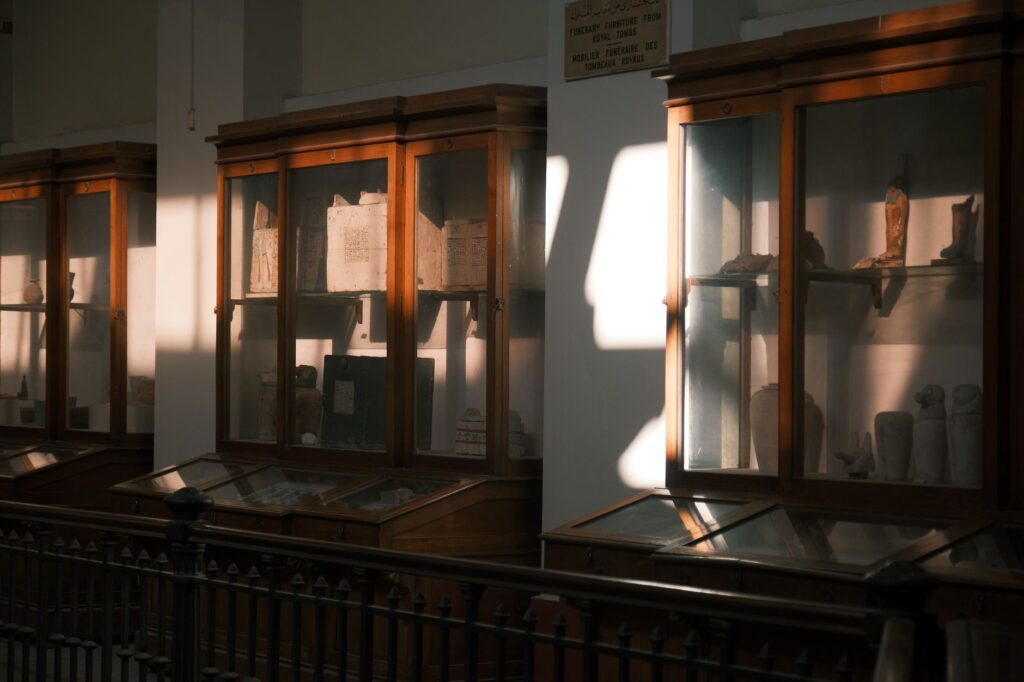
The exhibition tour is designed to break down the manufactory’s stylistic evolution, moving through playful Rococo, sober Neoclassicism, 19th-century Historicism, and Art Nouveau influences. The display cases showcase complete dinner sets that belonged to Russian tsars, Prussian kings, and international diplomats, each set a testament to the political alliances and aesthetic tastes of its era. Furthermore, live demonstrations allow the public to closely observe the work of throwers and painters, understanding the extreme difficulty involved in handling this material.
Dialoguing with Modernity: Contemporary Art in Meissen
Far from becoming a static museum dedicated exclusively to aristocratic nostalgia, Meissen has successfully reinvented itself in the 21st century. The institution regularly collaborates with international contemporary artists, designers, and architects to reinterpret porcelain from avant-garde perspectives. These collaborations challenge the traditional boundaries of the material, exploring new forms, textures, and architectural applications.
Contemporary visual artists use the manufactory’s kilns to create monumental installations that combine the fragility of porcelain with current social and ecological discourses. This openness to modernity demonstrates that Böttger’s legacy remains fertile ground for experimentation, where technical perfection serves creative freedom without forsaking the historical roots from which it originated.
Practical Information for the Traveler
Planning a trip to Meissen requires considering several logistical aspects to maximize the cultural experience. The town is located just 25 kilometers northwest of Dresden, making it an ideal day trip or a fundamental stop within a cultural itinerary through the Elbe Valley.
How to get there: The nearest airport is Dresden Airport (DRS), connected to major European hubs. From Dresden Central Station (Dresden Hauptbahnhof), the S-Bahn commuter train (line S1) reaches Meissen station in approximately 35 minutes, with frequent departures throughout the day. For those traveling by car, the A4 freeway connects Dresden to Meissen via the B6 federal highway.
Hours and tickets: The Meissen Porcelain World (Erlebniswelt Meissen) generally opens every day of the week, although hours vary between summer and winter seasons (usually operating from 9:00 AM to 5:00 PM). It is recommended to purchase combined tickets that include museum access and the demonstration workshop tour. Guided tours are available in multiple languages, including English and German, and booking in advance via their official website is advisable.
Explore Saxon heritage through its porcelain to reveal how patience, science, and art can converge to transcend the barriers of time and matter.

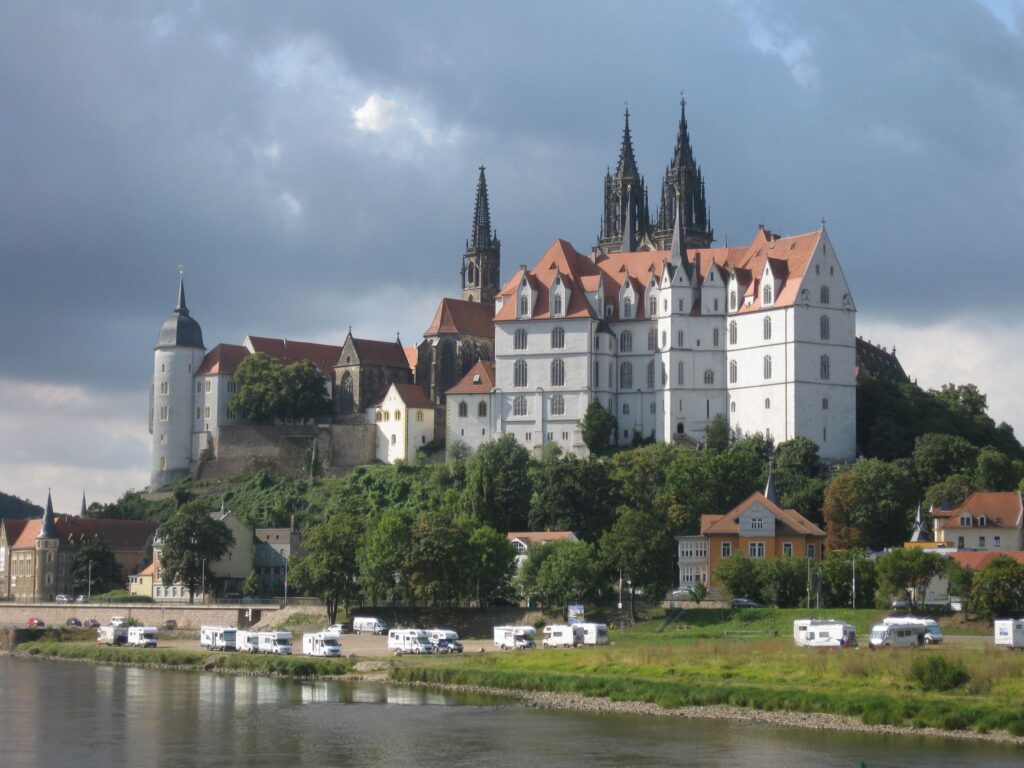
What else to see nearby: Beyond the manufactory, the town of Meissen features a medieval old town, the Gothic cathedral, and the imposing Albrechtsburg Castle perched on a hill above the Elbe River. The vineyards of the Saxony wine region, one of Europe’s smallest and northernmost, also offer the opportunity to taste high-quality local wines in nearby traditional wineries.
Conclusion: The Endurance of White Gold
The history of Meissen is much more than the chronicle of a ceramic factory; it reflects human ambition, scientific curiosity, and the relentless pursuit of formal beauty. In a world dominated by mass production and planned obsolescence, the survival of a workshop where pieces continue to be molded and painted by hand represents a courageous cultural manifesto.
Visiting Meissen and contemplating the unalterable luster of its porcelain connects directly with the dawn of European aesthetic modernity. The two crossed swords continue to remind us that true excellence brooks no shortcuts, and that art, when nurtured by rigor and passion, is capable of defying the passage of centuries.