On the map, Rødovre appears as a compact patch west of Copenhagen, inside Denmark’s Capital Region. It is listed as the seat of the municipality that bears its name, with a population of around forty thousand and a modest elevation of roughly twenty meters above sea level. Nothing in those figures suggests the cultural interest hidden in a territory so rarely visited by international travelers.
Yet Rødovre is a good example of how the Danish outskirts have become a place where the country’s transformation can be read: the shift from an agrarian to an industrial economy, the building of the welfare state and the arrival of diversity. Exploring it requires changing scale and accepting that heritage here is not always inside a museum.
This is also a lesson in how to travel. A town of this size, without a monumental skyline or a historic core packaged for visitors, asks for a different kind of attention: slower, more observational, more willing to treat ordinary infrastructure as evidence. What follows is an attempt to read that evidence without overstating it.
A municipality that recognizes itself in its name
The etymology of the toponym points to an older landscape of clearings and woods, but what visitors see today is a dense urban fabric crossed by avenues and public transport lines. Rødovre borders Copenhagen and other western metropolitan municipalities, and that hinge position explains much of its character: neither center nor distant periphery, but an intermediate piece of the Danish urban machine.
Travelers looking for spectacular monuments may leave disappointed. Those interested in social history, however, will find an open-air archive: housing from different decades, public facilities and an associative life that sustains much of the local identity.
It helps to understand the administrative frame. Rødovre is not a district of Copenhagen but a municipality in its own right, with its own council, services and budget. That distinction matters in Denmark, where local government has long carried responsibility for schools, libraries, care and culture. A visitor who grasps this will read the town differently: what looks like a single urban surface is in fact a set of local decisions.
From countryside to city: a visible transformation
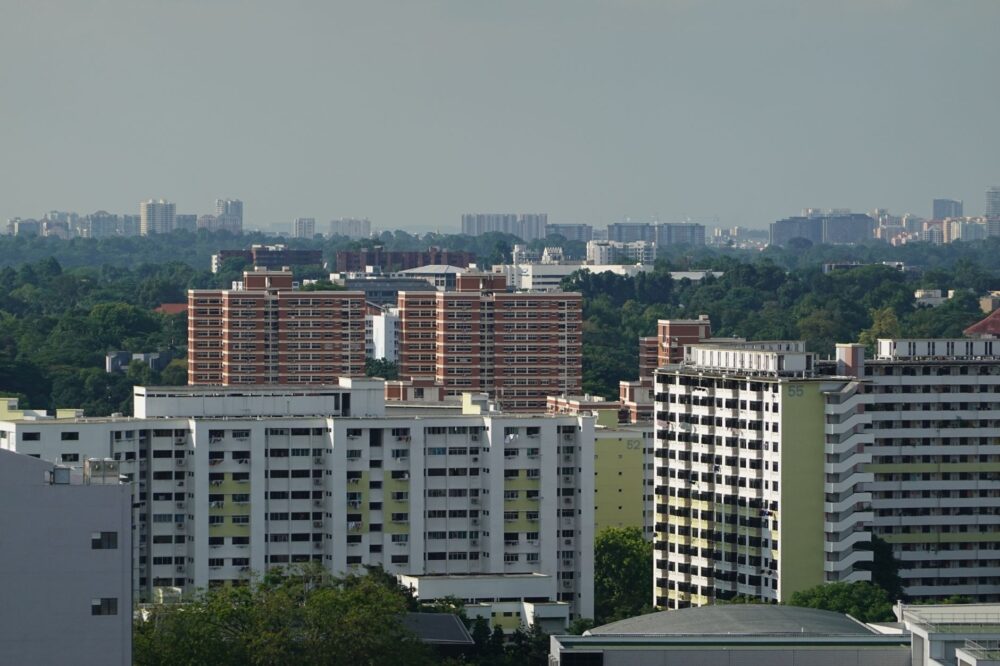
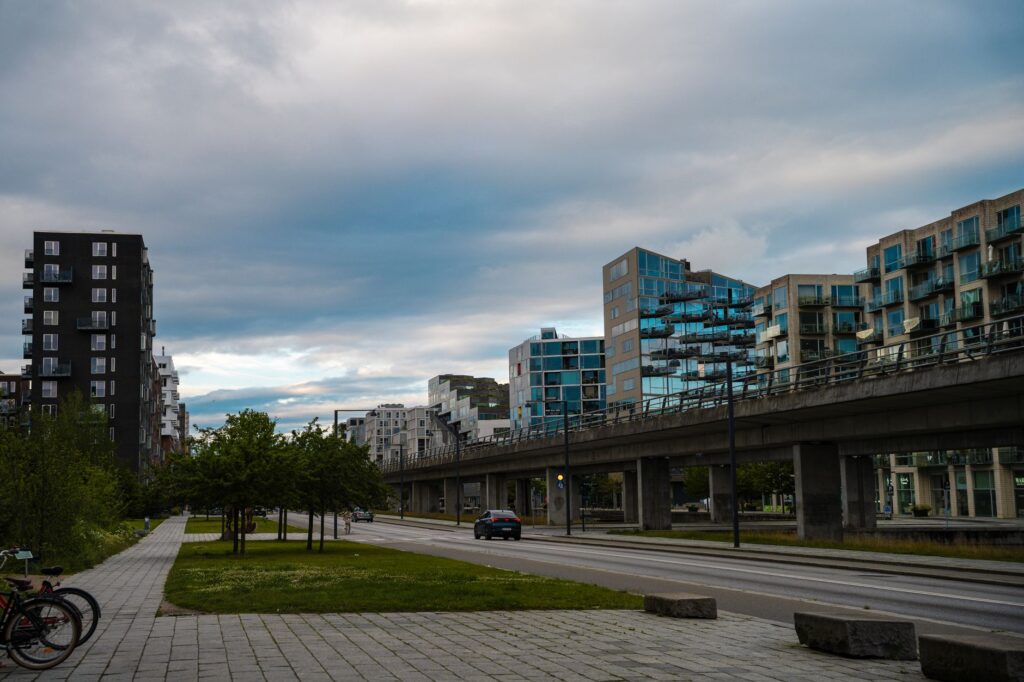
Throughout the twentieth century, Rødovre stopped being a predominantly agricultural territory and became part of Copenhagen’s metropolitan growth. The process was neither uniform nor instant. Neighborhoods of single-family houses sit alongside collective housing blocks, and the mix of scales tells a story of urban planning that can be read on foot.
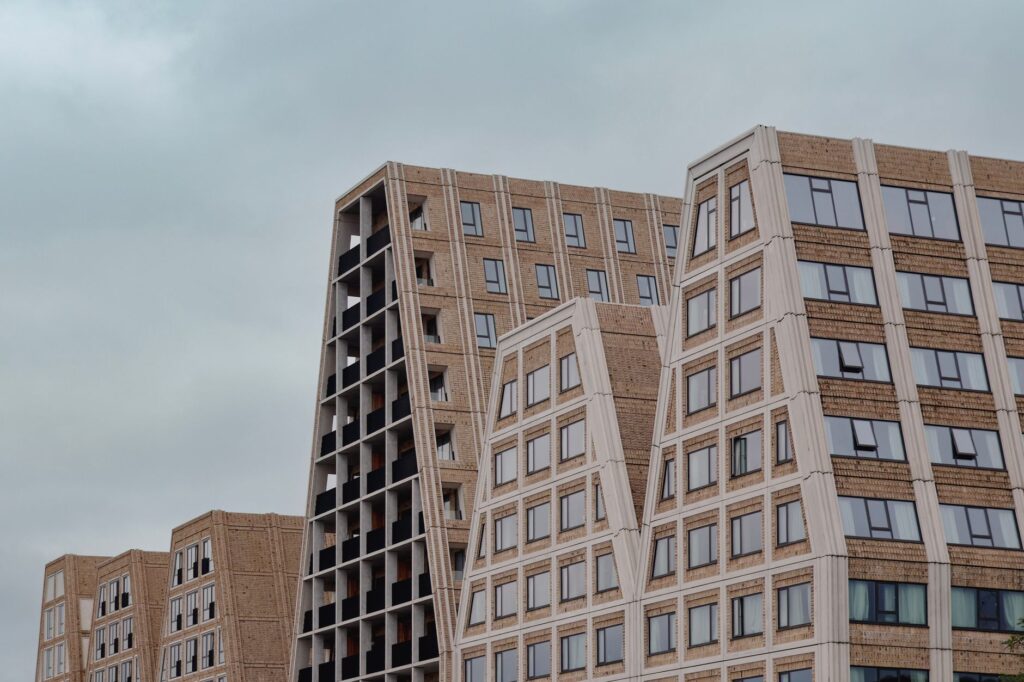
Danish residential architecture from the interwar and postwar periods appears here in discreet, functional versions designed for daily use. Rødovre’s heritage is above all a heritage of the everyday: housing, schools, libraries and the open space between blocks.
That mixture is not accidental. It reflects decades of debate about how to house a growing population without abandoning the qualities of light, air and green space that Danish planning has valued since the early twentieth century. Walking from one street to the next, the visitor can sense the arguments embedded in the built form: density against openness, collective provision against private life.
The library as a civic center
In Denmark, public libraries have worked for decades as cultural and civic centers, not just as book depositories. Rødovre takes part in that tradition and offers reading spaces, activities and meeting points that reflect the Danish way of understanding the public sphere.
For visitors interested in culture and heritage, a municipal library may sound like a minor destination. Yet it is one of the best places to observe how community is built on the outskirts: who uses it, at what hours, with which programs. It is a more reliable social thermometer than any tourist brochure.
The Danish library model is worth a brief explanation, because it shapes what the visitor sees. These are tax-funded institutions with a legal mandate to serve everyone, offering not only books but also newspapers, digital access, children’s areas and rooms for local groups. Their architecture often follows suit: generous glazing, clear sightlines, furniture meant to be used rather than admired. Observing those choices is a way of understanding the welfare state as a physical experience rather than an abstract idea.
Art in public space
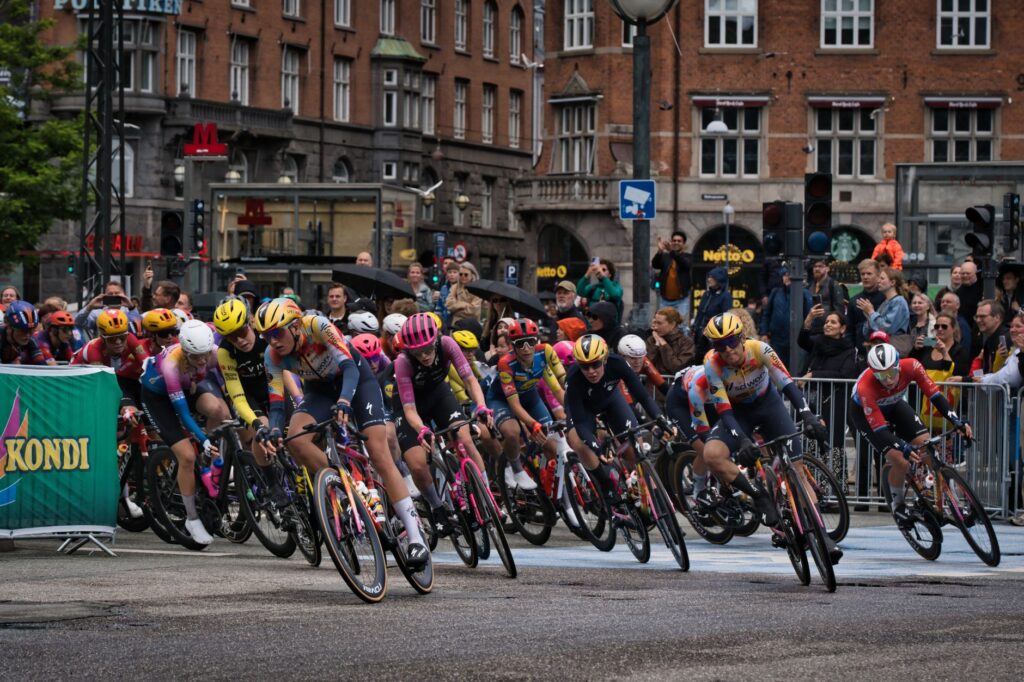
Rødovre has a tradition of art integrated into the urban environment, a common practice in Denmark since the mid-twentieth century. Sculptures, reliefs and site-specific works sometimes accompany public buildings and squares, without large signs announcing them.
That discretion is part of the appeal. Attentive walkers discover that the municipality has invested in beautifying the common rather than monumentalizing the exceptional. The result is an urban landscape of solid average quality, without grand gestures, consistent with the Danish culture of functional design.
For the visitor, this means adopting a different visual habit. Instead of following markers, look at entrances, stairwells, courtyards and the edges of squares. Public art in Denmark is often placed where people pass daily rather than where tourists gather, and its purpose is to give character to shared space. Recognizing it requires patience, but it rewards the walker with a sense of how a community chooses to present itself.
In Rødovre, heritage is not contemplated from behind a fence: it is used, crossed and inhabited.
Edge nature: parks and wetlands
Western metropolitan Copenhagen retains green areas and wetlands that form part of the capital’s ecological belt. Rødovre participates in that network with parks and recreation areas that, in summer, fill with families, runners and cyclists.
The bicycle is, in Denmark, a cultural infrastructure as much as a means of transport. Cycling through Rødovre reveals the real scale of the municipality and its continuity with neighboring areas. It is also the most respectful way to visit a place not designed for mass tourism.
Danish outdoor life follows its own rhythms. Weekends bring families to green spaces with picnic blankets and coffee; weekday evenings belong to runners and club sports. Understanding those rhythms helps the visitor avoid intruding and makes the experience more meaningful. The point is not to consume the landscape but to share it briefly, on the same terms as those who live there.
Neighborhood food and daily life
Rødovre’s food scene does not compete with Copenhagen’s, and that is precisely its interest. Bakeries, cafés and local shops show the Danish daily diet, with its mix of tradition and globalization. Travelers who sit down for a coffee will observe local life without intermediaries.
The hygge culture so often cited in travel manuals appears here in modest versions: a shared table, a quiet conversation, warm light in winter. There is no need to look for it in shop windows; it is enough to watch how public space is organized.
Danish everyday eating is less about restaurants than about routines: bread in the morning, a packed lunch, coffee in the afternoon. Bakeries are therefore a good starting point for anyone curious about local habits. They are also among the few places where a visitor can pause without feeling out of place, and where the pace of the neighborhood becomes visible.
Industrial heritage and the memory of work
Like much of the metropolitan outskirts, Rødovre retains traces of a productive past that has since been reshaped. Workshops, warehouses and industrial buildings that once sustained local employment form part of the municipality’s memory, even if they are not always signposted as heritage.
Recognizing those places requires a patient eye. The history of labor is rarely exhibited with the solemnity of monumental history, but it is the one that explains why Rødovre exists as it does. For visitors interested in culture, that reading effort is worthwhile.

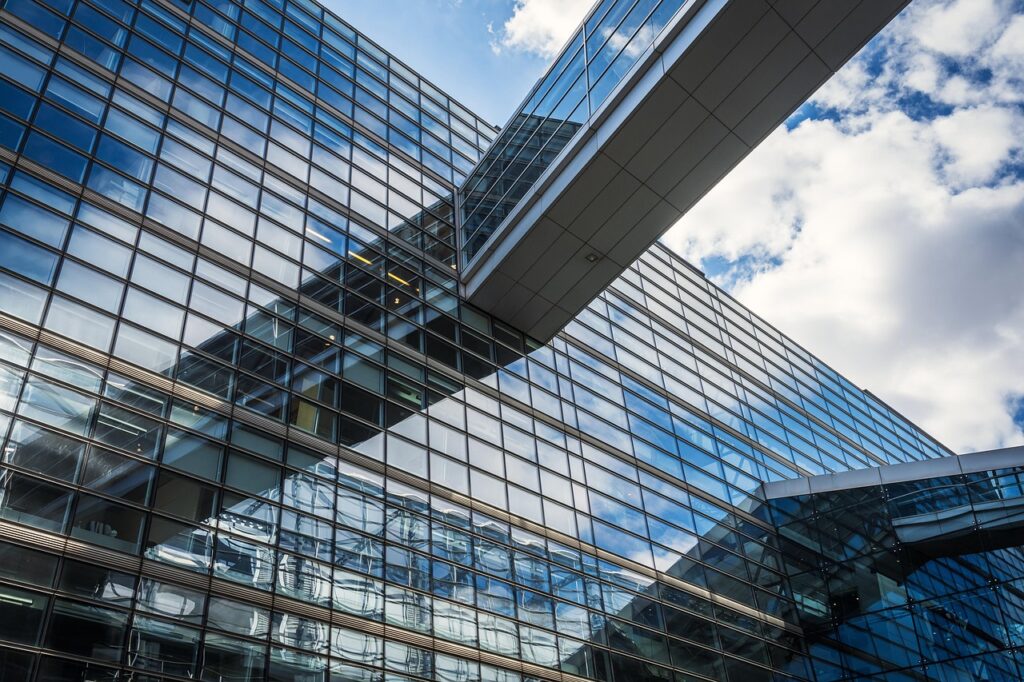
In Denmark, as elsewhere in Northern Europe, the shift from small-scale manufacturing to service employment changed the physical fabric of suburban towns. What remains is often a building type rather than a landmark: low structures with large windows, now used for shops, studios or community services. Noticing those conversions is a way of reading economic change without needing a museum label.
An identity built among neighbors
Danish associative life, with its sports clubs, neighborhood associations and cultural activities, has an everyday expression in Rødovre. That network explains why the municipality retains a sense of belonging despite its proximity to a capital that absorbs much of the public attention.
Travelers who want to understand Denmark beyond its postcards will find a discreet lesson here: local identity does not depend on having a great monument, but on having institutions and spaces where people recognize themselves.
This is perhaps the most transferable insight for a visitor. In many cities, identity is performed for outsiders; in a Danish suburban municipality, it is produced through participation. Volunteering, club membership and local events are not folklore but the working machinery of community. Observing that machinery, respectfully and from a distance, is a form of cultural understanding.
The Danish outskirts are not a void between the center and nowhere: they are a form of civilization with rules of their own.
What to look at closely
- The transition between housing types: single-family houses, blocks and public facilities.
- Art integrated into facades, squares and entrances to institutional buildings.
- Libraries and civic centers as thermometers of local life.
- Green areas and cycling routes connecting to the rest of the western metropolitan area.
- Neighborhood places where people eat and talk without pretension.
- Converted buildings that reveal the shift from manufacturing to services.
Practical guide
Rødovre lies in Denmark’s Capital Region, west of Copenhagen, and forms part of its metropolitan area. It is easily reached by public transport from the capital, and the bicycle is a comfortable and safe option for exploring the municipality and its surroundings. The local postal code is 2610, a useful detail when searching for accommodation and services.
The best time to visit depends on the traveler’s interests: summer offers parks and outdoor life; winter, a more inward version of Danish life. It is advisable to check library and cultural center opening hours before visiting, as they vary by season. This is not a destination with extensive tourist infrastructure, so prior planning helps.
For responsible travel, cycling or public transport is recommended, avoiding peak hours and respecting residential areas. Rødovre’s cultural interest lies not in its monuments but in its daily life: observing without intruding is part of the experience.
Practical expectations are worth setting in advance. English is widely understood in Denmark, which makes navigation and small interactions easy, but it is still polite to ask before switching languages. Card payments are the norm, and many services are digital, so carrying a working phone is useful. Distances are short, but weather can change quickly; a rain jacket is more practical than an umbrella on a bicycle.
Finally, consider the ethics of visiting a residential municipality. Photograph buildings and streets rather than people, avoid entering private courtyards, and treat public facilities as shared spaces rather than attractions. The reward for that restraint is a more honest encounter with a place that does not perform for visitors.
A closing note in the park
At the end of the day, Rødovre resembles what Denmark has wanted to be: a place where the public sphere works, where design serves daily life and where history is preserved without fuss. There is no grand final gesture, only a sum of small ones.
Travelers who leave with the sense of having seen something authentic have probably grasped the essentials: on Copenhagen’s outskirts, heritage is not a spectacle but a form of coexistence.