
Choa Chu Kang New Town sits in northwestern Singapore, about 28 metres above sea level and roughly halfway between the city centre and the Malaysian border. Home to more than 187,000 residents, it is one of the satellite towns built to house a growing population without sacrificing green space. Its name appears in Chinese as 蔡厝港, in Tamil as சுவா சூ காங் and in Malay as Choa Chu Kang, and that coexistence of languages already signals what a visitor will find: a local identity made of layers, not a single story.
This report does not propose a route of monuments. It proposes something more modest and more useful: understanding how a planned town is read through its daily gestures, its markets, its connector parks and its rules of coexistence. Choa Chu Kang is not a postcard destination, but it is a place where heritage is measured by how space is shared.
A young territory with kampung memory
Choa Chu Kang New Town is a relatively recent administrative name, but the toponym has older roots. The area appears in cartographic records and in oral memory as farmland, smallholdings and scattered settlements before intensive urbanisation. That kampung memory, the traditional Malay village, did not disappear entirely: it survives in the scale of the parks, in the presence of mature trees and in the habit of using public space as an extension of the home.
For the visitor, the lesson is clear: there is no point looking for a monumental historic centre, because there isn’t one. What does exist is a built landscape that documents Singapore’s urban history: public housing blocks, neighbourhood shopping centres, schools, clinics and a transport network that connects everything to the rest of the island.
The toponym itself is a reminder that Singapore’s place names often carry more than one language and more than one community. Reading the signs in the neighbourhood, in Latin script, Chinese characters, Tamil script and Malay, is a small exercise in understanding how a multi-ethnic state organises its public space. None of those languages is decorative; each one addresses a real community that lives there.
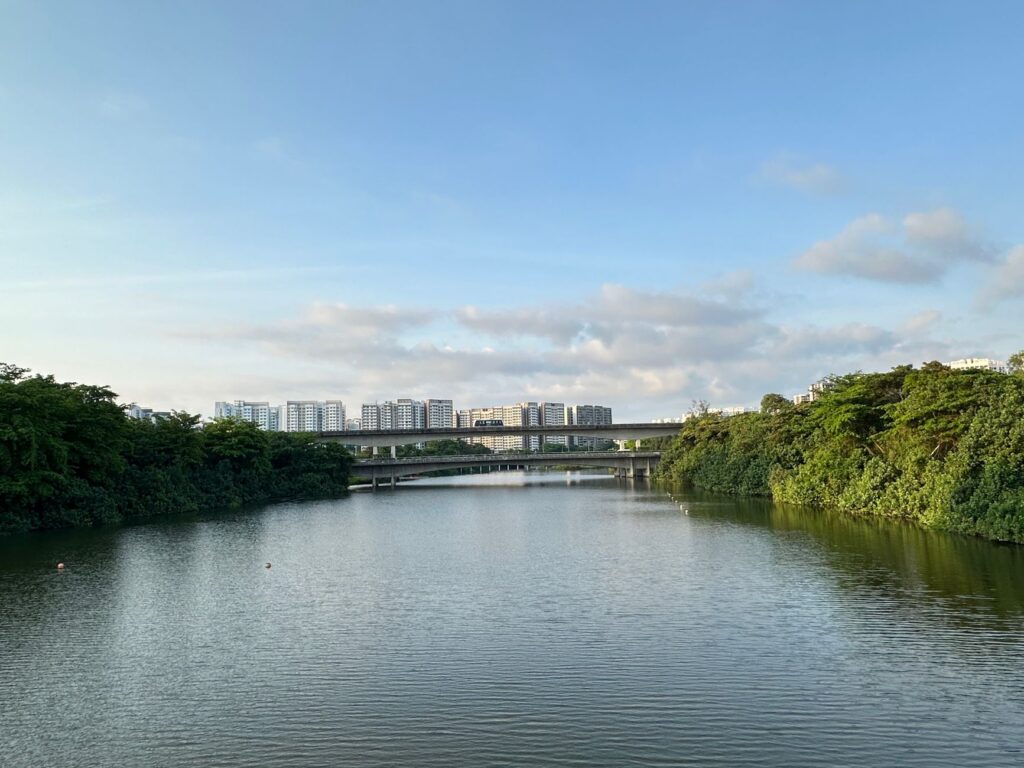
Reading Choa Chu Kang requires changing the question: not which monuments to see, but how a place designed for thousands of people to coexist without getting in each other’s way is actually inhabited.
Public housing as an urban archive
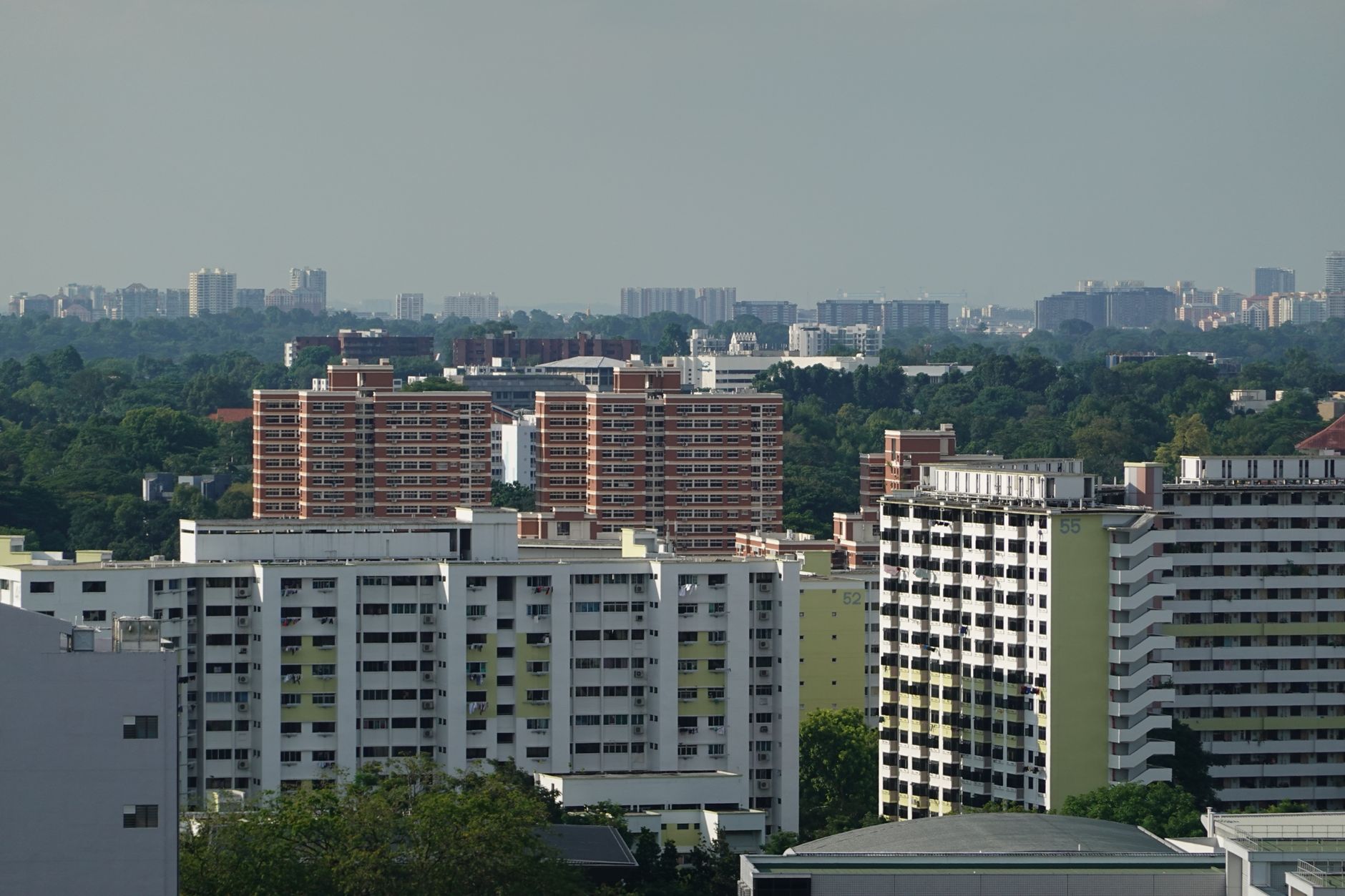
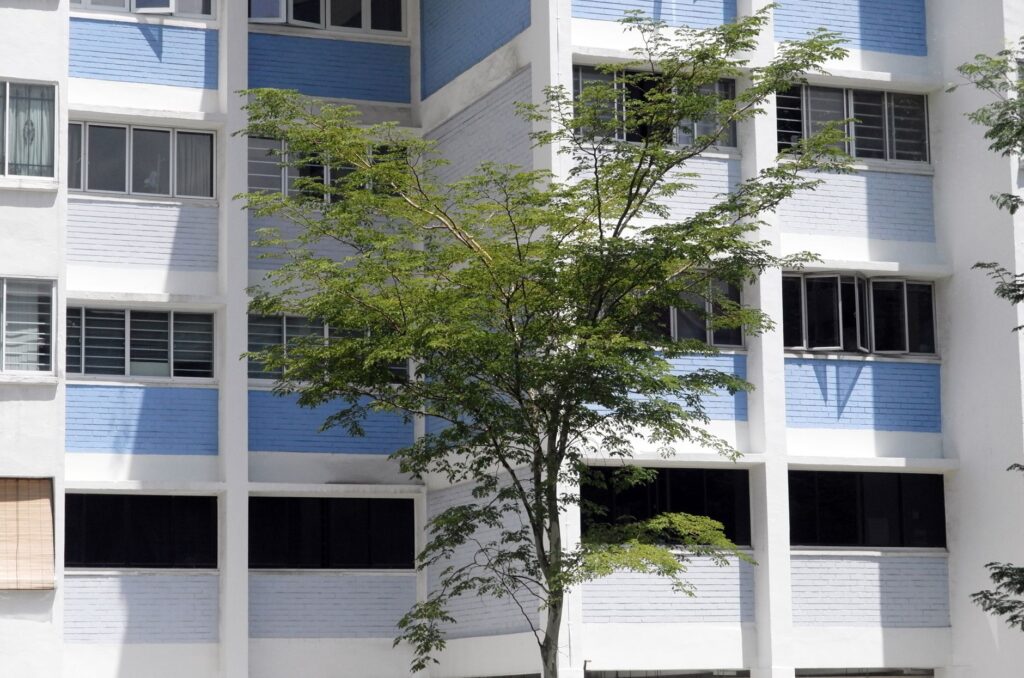
The landscape of Choa Chu Kang is dominated by HDB blocks, the public housing that the Singaporean state developed from the 1960s onwards. These buildings are not just residential architecture: they are an archive of social integration policies, of the ethnic mix within each block and of the evolution of tropical urban design.
Observing the corridors, inner courtyards and ground floors reveals how daily life is organised. In many blocks, the ground floor works as a semi-public space: small shops set up there, neighbourhood meetings take place and children play in the shade. It is modest heritage, but verifiable and very much present.
It helps to understand that the HDB system was conceived not only as shelter but as a social instrument. The mix of ethnic groups within each estate, the provision of shared amenities and the design of open ground floors were all intended to prevent the formation of isolated enclaves. Whether or not one agrees with every aspect of that policy, the result is visible on the ground: a neighbourhood where different communities share the same stairwells, the same shops and the same playgrounds.
What to look at without intruding
The responsible visitor should remember that these buildings are homes, not attractions. You can walk along the pavements and through the parks, but it is best to avoid private corridors, not photograph residents without permission and respect the rules of coexistence that govern shared spaces.
A useful rule of thumb is to ask what one would accept in one’s own building. Photographing a façade from the street is one thing; following a corridor to see how people live is another. The line is not complicated, but it requires attention, especially in a place where tourism is not the main economic activity and residents are not used to being observed.
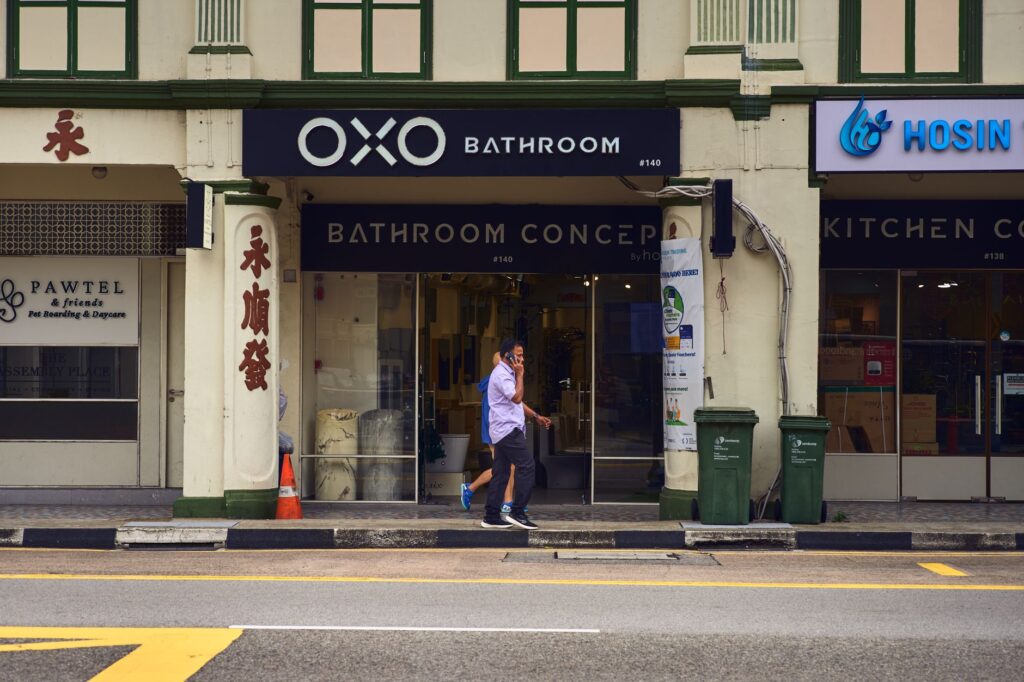
Connector parks and outdoor life
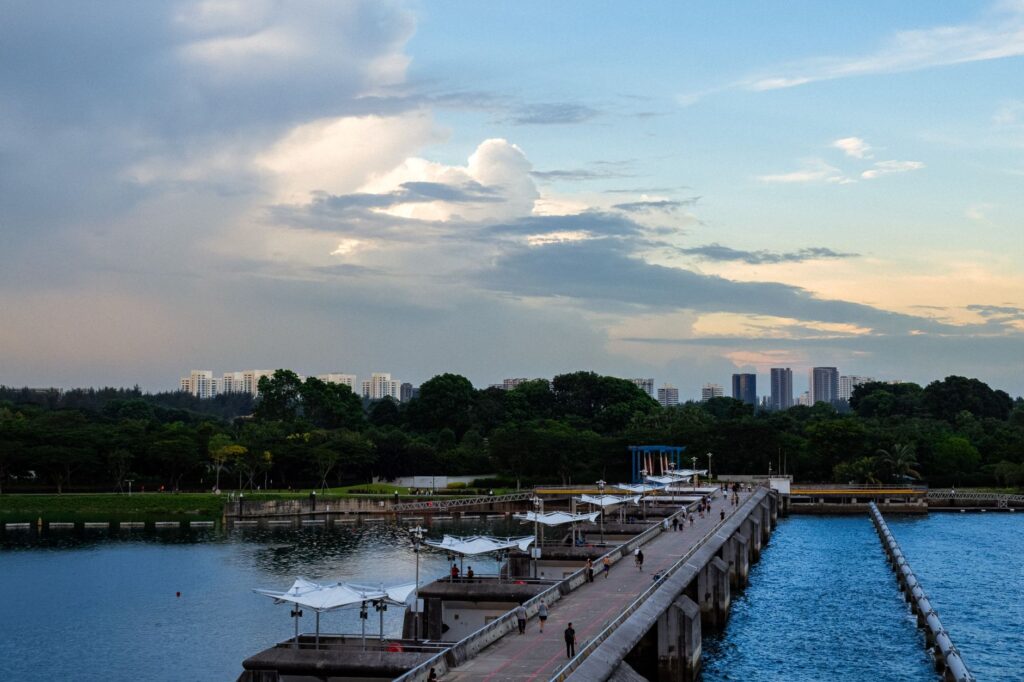
One of the most distinctive features of Choa Chu Kang is its connection to Singapore’s park connector network, which allows people to walk and cycle between neighbourhoods without depending on a car. That green infrastructure is not decoration: it is part of the local identity and of how residents use their free time.
Neighbourhood parks, ponds and outdoor exercise areas draw activity from first thing in the morning. People practise tai chi, walk in groups and talk. For the visitor, these spaces offer an honest window onto everyday life, provided that opening hours and rules of use are respected.
The park connectors also reveal a particular idea of the city: green corridors that link housing estates, transport nodes and water bodies, so that moving through the neighbourhood does not necessarily mean moving through traffic. For someone used to cities where parks are isolated islands, the continuity is striking. It also explains why cycling and walking are practical options rather than leisure activities reserved for weekends.
Water, shade and tropical time
In a tropical city, shade and water are not aesthetic details; they are conditions of comfort. The presence of mature trees, covered walkways and water features in and around the neighbourhood shapes when and how people go outside. Understanding this helps the visitor plan: the middle of the day is not the moment for a long walk, and the busiest hours in the parks are early morning and late afternoon.
Wet markets and neighbourhood food
Food is one of the most accessible forms of heritage in Choa Chu Kang. Wet markets and hawker centres are spaces where Singapore’s cultural diversity becomes tangible: Chinese, Malay and Indian stalls share aisles and tables.
For the visitor, the advice is simple: eat where residents eat, respect the queues and return your tray. These rules are not formal, but they keep the space working. The food experience does not depend on a famous dish, but on understanding the rhythm of the place.
A wet market is also an economic and social institution. It is where households buy fresh produce, where stallholders build relationships with regular customers and where the neighbourhood’s languages mix in everyday transactions. Visiting one is not a performance; it is entering a working space, and the appropriate behaviour is that of a customer, not that of a spectator.
In a hawker centre, courtesy is not a detail: it is the invisible infrastructure that allows hundreds of people to eat together every day.
Transport and human scale
Choa Chu Kang is connected to the rest of Singapore through the public transport system, including the light rail line that runs through the neighbourhood. That network does not only make movement easier: it also defines the scale of the town and the way residents organise their day.
Visitors arriving without a car will find the neighbourhood accessible, but should plan journeys and avoid peak hours. Signage is clear and electronic payment is common, although specific details should be checked with official sources before travelling.
Transport also shapes the town’s identity in a subtler way. The stops and interchanges function as meeting points, and the routes connect housing blocks with markets, schools and clinics. For the visitor, using public transport is not just a practical choice; it is the most direct way to understand how the neighbourhood is stitched together and how far residents travel for ordinary errands.
Intangible heritage: festivals and neighbourliness
Beyond architecture, Choa Chu Kang keeps an intangible heritage made of celebrations, neighbourhood meetings and everyday practices. Religious festivals, temporary markets and community activities are part of the life of the neighbourhood and reflect Singapore’s cultural mix.
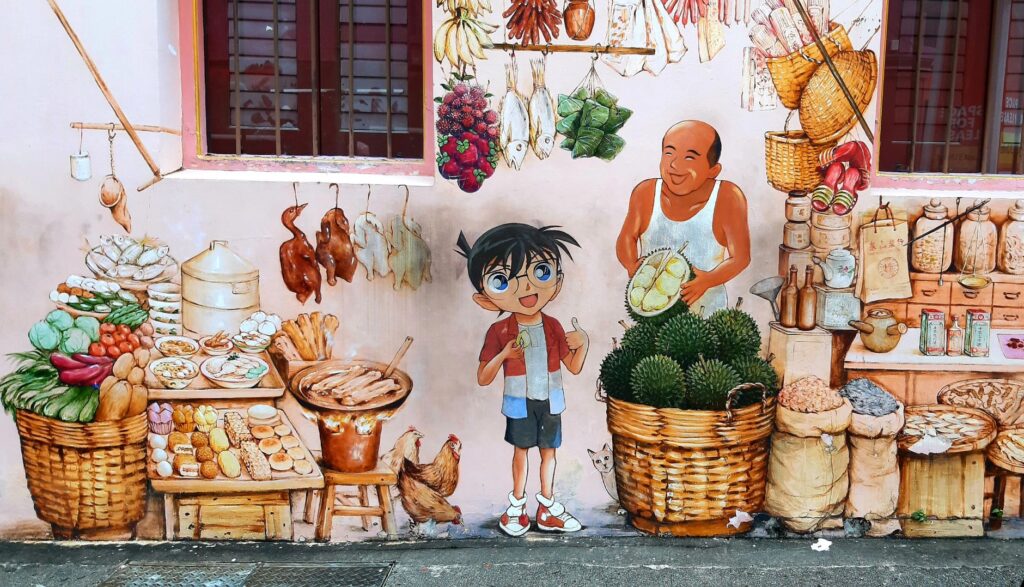
The visitor should approach with respect: observe without interrupting, ask before taking part and avoid turning celebrations into a spectacle. Local hospitality exists, but it is not an obligation that the visitor can demand.
Neighbourliness, in a planned town, is partly designed and partly practised. Shared corridors, common areas and residents’ committees create the conditions, but it is the daily habits of the people who live there that make them work. That is why the most meaningful heritage here is often invisible: the unwritten rules that allow thousands of people to share a small territory.
How to observe without disrupting
If a community event is taking place, the safest approach is to stay at the edges, follow the instructions of organisers and avoid blocking access. Photography should be discreet and, when in doubt, omitted. Participation in religious ceremonies is not a tourist right, and a respectful distance is often the most appropriate form of interest.
Responsible choices before arriving
Travelling to Choa Chu Kang means accepting that it is not a conventional tourist destination. Responsible choices therefore begin before arrival: learning about the rules of coexistence, respecting private spaces and choosing local providers where possible.
It is also worth remembering that Singapore is a city-state with strict rules on public order, consumption in certain spaces and the use of shared areas. Ignoring them is not only disrespectful: it can have legal consequences.
Responsibility also means adjusting expectations. There are no guided tours of daily life, and the neighbourhood does not owe the visitor an experience. The most rewarding approach is to arrive informed, move slowly, buy from local businesses and accept that much of what makes the place interesting is not designed for outsiders.
Practical guide
To plan a visit to Choa Chu Kang, keep a few general criteria in mind, always verifiable through official sources:
- Best time: early morning and late afternoon are cooler and allow you to observe neighbourhood life without the hottest hours.
- Transport: the public system connects the neighbourhood with the rest of the island; plan journeys and avoid peak hours.
- Food: wet markets and hawker centres are the most accessible option; respect queues and return trays.
- Rules: respect private spaces, do not photograph residents without permission and follow the signs in shared areas.
- Language: English is the common language, but Chinese, Malay and Tamil are present in daily life.
- Weather: expect heat and humidity throughout the year; carry water, seek shade and plan indoor pauses.
- Information: check official sources for opening hours, transport disruptions and any local regulations before travelling.
A town to be read slowly
Choa Chu Kang does not offer the visual impact of a European historic centre or the spectacle of a natural landscape. It offers something else: the chance to observe how a society plans coexistence and how residents inhabit it through everyday gestures.
For visitors willing to walk without rushing, respect the rules and look without intruding, the neighbourhood reveals a local identity made of diversity, infrastructure and neighbourliness. It is a heritage that is not contemplated from outside, but understood when space is shared with those who live in it.