Casablanca is not the postcard many expect. It is a metropolis of more than three and a half million people, Morocco’s economic capital and the seat of the Casablanca-Settat region, where the Atlantic brings mild weather and a humidity that seeps into the walls. Food here does not live in white-tablecloth restaurants: it lives in neighbourhood markets, in bakeries that knead before dawn and in home kitchens where, every morning, someone decides what goes on the table.
To understand that cooking, you have to change scale. It is not about chasing the spectacular dish but about reading small gestures: how a tomato is chosen, how bread is stored, how tea is poured. This report follows Casablanca’s everyday pantry, its heritage, its routines and the choices a responsible visitor can make to get closer without breaking anything.
A city that eats facing the Atlantic
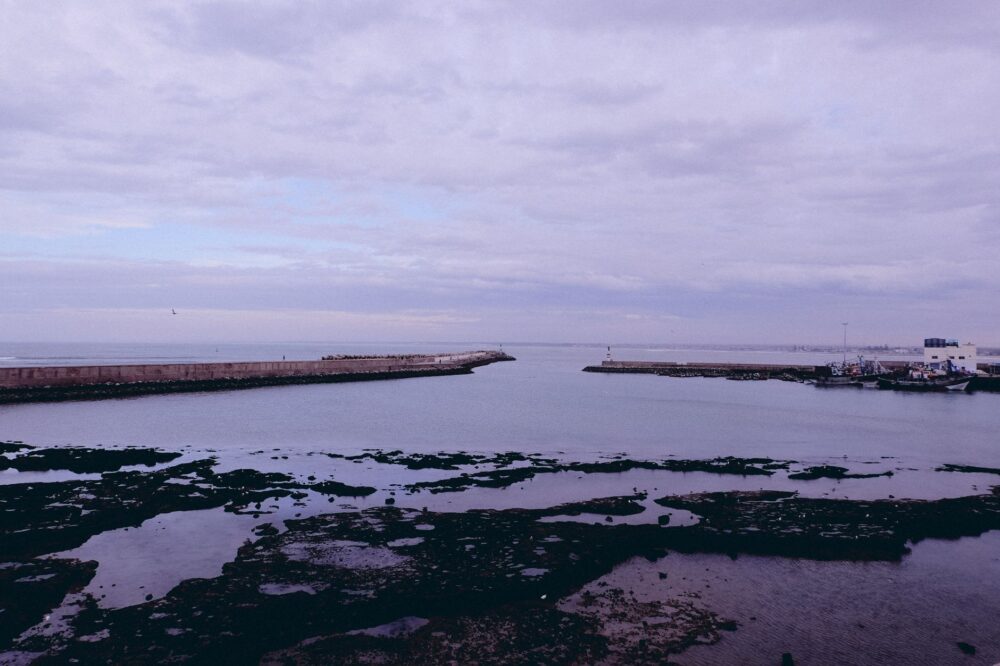
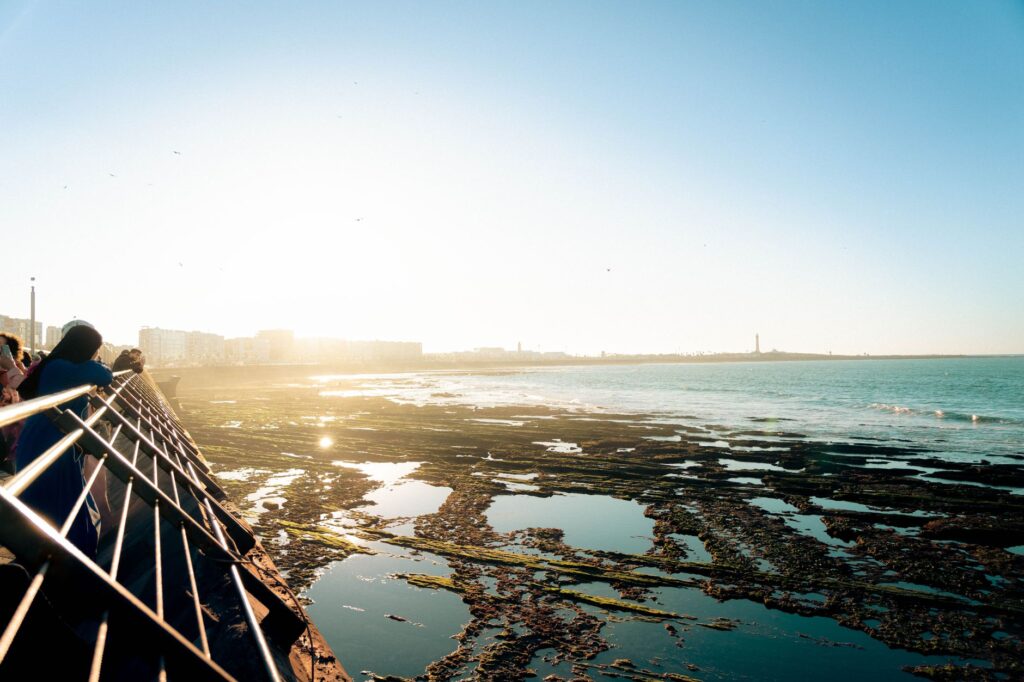
Casablanca’s geography explains much of its cooking. The city spreads across a coastal plain about 27 metres above sea level, open to the sea breeze and crossed by avenues that mix the French colonial grid with fast-growing neighbourhoods. That Atlantic position brings fish and seafood, but it also imposes a cuisine of preservation: salted goods, oils, dried pulses and flours that keep.
The result is a table of contrasts. Arab-Andalusian tradition, Amazigh heritage, French influence on bread and pastry, and the contributions of communities that made the city a cosmopolitan port all coexist. Casablanca cooks with what arrives and with what is stored, and that double logic shows in every purchase.
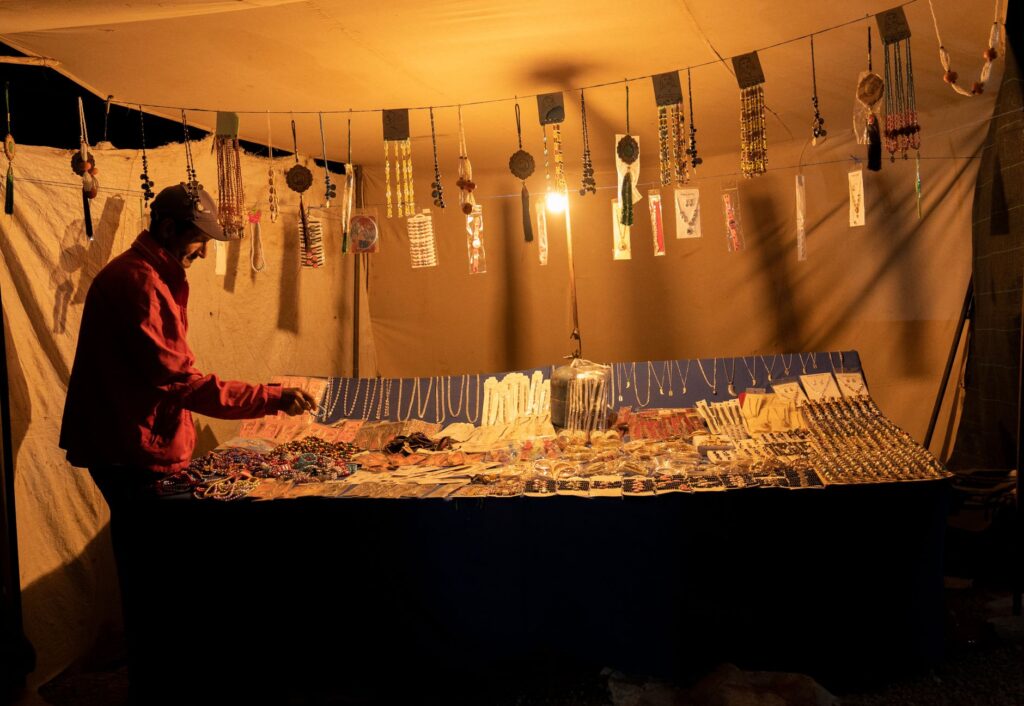
For visitors, the first lesson is that the market is not a stage set. It is living infrastructure, with hours, hierarchies and codes. Watching before buying, asking without demanding and accepting that the vendor is busy are concrete forms of respect.
The bread you take to the corner oven
In many Casablanca neighbourhoods, bread is not bought fully made: it is kneaded at home and taken to the neighbourhood oven, the ferran. It is an everyday practice that sustains a network of trust. The dough is marked with a sign so it can be recognised, a small fee is paid for baking, and it is collected still hot.
That bread, often round with a dense crumb, is not a minor accompaniment: it is the base on which the meal is built. It is used to scoop up stew, to accompany tea, to complete a plate of pulses. Its presence orders the table and the household budget.
Bread is not thrown away in Casablanca: it is dried, grated and turned into something else. It is one of the quietest lessons of local cooking.
For those visiting the city, the neighbourhood oven is a privileged place to observe, provided distance is kept and work is not interrupted. It is not a tourist space: it is a neighbourhood necessity that deserves discretion.
Vegetables, pulses and spices: the daily shop
The Casablanca pantry rests on a solid vegetable base. Tomatoes, onions, courgettes, carrots, aubergines and peppers appear at the stalls according to the season, alongside dried pulses such as chickpeas and lentils, and a range of spices from cumin to dried coriander, ginger to cinnamon.
The daily shop has its own choreography. You start with the perishable, continue with what keeps and finish with aromas. In neighbourhood markets, the vendor advises, haggles and adjusts the quantity to what the customer needs. Negotiating is not a performance: it is a conversation about price and quality, and it has rules.
- Ask the price before asking for a quantity.
- Accept the local unit of measure, often the kilo or the pile.
- Do not touch the goods without the seller’s permission.
- Carry cash in small notes and coins.
The market is also a social thermometer. Generations, accents and income levels cross there. For the traveller, the best attitude is that of an apprentice: watch, listen and buy little, but with intention.
The tea that sets the pace of the afternoon
In Morocco, mint tea is not a drink: it is a threshold. It is served on arrival, offered to the guest and repeated for as long as the conversation lasts. In Casablanca, that ceremony coexists with urban haste but keeps its function: marking that the encounter matters.

Making it well takes patience. Water is heated, the teapot is rinsed, green tea and fresh mint are added, and the sugar is left to dissolve without hurry. The high pour when serving oxygenates the infusion and forms the foam considered a sign of good practice. It is not a secret recipe: it is a practice passed down in homes.
Offering tea is a way of saying that the other person’s time counts. Refusing it without reason can be read as disinterest.
The visitor who accepts tea also accepts a pause. That pause is perhaps the best doorway into Casablanca’s cooking: meals are not eaten in a hurry, they are eaten with conversation.
Fish, olive oil and Atlantic preserves
Morocco’s Atlantic facade supplies Casablanca with fresh fish and a culture of preservation that includes salted goods and oils. Olive oil, produced in inland regions of the country, is a pillar of home cooking: it appears in salads, stews and frying, and its quality varies with the harvest and the area.
In the markets it is common to find stalls specialising in olives, oils and vegetable preserves. Buying a small bottle, asking about origin and tasting before taking more are reasonable gestures for a traveller who wants a edible souvenir without overloading the suitcase.
Fish, for its part, is bought with freshness in mind: clear eyes, red gills, a smell of the sea. In home kitchens it is baked, grilled or stewed with tomato and spices. Simplicity is the rule, not the exception.
Home cooking: tagine, couscous and other routines
Tagine and couscous are known outside Morocco, but in Casablanca they work as routine dishes, not only celebrations. Couscous, in particular, is associated with Friday in many homes: it is prepared in advance, served generously and shared with whoever arrives.

Casablanca home cooking also includes pulse stews, hearty soups such as harira during Ramadan, and fresh salads with tomato, onion and herbs. Recipes vary from one home to another, and that variation is part of the heritage: there is no single correct version.
For visitors, the best way to know this cooking is through a shared table, when there is a genuine invitation. One should not force entry into a home or ask for a culinary demonstration as if it were a show. Moroccan hospitality is real, but it also has limits that should be respected.
Buying, cooking and eating: responsible choices
Casablanca is a city of economic contrasts, and food reflects that. Shopping in neighbourhood markets, rather than only in large stores, helps sustain a chain of small businesses. Paying in cash, with small notes, makes the transaction easier and avoids friction.
It is also important not to idealise. Everyday cooking coexists with precariousness, waste and difficulties in accessing fresh produce in some neighbourhoods. A responsible traveller avoids photographing without permission, does not interrupt vendors’ work and does not treat the market as a theme park.
Carrying a reusable bag, avoiding unnecessary plastic and buying only what will be consumed are small but coherent gestures in a city learning to manage its waste.
Architecture and heritage: where food happens
Casablanca’s cooking can also be read in its architecture. Covered markets, neighbourhood bakeries and the inner courtyards of traditional houses organise daily life. The medina, the historic centre, preserves a dense urban fabric where buying and selling mix with neighbourhood traffic.

Beyond the medina, the districts of the colonial extension and areas of recent growth show other ways of trading: municipal markets, small grocery shops and street stalls. Each format has its logic and its clientele.
Culinary heritage is not only in buildings but in the practices that cross them. Preserving a neighbourhood bakery is also preserving a form of social relation, and that is especially visible in a city that grows fast.
A possible walk: from market to table
For those who want to approach this cooking without pretension, a reasonable route starts early, when the stalls are fresh and the heat is milder. You can visit a neighbourhood market, watch the buying of vegetables and spices, and end at a bakery or a tea stall.
There is no need for a closed itinerary or a guide promising secrets. It is enough to choose an area, walk without hurry and accept that the city is not designed for tourist consumption. The reward is a more precise view of how a metropolis feeds itself.
At the end of the day, Casablanca’s cooking leaves a simple impression: it is a table built with what there is, with what is shared and with what is learned. The traveller who understands that takes away something more lasting than a recipe.
Practical guide
When to go
Spring and autumn are pleasant seasons for walking and shopping. Summer can be humid and hot, and Ramadan changes the hours of markets and restaurants: it is worth checking before travelling and adapting the pace.
What to bring
- Cash in dirhams, with small notes and coins.
- A reusable bag for shopping.
- Comfortable shoes for markets and uneven streets.
- Discreet clothing respectful of local customs.
How to behave
- Ask permission before photographing people or stalls.
- Do not touch goods without the vendor’s invitation.
- Ask the price before asking for a quantity.
- Accept tea if offered, unless there is a justified reason not to.
- Do not haggle aggressively or mock the price.
What to buy
Loose spices in small quantities, olive oil of identified origin, olives, flours and fresh bread. To take home, choose packaged and declared products, and respect the customs rules of the destination country.
Language and courtesy
Moroccan Arabic and French are the most useful languages in daily life. A simple greeting in Arabic opens doors; French eases communication in shops. English works in tourist areas but not in every neighbourhood market.
Safety and health
As in any large city, it is wise to stay aware of your surroundings, avoid displaying valuables and drink bottled water if unsure of potability. Checking official sources before travelling is always advisable.
The last tea
As evening falls, Casablanca slows down. Terraces fill, bakeries sell their last pieces and the smell of mint returns. At that hour, the city seems to remember that its cooking is not a spectacle but a way of being together.
The traveller who leaves with a bottle of oil, a packet of spices or simply the memory of a shared tea takes away a small part of that table. What matters is not the quantity but having understood that in Casablanca food is learned slowly, by watching, asking and accepting the other person’s time.