
In Split, Croatia, food does not begin on a restaurant menu. It begins earlier, at the stalls before dawn, in the crates of fish arriving from the Adriatic and in the bags of vegetables coming down from the islands. The Dalmatian city, home to roughly 150,000 people in its wider municipality, organises its day around a pantry that blends Mediterranean inheritance, Venetian memory and neighbourhood routine.
For a traveller, the useful question is not where to eat well but how the city shops and cooks. The answer runs through the market, olive oil, fish from the auction and an idea of seasonality that still holds in home kitchens.
A city that shops before sunrise
Split’s central market, beside Diocletian’s Palace, works as a hinge between the old town and daily life. Fruit, vegetables, cheese, meat and fish share the stalls. It is not a museum space: it is a workplace where locals shop quickly and with judgement.
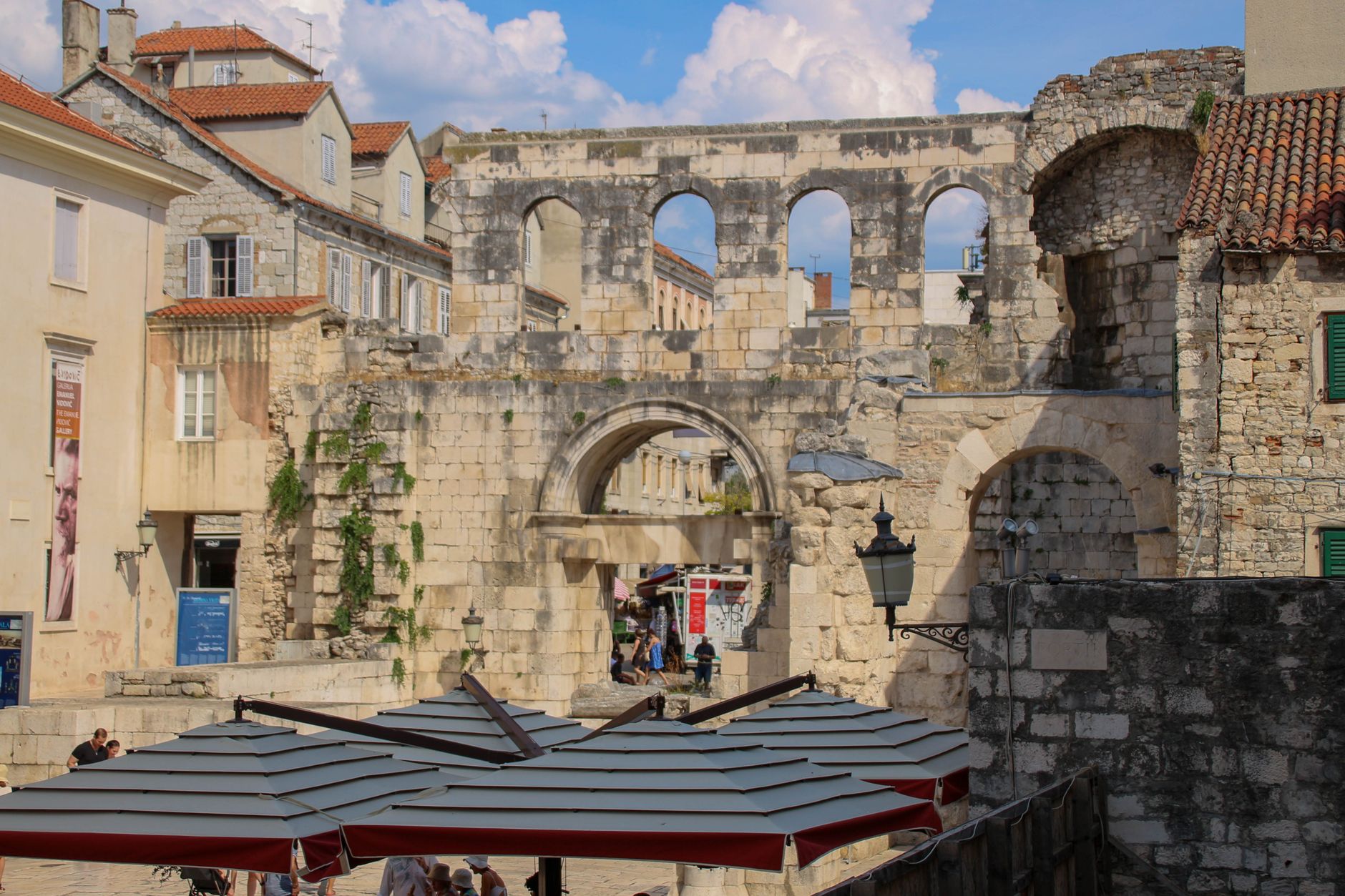
The relationship between the market and the Roman palace is one of the city’s keys. Commercial life occupies the edges of a UNESCO World Heritage monument, and that coexistence explains much of the local character: heritage is not contemplated here, it is used.
In Split, the daily shop is not a tourist attraction: it is how the city decides what will be cooked that evening.
Fish as a calendar
The Dalmatian coast sets the rhythm of the table. Sardines, anchovies, sea bass, sea bream, squid and octopus appear according to the season and the catch. The fish stalls are a good place to understand that people here do not buy what they want but what is available.

That logic explains simple, robust dishes: grilled fish with olive oil and lemon, octopus stewed with potatoes, fish soup with rice. Dalmatian cooking tends towards minimal intervention because the ingredient already carries the flavour. Olive oil, garlic and parsley are almost a shared grammar.
What to look for at a fish stall
- Clear eyes and shiny skin on fresh fish.
- Origin and date labelling where available.
- Ask what came in that morning and what is in season.
- Avoid undersized specimens outside the season.
Olive oil and the islands
Croatia produces olive oil in Istria, Kvarner and Dalmatia. In Split, oil arrives from cooperatives and growers on nearby islands such as Brač, Hvar, Šolta and Vis. The difference between one oil and another depends on variety, terrain and the moment of harvest.
For visitors, a good practice is to buy in specialist shops or directly at the market, asking about origin and harvest. You do not need to become an expert: simply ask who produces it and which island it comes from. That conversation often opens the door to honest recommendations.
Home cooking: soup, vegetables and bread
Everyday eating in Split does not always involve a restaurant. Many households sit down to a soup or vegetable stew, bread and some cured meat or cheese. Italian influence shows in pasta and the use of tomato, but the local pantry has its own weight: chard, beans, cabbage, potato, onion and herbs.
Bread is central. Neighbourhood bakeries open early and sell large loaves, often wheat-based, bought for the day. It is common to see locals carrying a bag of bread home, a gesture that sums up the relationship between the city and its food.

Split’s cooking does not aim to surprise: it aims to bring the ingredient to the plate with as little noise as possible.
The weight of Venice and the Empire
Split’s history is marked by centuries of Venetian rule and by its position as an Adriatic port. That inheritance shows in preservation techniques, in the use of spices and in a certain idea of the table as a meeting place. The sea and the mountain, fish and oil, wine and bread, form a system that has survived political and economic change.
Today the city also lives from tourism, which raises a fair question: how to keep a seasonal kitchen when demand multiplies in summer. The local answer tends to be the same: buy well, cook simply and do not promise what the sea does not give.
Wine, figs and convent sweets
Dalmatian wines, red and white, accompany the table naturally. Varieties such as plavac mali or pošip appear on lists and in shops, and many family wineries sell directly. Figs, almonds and citrus complete a pantry that is largely Mediterranean and partly Austro-Hungarian in its pastry.
Convent sweets and almond recipes are a good entry point to that mix. There is no need to visit every workshop: choose one, ask about the recipe and buy a little. Moderation is also a form of respect for a tradition sustained by small-scale production.
Eating in Split without switching to autopilot
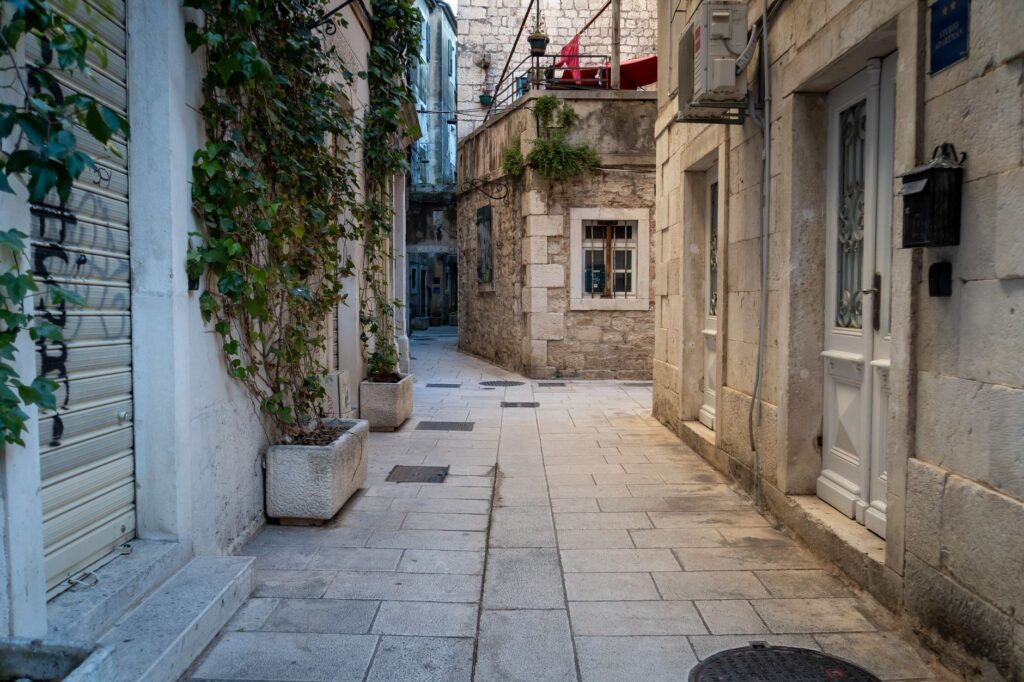
The historic centre concentrates restaurants for every taste, but the experience improves when you step away from the busiest arteries. The neighbourhoods of Varoš and Manuš, with their narrow streets and small squares, offer a more domestic scale. There it is easier to find set lunches, soups and fish dishes without artifice.
It also helps to watch the clock: the main meal tends to be at midday, and dinner comes early. Markets run in the morning, and many stalls close after noon. Adjusting to the city’s rhythm is part of the trip.

Signs of an honest table
- A short menu that changes with the day.
- Fish with identified origin.
- Seasonal vegetables and bread from a nearby bakery.
- Local wine by the glass, not only big-brand bottles.
Heritage you can eat
Diocletian’s Palace, the old town and the harbour front form a setting that sometimes overshadows what happens in kitchens. But the link between heritage and food is direct: many recipes have been passed down in families who have lived among these stones for generations. The city does not separate the monument from the pantry.
For visitors, that means the best way to know Split is to shop, cook or eat with a sense of season. It is not about chasing authenticity as an object but about joining a routine that existed before mass tourism arrived.
Practical guide
When to go: spring and autumn offer active markets and mild temperatures. Summer brings more visitors and heat; start early for shopping.
Where to shop: the central market beside the palace is the starting point. For oil and wine, specialist shops in the centre and nearby neighbourhoods let you ask about the producer.
What to try: grilled fish, octopus with potatoes, vegetable soups, neighbourhood bread, island olive oil and Dalmatian wines.
Good practice: carry a reusable bag, buy modest quantities, ask about the season and avoid undersized fish. Paying cash at small stalls usually makes things easier.
Language: Croatian is the local language; English works in tourist areas, but a few Croatian words help at the market.
Getting around: the historic centre is walkable. For the islands, ferries and catamarans leave from the port; check updated schedules before travelling.
A last stall, a last bag
By late morning, Split’s market looks like a workplace again: crates emptied, stalls packed up, neighbours heading home with the shopping done. The city then turns to cooking. That scene, repeated every day, is perhaps the clearest way to understand Dalmatian food: a pantry chosen by eye, cooked patiently and shared without hurry.