Point Cook appears on maps as a residential strip on the southwestern edge of Melbourne, in the state of Victoria, Australia. Its population exceeds 66,000 and its landscape combines new streets, lagoons, wetlands and a skyline of construction that never quite closes. By car from the city centre the trip takes around half an hour when traffic cooperates; by public transport, a less publicised truth emerges: here the train is not part of everyday life.
That paradox is the starting point of this report. Point Cook is one of the fastest-growing suburbs in the Melbourne metropolitan area, yet its daily mobility is resolved through buses, bicycles, shared cars and long walks to neighbouring stations. Victoria’s railway history, one of the oldest networks in the world, reaches this place as both promise and memory: the promise of a future connection and the memory of a territory that was farmland, countryside and an air base long before it became a suburb.
A neighbourhood that outgrew its rails
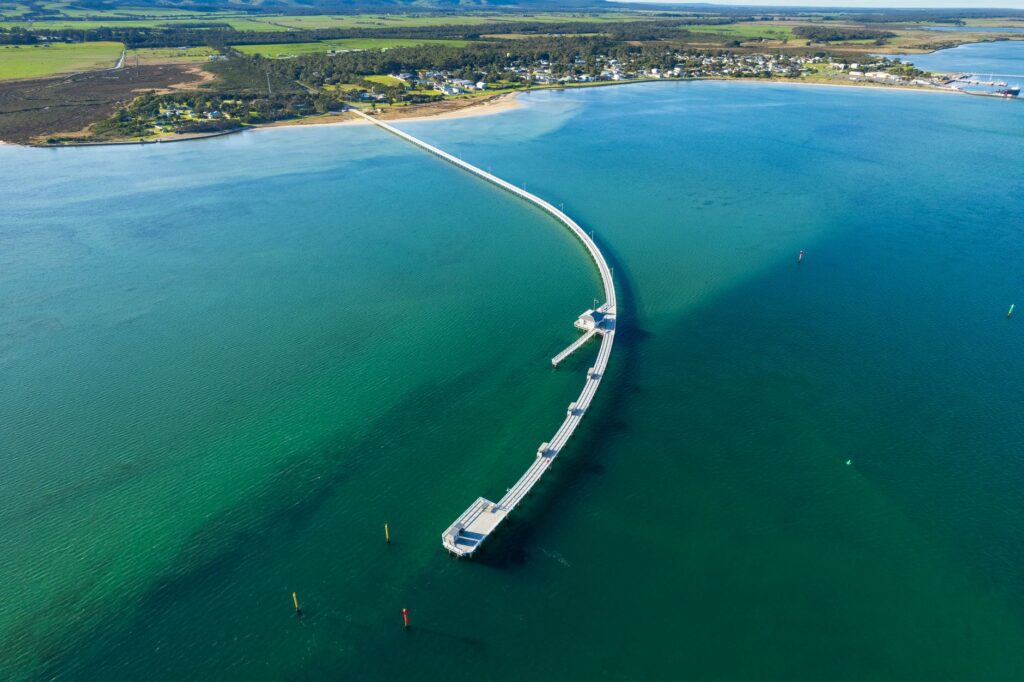
Point Cook’s expansion followed the pattern of many new areas in western Melbourne: large residential developments, low-rise shopping centres and a road network designed for the car. Geographic data confirms it: the urban core sits about ten metres above sea level, beside the shore of Port Phillip Bay, and the suburb belongs to the local government area of Wyndham.
That accelerated growth left a visible consequence in daily life. Houses arrived before tracks, and the bus network became the only public service capable of connecting the suburb to the rest of the city. For thousands of residents, the commute begins with a walk to a stop and continues with a transfer to a railway station located outside the neighbourhood.
The journalistic question, therefore, is not when the train will arrive, but how a community organises itself around that absence and what the wait reveals about the way Australia plans its urban fringes.
Victoria’s railway heritage as a backdrop
To understand Point Cook’s situation, it helps to look at Victoria as a whole. From the mid-nineteenth century the state built a railway network that linked ports, mines and agricultural districts, and that still structures much of regional transport today. Melbourne developed an electrified suburban network that became an international reference for its extent and frequency.
That tradition coexists with an uneven reality. While the eastern and northern suburbs have consolidated stations and frequent services, large areas of the west have grown with a model more dependent on the car. Point Cook belongs to that second group, and its case offers a way to observe how a country’s railway heritage does not always translate into effective coverage for its newest territories.
The history of the train in Victoria is not only the history of its famous lines, but also the history of the places that were left outside them.
Moving without a train: the daily logistics
Daily life in Point Cook revolves around a bus network that connects the suburb with nearby transport hubs. Residents commonly combine several stages: walking to the stop, waiting for the bus, transferring and, in many cases, turning to the car for journeys that public transport does not cover comfortably.
For the traveller, the lesson is practical. Point Cook is not a destination to be explored on foot from station to station, but a territory that demands planning every movement in advance. Anyone visiting to discover its natural heritage or its aviation history should consult up-to-date timetables and allow generous margins, because distances between stops are considerable and services change according to the day and the time of day.
- Check bus timetables in advance: frequency varies by route and time of day.
- Combine public transport and walking: internal distances are greater than they appear on the map.
- Allow time for transfers: the suburb has no railway station of its own.
The heritage that does exist: aviation, wetlands and memory
If the train is a promise, Point Cook’s heritage is a tangible reality. The area is home to one of Australia’s oldest air bases, linked to the country’s military aviation history, and preserves a set of wetlands and nature reserves that form part of the neighbourhood’s identity.

That heritage coexists with the daily life of a residential suburb: families walking beside the lagoons, cyclists following the coastal paths and neighbours using green spaces as an extension of their routine. Victoria’s railway memory, by contrast, is felt here indirectly: in the names of routes, in transport plans and in the public conversation about the pending connection.
The station being awaited: plans, debate and caution
The possible arrival of the train in Point Cook has formed part of the urban debate in western Melbourne for years. State and local transport plans have addressed the need to improve rail connections in a region of rapid growth, but any project of this scale requires studies, funding and timelines that do not depend solely on local demand.
Caution is therefore warranted. There is no confirmed date and no operating railway service in the neighbourhood, and this report does not attribute statements or personal testimonies to specific residents. What is verifiable is the tension between sustained demographic growth and a transport infrastructure that has not yet matched the pace of urbanisation.
In Point Cook, waiting for the train has become a way of understanding the territory: what is missing also defines daily life.
What this case reveals about Australian fringes
Point Cook’s case is not isolated. Many new areas of Australia’s major cities have grown with a model that prioritises housing over public transport, and then face the challenge of providing services to communities that are already consolidated. The consequence is a dependence on the car that affects mobility as well as social life and access to employment.
Observing Point Cook offers a clearer view of how a city is planned in Australia: first the land, then the houses and, often much later, the transport. The country’s railway history, so rich in central and eastern Melbourne, reaches these areas as an outstanding subject that shapes the daily experience of thousands of people.

A possible visit: what to see and how to move
Anyone arriving in Point Cook with an interest in its heritage will find a territory of contrasts. The wetlands and coastal paths offer a serene landscape, while shopping centres and avenues remind visitors that this is an expanding suburb. The historic air base and the spaces linked to aviation add a cultural dimension that distinguishes the area from other residential fringes.
For getting around, the recommendation is clear: plan ahead, check bus services and prepare alternatives. The train is not available in the neighbourhood, and the nearest stations lie outside its boundaries, so travellers should assume that part of the journey will be made by road or through transfers.
Practical guide
Getting there. Point Cook lies southwest of Melbourne, in the state of Victoria, Australia. The usual access is by road from the city centre, with a duration that varies according to traffic. For public transport, check the bus routes that connect the suburb with nearby transport hubs.
When to go. The local climate is temperate, with mild summers and cool winters. Spring and autumn tend to offer pleasant conditions for exploring natural spaces and coastal paths.
What to bring. Comfortable shoes, sun protection and water, especially if you plan to walk between stops or explore the wetlands. Shade is limited in some open areas.

Mobility. There is no railway station in Point Cook. Internal journeys require a bus, car or bicycle, and transfers should be planned with a margin. Always check updated timetables before setting out.
Heritage. Aviation history and natural spaces are the area’s main cultural attractions. Respect access rules for protected areas and historic facilities.
The platform that does not yet exist
At dusk, Point Cook recovers the calm of Australian suburbs: lights on in the houses, bicycles returning and buses crossing the avenues. On the horizon there is no platform, no track, no train announcement. There is a community that has learned to move without it and that, at the same time, keeps waiting.
That wait is the neighbourhood’s true intangible heritage: the memory of a territory that was countryside and air base, and the promise of a connection that could one day change its rhythm. In the meantime, Point Cook shows that the history of transport is written not only in the stations that exist, but also in the places that learned to live without them.