Mwanza wakes before the rest of Tanzania. At the fishing port, the lamps on the boats go out as the sun rises over the granite hills and Lake Victoria begins to return the sky’s reflection. The city, capital of the region of the same name and the country’s second-largest urban centre by population, has lived facing the water for more than a century, and that relationship has shaped the way it works, trades and receives those who arrive.
This report proposes a reading of Mwanza through everyday life: the trades of the port, the neighbourhood markets, the cultural heritage of the communities around the city and the choices a visitor can make so that their presence adds rather than subtracts. It is not a closed itinerary, but a way of understanding why this city in northwestern Tanzania deserves more time than many travellers give it.
A city built on rounded stones
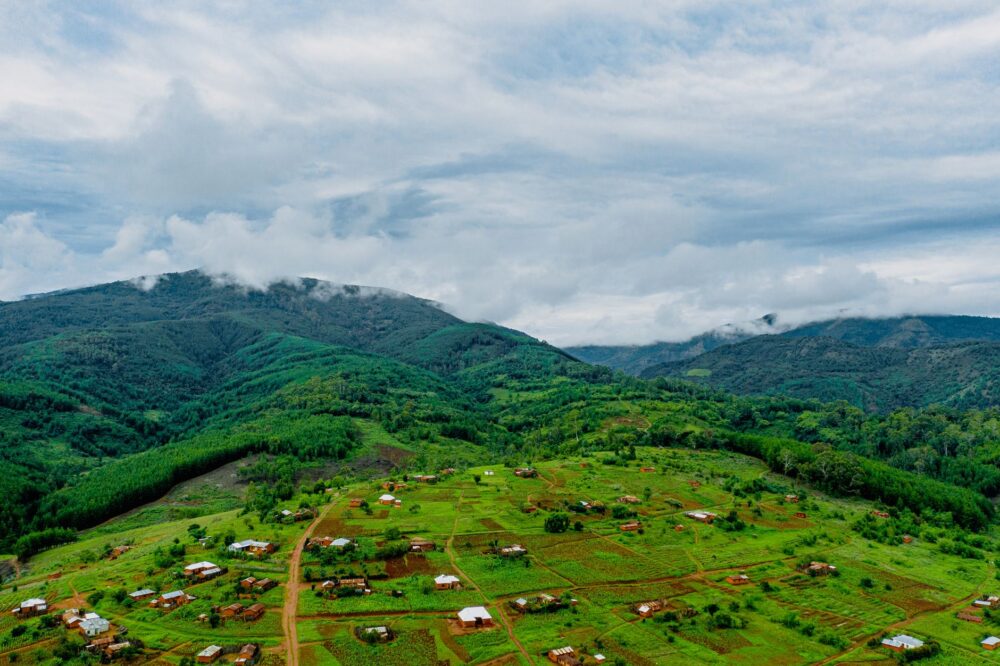
Mwanza’s urban landscape is dominated by granite formations that emerge between the houses like sleeping animals. Old maps call them bismarck rocks, though locals know them by their shapes: the elephant rock, the tortoise rock. Around them grew an urban fabric that rises and falls without pause, with streets that adapt to the topography instead of imposing themselves on it.
That geology is not just scenery. It explains why the centre is organised in terraces, why views of the lake appear suddenly when you turn a corner and why water, in the rainy season, finds its own paths between the neighbourhoods. Walking Mwanza means accepting that the ground is never entirely flat.
These outcrops also serve as informal landmarks in a city where street signs are uneven and addresses often depend on the nearest rock, school or mosque. Residents give directions by referring to a slope, a junction or a boulder rather than a street number, and that habit says much about how the city is mentally mapped: by shared references rather than by grid lines. For a visitor, learning to navigate this way is part of the experience, and asking for help is rarely met with indifference.
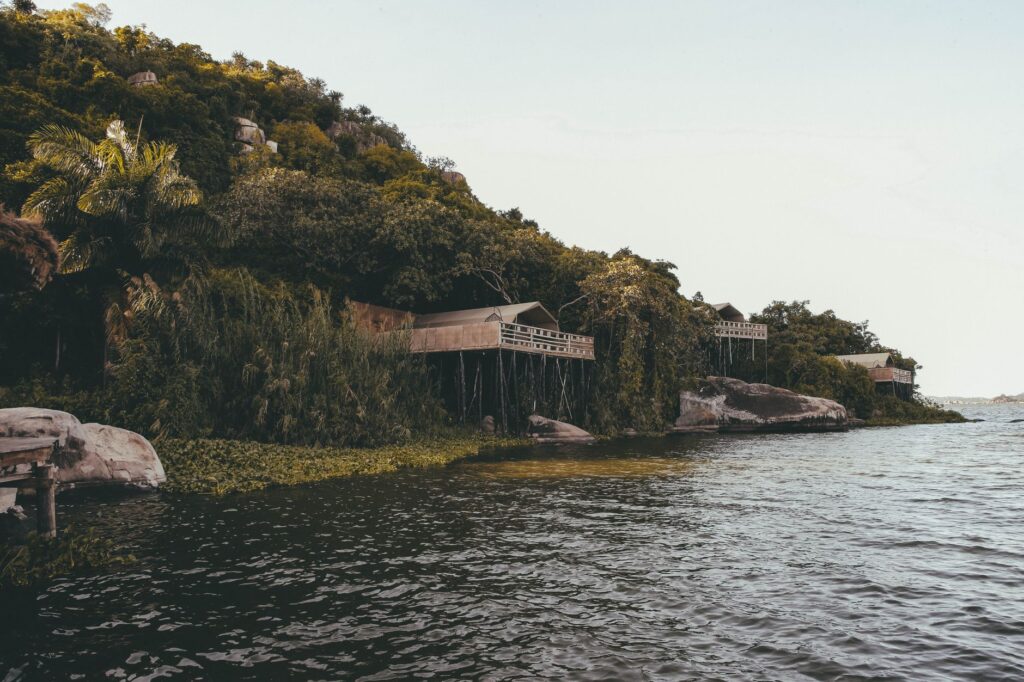
The city is not viewed from a single lookout: it is discovered at the pace of its slopes and its rocks.
The port that rises early
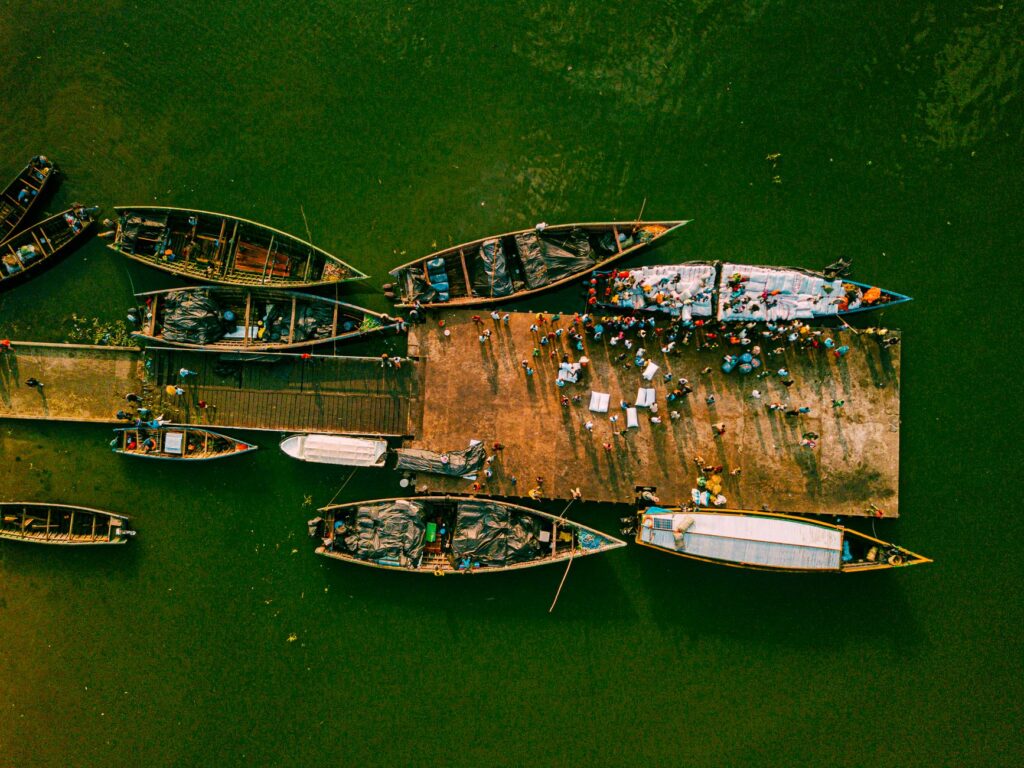
The port of Mwanza is one of the most active connection points on Lake Victoria. Vessels linking to other shores of the lake depart and arrive there, and its docks host a fishing fleet that supplies much of the regional market. Activity begins before dawn and concentrates in the early morning, when fish is unloaded, sorted and negotiated.
For visitors, the recommendation is to observe with respect: this is a working space, not a stage. Ask before photographing, stay clear of loading areas and avoid interrupting operations. In return, the port offers one of the clearest lessons about the city’s economy: here the lake is not scenery, it is pantry and road.
The rhythm of the docks changes through the day. Early hours belong to unloading and wholesale negotiation; later, attention shifts to ice, fuel, repairs and the small services that keep the fleet running. Around the port a secondary economy has grown: workshops, food stalls, sellers of rope and nets, and transporters who move crates towards the markets. Understanding that chain helps the visitor see that fishing is not a single activity but a system of interdependent trades.
Markets that set the rhythm of the day
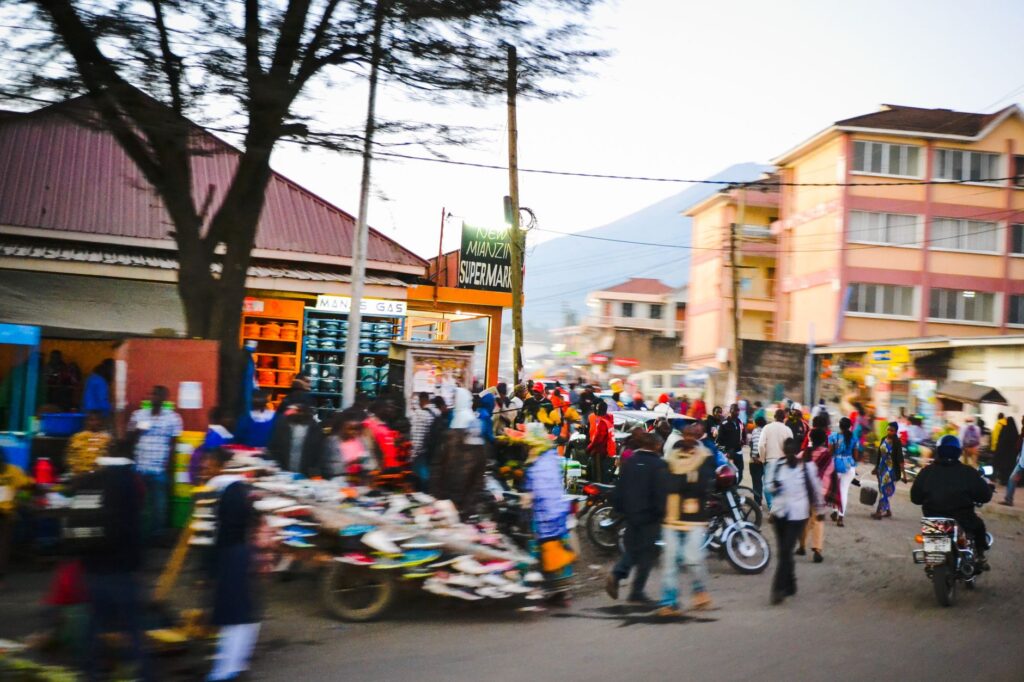
Mwanza’s markets work like social clocks. They sell dried fish, vegetables, fabrics, utensils and goods brought from other regions. Each neighbourhood has its own market, and each market has its hours: some are busiest at dawn, others around midday, and some come alive in the late afternoon.
Wandering them without haste reveals the city’s diversity, where communities of Sukuma, Zanaki, Kerewe and other origins live alongside a long-established commercial presence of Indian-Tanzanian background. That mix shows in the food, in the languages crossing at the stalls and in the way of bargaining, which here tends to be more conversation than confrontation.
Market etiquette is simple and worth learning. Greet before asking a price, accept that the first figure is an opening rather than a final offer, and avoid handling produce you do not intend to buy. Photographs of stalls and people require permission, and a refusal should be accepted without insistence. Small purchases, made with patience, often open more doors than any guidebook recommendation.
The heritage that rarely appears in guidebooks
Mwanza is not a city of grand monuments. Its heritage is more discreet and more alive: the rocks that structure the neighbourhoods, the colonial-era houses still standing in the centre, the churches and mosques that gather the community each week and, above all, the oral memory of the lake’s trades.
To approach that heritage, it helps to rely on local guides and cultural organisations in the city, who can explain the context of each place without turning it into an attraction. The visitor who arrives with curiosity and without haste finds in Mwanza a city that explains itself through conversations more than through signs.
Memory here is transmitted in stories about the arrival of the railway, the growth of the docks and the neighbourhoods that expanded along the slopes. Older residents recall how certain areas changed function over decades, from residential to commercial or the reverse. Listening to those accounts, without turning them into spectacle, is one of the most valuable ways to understand a city whose history is not preserved in museums but in the people who lived it.
Eating what the lake gives
Mwanza’s cooking revolves around fish from Lake Victoria, particularly Nile perch and the so-called sangara, prepared grilled or in stews with tomato, onion and spices. They are served with ugali, the maize staple that sustains much of the region’s diet, and with leafy greens cooked with coconut or groundnuts.
Food stalls near the port and in the markets offer simple, honest versions of that cooking. For a slower experience, restaurants in the centre and residential neighbourhoods serve dishes that combine local tradition with influences from the Swahili coast and Tanzania’s Indian community.

Eating well here also means eating seasonally and asking what is available that day. Portions are generous, and sharing a plate is common. Vegetarian options exist but are less prominent, usually based on beans, greens and maize. Tipping is not obligatory but is appreciated in sit-down establishments, and paying in local currency avoids awkward exchanges at small stalls.
Neighbourhoods to walk without a plan
Mwanza is best explored on foot, neighbourhood by neighbourhood, accepting that distances are relative and slopes count. Areas such as Kirumba, Nyamagana or Capri Point offer different rhythms: bustling markets, residential streets, lake views and small shops where you can buy water, fruit or a prepared meal.
It is advisable to walk accompanied, especially after dark, and to ask residents which areas are most suitable at each moment. Tanzanian hospitality is generous, but caution is part of mutual respect.
Each neighbourhood has a distinct character that rewards slow observation. Some are defined by their commercial activity, others by schools, places of worship or transport hubs. Public transport in the form of shared minibuses connects them, and using it requires learning routes and asking at each stop. Walking between adjacent areas at a calm pace, with water and sun protection, remains the best way to notice the details that a vehicle would pass by.
The lake as a shared responsibility
Lake Victoria faces well-known environmental pressures: overfishing, plastic pollution and changes in water levels that affect lakeside communities. In Mwanza, some local groups work on shoreline clean-ups and on raising awareness about responsible use of fishing resources.
Visitors can join that logic with concrete gestures: avoid single-use plastics, do not leave waste at the port or on the beaches, eat fish in establishments that respect minimum sizes and support local guides and businesses that maintain sustainable practices.
Responsible travel also means understanding that the lake supports livelihoods far beyond the city. Decisions taken at a market stall or a restaurant table connect, however indirectly, with the fishing families and the ecosystems that sustain them. Asking where fish comes from, choosing reusable containers and refusing to buy wildlife products are small but consistent ways to align a visit with the interests of the people who live from the water.
Travelling to Mwanza means accepting that the lake is not a photo backdrop but a neighbour with rights.
A closing facing the water
At the end of the day, the granite hills turn orange and the lake goes still. On the shores, fishermen prepare their nets for the next dawn and children play among the rocks. It is the moment when Mwanza shows its calmest side, the one that does not appear in brochures but explains why so many travellers leave with the feeling of having met a real city.
That feeling is built from small things: a conversation at a stall, a shared meal, a view that appears unexpectedly between two rocks. Mwanza does not offer itself as a spectacle but as a working city with its own rhythm, and the visitor who adapts to that rhythm tends to leave with a more durable impression than any checklist of sights could provide.
Practical guide
Getting there
Mwanza has an airport receiving flights from Dar es Salaam and other destinations in the country, and road connections from nearby cities. The port links to other shores of Lake Victoria. Check schedules and routes in advance, as they can vary by season.

When to go
The dry season, between June and October, usually offers more comfortable conditions for walking and sailing. The rainy season, from November to May, brings greener landscapes but also difficult streets and slower journeys.
What to bring
Comfortable shoes for the slopes, sun protection, mosquito repellent, reusable water and clothing respectful of local customs. Dress simply when visiting markets and neighbourhoods.
Health and safety
Consult a travel medicine service before departure and follow current health guidance. Within the city, ask about suitable areas and hours and avoid night travel through quiet areas.
Respect and local spending
Asking before photographing, hiring local guides, buying in neighbourhood markets and choosing locally managed accommodation and restaurants are concrete ways for a visit to contribute to the city’s economy.