
Bucaramanga sits on a plateau just over a thousand meters above sea level in northeastern Colombia, and that geographic condition explains much of its character. The city is organized around parks and a public life that takes place outdoors, at a scale that invites walking. Its historic center preserves a recognizable urban fabric, with buildings that speak of accumulated growth and of a society that learned to live alongside commerce, the university and the shade of trees.
For the visitor, Bucaramanga is not a destination of isolated monuments but of contexts: the way a park holds a neighborhood together, the way an old house coexists with a modern building, the way local memory is passed on in conversation rather than only on plaques. Reading the city requires pausing, looking twice and accepting that much of its heritage is intangible and sustained by daily life.
A plateau that orders urban life
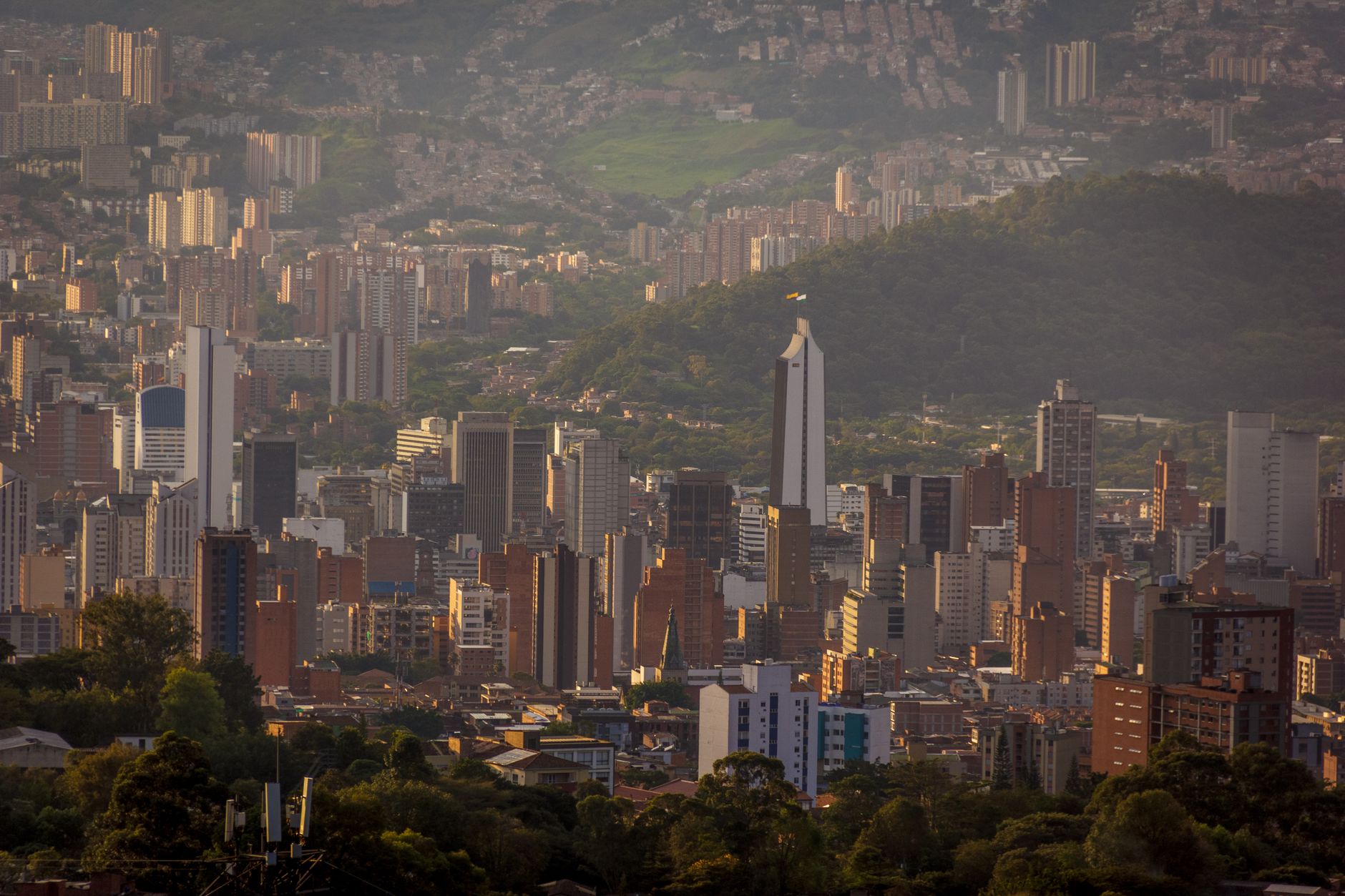
The topography of Bucaramanga is not a decorative detail: it is a condition that determines how people walk, build and live. The city spreads across a plateau surrounded by ravines and streams, and that geographic edge has historically marked its urban expansion. The central neighborhoods keep a pedestrian density that contrasts with newer expansion zones, and that difference in scale is one of the keys to understanding the city.
Walking the center reveals how residential and commercial architecture interweave without a rigid separation. Mid-twentieth-century facades coexist with later interventions, and that mix, far from being a flaw, works as an archive of the urban decisions the city made in different periods.
This plateau condition also shapes the way the city is experienced in time. The elevation tempers the heat of the lowlands and gives the days a rhythm that favors lingering outdoors, which in turn explains why so much social life happens in the street rather than behind closed doors. Understanding that link between terrain and habit is the first step toward reading Bucaramanga on its own terms, rather than through the expectations a visitor brings from other cities.
Bucaramanga’s heritage is not contemplated from a museum distance: it is crossed on foot, heard in conversation and sustained by the daily use of public space.
The park as a daily institution
In Bucaramanga, the park is not an urban ornament: it is an institution. Parks in the center and in traditional neighborhoods serve functions that go beyond leisure: they are places of encounter, informal commerce, collective memory and the transmission of customs. That centrality of public space explains why the city’s life can be read so clearly on its benches and paths.
For visitors, the recommendation is simple: choose a park, sit down and observe. Daily life unfolds there with a naturalness that needs no script. It is also where visitors can understand the relationship between climate, shade and sociability, a link that is learned quickly in Bucaramanga.
It helps to think of parks as shared rooms rather than as stages. Each one has its own schedule and its own regulars: morning walkers, midday vendors, afternoon families. Arriving without a fixed plan and letting the pace of the place set the rhythm is usually more rewarding than trying to cover several parks in a single outing. The point is not to collect green spaces but to notice how each one anchors the life of the blocks around it.
Architecture at a human scale
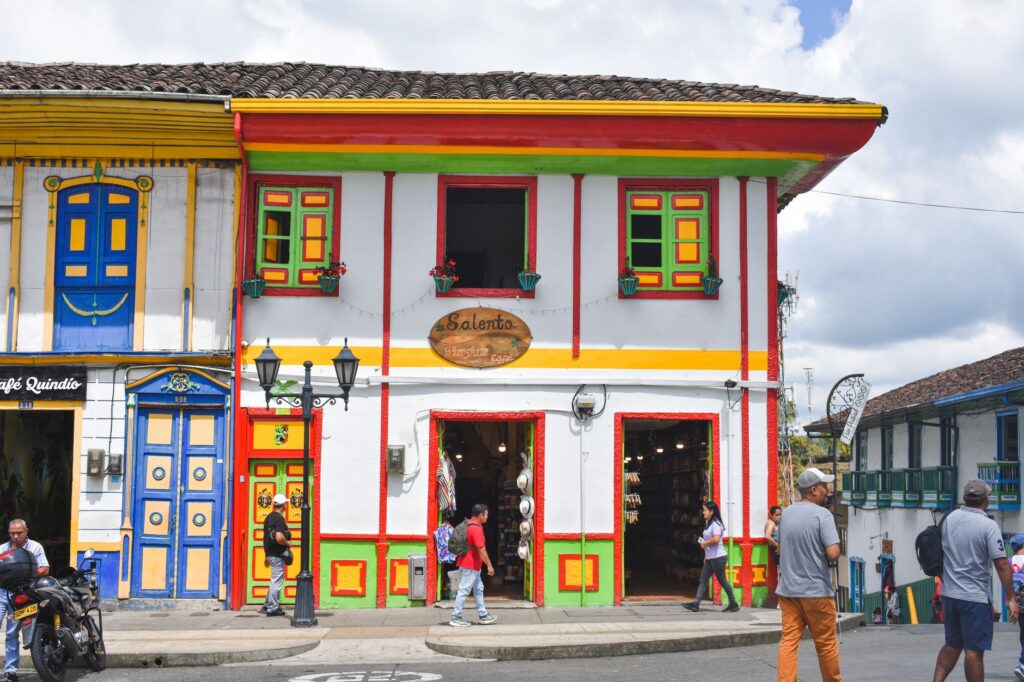
The historic center of Bucaramanga preserves an architecture that does not seek monumental impact but continuity. Two- and three-story buildings with balconies and corridors define a scale that favors street commerce and pedestrian life. That architectural continuity is fragile heritage, because it depends on conservation decisions that are not always visible to visitors.
Walking the center attentively allows you to distinguish periods: some buildings point to a phase of commercial growth, others reflect later architectural currents, and some have been rehabilitated for cultural uses. The key is in the details: railings, entrance halls, eaves and moldings tell more than large volumes.
This modest scale has a practical consequence for the visitor: the center is best understood slowly and at street level. Looking up at facades, noticing how entrances are used, and observing where shade falls in the afternoon reveals how architecture and daily routine reinforce each other. Heritage here is not confined behind barriers; it is the working fabric of a living center, which makes respectful attention more important than any checklist of sights.
Memory passed on in conversation
Much of Bucaramanga’s heritage is not in its buildings but in the people who inhabit them and the stories that circulate about them. Local memory is passed on in shop conversations, family accounts and the way neighbors explain why a place matters. That intangible dimension is what gives meaning to architecture and what makes conservation more than a technical matter.
Responsible visitors can approach that memory with questions and with listening. The point is not to extract testimony for a chronicle but to recognize that the city also explains itself through the voices of those who live in it. That attitude changes the travel experience entirely.
Listening well also means accepting limits. Not every story is meant to be shared with a stranger, and not every corner of a neighborhood is open to exploration. Recognizing those boundaries is part of understanding a place whose heritage lives in ordinary routines rather than in curated narratives. When visitors approach the city with that patience, conversations tend to happen naturally, on the city’s terms rather than on a schedule.
A culture of workshops and trades
Bucaramanga and its metropolitan area sustain a tradition of trades expressed in workshops of various kinds: repair, tailoring, carpentry, mechanics. That craft culture is productive heritage that is not always recognized as such, but it explains the city’s relationship with manual work and with the transmission of knowledge between generations.
For visitors, workshops are not an attraction in themselves, but they are an indication of how the local economy works. Observing that activity with respect, without interrupting or turning it into spectacle, is a way of understanding the city from within.
These trades also reveal a different kind of continuity than architecture does. A workshop that has served the same street for decades carries knowledge that is rarely written down, passed instead from one pair of hands to another. Valuing that knowledge means treating the people who hold it as part of the city’s heritage, not as background to a photograph. Simple choices, such as buying from local businesses and asking before observing, go a long way.
Eat, walk, listen: the pulse of daily life
Daily life in Bucaramanga has a recognizable rhythm: market mornings, park afternoons, conversations on street corners. Local gastronomy, with simple preparations of rural origin, is part of that rhythm rather than a set piece for visitors. Eating in a neighborhood place, without expectations of spectacle, is one of the best ways to understand the city.
The plateau’s temperate climate favors outdoor life for much of the year, though rain is frequent and plans should stay flexible. Walking without hurry, with water at hand and a willingness to change course, is the right attitude.
That rhythm is worth respecting rather than accelerating. Markets have their own hours, and the busiest moments are not always the most comfortable for a visitor. Learning to move with the city’s schedule, rather than against it, makes the experience calmer for everyone involved and allows small details to surface: the way vendors greet regulars, the way a street changes character between morning and late afternoon.

Heritage and responsible visitor decisions
Like many intermediate cities, Bucaramanga faces tensions between conservation and development. Visitors do not resolve those tensions, but they can help ensure that heritage is valued. Choosing local commerce, respecting public space, not invading neighborhood life with tourist expectations and treating historic buildings as inhabited places rather than backdrops are small decisions with a cumulative effect.
It also helps to inform yourself before visiting: understand which spaces are public, which are private and which have specific hours. Curiosity without context can be as problematic as indifference.
Responsibility here is less about rules than about awareness. A city that lives largely outdoors depends on shared trust: quiet in residential streets, care with waste, patience in crowded spaces. Visitors who adopt those habits blend into the daily fabric instead of straining it, and they often find that the city opens up more readily when approached with that restraint.
A city is preserved when those who visit understand that its value lies not only in what is seen but in what is sustained every day.
Practical guide
Getting there and getting around
Bucaramanga has an airport connecting the city with major national destinations. Within the city, the historic center and main parks are walkable, though the topography and distances make it advisable to combine walks with local transport. Check updated routes and schedules before heading out.
When to go
The plateau’s climate is temperate year-round, with rainy seasons to keep in mind. Flexible planning and proper footwear are more useful than any rigid forecast.
What to observe
- The relationship between parks and the neighborhoods around them.
- The facades of the historic center and their transformations.
- The activity of workshops and street commerce.
- Daily life in the market squares.
Conduct recommendations
- Respect private spaces and the opening hours of the places you visit.
- Do not interrupt the work of workshops or shops.
- Spend in local establishments and avoid dynamics that commodify neighborhood life.
- Learn about the history of a place before visiting it.
A closing moment in the park
At the end of the day, Bucaramanga returns to its most recognizable stage: the park. There, generations meet, the day winds down and the city transmits, without a speech, what it is. For visitors who have walked attentively, that moment is not a tourist epilogue but a confirmation that the heritage of this Colombian city is sustained by daily life. Taking that lesson home, and not only a photograph, is the best way to have been here.