
Bhopal does not appear in brochures like the monumental cities of northern India. And yet, few state capitals retain such a recognizable character: a city built around artificial lakes, with an old quarter of havelis, mosques and bazaars where time is measured in conversations rather than clocks. In the center of Madhya Pradesh, this city of just over 1.8 million people combines the legacy of the Nawabs who ruled it with an intense daily life of commerce, tea and auto-rickshaw rides.
For travelers arriving from Delhi, Mumbai or Indore, Bhopal demands a prior decision: which city do you want to see? The one photographed in two hours or the one understood in three days. This report proposes the latter, with a warning: the city carries a tragic industrial memory that should not be ignored, but which does not define it entirely. Exploring it with curiosity and without morbid interest is the best way to understand it.
A geography of fresh water in central India
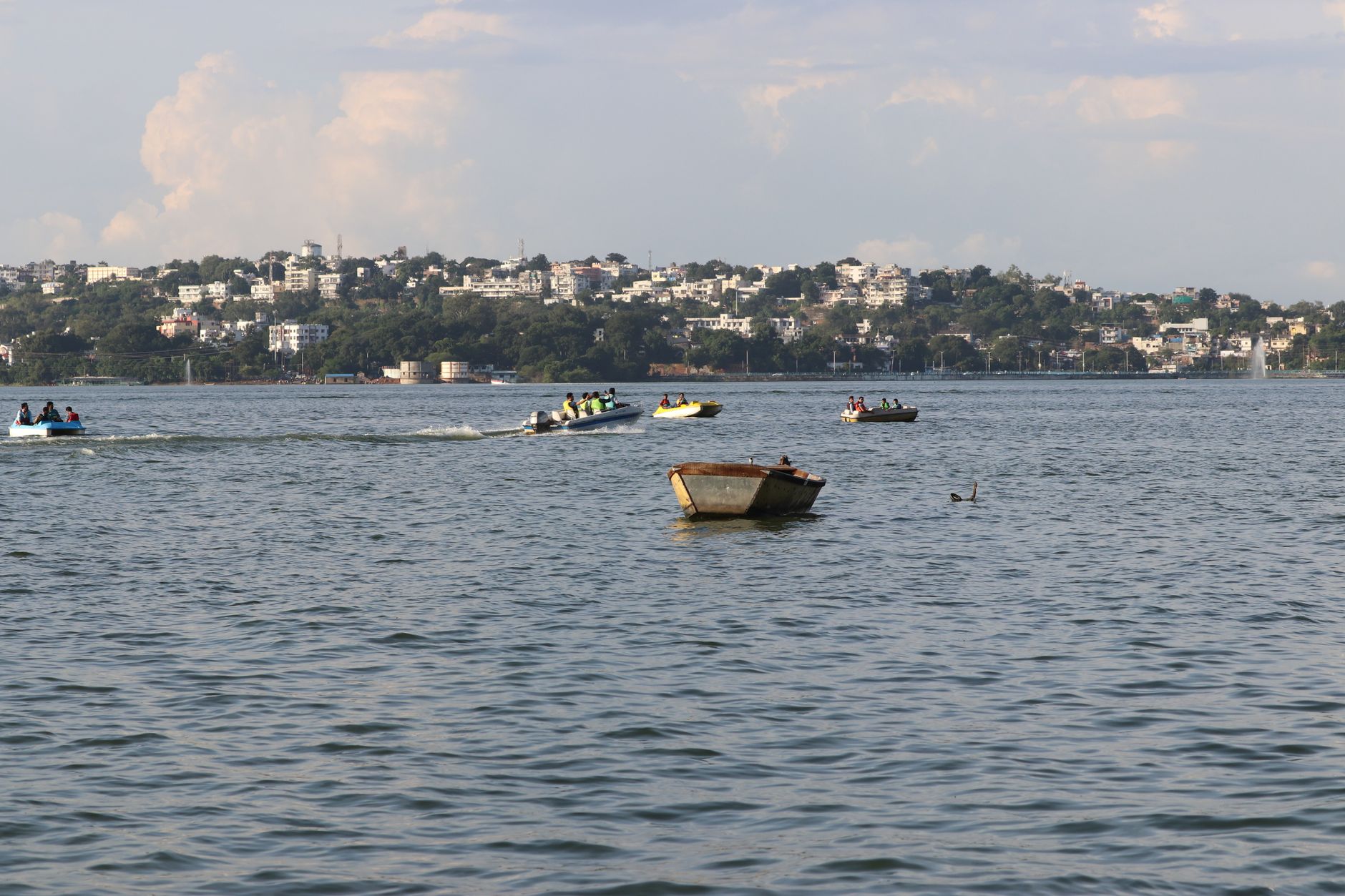
Bhopal spreads across a plateau at about 500 meters above sea level, in a region of low hills and chained lakes. The best known, the Upper Lake, was created in the 11th century by order of King Paramara Bhoja, from whom the city takes its name according to local tradition. The old core grew around it; on the other side, the new city, planned in the 20th century, was organized around a second lake.
That duality marks the walk. The old quarter, known as Chowk Bazaar, preserves a grid of narrow streets where temples, mosques, fabric shops and food stalls coexist. The new city, with wider avenues and administrative buildings, responds to a different logic. Walking from one to the other is the best way to measure the urban transformation of recent decades.
The presence of water is not decorative. The lakes regulate the rhythm of neighborhoods, mark the boundaries between the historic center and the expansion zones, and offer a horizon of calm in a city that, like most Indian capitals, moves with intensity. Understanding this geography helps the visitor orient themselves and also understand why Bhopal has been called, in local accounts, a city of lakes.

The Nawabi legacy: palaces that still breathe
Between the 18th and 20th centuries, Bhopal was ruled by a dynasty of Nawabs, including several women who left their mark on architecture and administration. Shaukat Mahal, with its facade of European and Islamic influences, and Sadar Manzil, an old audience hall, are examples of the stylistic mix that characterizes the city.
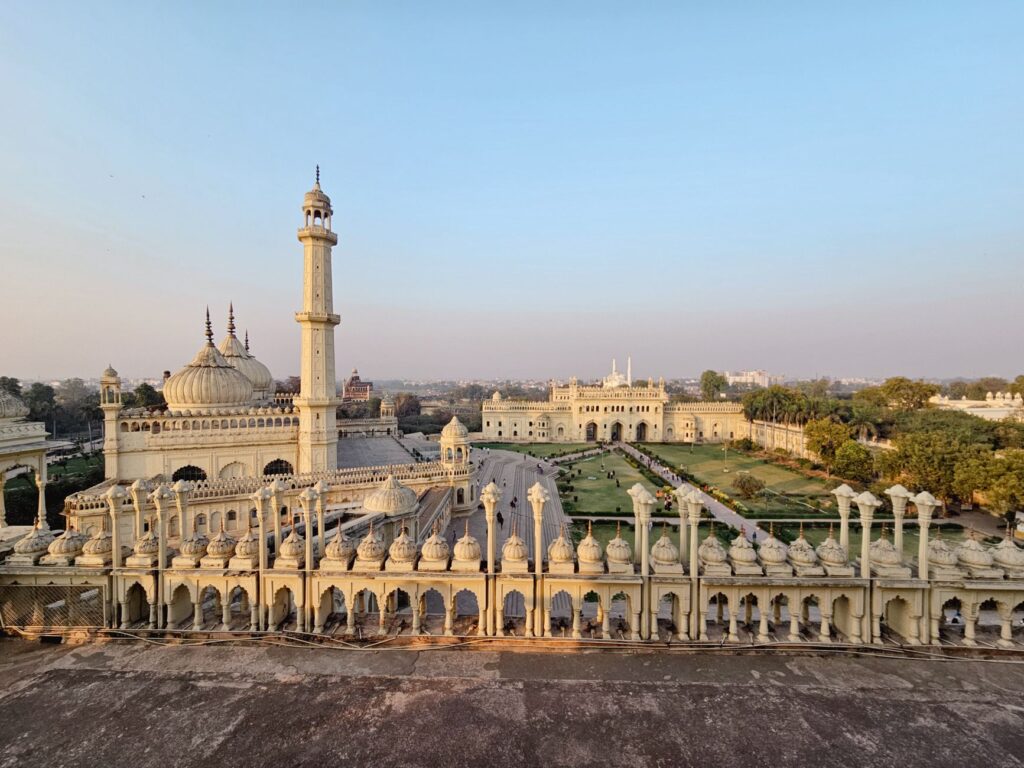
Further north, the Taj-ul-Masajid, one of the largest mosques in India, dominates the skyline with its pink domes and extensive courtyard. Its construction, begun in the 19th century, lasted for decades and is still perceived today as a work in dialogue with the present: at dusk, entire families sit on its steps.
Bhopal’s architecture is not contemplated from the outside: it is inhabited. Courtyards, steps and arcades are meeting spaces before they are monuments.
This Nawabi heritage is not a closed museum. Many of these buildings are still in use, either as institutions or as private residences, and their presence in the urban fabric explains the city’s peculiar tone: a nobility of scale that does not impose itself, but coexists with everyday commerce. For the traveler, the lesson is to look up, but also to look around, because the value is in the relationship between the monument and the street that surrounds it.
Chowk Bazaar: the pulse of the old quarter
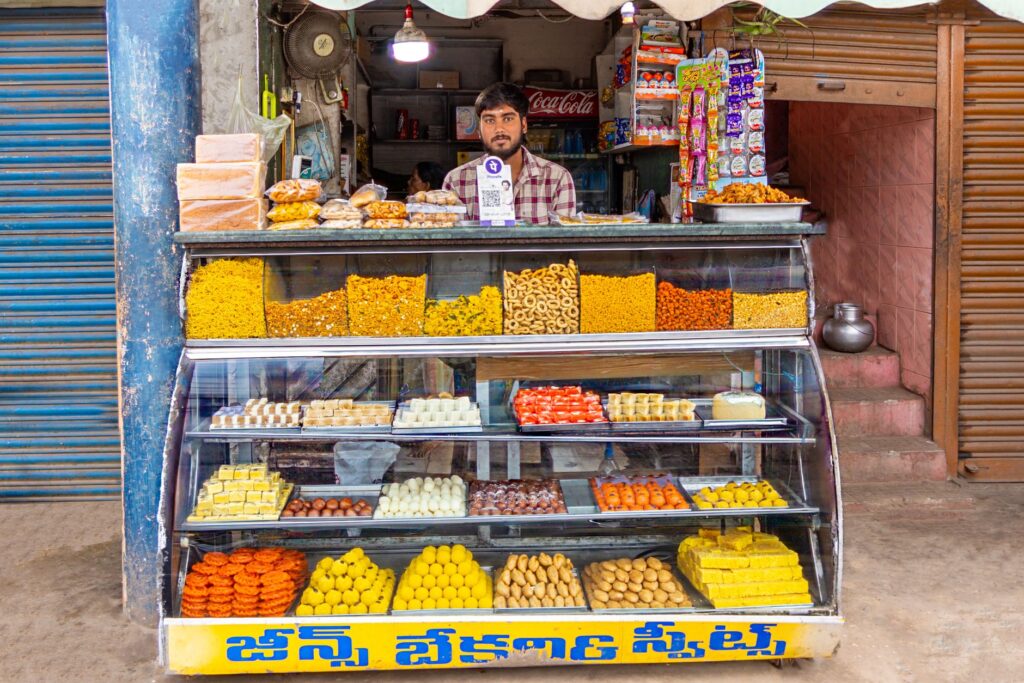
The Chowk market is the commercial heart of the old city. Here spices, fabrics, kitchen utensils and traditional sweets are sold. The narrow passages force you to walk slowly, and that slowness is an advantage: it allows you to observe the wooden balconies, carved doors and interior courtyards of the houses, many of them inherited from generation to generation.

Local gastronomy deserves a stop. The typical breakfast includes poha, flattened rice with onion and lemon, and jalebi, a spiral-shaped fried sweet. Mid-morning, chai is served in small glasses on any corner. Eating at street stalls is part of the experience, as long as you choose the ones with the highest customer turnover.
The market is also a good place to observe how the city’s commercial life is organized: wholesale and retail, family stalls and small workshops share the same space. Buying with curiosity, asking before photographing and accepting that bargaining is part of the local custom are ways of approaching the neighborhood without turning it into a backdrop.
The lakes: walks, birds and sunsets
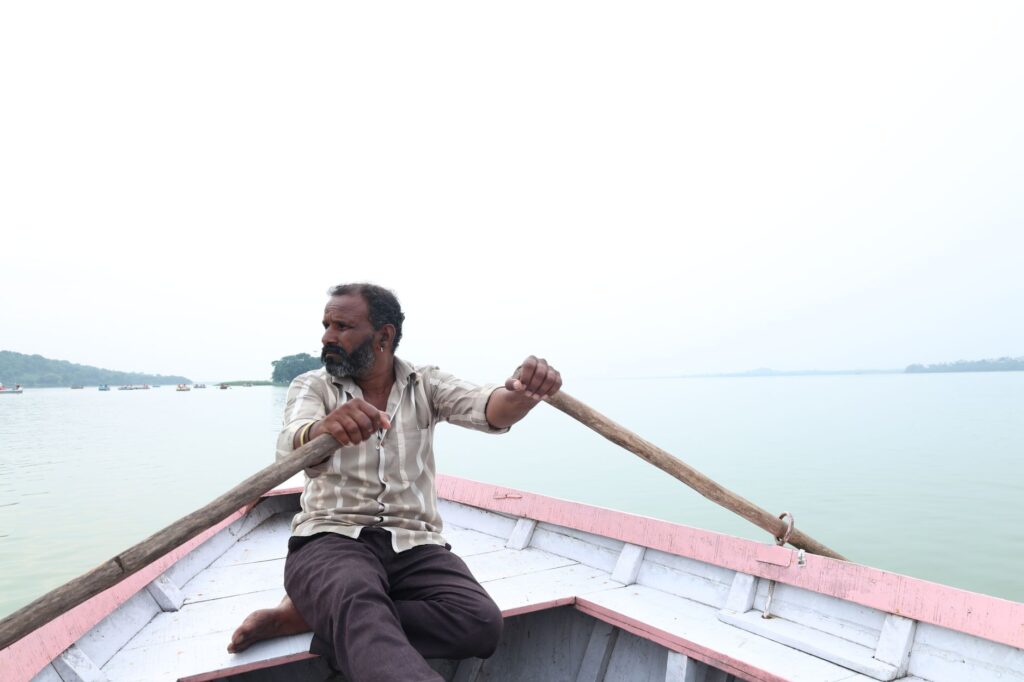
The Upper Lake, also called Bhojtal, is where the city relaxes. Its shores host gardens, piers and viewpoints. At dawn, it is common to see residents practicing yoga or walking before the heat. At sunset, families gather in the nearby parks.
For those seeking nature, the nearby Van Vihar National Park, on the lake shore, offers a vehicle or walking route through a dry forest inhabited by antelopes, deer and birds. It is not a zoo, but a reserve that is part of the city’s daily landscape.
The lakes also impose a practical lesson: distances in Bhopal are measured by the time it takes to go around them. A map can be deceptive, and the best way to plan a day is to group visits by shore, leaving the central hours for indoor activities or rest. This simple organization transforms a scattered itinerary into a coherent walk.
Museums to understand the context
The National Museum of Human Rights, installed in the former Nawab palace, proposes a reflection on memory and justice. Its collection, which includes documents and testimonies, helps to understand the city’s recent history without falling into sensationalism. It is a visit that requires time and silence.
Another interesting space is the Museum of Man, dedicated to the ethnography of the communities of Madhya Pradesh. Its rooms show tools, textiles and ritual objects from tribal and rural groups, and offer a key to understanding the cultural diversity of the state.
These museums do not function as complements to the walk, but as its counterpoint. After the noise of the bazaars, a room with documents and objects allows the visitor to place what they have seen in a broader context. Reserving an hour for these spaces is a way of respecting the city’s memory and avoiding a merely aesthetic visit.
Religious architecture and coexistence
Bhopal is an example of religious coexistence in central India. In addition to the Taj-ul-Masajid, Hindu temples such as Gufa Mandir, excavated in a hill, and St. Francis Cathedral, in neo-Gothic style, stand out. Festivities such as Eid or Diwali transform the streets into shared spaces.
Travelers should remember that these are active places of worship. Dressing modestly, asking permission before photographing and respecting prayer times are basic rules that facilitate the visit and avoid misunderstandings.
Coexistence is not an abstract concept here: it is practiced in the daily sharing of streets, markets and celebrations. For the visitor, the most useful attitude is observation and discretion, understanding that temples and mosques are not tourist stages but community centers where the visitor is a guest.
Beyond the center: neighborhoods and workshops
Contemporary Bhopal extends south and east, with residential neighborhoods and industrial zones. In the city’s workshops, wood, metal and textiles are worked. Some artisans receive visits, but it is advisable to contact them in advance through local organizations rather than showing up unannounced.
The MP Nagar neighborhood, with its cafes and bookstores, shows another face of the city, younger and more cosmopolitan. It is a good place to rest between visits and observe urban life without haste.
Moving away from the historic center also allows us to understand the city’s growth tensions: neighborhoods that expand, transport that connects them and a daily life that does not depend on tourism. Walking these areas with respect, without treating them as an exotic spectacle, is part of a responsible visit.
How to read the city without reducing it
Bhopal resists simplification. It is not only the city of lakes, nor only the city of palaces, nor only the city marked by the memory of the industrial tragedy. Each of these layers exists and interacts with the others, and the visitor’s task is to hold them together without prioritizing the most spectacular or the most painful.
A useful way to organize the visit is to alternate scales: a morning in the old quarter, an afternoon by the lake, a museum visit and a walk through a contemporary neighborhood. This alternation avoids saturation and allows each space to be perceived in its own rhythm.
It is also advisable to travel with time and without a closed checklist. In Bhopal, the most valuable encounters often arise from a detour, a conversation at a stall or a pause on a staircase. That does not mean improvising everything, but leaving room for the city to propose its own itinerary.
Practical guide
- When to go: from October to March, when temperatures are milder. Summer can be extremely hot and the monsoon, between June and September, brings intense rain.
- How to get there: Bhopal has an airport (BHO) with connections to Delhi, Mumbai and other Indian cities, and a railway station with regular services from the main capitals.
- Getting around: auto-rickshaws are the most practical option for short trips. For longer distances, agree on the price before getting in or use ride-hailing apps.
- Accommodation: options range from budget hotels in the center to mid-range establishments in the new city. Booking in advance in high season is recommended.
- Respect: when visiting mosques and temples, cover shoulders and legs, remove shoes when appropriate and do not interrupt ceremonies. At the Museum of Human Rights, maintain a respectful tone and avoid disaster tourism.
- Language: Hindi is the main language; English is used in hotels and tourist restaurants, but outside those circuits it is advisable to carry a translator or learn basic phrases.
- Photography: ask before photographing people, especially in markets and places of worship. A refused portrait is not a rejection of the traveler, but a boundary that should be respected.
- Waste and water: carry a reusable bottle and avoid single-use plastics where possible. In a city of lakes, the responsible visitor’s small decisions have a visible impact.
A city remembered by walking
Bhopal does not offer easy postcards. It offers something more valuable: the possibility of understanding an Indian city that has not been turned into a stage set. Its lakes, markets and palaces tell a story of splendor and also of loss, of coexistence and tension. Travelers who arrive with time and without prejudice discover that the best way to know it is to let the streets set the pace.
Traveling to Bhopal means accepting that memory is part of the landscape. It is not about looking away, but about learning to look carefully.