
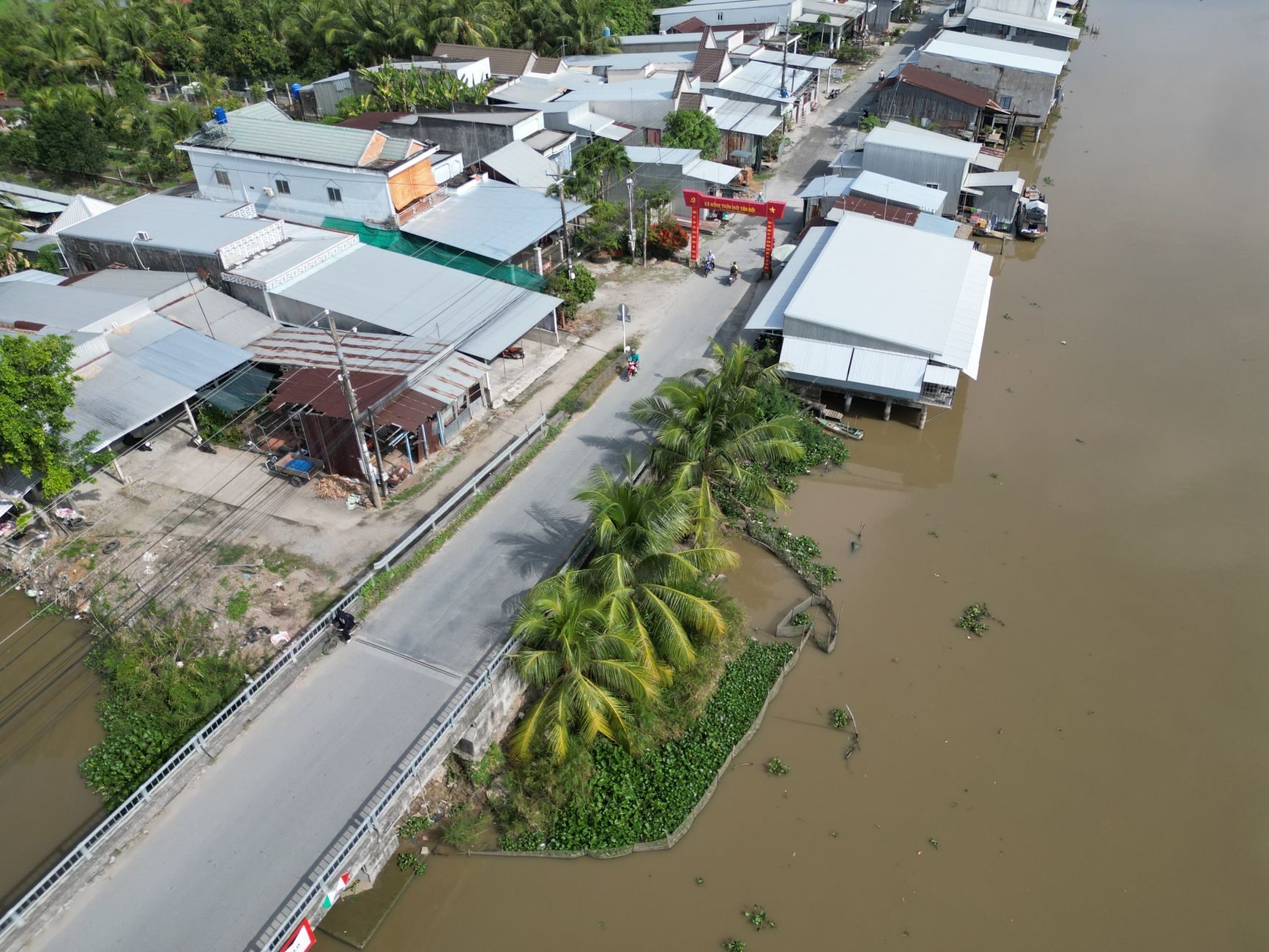

At the western edge of the Mekong Delta, Rạch Giá occupies a strip of land where the river and the Gulf of Thailand meet without a clear border. The capital of Kiên Giang province, in Vietnam, is a city of around 460,000 people that has grown facing the water: first as a fishing port, later as a trading hub and today as a gateway to the islands of Phú Quốc and Nam Du.
But Rạch Giá is more than a transit point. It is a city where the market starts before dawn, where houses stand on stilts and where visitors discover that moving slowly is not a limitation but a way of understanding the place.
A geography written in water
The city sits on low ground, barely thirteen metres above sea level, on a plain crossed by canals that for centuries carried rice, fish and building materials. That network of waterways was, until a few decades ago, the region’s real road system.
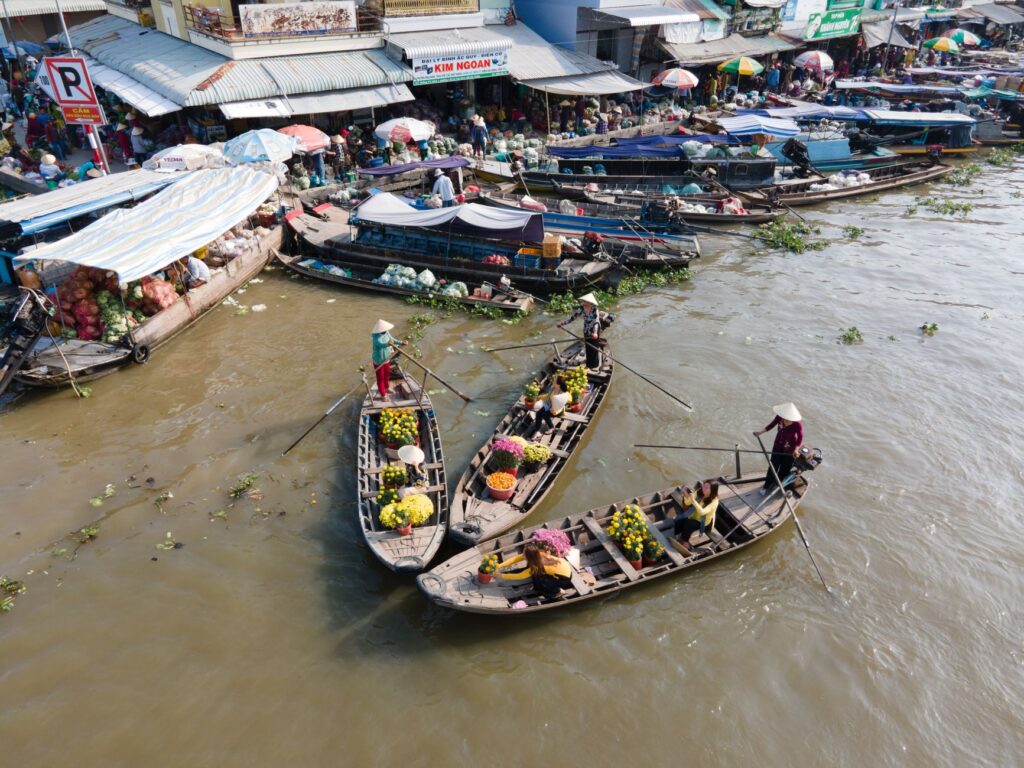
Today asphalt has gained ground, but water still organises life. The canals in the centre serve as drainage, as a minor transport route and as social space. Utensils are washed there, boats are repaired and goods arrive directly from the launches.
In the delta, mobility is measured not in kilometres but in tides: there are hours to leave and hours to wait.
That logic explains why many travellers who arrive in a hurry leave without having seen anything. The city rewards those who accept its temporality.
Understanding this relationship with water also helps visitors read the urban landscape. The low elevation and the density of canals mean that drainage, flooding and land use are not abstract debates but part of daily conversation. A walk through the centre reveals how buildings adapt: raised thresholds, open ground floors and courtyards that can absorb water during heavy rain. None of this is presented as a spectacle; it is simply how the city works.

The market as a gauge of local life
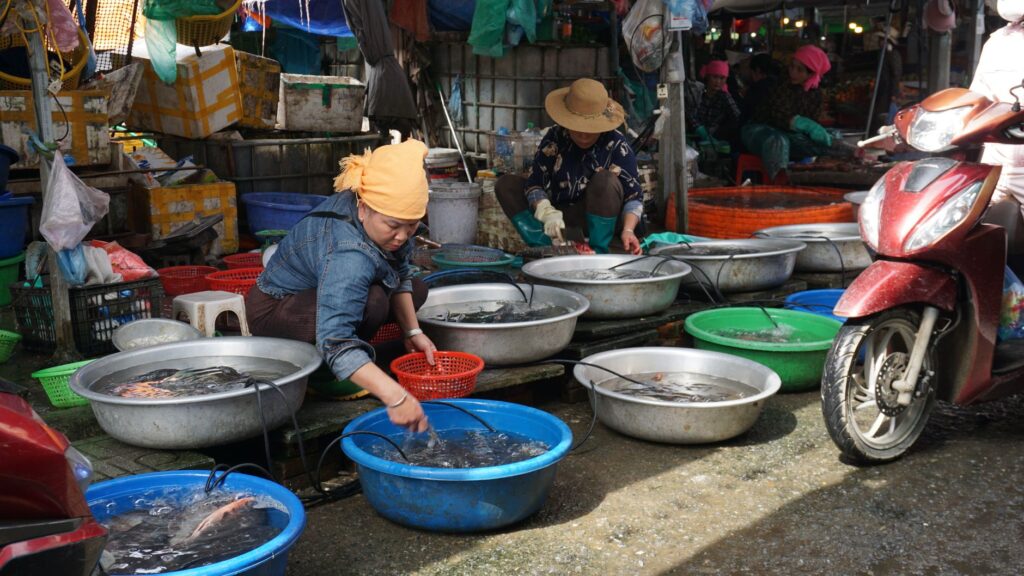
The central market of Rạch Giá is a good starting point for understanding the everyday economy. Fishmongers, fruit stalls, sellers of medicinal herbs and small workshops where nets are repaired all mix there. Activity begins before dawn and fades by mid-morning, when the heat sets in.
A few metres away, the waterfront offers another reading of the city: families walking at sunset, young people exercising and fishermen checking their catch. It is a free, open space heavily used by residents, which makes it a good place to observe without interfering.
Visitors who want to understand the market’s rhythm should arrive early and move slowly. The stalls are not arranged for tourists, and the most interesting exchanges often happen between regular customers and sellers who know each other. Buying a small amount of fruit or a prepared snack is a simple way to participate without disrupting the flow. Photography is best done with a discreet approach and, when in doubt, a gesture of permission.
Heritage between temples and merchant houses
Rạch Giá preserves several temples of Chinese and Vietnamese origin that reflect the region’s migratory history. The Chinese community, which arrived centuries ago to trade, left a visible mark on the architecture of some central streets and on the festivities still celebrated today.
The temple of Nguyễn Trung Trực, dedicated to the local hero who resisted French colonisation in the 19th century, is one of the most visited places by residents themselves. It is not a mass tourist attraction but a space of memory to be explored with respect and without haste.
The old merchant houses, many of them renovated, show a hybrid style: narrow façades, inner courtyards and wooden balconies. Some have become small shops; others remain family homes.
For the visitor, heritage here is not confined to a single monument. It appears in the way streets are named, in the proximity of temples to markets and in the persistence of family businesses across generations. A responsible approach means treating these spaces as living places rather than backdrops. Dress modestly when entering temples, ask before photographing people and avoid blocking entrances while observing.
Getting around without altering the city’s rhythm
Transport in Rạch Giá combines motorbikes, bicycles, tuk-tuks and some local buses. For visitors, the most reasonable option is to walk through the centre and use motorbike taxis for longer distances, always agreeing the price before getting on.
Rạch Giá airport connects the city with Ho Chi Minh City and some regional routes, although the most common option is the bus from the metropolis, a journey that crosses the delta and reveals the transition between rice fields and urban centres.
- Move on foot through the historic centre and the waterfront.
- Use motorbike taxis for short trips and agree the fare in advance.
- Avoid the middle hours of the day because of heat and humidity.
- Book ahead if travelling during festival periods.
Walking is not only the cheapest option; it is also the most revealing. The centre is compact enough to explore on foot, and the waterfront provides a continuous route that links markets, temples and residential streets. For longer distances, local motorbike taxis are efficient, but visitors should confirm the destination and the fare before setting off. Renting a bicycle is another option for those comfortable with traffic, though it requires attention and a willingness to adapt to local conditions.
The relationship with the islands: a gateway, not just a destination
Rạch Giá is the usual departure point for Phú Quốc and the Nam Du archipelago. That gateway role has transformed part of its economy, with agencies, hotels and services aimed at travellers. Yet the city retains a character of its own that does not depend on island tourism.
For those seeking to understand the delta, staying at least two days in Rạch Giá allows them to see the city without the urgency of a transfer. The piers, the fish markets and the early-morning markets are part of that experience.
The gateway function also creates a practical tension. Many visitors arrive in the evening and leave on the first boat or flight the next morning, which concentrates pressure on a few services and leaves little room for the city itself. A more balanced approach is to plan the island trip around the city rather than the other way round: spend a day exploring the centre, then depart with a clearer sense of the region’s geography. This also reduces the risk of missing connections due to weather or seasonal changes.

Sustainability: small decisions, visible effects
Like many cities in the delta, Rạch Giá faces environmental challenges linked to water management, waste and pressure on coastal ecosystems. Visitors cannot solve those problems, but they can reduce their impact.
Some concrete practices: carry a reusable bottle, avoid single-use plastics in markets, hire local services rather than external chains and respect the rules of temples and community spaces. It is also useful to find out which areas are protected and which activities are regulated.
Travelling thoughtfully in the delta means accepting that water sets the pace and that haste rarely improves the experience.
Sustainability here is less about grand gestures and more about attention. Buying from local vendors, choosing family-run accommodation and avoiding unnecessary waste are simple actions that align with how the city already functions. Visitors can also ask accommodation providers about waste separation or water-saving practices, which helps normalise these questions. None of this requires specialised knowledge; it requires a willingness to observe and adapt.
Market and waterfront cuisine
The cuisine of Rạch Giá is based on fresh fish, rice and aromatic herbs. Waterfront stalls prepare fish soups, filled pancakes and coconut dishes that reflect a mix of Vietnamese, Khmer and Chinese influences.
It is common to eat at street stalls or small family restaurants, where the menu changes according to the day’s catch. For visitors, the recommendation is to observe what locals are eating and order the same, always paying attention to the stall’s hygiene.
Eating well here is not a matter of finding the most elaborate restaurant but of following the market’s logic. Morning is the best time for fresh produce and simple breakfast dishes; later in the day, the waterfront stalls offer lighter options. Visitors with dietary restrictions should ask directly about ingredients, as menus may not list them in detail. Drinking bottled or filtered water remains a sensible precaution.
Daily life beyond the centre
Although the centre and waterfront concentrate most of the visitor’s attention, the residential neighbourhoods reveal another dimension of Rạch Giá. Small shops, repair workshops and family kitchens line streets that are quieter than the main market area. Walking through these neighbourhoods requires respect for privacy, but it offers a more nuanced view of how the city lives beyond its commercial face.
Public spaces such as parks and the waterfront are used intensely in the early morning and evening, when heat subsides. Observing these routines helps visitors understand the city’s schedule and plan their own movements accordingly. It also reinforces a simple principle: in Rạch Giá, timing matters as much as destination.
A closing view over the gulf
At sunset, the Rạch Giá waterfront fills with families contemplating the Gulf of Thailand. It is a simple moment, without grand monuments, that sums up the city well: water, community and a human scale that invites you to stay a little longer than planned.
Those who arrive looking only for a transfer miss the chance to understand how a delta city organises its life around an element it does not fully control. That lesson, quiet and everyday, is perhaps the best memory Rạch Giá offers.
Practical guide
When to go: the dry season, roughly from December to April, offers more stable conditions for walking and boating. The rainy season, from May to November, brings intense rainfall but also greener landscapes and fewer visitors.
Getting there: Rạch Giá airport receives flights from Ho Chi Minh City and other Vietnamese cities. There are also road and river connections from various points in the delta.

Where to stay: the centre and the waterfront area concentrate the hotel and guesthouse offer. For quieter stays, look for small family-run accommodation.
What to bring: light clothing, sun protection, insect repellent and comfortable walking shoes. A reusable bottle helps reduce waste.
Local etiquette: when visiting temples, cover shoulders and knees and remove shoes where appropriate. In markets, ask before taking photographs.
Budget: prices vary by season and type of service. Check updated rates from official sources or your accommodation before booking excursions.
Safety and health: drink bottled or filtered water and check current health recommendations before travelling.


