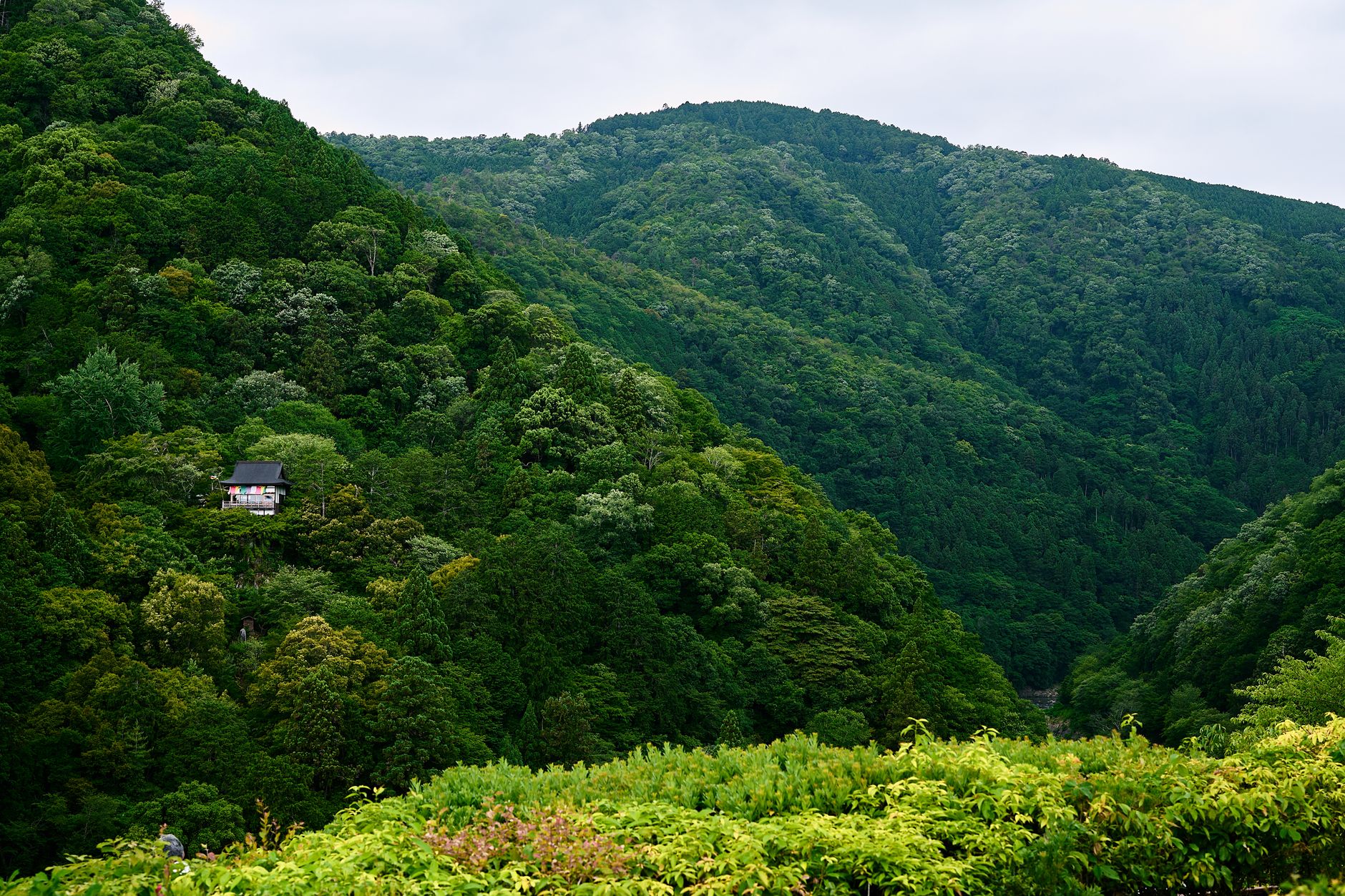

Kyoto, in Japan, is famous for its temples, gardens and more than a thousand years of imperial heritage. Yet the city is also ringed by mountains: to the east, west and north, a crown of forests and hills frames the urban valley and offers hiking routes that few visitors consider when planning a trip. Walking here is not about climbing big peaks but about following historic trails, old mountain passes and cedar forests that have shaped the religious and everyday life of the region for centuries.
This guide does not sell an idealized experience. It addresses what a hiker needs to know before setting out: the type of terrain, how to reach the trailheads, what footwear and equipment are reasonable, which precautions to take and how to minimize impact on a fragile and heavily visited environment. Realistic preparation is the difference between a pleasant day and an avoidable mishap.
A valley surrounded by mountains made for walking
Kyoto’s geography explains its history. The valley where the city sits is flanked by moderate hills, largely covered in forest. Those mountains are not scenery: for centuries they have been crossed by pilgrims, monks, woodcutters and residents heading up for water, timber or silence. Many of those paths remain in use today, connecting residential neighbourhoods with temples, viewpoints and small shrines.
Hiking in Kyoto means accepting a different scale from big-mountain terrain. Elevation gains are modest, but slopes can be sustained and the ground uneven. The city’s proximity means almost any route starts and ends near public transport, which simplifies logistics and allows you to adapt the day to the weather or your energy levels.
What to expect from the terrain and difficulty
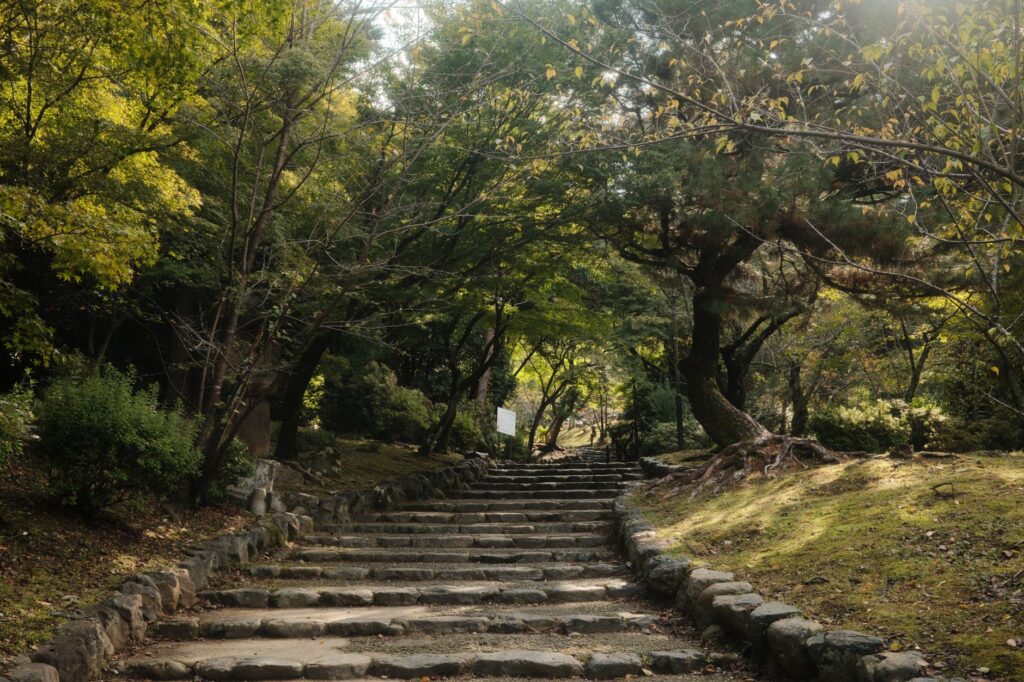
Trails around Kyoto combine dirt sections, stone steps and roots. In the rainy season, humidity makes some steps slippery, especially on descents. Technical difficulty is low on most itineraries, but duration and accumulated elevation can turn an apparently simple walk into a demanding day for anyone unused to it.
It helps to distinguish between short walks of one or two hours and half-day routes linking several points. The former suit almost anyone with proper footwear; the latter require a little more fitness and an honest estimate of time. Signage exists, but it is not always abundant or uniform, so carry a downloaded map or a navigation app that works offline.
Access: reaching the start without relying on a car
One advantage of Kyoto is that many trailheads can be reached by bus or train. Outlying neighbourhoods serve as gateways to the hills, and from the centre they are relatively short rides away. Check timetables in advance, because frequencies drop outside peak hours and in less urban areas.
A car is not essential and is often a hindrance: parking is limited and mountain roads are narrow. Those relying on public transport should plan the return with a margin, since a delay on the trail may coincide with the last service of the day. Starting early is not just about daylight: it is a safety measure.
Weather and seasons: humidity sets the pace
Kyoto has hot, humid summers, cold but generally mild winters in the valley floor, and highly variable spring and autumn. Rain can appear in any month, and humidity makes effort feel more intense than the thermometer suggests. In summer, the early morning hours are the most sensible time to walk; in winter, morning frost can make stone steps slippery.
The mountains of Kyoto do not forgive improvisation: a clear sky when you leave your accommodation does not guarantee a dry trail two hours later.
Layering is the most reliable strategy. A waterproof, breathable shell plus a dry change of clothes covers many scenarios. Footwear should have grip and be tested before the trip: breaking in new boots on a wet trail is a bad idea in any country.
Safety and navigation on busy trails
Although many paths are close to the city, they should not be underestimated. There are sections with patchy mobile coverage and junctions where signage can confuse. Walking alone is not advisable on quiet routes, and telling someone your planned itinerary is a simple practice that helps in case of an incident.
Water and sun protection are necessary even on cloudy days. In summer, the risk of heat exhaustion is real; in autumn, fallen leaves can hide loose stones. A small first-aid kit and a headlamp take up little space and add margin against the unexpected. The general rule is simple: if the trail becomes harder than expected, turning back is a sound decision, not a failure.
Heritage and context: walking between history and nature
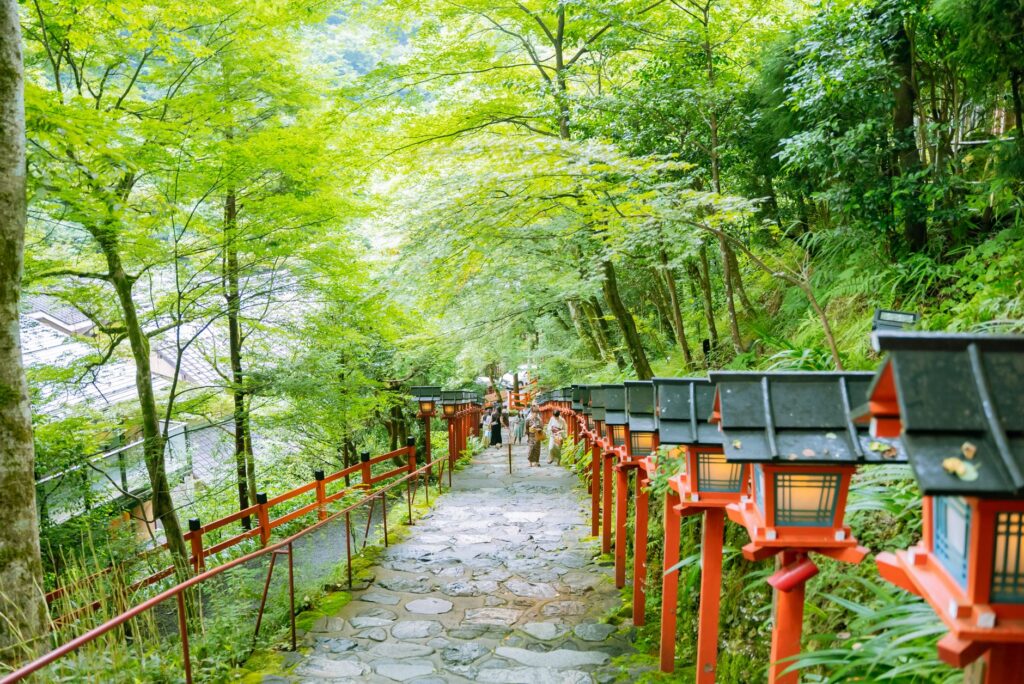
Trails around Kyoto are not just sporting routes. Many cross forests that have been managed for generations and pass shrines, cemeteries and old pilgrimage paths. That mix of nature and heritage calls for an attentive attitude: this is not a theme park but a living landscape where local communities maintain traditions and care for the environment.

Some sections form part of historic pilgrimage itineraries that linked important temples. Walking them with respect means staying on the trail, not touching ancient structures and keeping your voice low in sacred areas. Contemplation is part of the experience, and silence is, in many places, the best way to travel through them.
Minimum impact: rules that matter
Human pressure on trails near Kyoto is considerable. To reduce impact, follow a few basic guidelines: carry out all rubbish, do not feed wildlife, do not collect plants or stones and stay on marked paths. In the rainy season, walking off-trail through mud widens erosion and damages the ground.
Trekking poles can help on descents, but check that the tips do not damage fragile ground. In temple areas, specific rules on photography or access are common; respecting them is part of the visit. Responsible hiking is not a label: it is a series of small, repeated decisions.
What to pack: reasonable kit for a half day
For a half-day route around Kyoto, a well-chosen basic kit is enough. The list includes footwear with grip, layered clothing, a light waterproof, enough water, some food, a map or offline app, sun protection, a cap, a minimal first-aid kit and a bag for rubbish. In summer, adding electrolytes or an isotonic drink helps offset sweat loss.
- Tested hiking footwear with good grip.
- Light rain jacket and a dry change of clothes in the pack.
- Plenty of water and easily digestible food.
- Downloaded map or offline app.
- Headlamp and basic first-aid kit.
- Bag for your own waste and, where possible, others’.
There is no need to carry high-mountain gear. The key is foresight and lightness: an over-heavy pack reduces agility on stepped sections and increases the risk of a fall.
Practical guide
Best time to walk: the early morning hours, especially in summer, when temperatures are lower and trails are quieter. In autumn, afternoon light is pleasant, but calculate sunset with a margin.
Transport: buses and trains reach many trailheads. Check up-to-date timetables at tourist offices or official transport websites; do not assume high frequency on every line.
Difficulty: most routes are low or moderate, with modest elevation gains but sustained slopes. Assess your fitness honestly and choose itineraries accordingly.
Safety: share your route, keep your phone charged, avoid walking alone on quiet trails and turn back if terrain or weather worsens.

Respect: stay on the trail, do not feed animals, do not collect plants or stones and follow the rules of temples and sacred areas.
Closing: walk slowly, look far
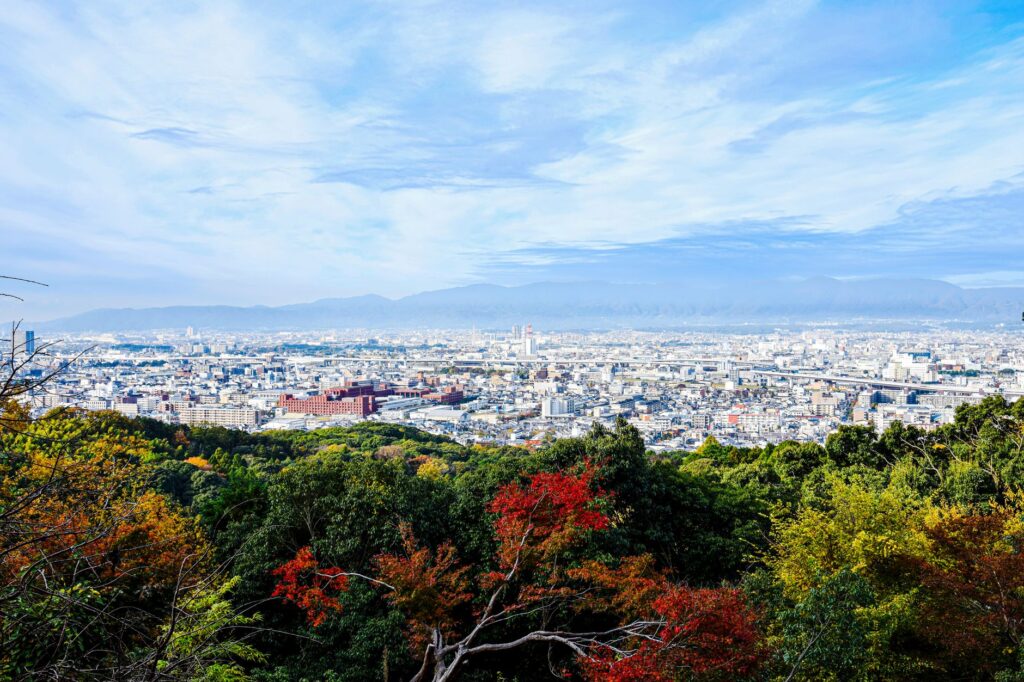
At the end of the day, as the trail descends towards the city and Kyoto’s rooftops reappear among the trees, it is easy to understand why these mountains have been a place of retreat and contemplation for centuries. There is no need to reach a famous summit or accumulate kilometres: it is enough to walk attentively, prepare what is needed and accept that the mountain sets its own pace.
The best way to travel Kyoto’s trails is the one that leaves the least trace and the greatest attention. A modest, well-planned itinerary can be more memorable than an ambitious, poorly prepared route. In a landscape where nature and history intertwine, walking slowly is also a form of respect.