
Curridabat is not a destination of monumental postcards. It is a city of 34,586 people set at around 1,200 meters above sea level in Costa Rica’s San José Province, where heritage appears at the scale of the everyday: a sidewalk, a corner house, a century-old tree, a bus stop that holds conversations. To understand it, the traveler has to change posture: less hunting for landmarks, more attention to the urban fabric.
The question guiding this journey is simple: how do you read the heritage of a city that grew with metropolitan expansion and still keeps traces of its own identity? The answer is not in a single building but in the relationship between street layout, coffee memory and the neighborhood life still visible on its streets.
A city you understand from the map
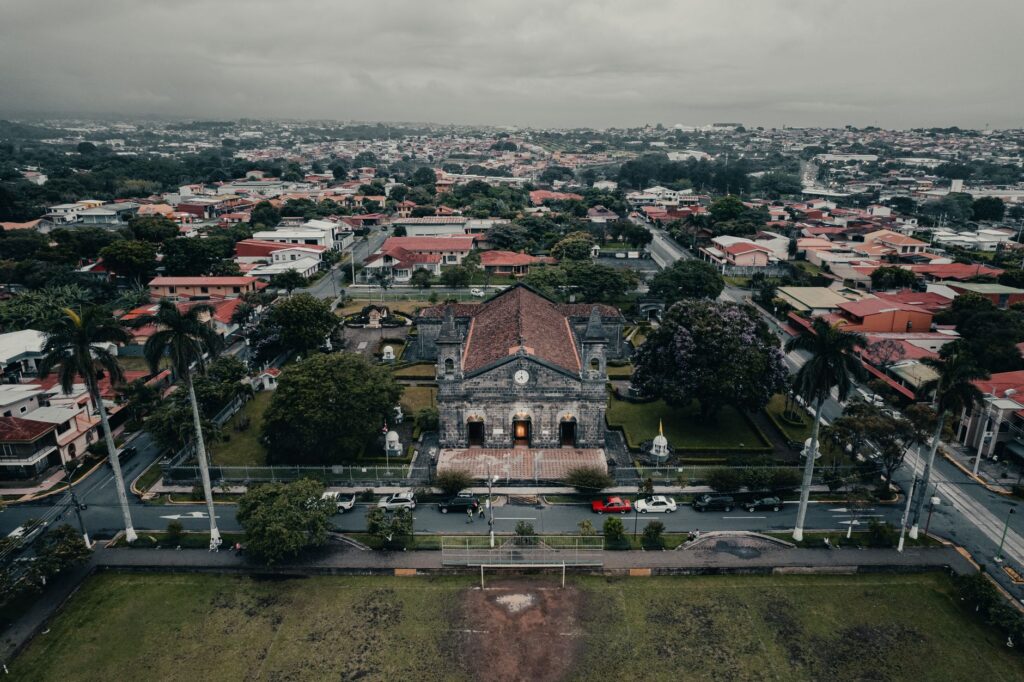
Curridabat appears in geographic records as a populated place within the canton of the same name, in San José Province. Its altitude of roughly 1,200 meters gives it a temperate climate that has historically favored settlement and cultivation. For visitors, that intermediate-city condition is an advantage: it can be walked without the density of the capital center.
The layout combines fast-moving avenues with low-scale residential streets. That mix explains much of its character: it is neither a frozen village nor an anonymous metropolis, but a transitional territory where rural memory and urban life coexist.
Reading Curridabat means accepting that heritage does not always announce itself with a plaque: sometimes it is recognized in the shade of a tree or the routine of a bus stop.
Coffee as a foundational layer
Like much of Costa Rica’s Central Valley, Curridabat’s history is tied to coffee cultivation, which transformed the region’s landscape and economy. Although the urban fabric now covers many of those spaces, coffee memory persists in the topography, in some old houses and in the way the city organizes itself around former roads.
The point is not to look for active plantations in the urban center but to understand that the city grew over an agricultural landscape. That reading helps explain why certain roads remain structuring axes and why traditional housing keeps patios and side corridors that respond to a climate and a way of life predating expansion.
Domestic architecture: the house as document
Curridabat’s built heritage is expressed above all in domestic architecture. One- and two-story houses with pitched roofs, side corridors and street-facing grilles form a discreet but coherent repertoire. Many have been modified, yet they retain elements that allow the evolution of local dwelling to be read.
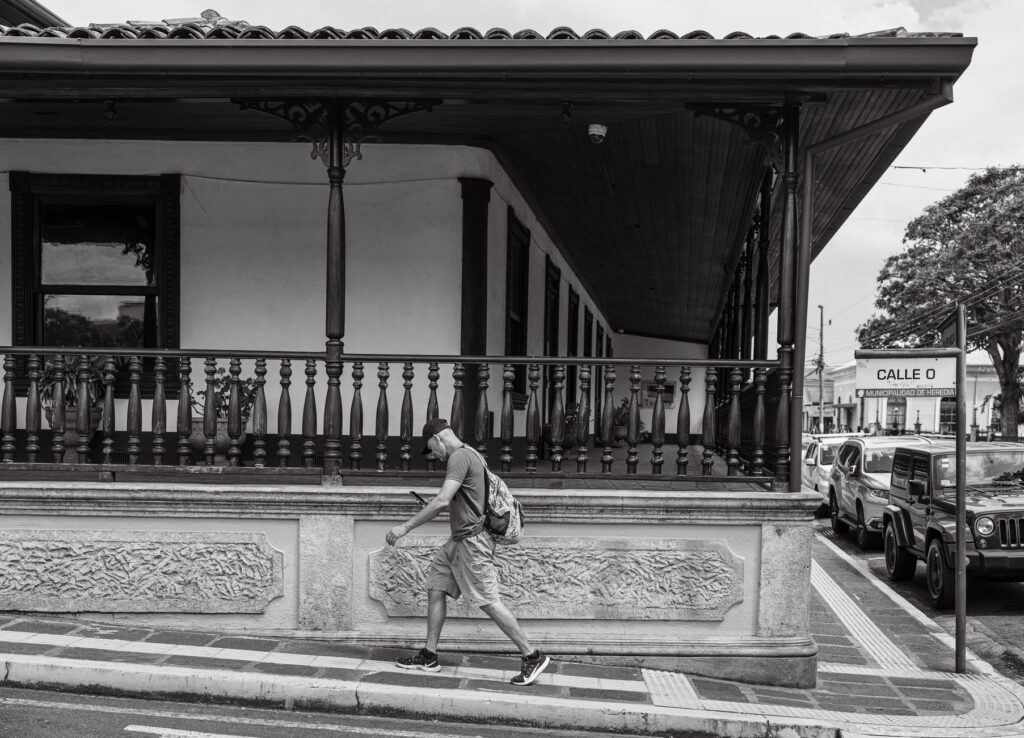
For visitors interested in heritage, the recommendation is to observe without intruding: the house is a private space, and its documentary value does not authorize entry or photography without permission. The sidewalk, the front garden and the relationship with the street are enough to grasp the whole.
What to look for on an architectural walk
- The proportion between house height and street width.
- Corridors and eaves that respond to rain and sun.
- Grilles and gates as a language of transition between public and private.
- Mature trees that accompany facades and shade the sidewalk.
Neighborhood life as living heritage
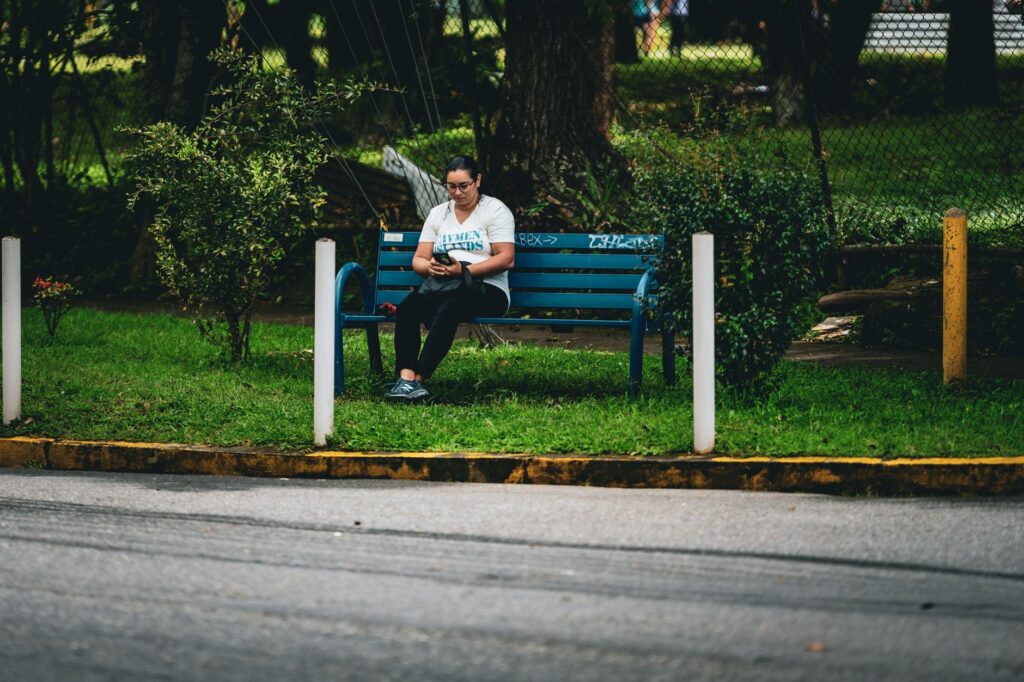
Some heritage is not kept behind glass: neighborhood life. In Curridabat, that dimension is visible in the routines of people walking to work, in nearby commerce and in the use of public space. Bus stops, small squares and access points to everyday services work as nodes of sociability.
For travelers, this implies a responsible decision: observe without interrupting, buy from local businesses when possible and avoid treating daily life as a spectacle. Living heritage is sustained by respect for those who inhabit it.
Getting around Curridabat: a matter of scale
The city is best covered in short trips. Its condition as an urban core within the metropolitan area allows walks to be combined with public transport. Long days are not advisable: Curridabat’s scale invites fragmented strolls, with pauses and observation.

It helps to see the city as part of a metropolitan continuum. Those arriving from San José will find a gradual transition between the capital and the eastern periphery. That continuity explains both the availability of services and the loss of some heritage elements under real-estate pressure.
The challenge of conserving without freezing
Like many intermediate cities in the Central Valley, Curridabat faces tension between development and conservation. Urban expansion, housing demand and changes in land use press on heritage that is not always inventoried. The question is not whether the city should change but how it can do so without erasing the traces that give it identity.
Visitors have a limited but real role: value what exists, document it respectfully and prefer consumption practices that do not accelerate the replacement of the traditional fabric. Conserving urban heritage does not depend only on institutions: it also depends on the gaze of those who inhabit and visit it.
A possible route, without haste
A reasonable visit to Curridabat can be organized around three gestures: walking residential streets while observing domestic architecture, pausing at spaces of everyday sociability and reading the landscape as the result of a transformed agricultural history. The aim is not to cover ground but to look closely.
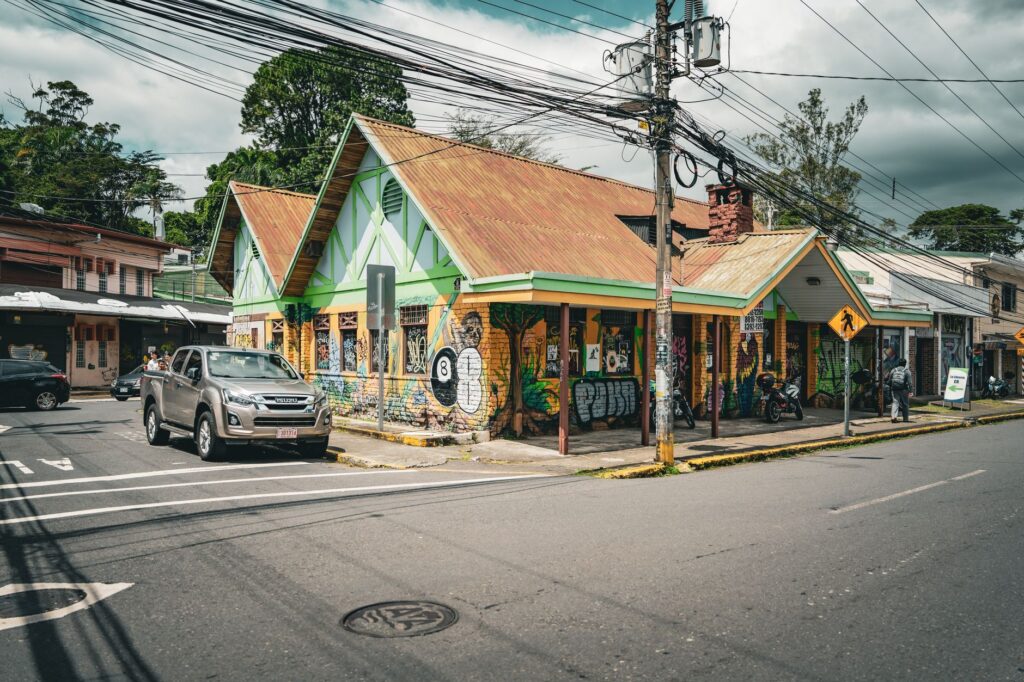
It is best to avoid peak traffic hours and to wear comfortable shoes. The city offers no formal tourist circuit, and that absence of script is both its difficulty and its value: it forces visitors to build their own reading of the place.
In Curridabat, heritage is not visited: it is recognized. The difference between the two actions defines the quality of the trip.
Practical guide
Getting there and around
Curridabat is part of the San José metropolitan area and connects to the capital via public transport and main roads. For internal trips, walking is the most suitable option on residential streets; public transport is useful for longer journeys. Routes and schedules should be checked with official sources before traveling.
When to go
The area’s temperate climate, shaped by altitude, allows visits during much of the year. Rainy seasons can affect walks, so flexible schedules and rain protection are advisable.
What to bring
- Comfortable shoes for uneven sidewalks.
- Water and sun protection.
- Light clothing with an extra layer for rain.
- A camera or notebook to record observations without entering private property.
Conduct recommendations
Do not enter private homes or patios. Ask permission before photographing people or identifiable facades. Respect the everyday use of bus stops, sidewalks and shops. Favor consumption at local establishments.
Limitations to keep in mind
Curridabat has no consolidated tourist circuit or extensive heritage signage. The visit requires tolerance for ambiguity and a willingness to build one’s own reading. Information on schedules, fees and services should be verified with updated official sources.
Closing: a sidewalk as a starting point
At the end of the walk, what remains is not a list of monuments but the image of a shaded sidewalk, a house with a corridor and a bus stop where someone waits. Curridabat is defined by that minimal scale, by the accumulation of gestures that sustain a place’s memory. The traveler who accepts this way of looking takes away something more lasting than a photograph: a way of understanding how Costa Rica’s intermediate cities keep their identity while changing.