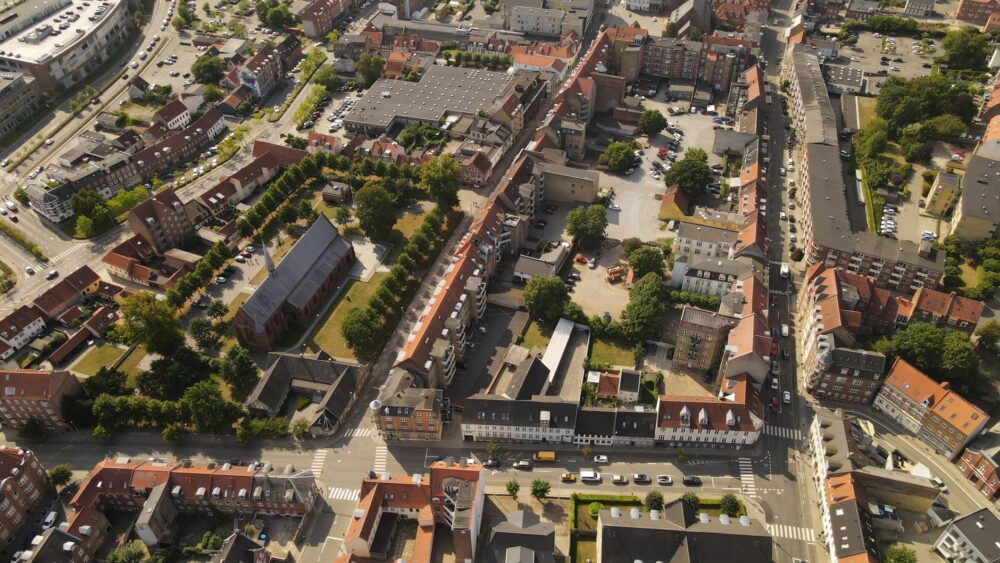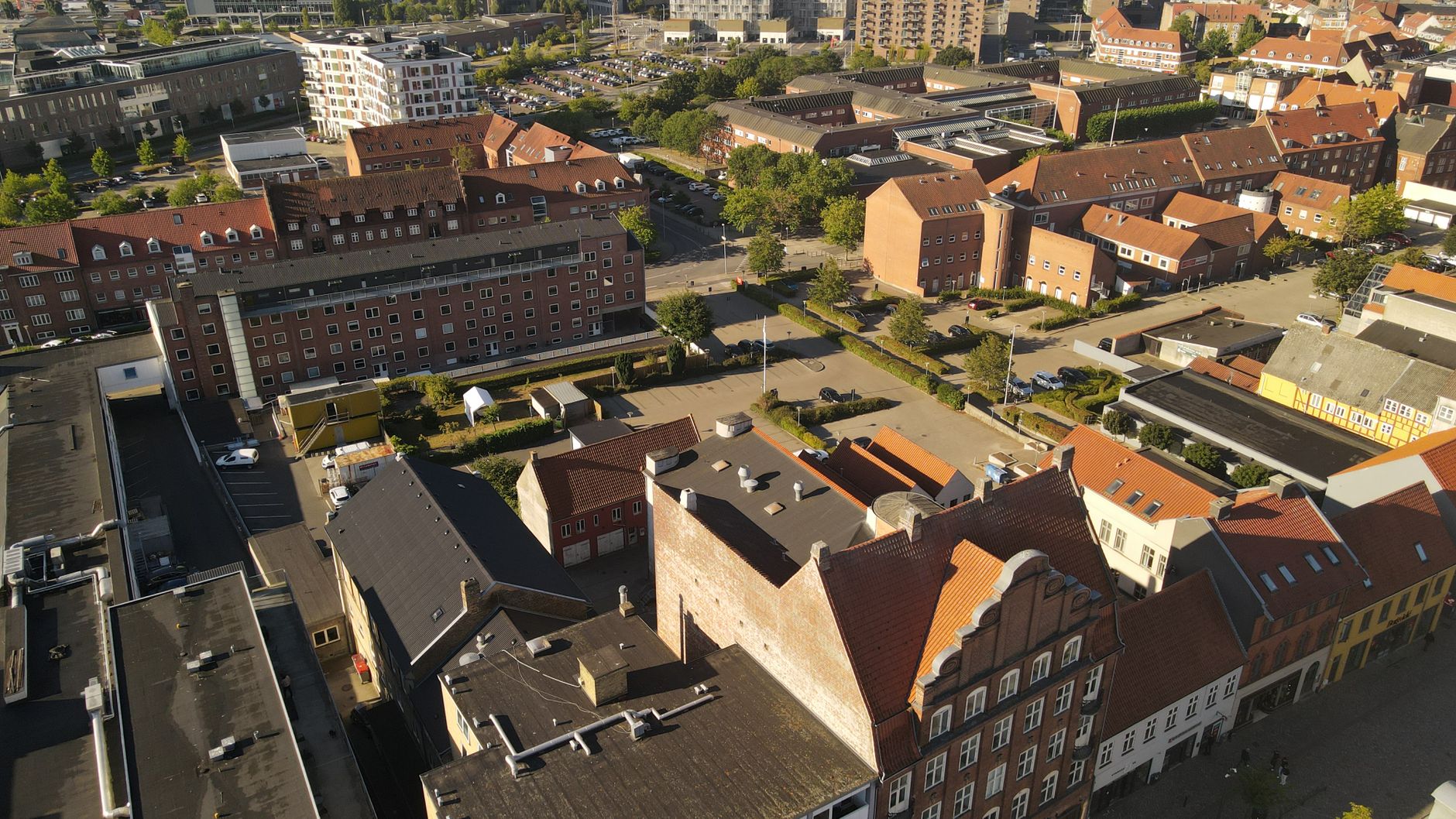

Albertslund rarely appears on Denmark’s must-see lists. That is precisely what makes it worth a detour. Twelve kilometres west of Copenhagen, this municipality of around 30,000 people grew alongside the Danish welfare state and the planned expansion of the capital. Visitors expecting red-brick village houses find something else: a town organised by housing blocks, footpaths and railway stations.
The question guiding this walk is not what to see but how a place conceived on a drawing board is actually lived. Albertslund offers an uncommon lesson in public housing, mobility and everyday landscape. It also lets travellers observe Danish life without the filter of Copenhagen’s historic centre.
A municipality born from a plan
Albertslund belongs to Copenhagen’s western belt, within the Capital Region. Its modern development is tied to post-war suburban growth, when Denmark needed to house a rising population and invested in planned neighbourhoods with services close at hand. The result reads like a manual of Nordic urbanism: housing blocks, green areas, shared facilities and a path network that favours those on foot or on two wheels.
It is not a monumental place. Its appeal lies in the coherence between what was built and how it is used. Distances are short, greenery is abundant and public transport shapes much of daily life. For travellers used to old town centres, the experience may feel restrained; for those trying to understand how Danish society works from the inside, it is a revealing stop.
Reading a planned town requires a certain discipline. The eye looks for landmarks and finds instead repetition: the same window rhythm, the same hedge line, the same lamp post. Only after a while does the variation appear, and with it the logic of the plan. This is not a place that rewards a quick circuit; it rewards attention to what is repeated and why.
The neighbourhood as a unit of belonging
In Albertslund, identity is organised by neighbourhood rather than by a single centre. Each housing area has its own character, shared spaces and routines. That fragmentation does not prevent a sense of community: it shifts it to a manageable scale, where the immediate surroundings are the first circle of reference.
Visitors can walk these areas slowly, noticing how the spaces between buildings are used. Benches, playgrounds, allotment gardens and small sports facilities are woven into the landscape. They are not decoration: they are social infrastructure. That is one of the keys to reading the municipality.
There is a practical lesson here for anyone who studies cities. A sense of belonging does not always come from a square, a church or a market hall. It can also come from a shared entrance, a bicycle shed or a footpath that everyone uses at the same hour. Albertslund makes that visible, and it is worth pausing to notice it.
Understanding Albertslund means looking less at the buildings and more at what happens between them: the journeys, the pauses and the places where people meet.
Cycling as a local language
Denmark is a country of cyclists, and Albertslund is no exception. Here the bicycle is neither a sport nor a tourist attraction but an ordinary means of transport. Lanes and paths connect neighbourhoods, stations and facilities with a logic that rewards consistency more than speed.
For visitors, renting a bike or walking long stretches reveals that everydayness. Distances are manageable and the landscape changes gently: residential areas, green strips, service roads and small shops. It is a discreet way to grasp how daily life is organised on the outskirts of Copenhagen.
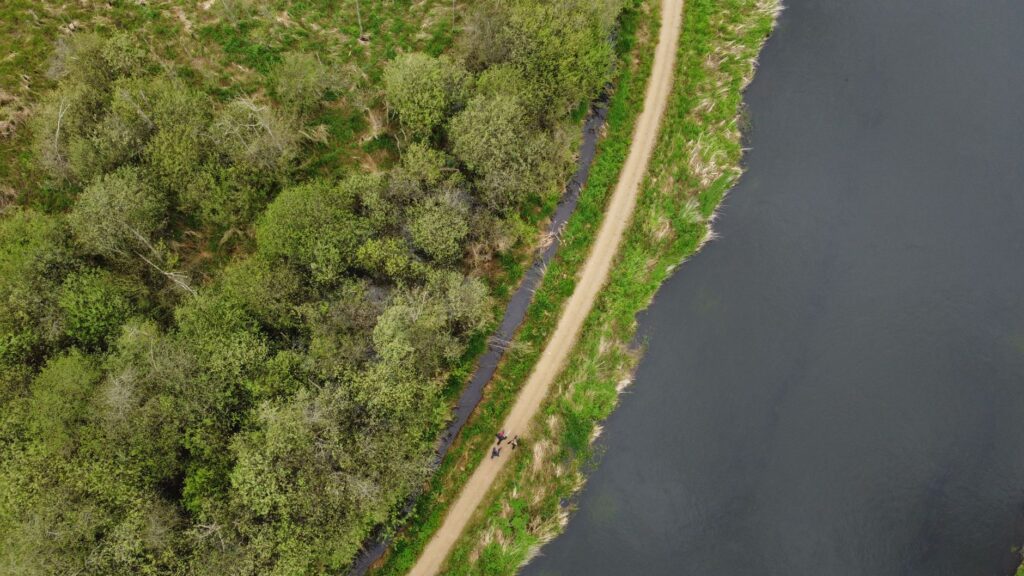
Cycling in a Danish suburb also means learning a few unwritten rules. Keep to the right, signal turns, give way where the path narrows, and do not assume that a quiet lane is empty. These habits are not formalities; they are the grammar of a shared space. A visitor who follows them blends in, and blending in is the point.
Residential architecture and open landscape
Albertslund’s architecture follows criteria of efficiency and liveability rather than visual effect. Housing estates, often several storeys high, are arranged to leave open space between blocks. That repeated gesture produces an open landscape where light and vegetation take the lead.
The result may seem austere, but it has a clear logic: encouraging ventilation, access to greenery and pedestrian circulation. For travellers interested in urbanism, walking these areas is a chance to see how Danish housing policies take shape. It should be done with respect: these are lived-in neighbourhoods, not stage sets.
It helps to look at the ground floor of a building rather than the facade as a whole. Entrances, storage rooms, bicycle racks and small gardens reveal how residents adapt a standard design to their own needs. That layer of use is often the most interesting part of a planned environment, and it is visible without entering any private space.
Greenery as everyday infrastructure
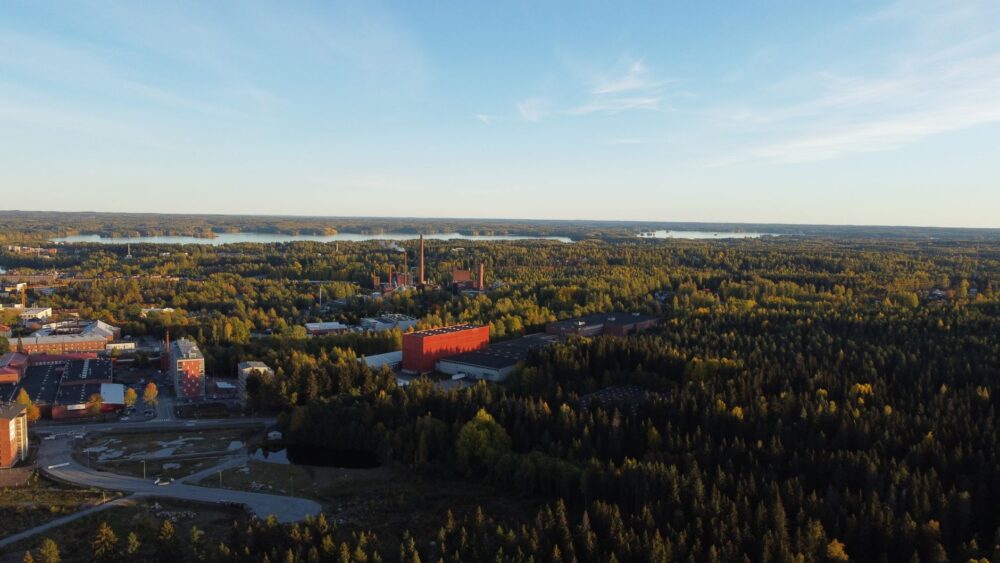
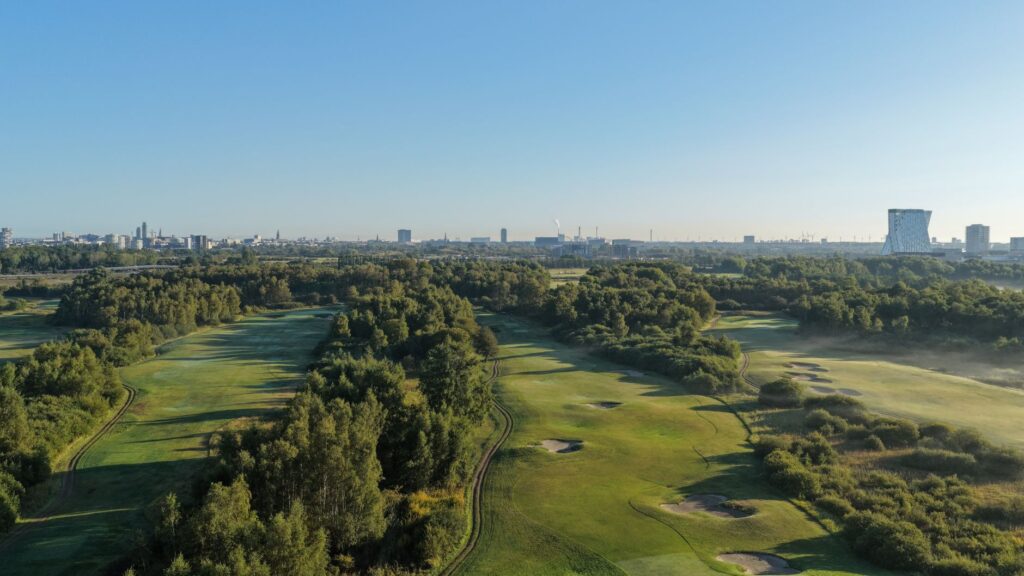
Albertslund devotes a considerable share of its surface to green space. These are not only defined parks but strips and corridors linking one area to another. That greenery serves practical purposes: drainage, shade, recreation and urban biodiversity. It also carries symbolic weight, reinforcing the idea that nature belongs to the city rather than being an add-on.

For visitors, these spaces offer pleasant pauses and a way to observe local life. Families, runners, older residents and groups of young people share the same landscape at different hours. It is a good place to sit and absorb the rhythm of the municipality.
Season matters when reading this landscape. In spring the planting is fresh and the paths busy; in summer the shade becomes the main amenity; in autumn the corridors of trees show their structure; in winter the open plan is at its most legible, with sightlines that summer hides. Each season offers a different argument for the same design.
Quiet heritage: the memory of planning
Albertslund’s heritage is not old, but it is significant. It reflects a specific phase of Danish history: the building of the welfare state, the expansion of cities and a faith in planning. The municipality’s buildings and layouts are documents of that era, and their conservation raises debates about what deserves protection.
For culturally minded travellers, this heritage is less obvious than a cathedral or a castle, but it offers a valuable reading of how a society chooses to organise its territory. Albertslund invites reflection on housing as a right and public space as a shared responsibility.
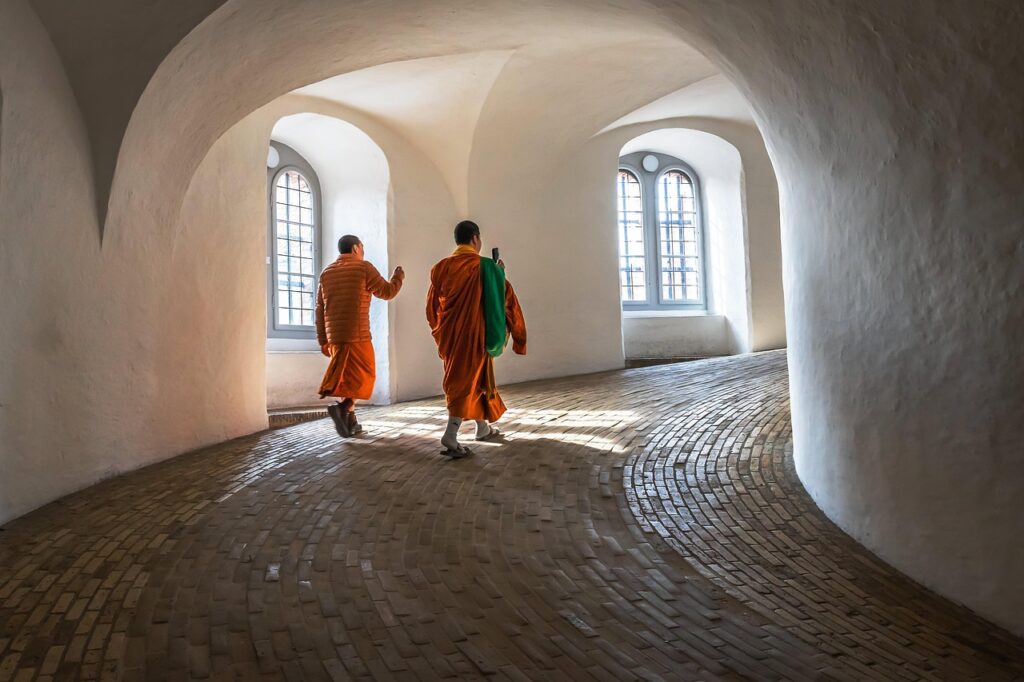
This kind of heritage also asks a question that many European towns now face: how to care for buildings that are neither ancient nor fashionable. The answer is rarely a museum. It is more often maintenance, adaptation and a community that keeps using the place. Albertslund’s value lies precisely in that continued use.
Daily life and responsible visitor choices
Visiting Albertslund requires adjusted expectations. There are no major monuments or an intense tourist offer. What exists is a daily life that runs on clear rules: respect for shared spaces, use of public transport and care for the environment. The responsible visitor fits into that logic without disrupting it.
That means, for instance, not treating residential areas as a photo set without judgement, using the provided infrastructure and keeping a discreet pace. The reward is an honest look at a municipality that does not show off but explains a great deal about Denmark.
It also means accepting that some of the most interesting details cannot be photographed well: a child’s bicycle left at an entrance, a bench worn by use, the way a path curves to avoid a tree. Observing these things without intruding is part of the visit, and it is a skill worth practising.
Neighbourhood food and simple pauses
Albertslund’s food scene reflects its residential character. Local shops, bakeries and everyday eateries dominate. It is not a destination for grand culinary experiences, but it is a place to eat well without fuss and watch how the community gathers around a table.
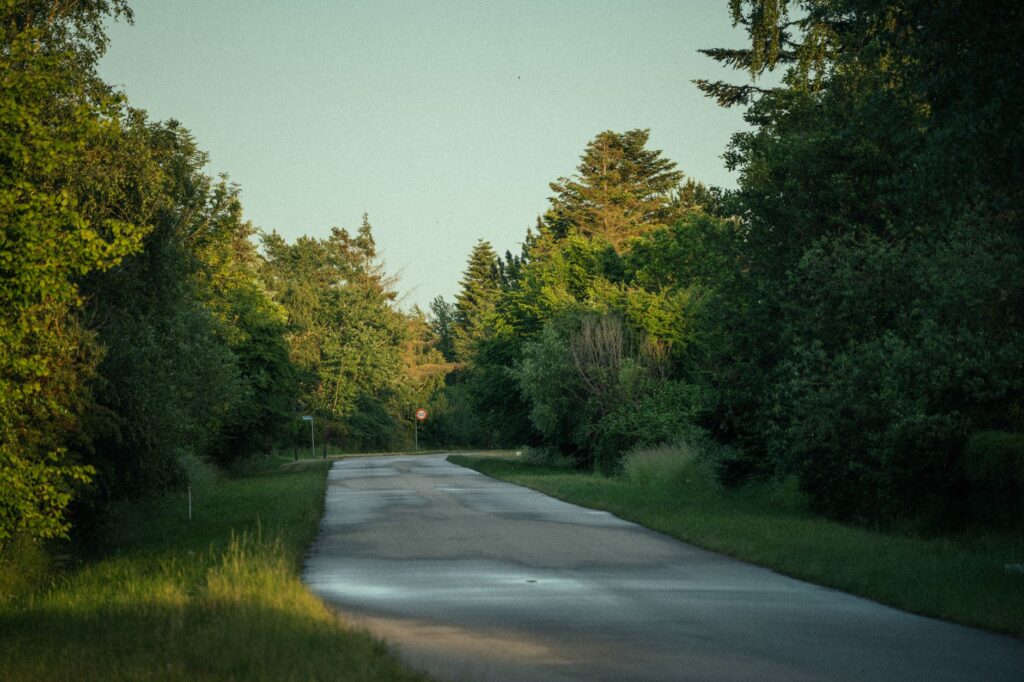
Those seeking a wider experience can combine the visit with Copenhagen, a short train ride away. But time should be set aside for the municipality itself: a quiet café, a walk between blocks and parks, a brief conversation in a bakery. That is where the place becomes legible.
A simple rule helps: eat where the neighbourhood eats, at the hours the neighbourhood eats. A bakery in the morning and a modest lunch near a station tell you more about the place than any curated list. They also keep the visitor’s money in the local economy, which is a modest but real form of responsible travel.
Albertslund does not compete with Denmark’s grand destinations; it offers something else: the chance to see how a community is organised once the plan becomes life.
Practical guide
- Getting there: Albertslund is connected to Copenhagen by the suburban rail network, with stations inside the municipality. Cycling is a common way to move around locally.
- When to go: Spring and summer allow visitors to enjoy the green spaces and outdoor routes. Autumn offers soft light and quieter streets.
- What to bring: Comfortable shoes, clothing suited to Danish weather and a willingness to walk or cycle. Check the forecast before setting out.
- What to avoid: Treating residential neighbourhoods as attractions. These are lived-in spaces; respect for residents’ privacy is part of the visit.
- Combinations: Proximity to Copenhagen makes Albertslund suitable for a half-day excursion or as a quiet base for exploring the region.
A photograph for the end
As evening falls, Albertslund’s paths empty little by little. Bicycles return, lights come on in the windows and the greenery deepens. There is no grand monument to photograph, but there is a scene that sums up the place: a community settling without noise, in a landscape built for daily life.
That is Albertslund’s lesson. It does not dazzle, but it explains. And for curious travellers, understanding how a planned municipality is inhabited can be as valuable as touring a historic centre. Denmark, after all, can also be read on its outskirts.