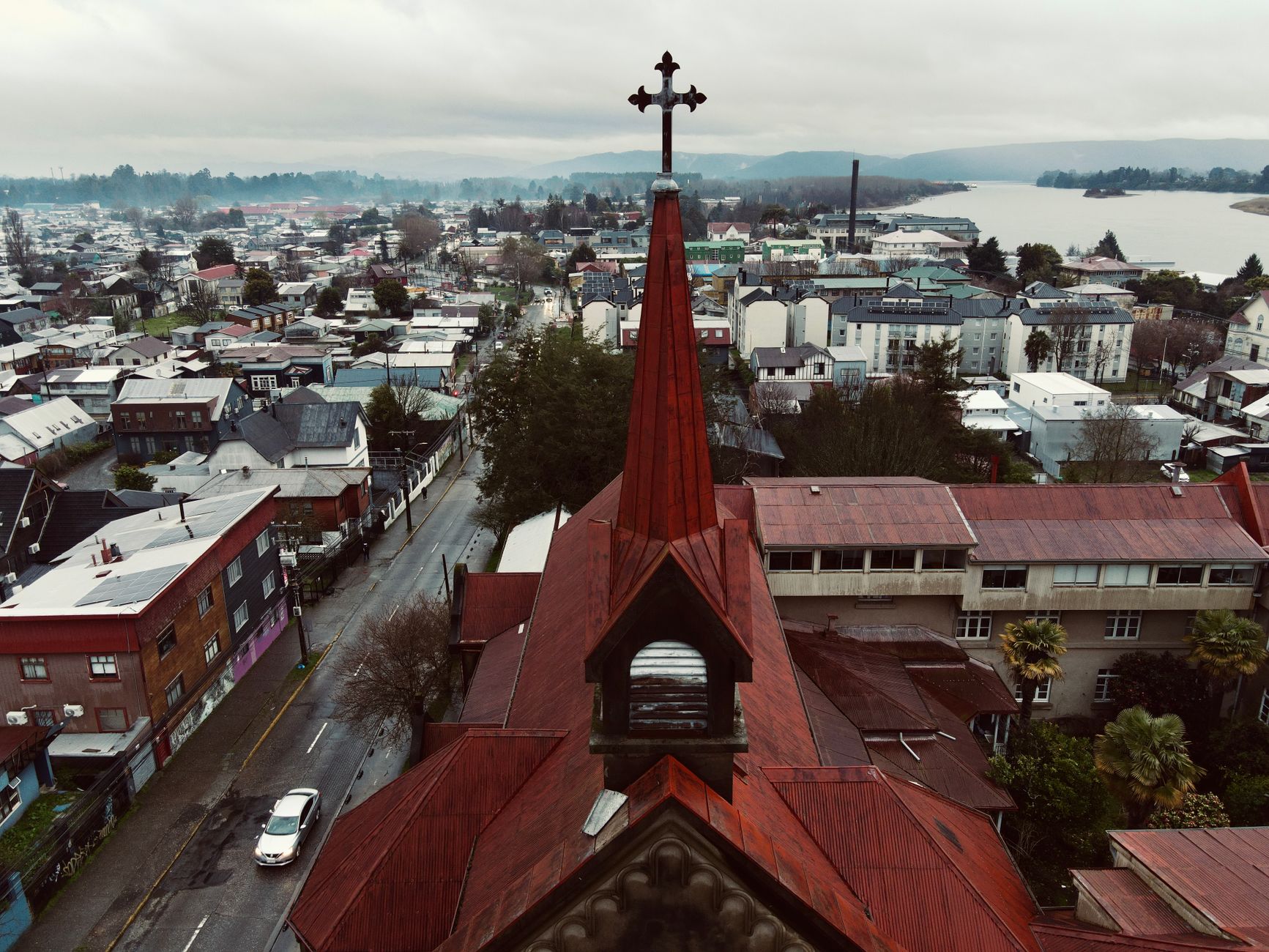

On the Chiloé archipelago, in southern Chile, wood is not a decorative material: it is the language in which an entire culture was built. Churches, houses, piers, boats and even garden fences share the same constructive logic, inherited from a long dialogue between island carpenters, Jesuit missionaries and, later, Franciscans. That repertoire, known as the Chilota School of wooden architecture, shaped a landscape that UNESCO recognized as a World Heritage Site in 2000.
To travel through Chiloé today is to witness a conversation between what endures and what changes. The churches remain the heart of their communities, but the archipelago also faces the challenge of keeping a craft alive while tourism, weather and the scarcity of fine hardwoods put pressure on the structures. This is the story of a place where building and believing share the same tools.
An archipelago that learned to build with what it had
Chiloé is a group of islands separated from the mainland by the Chacao Channel. That insular condition shaped its history: for centuries, materials arrived with difficulty, and the timber available in the temperate rainforest became the most reliable resource. Local carpenters developed their own techniques, many inspired by shipbuilding, to raise structures capable of withstanding humidity, wind and earthquakes.
The arrival of the Jesuits in the 17th century introduced a system of circular missions. The priests toured the islands once a year and, together with the communities, erected chapels that were then left in the care of a trained layperson. When the Jesuits were expelled in 1767, the Franciscans continued and expanded that tradition during the 19th century. The result was a network of temples that once exceeded a hundred, of which around sixty survive today.
The churches that sustain community life
Sixteen of those churches were inscribed on the World Heritage List. Among them are the churches of Achao, Quinchao, Castro, Rilán, Nercón, Aldachildo, Ichuac, Detif, Vilupulli, Chonchi, Tenaún, Colo, San Juan, Dalcahue, Chellín and Caguach. All share recognizable features: a tower façade, a basilican layout, a vaulted ceiling and an interior where colour and religious images play a central role.
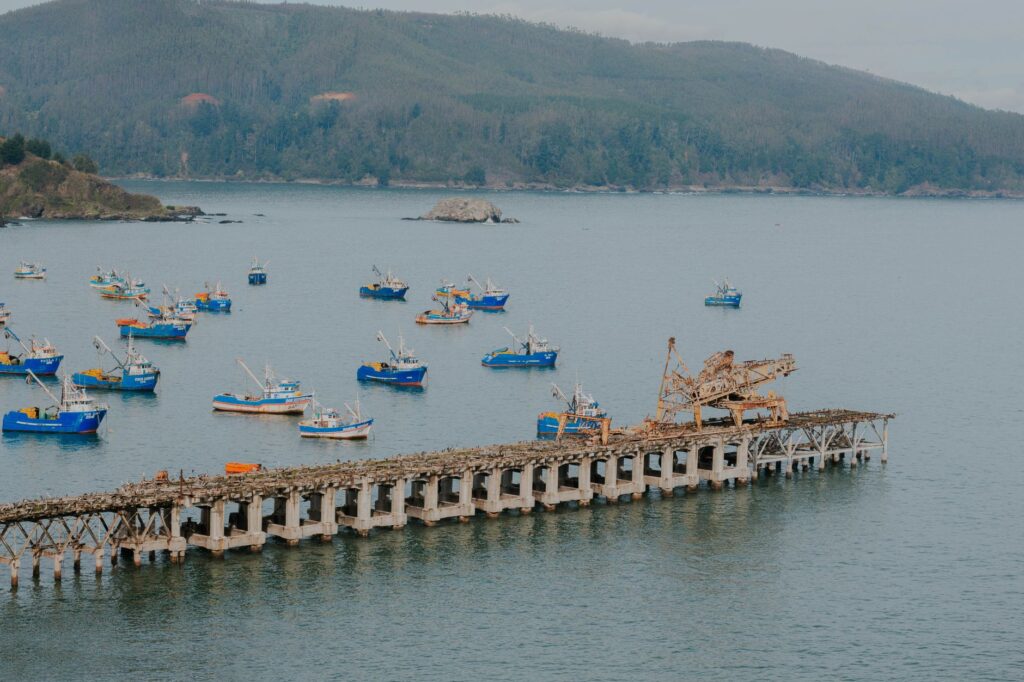
But what distinguishes them is not only their form. Their orientation and location respond to the demands of the sea: many were built on hills so that navigators could see them and to prevent flooding. In front of them lie esplanades that still function as stages for religious festivals and gathering places. Those esplanades, transformed into plazas or kept as open spaces, recall the time when missionaries arrived by boat and brought the community together.
The Chilote church cannot be understood without its esplanade: the temple and the public space around it form a single unit of community life.
Collective work, known as minga, has been key to maintaining these buildings. Neighbours, fishermen and farmers take part in repair and care tasks, a practice UNESCO identifies as part of the intangible value associated with the churches. That participation is not folklore: it is social infrastructure.
From ships to houses: one and the same craft
The influence of shipbuilding appears in the joints and fittings of towers and roofs. Boatbuilders, used to working with timber exposed to water and wind, transferred that knowledge to buildings. The result is an architecture that behaves, in a way, like a ship: flexible, articulated and designed to last under adverse conditions.
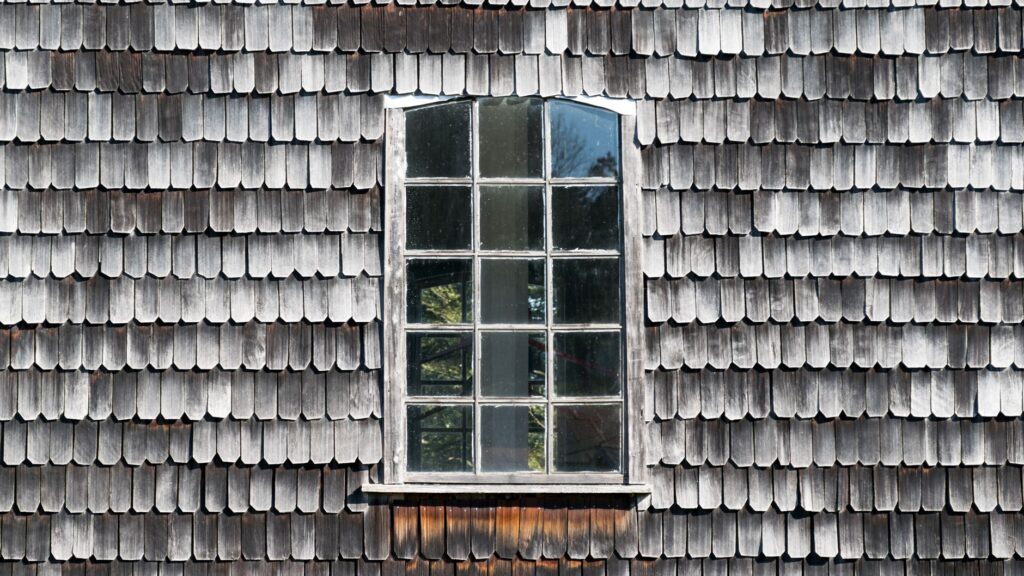
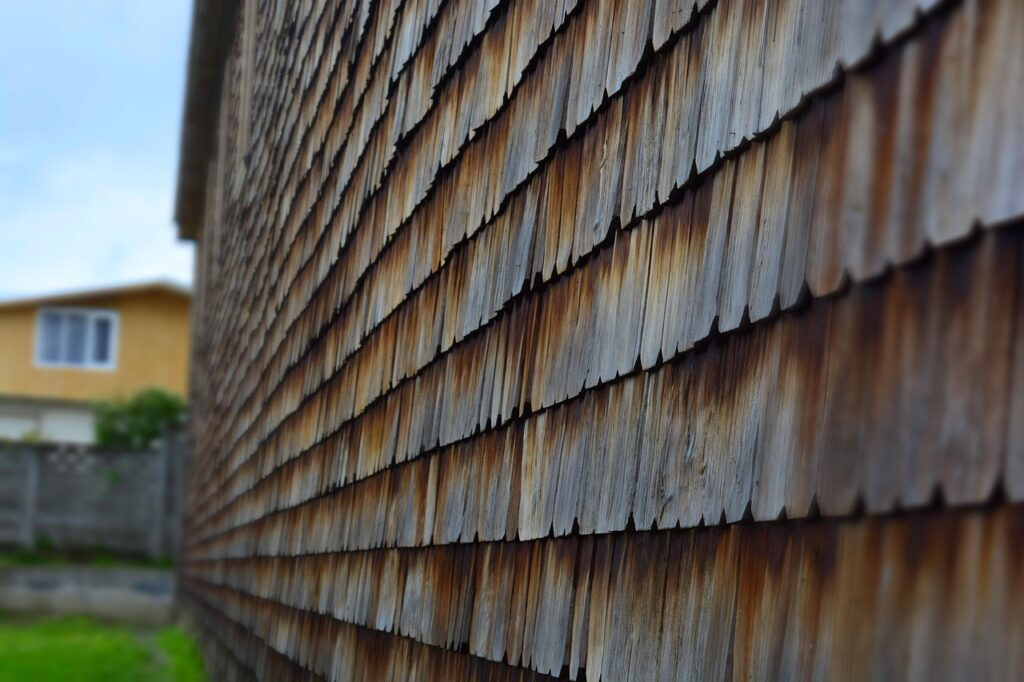
That knowledge is also expressed in the houses. In Castro, the colourful palafitos on stilts recall that the relationship with water organizes daily life. In rural areas, houses clad in alerce and cypress shingles show an economy of material: every piece is used, every joint is designed to withstand rain. The shingle, a small wooden scale, has become a hallmark of the archipelago.
A heritage that demands constant maintenance
Wood, by its nature, requires permanent care. Humidity, wood-boring insects and storms have tested the churches on several occasions. The collapse of the tower of the church of Chonchi after a storm in March 2002 highlighted the vulnerability of these structures and the need to strengthen conservation systems.
Since 2003, with support from the Inter-American Development Bank, a large-scale programme was implemented that managed to reverse serious damage, especially in the tower façades. The Friends of the Churches of Chiloé Foundation, created by the Diocese of Ancud, works alongside parishes and communities to coordinate conservation. The churches are also a National Monument of Chile under various decrees supported by Law No. 17,288 of 1970.
One of the current challenges is the scarcity of fine hardwoods. The protection of species such as alerce and cypress has led to the exploration of alternative woods that retain similar properties. Research is also underway on treatments that mitigate the effects of weather and attacks by wood-degrading organisms.
Passing the craft on to new generations
Conservation does not depend only on materials and budgets. It depends on people capable of reading a wooden structure, recognizing a joint and knowing when a piece needs replacing. Research, recording and the transmission of building techniques to new generations are urgent tasks, according to the site’s management documents.
In Chiloé, knowledge circulates informally: from master to apprentice, from family to family, from one building site to another. Formalizing it without making it rigid is part of the challenge. Communities have historically maintained their temples, but modernization and globalization have increased the vulnerability of that system. Finding a balance between development and preservation is, perhaps, the central problem of the archipelago.
What to see and how to travel through it
The archipelago is organized around two main hubs: Castro, on the Isla Grande, and Ancud, further north. From Castro, several heritage churches are relatively easy to reach, such as those of Nercón, Rilán and Dalcahue. Others, such as Caguach or Detif, require sailing and more careful planning.
The experience is not limited to the temples. The markets of Dalcahue and Castro offer a window into daily life: curanto, milcaos, chapaleles and seafood. Wooden crafts, textiles and basketry complete a cultural panorama in which manual trades still carry weight.
Things worth keeping in mind
- The churches are active places of worship: it is advisable to respect schedules and community activities.
- The weather is humid and changeable throughout the year; waterproof clothing is useful in any season.
- Some churches open for limited hours or remain closed outside celebrations; checking with local tourism offices helps organize the route.
- Transport between islands depends on boats and ferries; times can vary with the weather.
- Buying local crafts and hiring local guides helps tourism generate concrete benefits for the communities.
The balance between visiting and conserving
Tourism can be an ally of conservation if it is managed carefully. UNESCO documents warn about the risks of excessive commercialization and trivialization. The key is for benefits to reach the communities and for visits not to interfere with the religious and social use of the temples.
The sustainability of conservation is a major challenge: the churches are at the centre of their communities’ development, and any preservation formula must coexist with that development. It is not just about repairing buildings. It is about keeping alive a relationship between people, territory and beliefs.
Practical guide
Getting there: The main access to the archipelago is by air to Mocopulli airport, near Castro, or by road and ferry from Pargua, on the mainland, to Chacao. From Ancud and Castro, tours to the heritage churches are organized.
When to travel: The climate is oceanic, with frequent rain. The austral summer (December to March) concentrates more visitors and longer days. The shoulder season can offer lower crowds and equally rich landscapes.
What to bring: Waterproof clothing, suitable footwear for dirt roads and a flexible attitude toward changes in weather and transport schedules.
What not to do: Do not touch the wooden elements of the temples, do not enter restricted areas and do not assume that all churches are open at any time.
Where to get information: The tourism offices of Castro and Ancud, the Friends of the Churches of Chiloé Foundation and Chile’s National Monuments Council are useful sources for learning about the status and opening hours of the temples.
A scene that sums up the archipelago
At dusk, on one of the esplanades facing a shingled church, the sound of the wind mingles with the conversations of those returning from the sea. The dark wood of the temple bears the mark of generations of carpenters, worshippers and neighbours who have repaired, painted and sustained the building. There is no spectacle or staging: there is a community that continues to use its church as it always has.
That continuity, more than any isolated monument, is what makes Chiloé singular. Wooden architecture is not a memory of the past: it is a living practice that is learned, taught and defended. To visit the archipelago with respect is, in a way, to take part in that chain of care.