
The Persistence of Sewn Paper in the Digital Age
In the heart of Valencia, far from the commercial hustle of the main urban arteries, an oficio survives that defies the planned obsolescence of mass consumption. Hand-bound paperback bookbinding is not merely a process of joining printed sheets; it constitutes an act of cultural preservation where each crease of the bone folder and each stitch of linen thread embody a silent resistance. While industrial chains rely on mechanical milling and quick-drying synthetic adhesives, traditional Valencian workshops continue to apply centuries-old techniques that ensure a book is not only legible but structurally sound for decades.
This report delves into the workshops where time moves to the rhythm of the wooden press and the warmth of the glue pot. Through conversations with master binders, conservators, and contemporary creators, we will explore the invisible anatomy of a well-made book. We will discover how the geometry of hand-sewing over cords or cotton tapes determines the perfect opening of a volume, allowing the pages to lie flat on the table without mechanical tensions that force paper breakage. Valencia, with its rich guild tradition and vibrant independent design scene, stands out as an exceptional laboratory where technical rigor dialogues with aesthetic experimentation.
The Anatomy of Signatures: Folds, Sections, and Creasing
The birth of a handmade paperback begins long before thread touches paper. The process starts at the workbench with the reception of printed sheets in flat layouts, ready to be transformed through the fundamental operation of folding. Valencian artisans insist that a good fold is the foundation upon which the durability of the volume rests. Using an authentic bone folder—preferably polished deer or bovine bone to prevent a greasy shine on the paper—the binder marks the fibers with millimeter precision, ensuring corners meet with geometric exactness.
Once folded, the sheets are gathered into signatures, typically consisting of eight, twelve, or sixteen pages depending on the paper weight. At this point, the ideal thickness and weight of the spine are defined. In the workshops visited, artisans work with both high-end laid papers and modern coated stocks, each requiring specific handling. The excess ambient humidity typical of Valencia’s Mediterranean climate forces artisans to store sheets under strict hygrometric controls to prevent fiber deformation before proceeding to the sewing phase.
The Art of Hand Sewing: Stitches That Defy Time
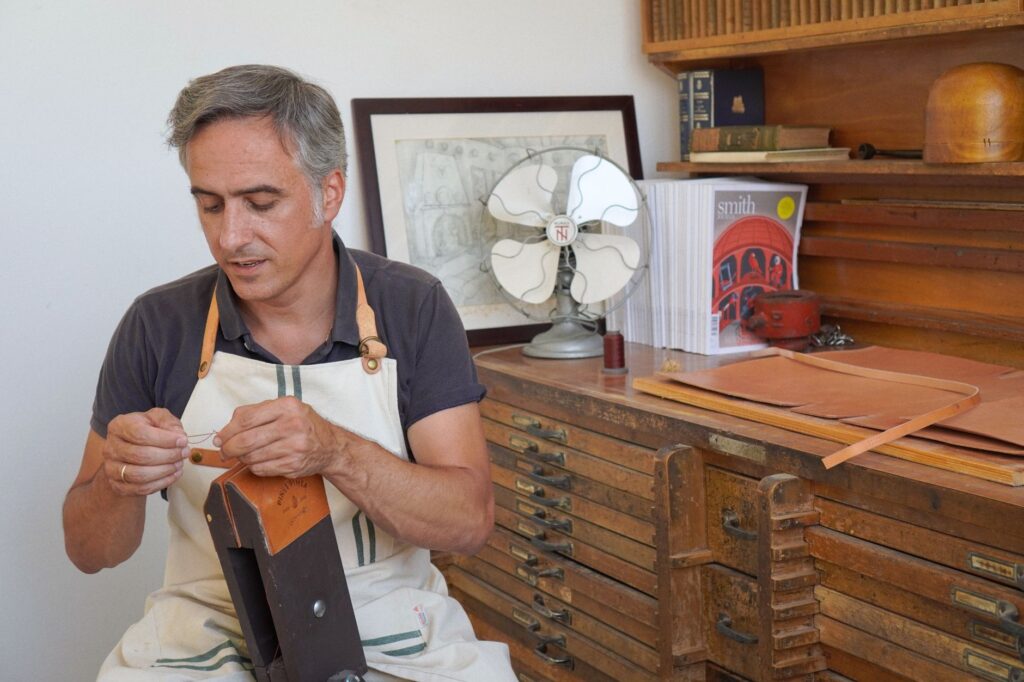
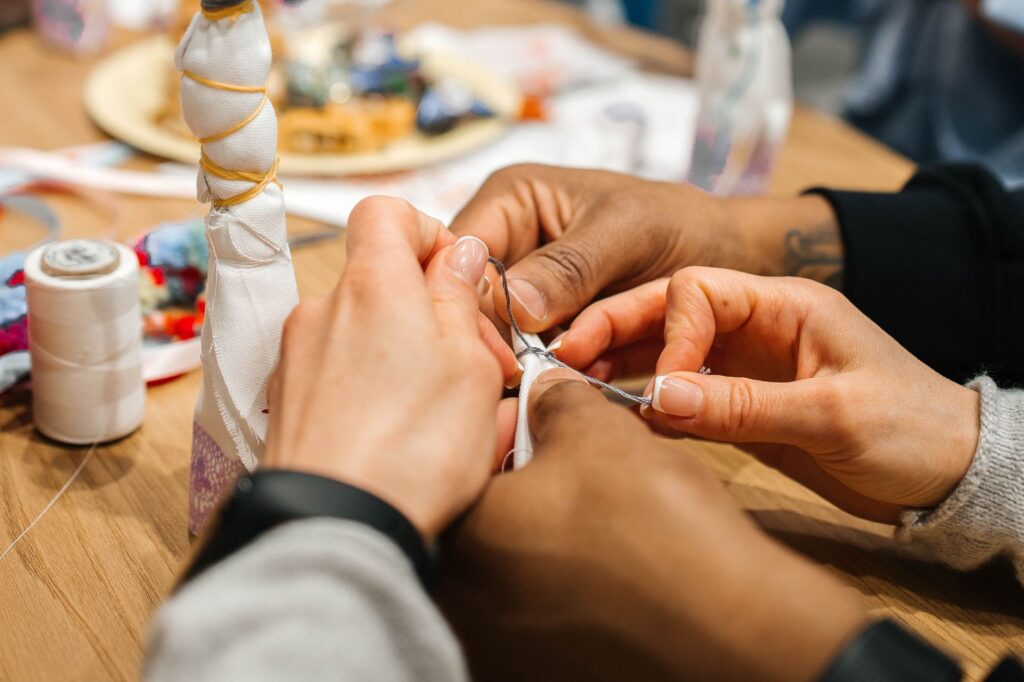
The soul of a quality paperback binding lies in its sewing. Unlike industrial production, where leaves are torn under the blades of milling machines, the artisan workshop respects the integrity of the signature through the perforation and passing of waxed linen thread. Valencia’s masters employ various sewing modalities, highlighting chain stitching over tapes or the classic exposed Coptic stitch, highly appreciated both for its structural resistance and unquestionable decorative value.
Each stitch requires constant, measured tension. Thread that is too tight wrinkles the spine and hinders book opening; thread that is too loose leaves signatures sloppy, inviting dust entry and subsequent paper degradation. As the thread travels through the interior of the signatures, the binder establishes a tactile dialogue with the work.
We sew by hand because we understand that every book has a unique backbone that demands mechanical respect and human sensitivity.
This attention to detail transforms the paperback into an enduring object, capable of withstanding thousands of openings without a single sheet detaching from its assembly.
Spine Preparation and Structural Gluing
Once the sewing of all signatures is complete, the book block—also known as the text block—requires a series of mechanical and chemical treatments prior to final gluing. The first step involves rounding or hammering the spine, a procedure that endows the book with its characteristic convex shape and prevents leaves from bowing inward with continuous use. After securing the cords or gauze reinforcements with binder’s hammers, adhesives are applied.
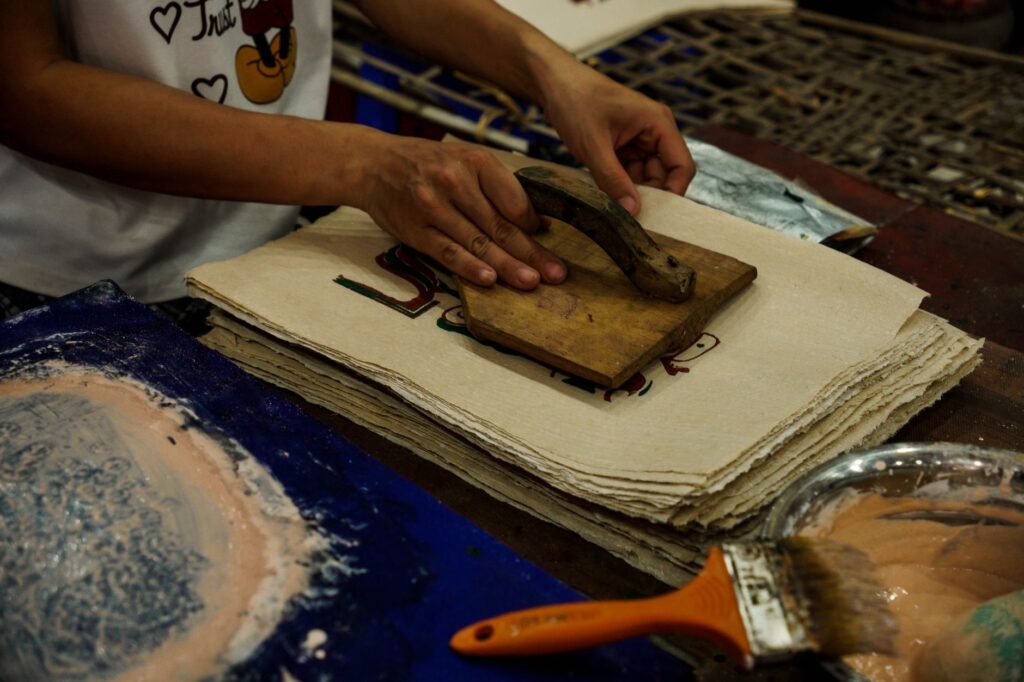
Far from the indiscriminate use of industrial vinyl glues that yellow and harden paper over years, traditional Valencian workshops continue to formulate their own animal-based glues, such as rabbit skin glue, or employ neutral pH PVA polymers that guarantee process reversibility. Gluing is performed hot, applying thin, penetrating layers that ensure spine flexibility. Over this initial layer, cotton mesh or tarlatan is adhered, an essential element that will absorb dynamic tensions when the reader opens the volume on a flat surface.
The Flexible Cover: Cardstock, Weight, and Grain
The definition of a paperback precisely implies the use of a soft cover, usually made of cardstock or heavy stock paper, contrasting with the rigidity of hardcover bindings. However, choosing the appropriate cover for a handmade book requires deep knowledge of paper density and grain direction. In Valencia’s studios, special attention is paid to ensuring the cover’s grain runs parallel to the book’s spine; otherwise, the cover will tend to warp undesirably, accumulating moisture and losing its formal elegance.
Creators combine pure cellulose cardstocks with vat-dyed handmade papers, playing with rough textures and weights ranging from 250 to 350 grams per square meter. The process of gluing the cover to the spine—known in jargon as attaching the wrapper—is executed using arm presses or controlled-pressure clamps. This union must be precise: only the spine of the block adheres to the cardstock, leaving the flanks free so the cover can pivot naturally when opening and closing the book, thus avoiding front hinge breakage.
Edge Trimming and Wax Finishing
With the cover attached, the book enters its phase of aesthetic definition and exterior protection: edge trimming and smoothing. In the most purist workshops, this process is carried out using a bench shear or paring knife, profiling head, tail, and fore-edge with impeccable cleanliness. The goal is not sterile industrial perfection, but removing folding burrs and offering a clean reading surface where the paper breathes and displays its original tactile texture.
To protect edges from dust, humidity, and passing years, some masters apply subtle layers of natural beeswax or perform light burnishing with an agate stone, a technique sealing paper pores without damage.
The finish does not seek the plastic perfection of the machine, but rather leaves the honest footprint of the hand that built the book.
The result is a paperback that invites touch even before reading, establishing an immediate sensory relationship between reader and printed object in the streets of the Turia capital.
Contemporary Innovation and Graphic Design Dialogue
Paperback bookbinding in Valencia does not live exclusively anchored in heritage nostalgia. In recent years, a new generation of graphic designers, independent publishers, and visual artists has forged strategic alliances with traditional workshops to experiment with avant-garde formats. Exposed spines with vibrant colored threads, overlapping covers with asymmetric flaps, and combinations of recycled agricultural papers—such as those made from grape or coffee residues—are being explored, redefining the contemporary concept of the artist’s book and limited edition.
This intersection between guild craftsmanship and contemporary design has made Valencia an unavoidable benchmark in southern Europe’s art book and independent publishing circuit. Workshops open their doors to creators from across the continent seeking the technical skill required to materialize complex editorial projects, proving that handmade paperback possesses infinite versatility capable of adapting to twenty-first-century expressive demands without abandoning its historical roots.
Practical guide
How to get there: Valencia features an excellent high-speed railway network (AVE and Ouigo) connecting from Madrid and Barcelona, placing the city under two hours from the capital. Manises International Airport connects with major European hubs and is fifteen minutes from the historic center by metro.
When to visit: Spring months (April to June) and autumn (September to November) offer ideal weather conditions, with mild temperatures and stable humidity levels, optimal for visiting workshops where paper and natural adhesives require environmental stability.
Workshop route: Most artisanal binding studios are concentrated in the Carmen neighborhood and around the central market. Advance contact is recommended, as many of these spaces are active workshops dedicating much of their day to custom production.
Recommended accommodation: The historic quarter houses boutique hotels set in restored old mansions, such as Caro Hotel or Palacete Almona, which respect traditional Valencian architecture and offer a stay experience deeply linked to design and local history.
Recommended reading and resources: To delve into the history of the book in the Valencian Community, consulting the holdings of the Public Library of Valencia and specialized publications from the Reial Acadèmia de Belles Arts de Sant Carles is highly recommended.
Tactile Epilogue: Memory Between the Covers
At the end of the day, when Mediterranean light begins to recede from the workshop windows and the scent of fresh paste and newly folded paper permeates the atmosphere, paperback bookbinding reveals itself as much more than a manufacturing technique. It is a pact of complicity between creator and reader, a physical refuge against the fleetingness of the digital. Every hand-sewn book in Valencia bears the unhurried rhythm of expert hands that have decided to stop time, leaf by leaf, so that written memory remains alive, warm, and open upon our hands.