
Origins and Silence on the Slopes of Croix-Rousse
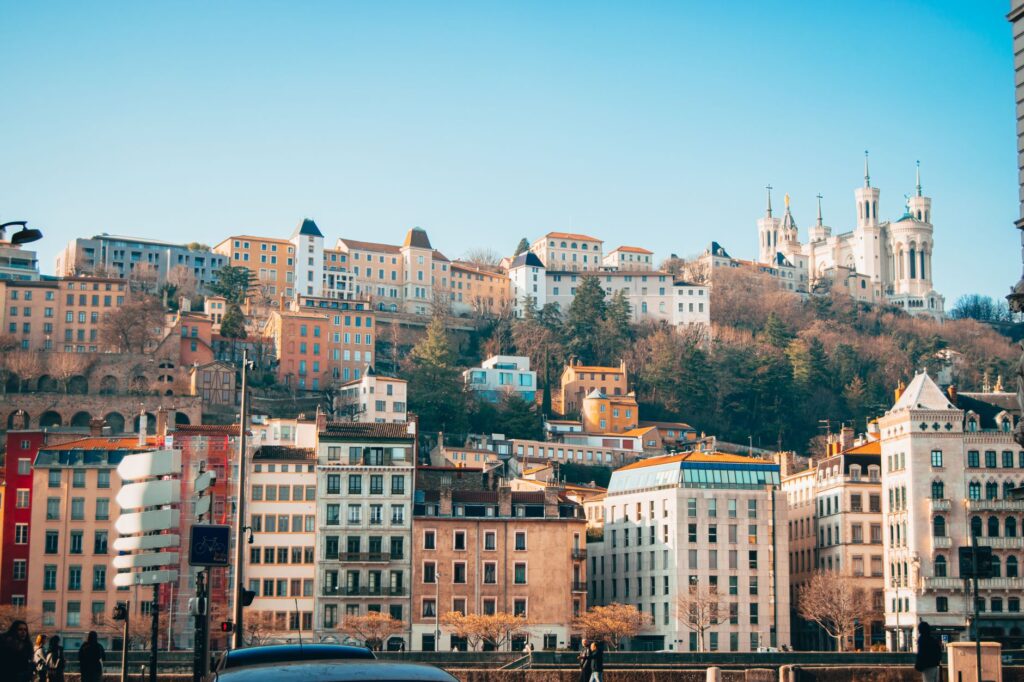
The Croix-Rousse hill in Lyon preserves the muffled echo of the wooden battens that for centuries dictated the economic and cultural pulse of France. In this labyrinth of steep alleyways, the architecture itself responds to an imperative technical function: ceilings up to four meters high designed specifically to house the voluminous mechanisms of Jacquard looms. Here, history is not archived in sterile glass cases, but vibrates in the steady rhythm of shuttles and the pungent scent of linseed oil and raw silk.
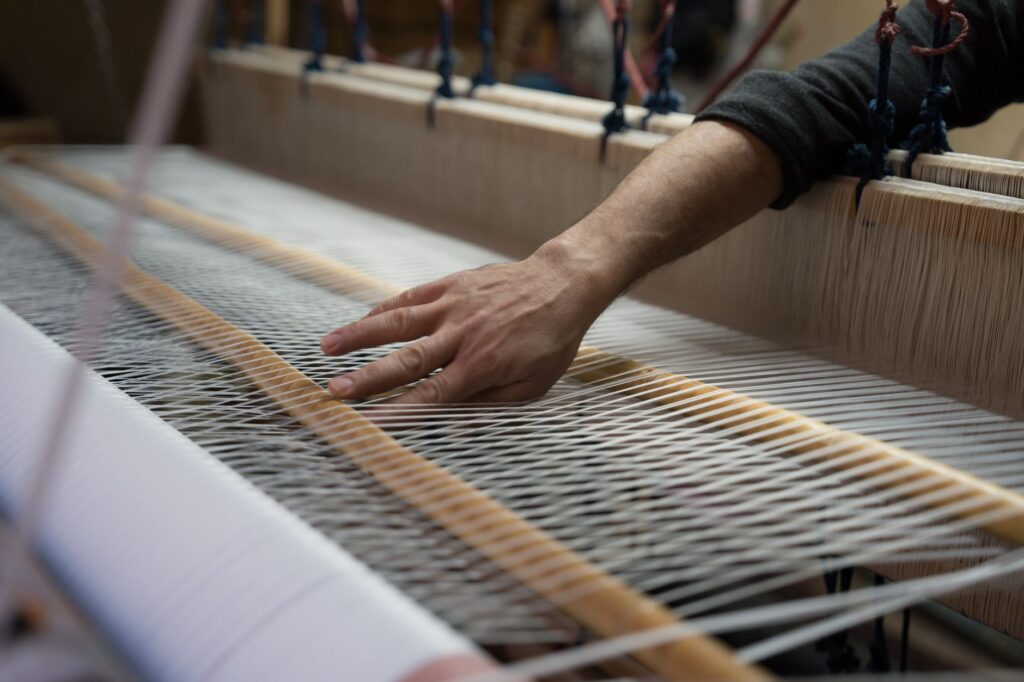
The descendants of the legendary canuts—the silk workers who led historic uprisings in the 19th century—continue to operate mechanical and manual looms with near-surgical precision. Far from constituting a mere relic of industrial heritage, these workshops face the 21st century by reinterpreting the codes of sustainable luxury. The raw material, mostly imported from select filatures, is transformed under the expert hands of artisans who master both the physics of tension and the traditional chemistry of open-vat dyeing.
The survival of this ancient craft is not a matter of chance, but the result of institutional patronage, collaborations with haute couture houses, and a generational handover driven by young designers who find in the loom a deeply contemporary medium of expression. Each woven piece here stands as a manifesto against planned obsolescence and mass textile production, an exercise in aesthetic resistance where every single thread tells a story of patience and technical rigor.
The Architecture of the Jacquard Loom and Its Hidden Mechanics
Understanding the magnitude of the work in Lyon requires a close examination of the mechanical ingenuity that revolutionized the global textile industry in the early 19th century. The Jacquard loom, the conceptual precursor to the punched cards used in early computing, enables the creation of complex damask and brocade designs through a matrix of connected cards that dictate which warp threads must be lifted in each pass.
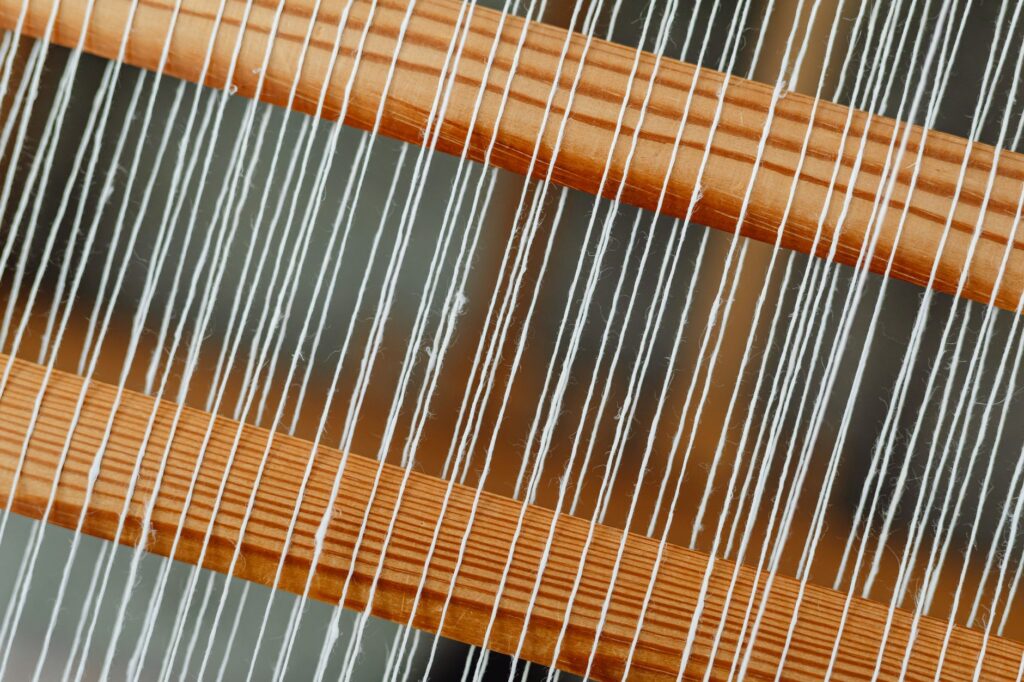
In the workshops of Old Lyon and Croix-Rousse, master assemblers perform maintenance tasks that border on fine watchmaking. A misalignment of millimeters in the iron rods or harness hooks can ruin meters of continuous fabric. Pearwood and cherrywood, traditionally used in the loom’s structure, absorb ambient humidity and require constant monitoring, turning the workshop into a living organism that breathes to the rhythm of Lyon’s climate.
The true mastery of the canut lies in listening to the creaking of the woodwork; the loom signals when the thread tension is on the verge of breaking the harmony of the weave.
This symbiosis between operator and machine contrasts sharply with the digital automation of modern factories. In these studios, the operator does not passively monitor a screen, but intervenes tactilely, adjusting counterweights and guiding the shuttle with gestures passed down through generations with barely any substantive modifications.
Chemistry and Color: The Laboratory of Historic Dyes
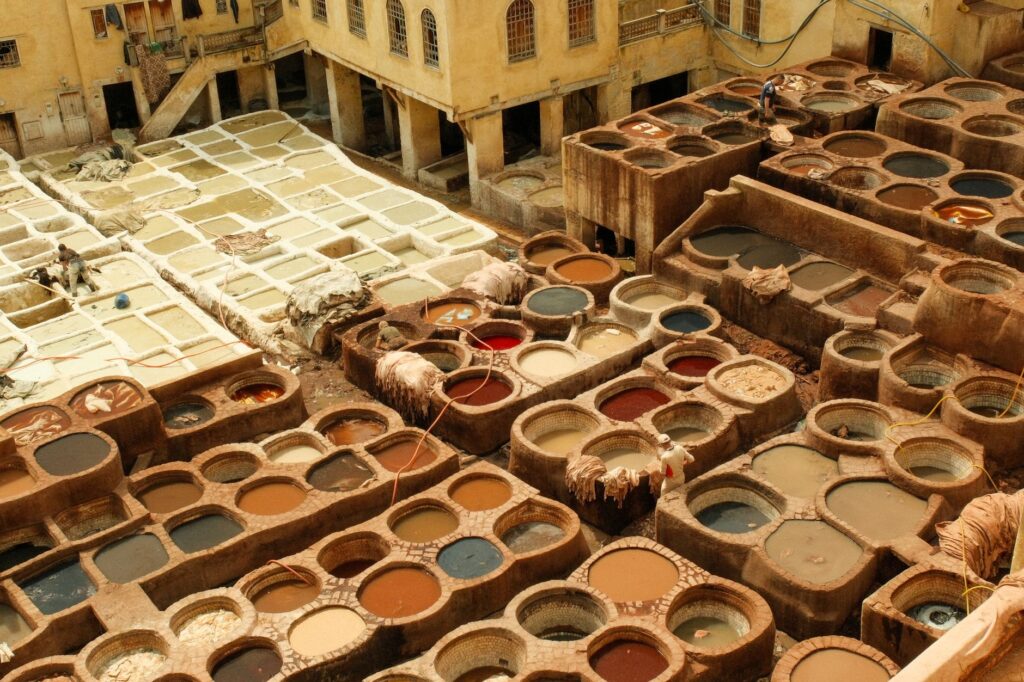
Before silk is embraced by the loom, it undergoes a process of chromatic alchemy that defines the visual identity of the final product. Lyon workshops have recovered formulas from the 18th and 19th centuries, using cochineal, natural indigo, weld, and madder roots to achieve deep, nuanced tones that synthetic dyes rarely replicate with the same warmth.
The degumming process, responsible for removing sericin—the natural protein coating the silk fiber—is carried out through controlled baths in soapy water at precise temperatures. This step is critical: if the temperature fluctuates, the fiber loses its characteristic luster or tensile strength. Master dyers operate with handwritten notebooks recording exact proportions, atmospheric conditions, and exposure times.
The result of this rigorous chromatic discipline is a palette oscillating between golden ochres, intense carmine reds, and muted moss greens, colors that respond subtly to changes in natural light. This obsessive attention to chemical detail ensures that textiles restored for European palaces and new interior design collections possess exceptional durability and unmistakable visual depth.
The Generational Handover: New Voices at the Loom
For decades, it was feared that the high-end weaving craft would become extinct along with the last masters trained in the post-war era. However, a new wave of creators trained in art and design schools in Paris, Milan, and Lyon has revitalized traditional workshops. These young professionals combine respect for tradition with an innovative approach to narrative design and the architectural applications of textiles.
Intensive apprenticeship programs, supported by private foundations and cultural ministries, ensure that the secrets of setting up complex warps—a process taking weeks before weaving the first centimeter—are not lost. These apprentices not only learn to replicate historical patterns for national heritage restoration, but also experiment with recycled fibers and conductive metals.
The integration of contemporary technology with traditional craftsmanship has led to surprising collaborations with interior architects and sculptors. Textiles are no longer limited to fashion or classical wall hangings; they become structural and acoustic elements in cutting-edge residential and corporate projects worldwide.
Sustainability and Traceability in the Age of Conscious Luxury
In a global market saturated with ephemeral products, Lyon’s silk industry stands as a bastion of radical sustainability. The traceability of every meter of fabric is guaranteed: from the sericulture farm to the final finishing workshop, every link in the supply chain complies with strict European environmental and labor regulations.
Unlike synthetic production derived from petroleum, natural silk is a biodegradable and renewable resource. Lyon workshops minimize waste by fully utilizing leftover threads to create fine leather goods and limited-edition accessories. This circular economic model proves that authentic luxury is inherently respectful of its environment.

True contemporary luxury lies in knowing the name of the person who tensioned every thread of our garment and in the certainty that its production has not compromised tomorrow’s resources.
Today’s consumers, increasingly critical of the ecological impact of their purchases, find in Lyon an ethical and durable alternative. Purchasing fabric from these workshops is equivalent to investing in heritage goods that, properly maintained, can transcend generations without losing aesthetic or mechanical properties.
Practical guide
How to get there: Lyon is served by Saint-Exupéry International Airport, connected to the city center via the Rhônexpress high-speed train in under thirty minutes. From Paris, high-speed TGV trains complete the journey to Lyon-Part-Dieu station in approximately two hours.
Best time to visit: Spring and autumn offer optimal temperatures for walking the steep slopes of Croix-Rousse without excessive tourist crowds.
Visitable workshops and reservations: Several historic workshops open their doors to the public through guided tours arranged via the Lyon Tourist Office. Advance booking weeks ahead is essential due to strictly limited capacities.
Recommended accommodation: Boutique hotels in rehabilitated historic buildings in Old Lyon and Croix-Rousse allow travelers to experience the original architectural atmosphere of the silk district.
Responsible shopping: Always look for the quality seal of local artisan workshops and avoid industrial imitations sold in generic souvenir shops.
Visual Epilogue: The Last Stitch at Dusk
As the sun descends behind the slate roofs of Croix-Rousse, golden rays penetrate obliquely through the large workshop windows, illuminating particles of silk dust floating in the air like a static constellation. In the quietest corner of the studio, an elderly master delicately adjusts the final knot of a night-blue warp. His hands, lined by years of labor yet steady as on day one, pause for an instant over the polished woodwork. In this final gesture, where centuries of memory intersect with the silent promise of tomorrow, the unbreakable essence of a city that made thread its most enduring monument is synthesized.