In the geographical heart of the North Atlantic lies a vast liquid expanse that defies traditional cartographic conventions: the Sargasso Sea. Unlike any other marine water body, this domain possesses no land boundaries or continental coasts; its borders are traced exclusively by dynamic oceanic currents that rotate clockwise, forming a gigantic swirl known as the North Atlantic Gyre. Far from being a blue desert as ancient sailor legends suggested, this pelagic ecosystem functions as a drifting floating forest, propelled by the force of trade winds and the Earth’s rotation.
Understanding the genesis and functioning of this sanctuary requires diving into physical oceanography on a planetary scale. Bounded by the Gulf Stream to the west, the North Atlantic Current to the north, the Canary Current to the east, and the North Equatorial Current to the south, the Sargasso Sea is characterized by unusual hydrological stability. Its waters, remarkably clear and warm, exhibit very low levels of dissolved nutrients, making this habitat a singular oligotrophic environment. However, amid this apparent scarcity, a dense biomass of holopelagic brown algae proliferates, floating freely without ever attaching to the seabed.
The Floating Architecture of the Genus Sargassum
The fundamental structural and biological element of this ecosystem is macroalgae of the genera Sargassum natans and Sargassum fluitans. Unlike benthic algae that grow rooted to the continental shelf, these species have evolved to complete their entire life cycle in the surface water column. Through small gas-filled vesicles known as aerocysts, sargassum fronds float to form dense mats, cords, and patches that can extend across square kilometers, creating a three-dimensional floating habitat in the middle of the open ocean.

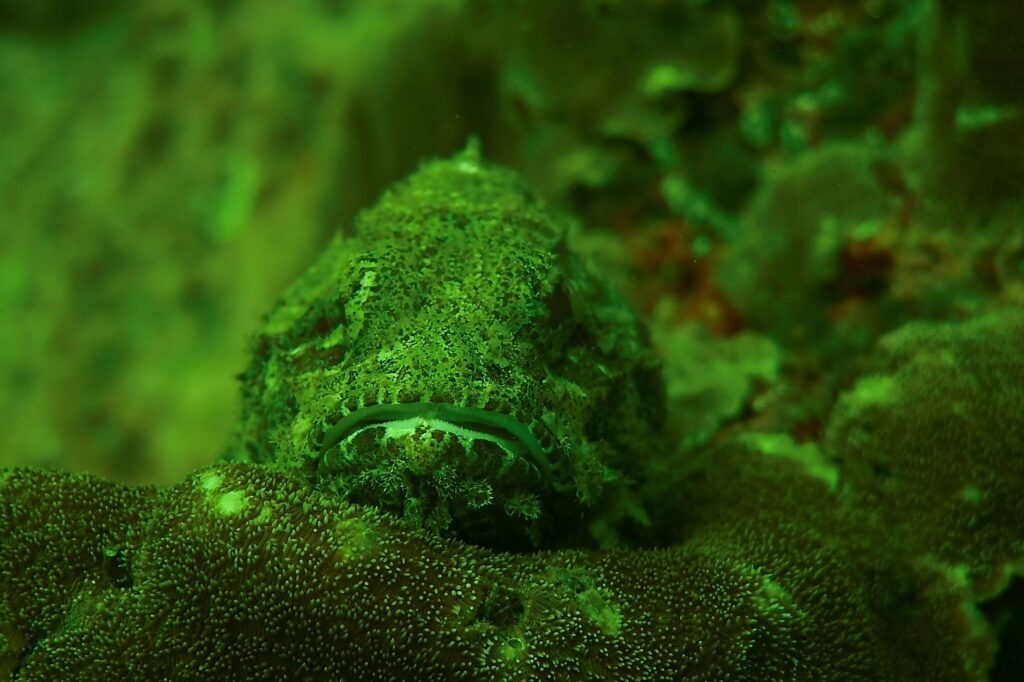
This complex plant architecture provides shelter, food, and breeding grounds for a multitude of highly specialized marine organisms. Endemic species such as the sargassum fish (Histrio histrio), swimming crabs, shrimp, and nudibranchs have developed exact color patterns and mimetic morphologies to blend seamlessly among the leaves and branches of the algae. For these animals, sargassum is not merely a home, but a floating fortress protecting them from pelagic predators in an environment where underwater visibility often exceeds thirty meters.
Nursery and Crossroads of Migratory Species
Beyond its resident inhabitants, the Sargasso Sea plays a critical and irreplaceable ecological role on an intercontinental scale by serving as a spawning ground and nursery for numerous migratory species of high ecological and commercial value. Among them stand out European eels (Anguilla anguilla) and American eels (Anguilla rostrata), whose adults undertake epic transoceanic migrations from European and North American rivers and estuaries to reproduce in the dark, warm depths of this sea.
Following fertilization, leptocephalus larvae emerge and are transported back toward continental coasts by the combined action of the Gulf Stream and prevailing winds, a journey that can last several years. Likewise, populations of juvenile sea turtles, especially the loggerhead turtle (Caretta caretta), use floating sargassum mats as natural nurseries where they find abundant food and thermal protection during their earliest and most vulnerable years of life on the high seas.
Oceanographic Dynamics and Extreme Transparency
The exceptional water clarity in the Sargasso Sea is another of its most notable oceanographic features. Due to the scarcity of phytoplankton in the surface layers and the steady sinking of organic particles toward abyssal depths, sunlight penetration reaches record depths, exceeding one hundred and fifty meters. This luminous clarity defines a very particular radiation regime that directly influences the biology of planktonic organisms and the local thermocline.
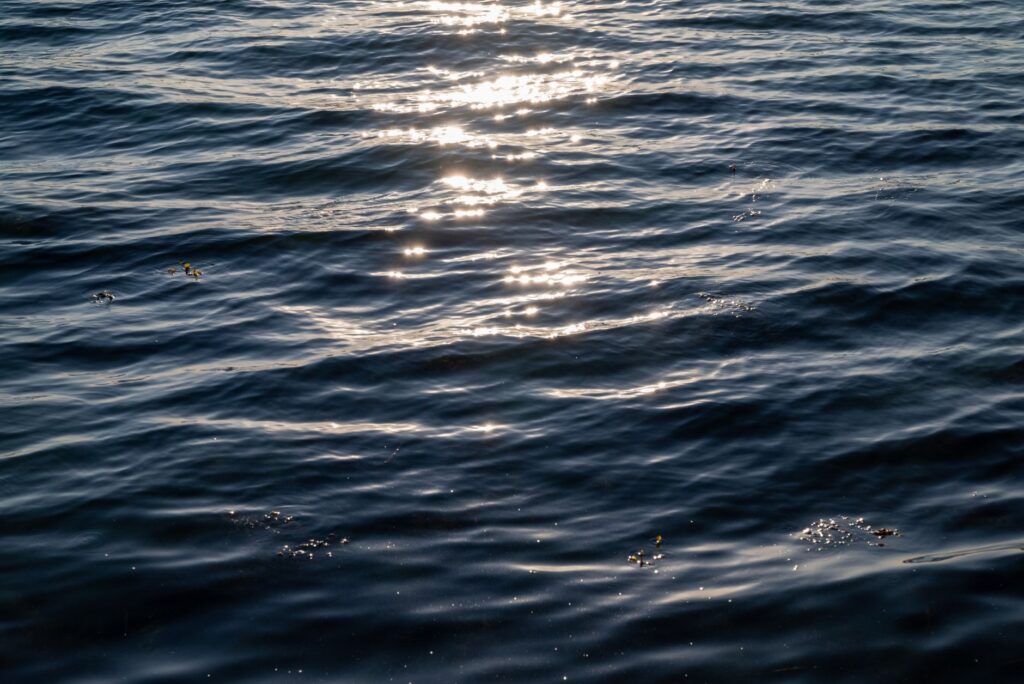
The thermal exchange between the atmosphere and the marine surface generates a seasonal mixing layer that regulates the stability of the gyre. Nevertheless, this dynamic balance faces growing pressures derived from global climate change. The warming of North Atlantic surface waters and ocean acidification subtly alter the metabolic rates of macroalgae and modify the routes of currents confining the system, threatening the integrity of the oceanic gyre in the long term.
The Sargasso Sea is not an isolated geographical accident, but the invisible engine connecting the biology of European rivers with the abyssal currents of the Atlantic.
Anthropogenic Threats: Plastics, Pollution, and Overfishing
Despite its apparent remoteness from major coastal urban centers, the Sargasso Sea is not immune to the human footprint. Due to the natural convergence of surface currents forming the oceanic gyre, this space acts as an ecological trap for floating debris dragged from thousands of kilometers away. The phenomenon is especially visible in the accumulation of microplastics and large volumes of abandoned fishing gear, commonly known as ghost nets.
These accumulations of synthetic waste not only degrade the quality of the pelagic habitat, but also cause accidental ingestion of plastic fragments by seabirds, fish, and turtles. Added to this are the pressures of industrial fishing of large pelagics on the periphery of the gyre and massive changes in the arrival of sargassum biomass toward the coasts of the Caribbean and the Gulf of Mexico, a phenomenon driven by agricultural nutrient excess and global warming that alters both the coastline and the open sea balance.
International Governance and the Hamilton Initiative
Because the Sargasso Sea lies in international waters—outside the exclusive jurisdiction of any coastal State—its legal protection has historically been complex and fragmented. To address this legal vacuum, the Hamilton Declaration was promoted, an intergovernmental agreement signed by several countries seeking to formally recognize the exceptional ecological importance of the area and promote its conservation through international cooperation.
Scientific and conservationist organizations work jointly to monitor the health of the ecosystem, assess resident species populations, and advocate before the International Seabed Authority and the International Maritime Organization to regulate maritime traffic, deep-sea bottom trawling, and pollutant dumping. The protection of this open sea represents a pioneering testing ground for the implementation of marine conservation tools on the high seas.
Practical guide
How to get there: Being an open sea in the North Atlantic, there are no regular commercial tourist routes or docking ports within it. Scientific expeditions and nature documentaries usually set sail from Bermuda, situated on the western margin of the oceanic gyre.
Best time to visit: The months between May and October offer the most stable and calm weather conditions for offshore navigation, with lower incidence of tropical storms and hurricanes in the North Atlantic.
Navigation requirements: Any maritime expedition to the Sargasso Sea requires oceanographic vessels equipped with extended autonomy, international marine research permits, and strict safety protocols for deep-water navigation.
Responsible observation: Approaching sargassum mats must be done with low acoustic impact engines to avoid altering resident fauna and prevent damage to the fragile floating structure of the macroalgae.
Interpretation centers: The Bermuda Institute of Ocean Sciences (BIOS) offers educational and outreach programs on the oceanography of the North Atlantic Gyre and sargassum biology.

Recommended equipment: High-sensitivity underwater imaging systems for natural light conditions at the surface, autonomous pelagic sampling equipment, and technical navigation clothing resistant to oceanic weather.
Active conservation: Supporting the scientific initiatives of the Sargasso Sea Commission and avoiding single-use plastics on land are essential measures to mitigate global impact on this unique ecosystem.
Beneath the immensity of the open sky and rocked by the steady rhythm of ancient currents, the Sargasso Sea maintains its fragile equilibrium. In its floating waters, a silent story of extreme adaptation and marine resilience is written, reminding us that the health of the planet’s oceans depends as much on the vitality of its coasts as on the protection of its most remote domains.