
The vastness of the Patagonian territory is not merely a geographical accident; it constitutes a climatic and spatial condition that has dictated the rules of human mobility since the nineteenth century. In this remote corner of the planet, where the western wind blows with unrelenting persistence and the steppe stretches toward the horizon in a monochrome palette of coirón grass and rounded pebbles, overcoming distances demanded radical engineering solutions. Conventional terrestrial transport—limited for decades by muddy dirt tracks and the complete absence of paved road infrastructure—turned railway projects into the sole logistical safeguard capable of economically and socially integrating southern towns with the nation’s political center.
Among the boldest initiatives of this steel odyssey stands the branch line linking the Atlantic coast with the Andean cordillera across the Southern Line of Río Negro, a monumental layout penetrating the domains of the central plateau. Originally conceived under the National Territories Development Act, this rail line did not respond to the purely extractive commercial logic that characterized other South American railways, but rather to a strict geopolitical directive of sovereignty and settlement. Every single wooden tie placed upon the stony ground represented an act of state assertion in a region where solitude was synonymous with geopolitical vulnerability.
The Geography of Wind and Steppe: The Orographic Challenge
Constructing a railway track across the Patagonian plateau subjects both machinery and human labor to exceptional thermal and mechanical stress. Unlike mountainous routes where the primary obstacle is the verticality of peaks, in the steppe the enemy is infinite horizontality combined with extreme thermal amplitude. The engineers who surveyed these terrains at the beginning of the twentieth century faced winters with temperatures dropping to twenty-five degrees below zero, freezing locomotive lubricants and transforming boiler water into a commodity as critical as fuel itself.
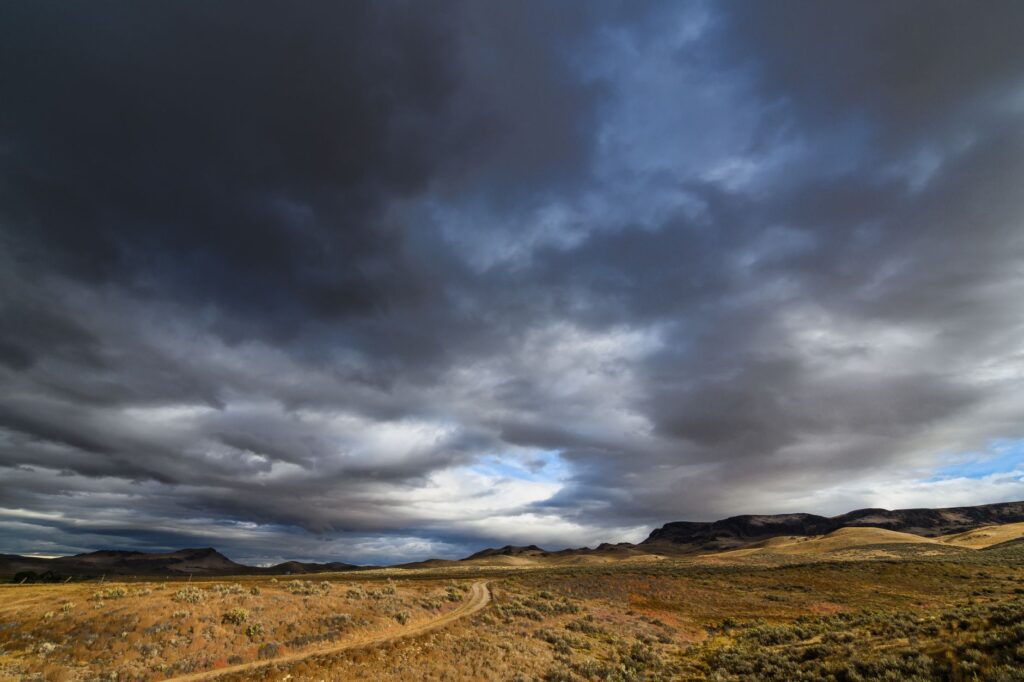
The regime of Patagonian winds, which frequently exceeds one hundred kilometers per hour in cross gusts, forced a complete redesign of traditional track profiling and ballast standards. Train formations had to incorporate additional ballast in their cabooses to prevent derailments caused by the sail effect. Furthermore, chronic water scarcity across the plateau required the construction of a complementary network of cisterns, Australian tanks, and minor aqueducts along the entire route, configuring a life-support system without which railway operations would have been technically unviable.
High Plateau Engineering: Bridges, Cuttings, and Embankments
Overcoming the undulating relief of Patagonia required meticulous execution of minor and major engineering works. Although the steppe appears to be a uniform plain, it is crisscrossed by deep canyons carved by ancient glacial torrents and basaltic mesas acting as natural fortresses. The British and Argentine engineers in charge of the layouts had to project removable metal viaducts and dry-stone embankments capable of resisting wind erosion and the sudden seasonal floods of intermittent rivers.
Cuttings excavated into solid rock through the intensive use of dynamite and manual labor formed the critical points of advance. In these sections, snow accumulation during harsh southern winters blocked longitudinal cuts, requiring front snowplow wedges mounted on high-power locomotives. The infrastructure not only had to support the weight of increasingly heavy formations but also ensure the thermal stability of the soil, characterized by freeze-thaw cycles that constantly threatened to fracture the base of white quebracho railway ties.
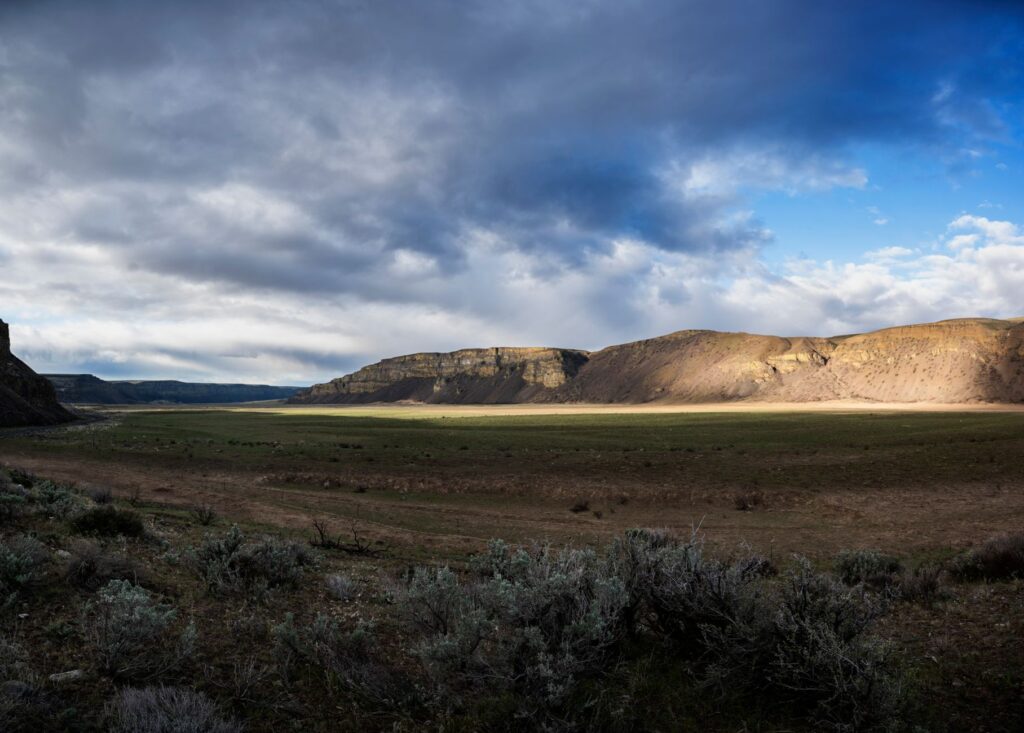
The railway line in Patagonia is not a simple transport route; it is the backbone that imposed civilization and steadfastness upon the hostile immensity of the steppe.
Supply Logistics and the Lifeline of Isolated Towns
Throughout most of the twentieth century, the train was the only reliable link between the small settlements of the plateau—such as Maquinchao, Jacobacci, or Clemente Onelli—and overseas ports. All vital provisioning depended on the regular formation: from flour and medicines to building materials and mineral coal. In the opposite direction, the railway fulfilled the crucial economic function of evacuating the region’s sheep production, transporting thousands of tons of wool toward export markets in Buenos Aires and Europe.
This logistical dependency generated a very particular railway culture, where the train schedule structured the social, commercial, and administrative life of each community. Stations functioned as multipurpose nodes where postal mail, mainland news, and commercial trade converged. The punctuality of the service, even under the worst weather conditions, became a symbol of institutional reliability that consolidated the Patagonian inhabitants’ sense of belonging against chronic isolation.
The Era of Broad Gauge and Regional Integration
The technical debate surrounding track gauge profoundly marked the history of southern transport. While the main coastal branches adopted broad gauge, the financial and orographic conditions of Patagonia prompted the use of narrow gauge in many sections to reduce initial excavation and curvature costs. However, this gauge fragmentation forced complex transshipment systems at convergence points with national trunk networks, slowing down the flow of goods and increasing overall operational costs.
The modernization of the tractive fleet, which occurred in the middle of the last century with the incorporation of diesel-electric locomotives, doubled cargo capacities and overcame the steep grades of the pre-cordillera with greater solvency. However, the subsequent deregulation of motor transport and the progressive paving of national highways initiated a process of operational decline that threatened the economic sustainability of these historic tracks.

Industrial Heritage and Railway Archaeology in the Steppe
Today, the remaining infrastructure of the Patagonian railway system is cataloged by industrial heritage specialists as an open-air museum of continental proportions. Period mechanical workshops, old locomotive sheds built with exposed brick and slate tiles, and riveted iron bridges constitute material testimonies of an unrepeatable technological epic. Preserving these elements involves not only architectural restoration work but also the safeguarding of the collective memory of the workers who tamed the cold desert.
Provincial and national agencies have promoted various initiatives aimed at rescuing emblematic sections for cultural tourism, reconverting traditional cargo logistics into heritage travel experiences. These historical formations now operate as vectors of local economic development, attracting travelers specialized in technical history and the extreme landscapes of the American south, without losing rigor in the preservation of their natural environment.
Practical guide
How to get there: Access to the Southern Line region is primarily achieved from San Antonio Oeste or Viedma in the east, or from San Carlos de Bariloche in the cordillera, using National Route 23 as the main road axis running parallel to the railway line.

When to travel: The months of the southern spring and summer (from November to March) offer the most benign weather conditions, with lower incidence of gale-force winds and reduced risk of road closures due to heavy snowfalls.
Transport logistics: Exploring the area independently requires a vehicle in optimal mechanical condition, preferably with four-wheel drive, given that many secondary roads consist of consolidated gravel.
Accommodation: Hotel supply is concentrated in major towns such as Ingeniero Jacobacci and Maquinchao, dominated by rural guesthouses and tourist estancias offering regional gastronomy based on Patagonian lamb.
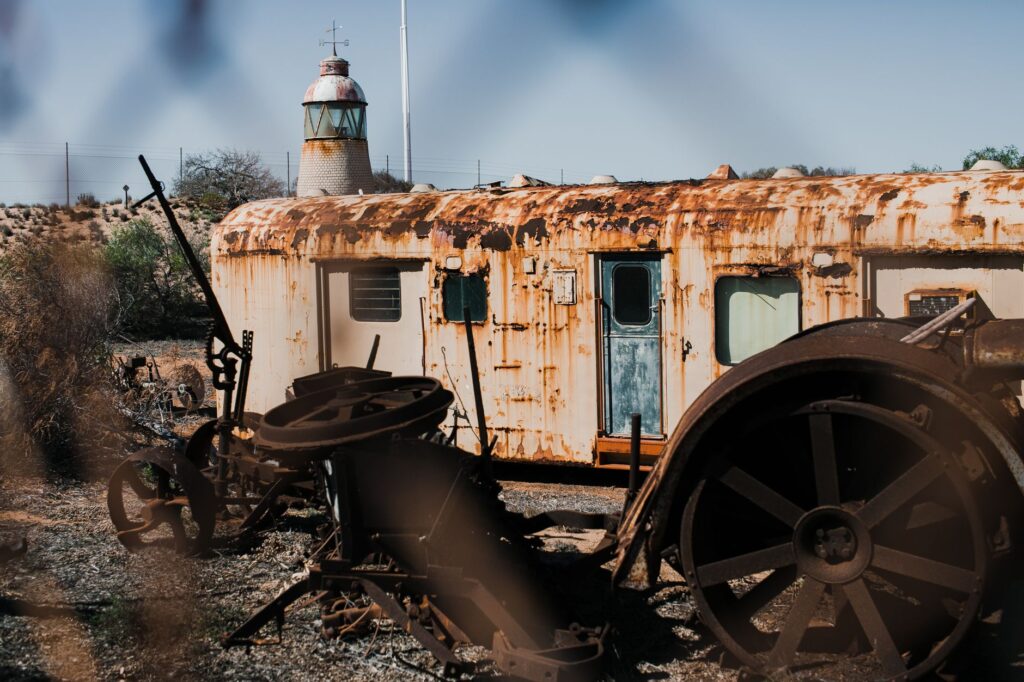
Connectivity: Mobile phone and internet signal is extremely limited or nonexistent outside urban centers; downloading offline maps and carrying satellite communication systems for emergencies on remote routes is highly recommended.
Environmental responsibility: The Patagonian steppe is a fragile, semi-arid ecosystem; visitors must never litter, avoid opening unauthorized tracks, and exercise extreme caution with fire given the high risk of forest and grassland fires.
The enduring value of these steel routes lies in their capacity to remind us that conquering physical space required a perfect symbiosis between mechanical science and human resilience. When the silhouette of a historic formation emerges among the golden ripples of coirón grass, silhouetted against the vastness of the southern sky, the persistent victory of ingenuity over oblivion is fully realized.