
The island of Lanzarote cannot be fully grasped merely by gazing at the viewpoints designed by César Manrique; it must be deciphered through its palate, an archive of survival where the subterranean fire of the 18th-century eruptions ultimately forged a pantry unlike any other on Earth. At the eastern edge of the Canary archipelago, where the trade winds blow with relentless persistence over basaltic lava flows, agriculture is not an ordinary cultivation technique, but an astonishing geological feat that defies international agronomic logic.
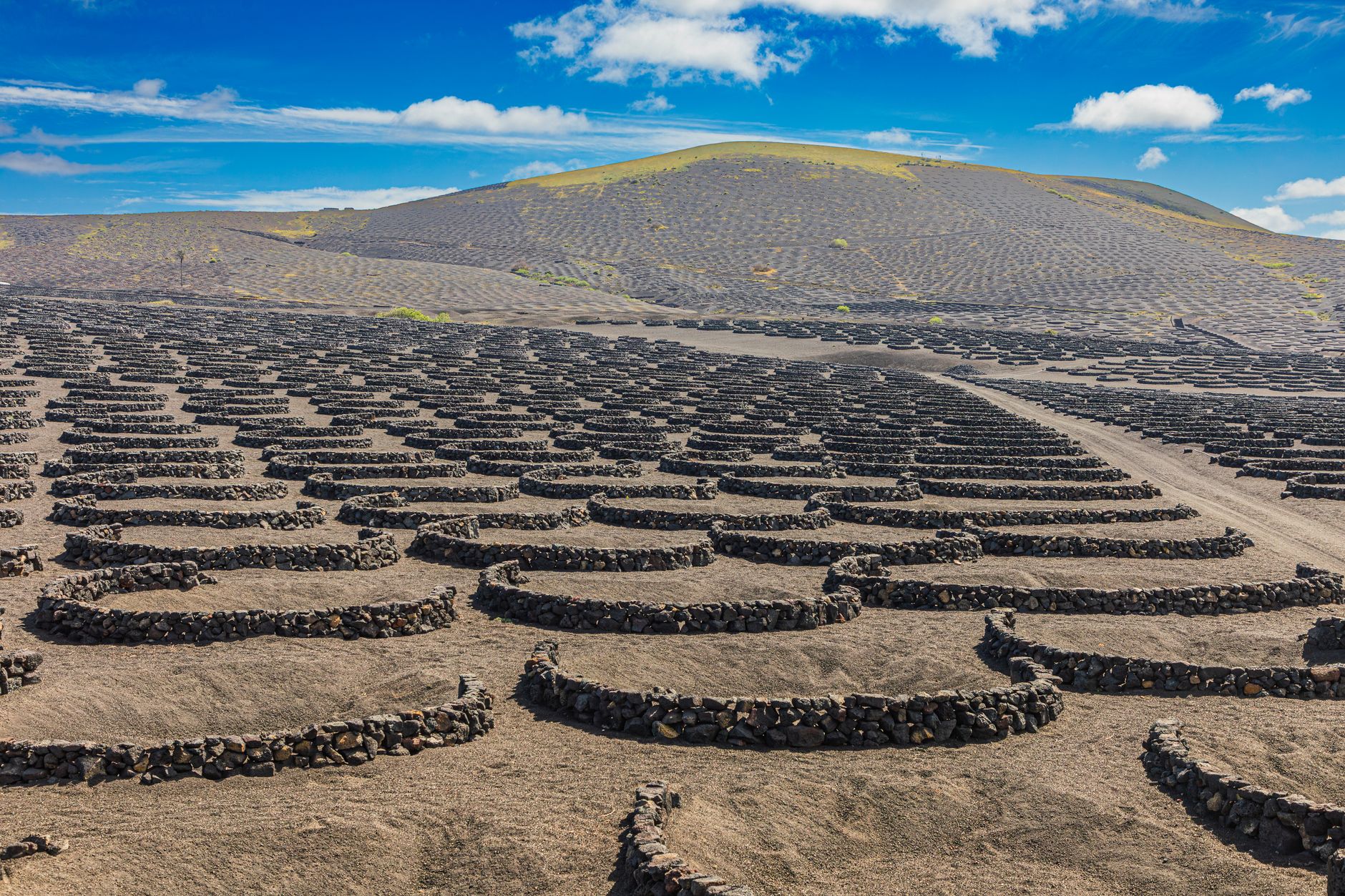
While contemporary travelers frequently seek the immediacy of standardized tourist circuits, true insular identity hides within the folds of Arrecife’s main market and the circular abyss of La Geria. Here, the sterile, black lapilli soil—locally known as picón—retains scarce nocturnal moisture and returns it drop by drop to the roots of centenarian vines that thrive in solitude, sheltered by semicircular dry-stone walls that map out a lunar landscape of immense ethnographic value.
The Architecture of Provision in Arrecife
The Morning Pulse in the Capital Halls
The day begins long before the sun warms the waters of the Charco de San Ginés. In the vicinity of Arrecife’s food market, wholesalers unload crates of fresh fish caught in the fragile maritime borderlands between Africa and the Canaries. White seabream, parrotfish, wreckfish, and amberjack parade past the stalls with the precision of a biological inventory. The vendors, heirs to generations of fishermen and farmers, wield their knives with the same ease they use to explain the qualities of sweet potatoes grown beneath the golden sand swept inland from the Sahara.
This space of everyday commerce functions as the island’s circulatory system. There is no trace of tourist artifice in its aisles; the white-tiled countertops welcome products from a volcanic orography that grants little quarter. Ancient potatoes, wrinkled and simmered with care in seawater, share space with artisanal goat cheeses from the valleys of Femés and Guatiza, aged with paprika or wrapped in fig leaves.

The Larder of the Islanders
Traditional Lanzarote cuisine is anchored in scarcity and ingenuity. Lacking timber to build large curing structures, fishermen air-dry their catch in the sun and salt it using production from the Janubio salt flats, the island’s oldest active operation. At the market, spice stalls release aromas of cumin, cilantro, and paprika, indispensable ingredients for crafting the mojos that accompany both local meats and rockfish.
Local farmers continue arriving every morning to offer surpluses of red onions, dry-farmed tomatoes, and tiny lentils harvested in the interior valleys. These seemingly humble ingredients possess an exceptional concentration of flavor driven by water stress and the mineral richness of the volcanic soil—a factor that chefs of the new Atlantic cuisine are now championing to position Lanzarote as a vanguard gastronomic destination.
The Liturgy of La Geria and the Miracle of Malvasía
Hoya, Zoco, and Volcanic Ash
A few short kilometers inland, leaving the coast behind, the valley of La Geria unfolds. The sight is breathtaking: thousands of pits excavated by hand into the black blanket of volcanic ash, featuring a solitary grapevine at the bottom and a semicircular stone wall erected against the trade winds. This layout is not driven by aesthetics, but by strict survival necessity. Each vine must capture the humid ocean breeze while shielding itself from turbulence that would desiccate its leaves within hours.

The human effort behind every bottle of wine is titanic. All agricultural labor is performed manually, without heavy machinery capable of navigating the fragility of the terrain. Viticulturists walk carefully across the picón, pruning and harvesting under the merciless summer sun. This intimate relationship between man, rock, and vine has given birth to volcanic malvasía, a wine of vibrant acidity, mineral notes, and an unmistakable glycerol profile that already charmed British navigators in past centuries.
Centenarian Wineries and Geological Resistance
The region’s wineries, some housed in traditional farmsteads with masonry walls and pine woodwork, open their doors to visitors to explain the winemaking process. Here, dry whites, semi-sweet wines, sweet reserves, and singular Listán Negro reds are crafted, surprising drinkers with their lightness and volcanic freshness. Local winemakers champion minimal intervention in the cellar, allowing the basaltic terroir to speak directly through the ferment.
Wine tourism in Lanzarote has evolved toward a respectful model that prioritizes the dissemination of agricultural heritage over mass consumption. Walking along authorized trails that skirt the estates reveals the true scale of a cultural landscape designated as a Protected Natural Area, ensuring the survival of an ancient farming model currently threatened by land-use pressures.
Rockfish and the Secrets of the Swell
The Rugged Coastline of Órzola and El Golfo
A culinary journey across the island demands a descent to the fishing ports where the Atlantic Ocean displays its wildest face. In towns like Órzola to the north or El Golfo to the west, local eateries receive their catch directly from artisanal boats. Canarian sancocho, a dish of salted fish—typically wreckfish or meagre—served with potatoes, sweet potato, and green mojo, transforms here into a Sunday ritual that gathers families around the table.

Fishing in Lanzarote requires an encyclopedic knowledge of tides and submerged lava shelves. Local gatherers descend vertiginous cliffs in search of limpets and sea snails, species clinging to wave-lashed rocks. These seafood products, consumed simply with drops of lemon or lightly seared with garlic, condense the saline essence of the archipelago.
The Alchemy of Gofio and Salt
No exploration of the island’s pantry would be complete without mentioning gofio, toasted cereal flour—primarily wheat and maize—which forms the foundational food of the Canary Islanders. Once considered a survival resource during eras of scarcity, it is now reinvented by pastry chefs and cooks who incorporate it into emulsions, ice creams, and fine doughs, adding an unmistakable toasted, earthy depth.
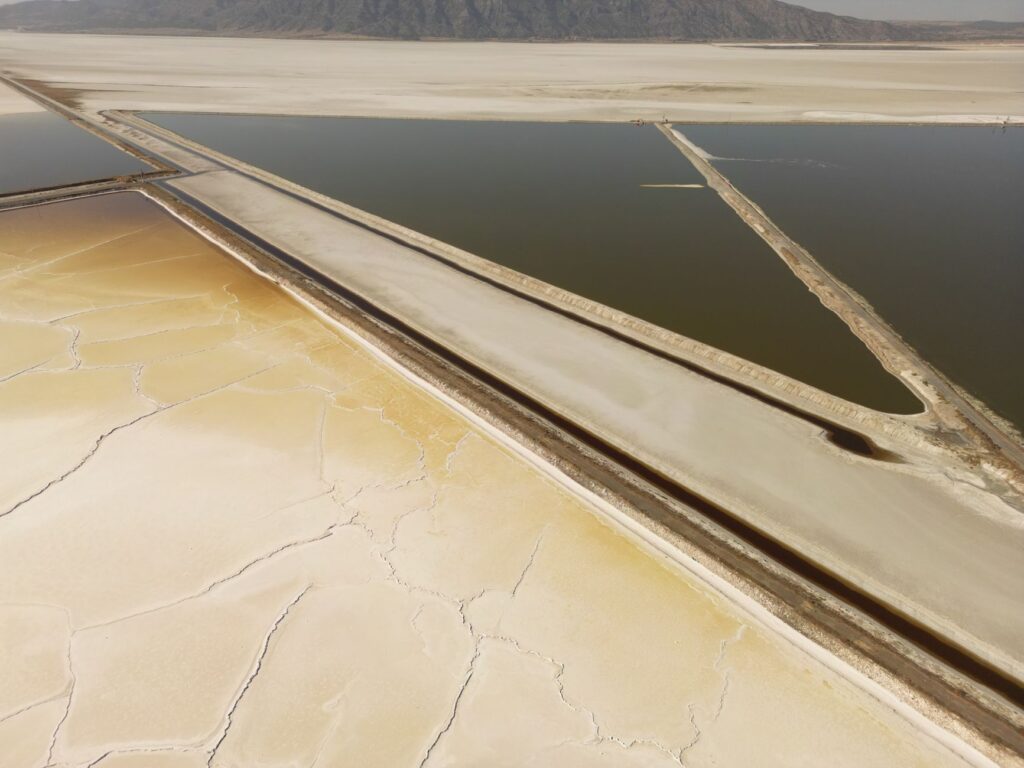
Salt, meanwhile, is not merely a condiment in Lanzarote, but a structural element. At the Janubio salt flats, seawater evaporates slowly under the sun through a traditional crystallization system set in clay pans. The result is crunchy flakes and fleur de sel that chefs use to finish fish and meat dishes, enhancing the raw ingredients without masking them.
Lanzarote’s cuisine does not shout; it whispers from the bottom of a crater, reminding travelers that the purest flavor is often born from extreme resistance against the elements.
Practical guide
When to go: Spring months (April to June) and autumn (September to November) offer mild temperatures and fewer visitors, ideal for exploring inland trails and wineries without crowds.
How to get there: Lanzarote Airport (ACE), located in San Bartolomé, connects the island with major European capitals and mainland Spanish airports through daily scheduled flights.
Getting around: The best option for exploring the agricultural interior and local markets is renting a vehicle at the airport. Main roads are in excellent condition, though caution is advised on dirt tracks leading to certain wine estates.
Recommended accommodation: Opt for boutique hotels integrated into restored historic farmsteads in municipalities like Teguise or Haría, where traditional architecture merges with contemporary comfort.
Essential bookings: Tastings at historical wineries in La Geria require advance online booking due to the limited capacity of their barrel rooms and volcanic courtyards.
Local etiquette: Always respect guidelines on private agricultural estates; do not step on dry-stone walls or walk on the picón outside designated paths to prevent soil erosion.
What to pack: Comfortable footwear with grippy soles for walking on volcanic terrain, broad-spectrum sunscreen, and windproof clothing, as the Atlantic breeze can turn brisk by late afternoon.
The Final Heartbeat of the Volcanic Landscape
At dusk, when the golden light of the setting sun ignites the crests of the volcanoes and paints the Famara sand dunes violet, the island reveals its most intimate and contemplative dimension. Sitting before the Atlantic horizon with a glass of volcanic malvasía in hand is to understand that travel is not measured in kilometers traversed, but in the capacity to attune oneself to the geological memory of a territory. In that complicit silence, broken only by the distant murmur of waves against basalt, Lanzarote’s cuisine ceases to be a mere repertoire of flavors and becomes an indelible lesson in human dignity and rootedness.