
The geography of urgency and the territory of stillness
There is an invisible geography traced by Madrileños every Friday afternoon, a silent exodus toward the margins where the asphalt yields to limestone, water retained in centuries-old reservoirs, and forests that still preserve the memory of transhumant shepherds. Far from the noise of Gran Vía and metropolitan urgency, the Community of Madrid and its bordering provinces harbor a mosaic of regions that defy the idea that disconnecting requires crossing national borders or undertaking long high-speed journeys.
This report does not propose a guide of clichés or a catalog of rural terraces aimed at express weekend tourism. It is an exercise in territorial and landscape archaeology to rediscover enclaves where time is measured by the rhythm of the seasons, vernacular architecture resists abandonment, and gastronomy maintains an indissoluble pact with local produce. From the clay cliffs of the southeast to the granitic peaks of the Sierra de Guadarrama, each corner selected here responds to a clear thesis: the true wealth of a capital lies in the diversity and fragility of its hinterland.
The Northern Sierra: dry-stone architecture and high-altitude forests
The first great backdrop of this interior journey rises in the Northern Sierra, a territory where dry-stone architecture defines both livestock corrals and farm boundaries that have remained unaltered for centuries. Villages such as Rascafría or Patones of Arriba—the latter saved from depopulation thanks to the protection of its singular dark slate settlement—operate as laboratories of cultural resistance against global homogenization.
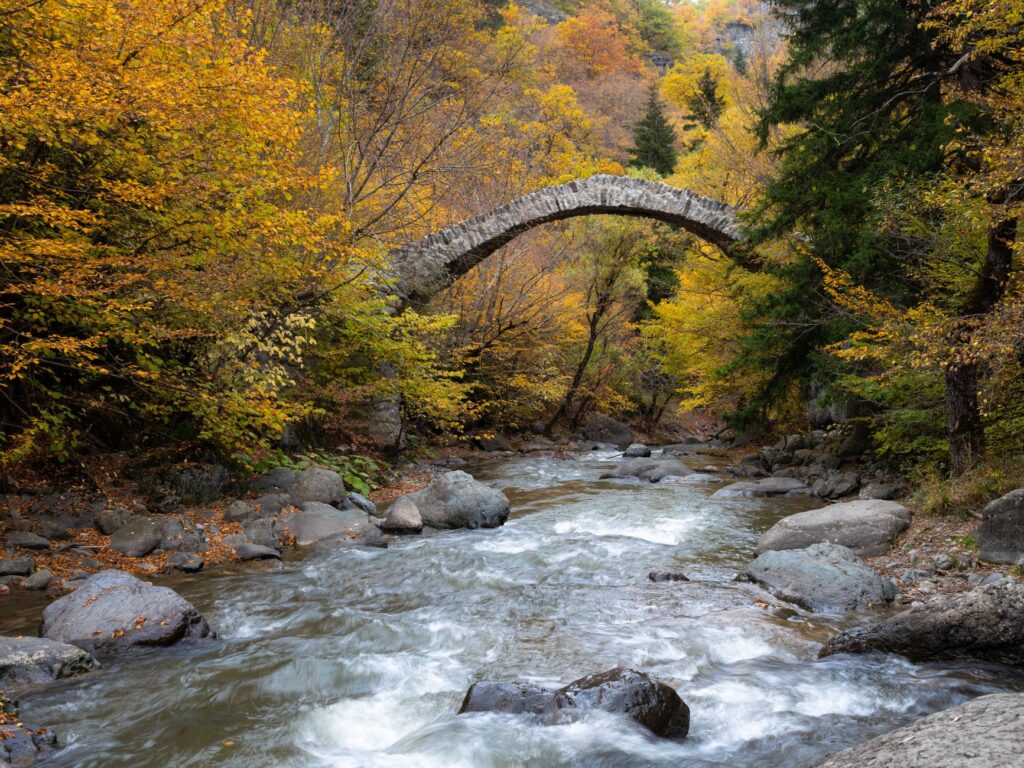
Walking along these paths requires understanding the impact of water on the historical economy of the area. The Lozoya Valley, crossed by the river of the same name, not only hosts the imposing Carthusian monastery that gives it name, but also a network of medieval irrigation channels that continue to water subsistence gardens. Here, the traveler finds a high-mountain ecosystem where Scots pine and Pyrenean oak compete with alpine pastures, creating a landscape of distinctly Central European accent just ninety kilometers from zero point.
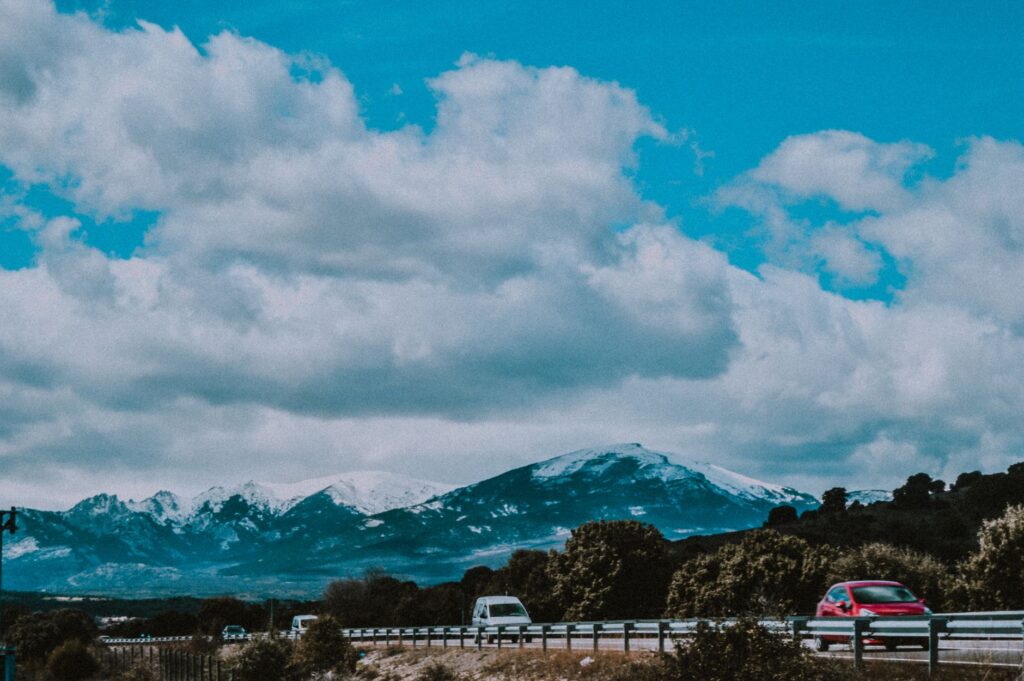
The landscape is not a mere backdrop for rest, but a living archive where every stone wall tells a story of collective survival.
Human intervention in these landscapes has historically been respectful of the topography, allowing native fauna—from the cinereous vulture to the Spanish ibex—to reclaim spaces at higher elevations. It is no coincidence that botanists and naturalists of the 19th century chose these valleys for their scientific expeditions, laying the foundations for an environmental sensitivity that today proves more urgent than ever.
The clayey Southeast: cliffs, steppes, and the fluvial pulse of the Tajo
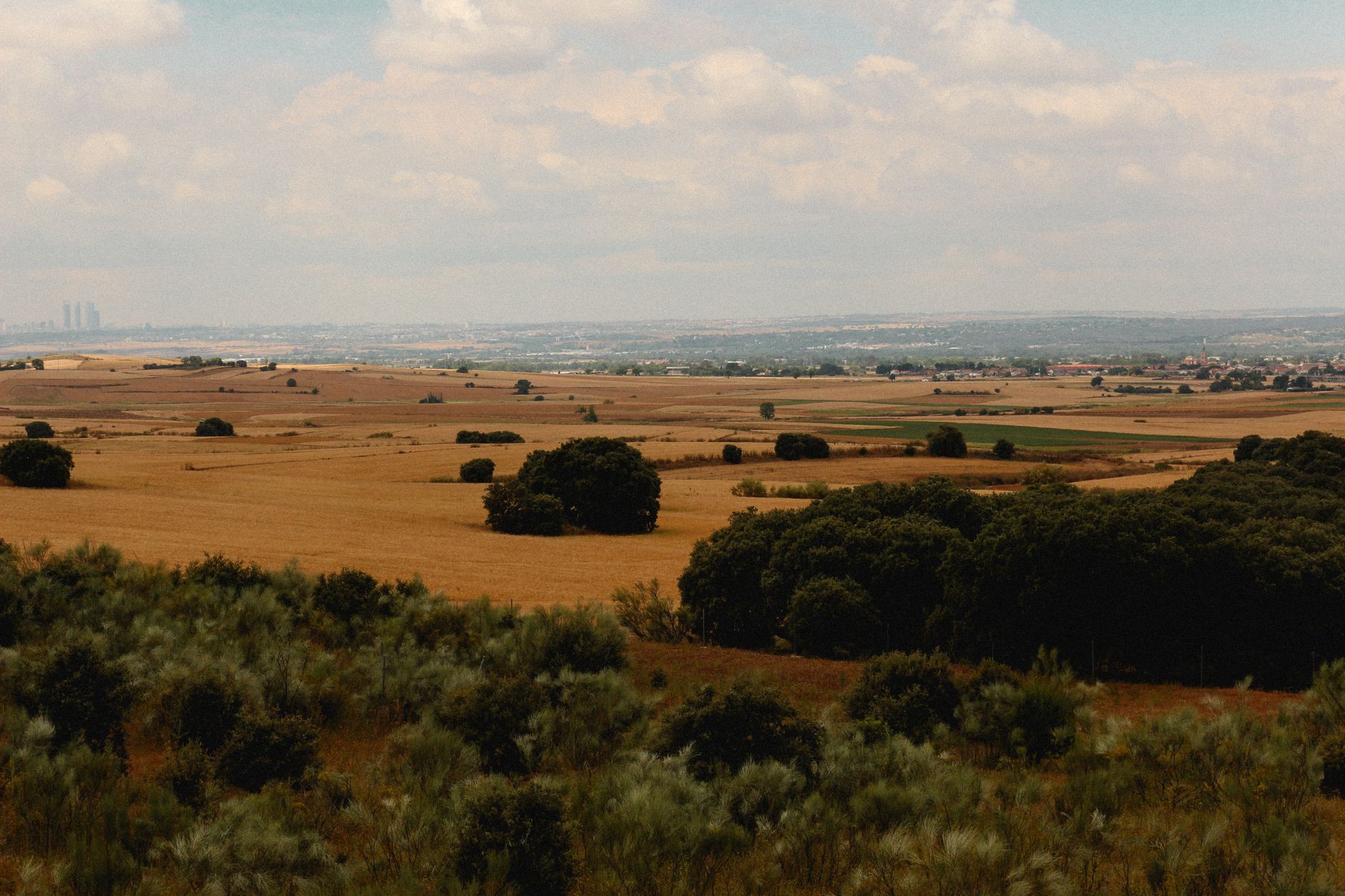
If the Northern Sierra offers gloom, humidity, and verticality, the Madrid southeast proposes a completely opposite chromatic palette: ochres, gypsum, clay ravines, and cereal plains that recall the purest Meseta steppes. Around Aranjuez, Chinchón, and the cliffs of Rivas-Vaciamadrid, the landscape opens with a luminous breadth that contrasts radically with the dead end of large urban avenues.
This sector of the territory stands out for its rich ornithological biodiversity. The Southeast Regional Park, shaped by the confluence of the Jarama and Tajo rivers, functions as a migratory highway for thousands of waterbirds that find in its artificial lagoons—former regenerated gravel pits—a sanctuary for nesting. Exploring these paths by bike or on foot allows one to understand the agricultural transformation of a region that supplied the markets of the Court for centuries.
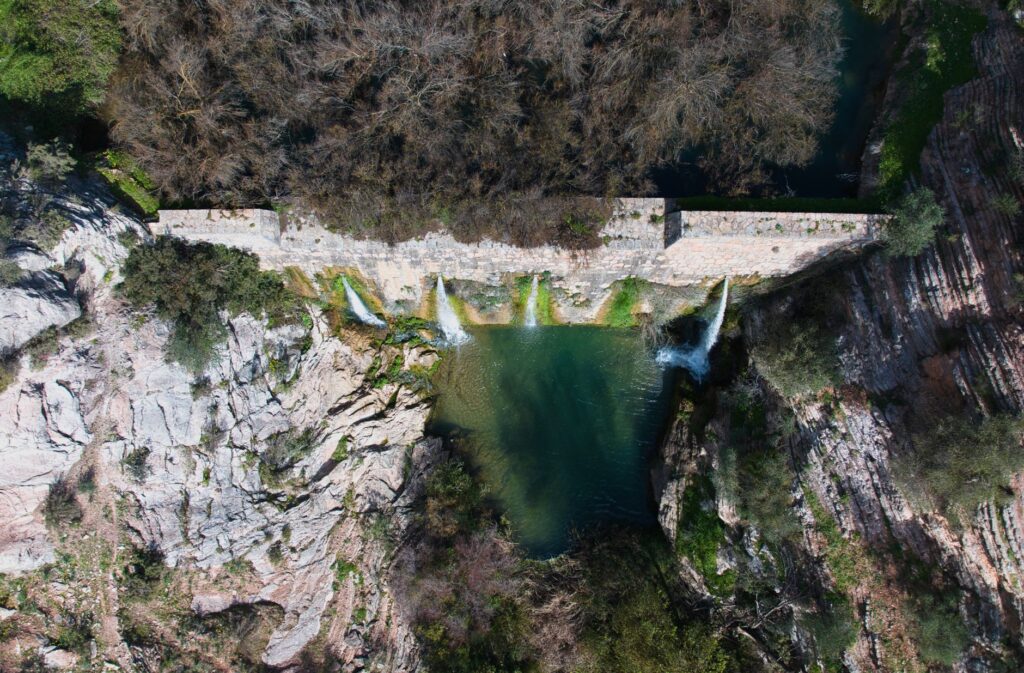
The historical gardens of Aranjuez, declared a Cultural Landscape by UNESCO, are the maximum exponent of this symbiosis between political power, hydraulic engineering, and agri-food production. Its groves, designed under Renaissance and Baroque canons, shelter centuries-old tree species that form plant vaults of extraordinary aesthetic beauty, especially during autumn and spring.
Underground heritage and century-old wineries
Beneath the surface of towns like Colmenar de Oreja or Villarejo de Salvanés lies another geography, excavated with pickaxe and flashlight: underground cellars, aging caves, and grain silos that sink their roots into the 17th and 18th centuries. These labyrinths of tufa and clay maintain a constant temperature throughout the year, becoming the perfect refuge for the production and aging of wines that recover almost extinct native varieties.
The wine culture of the region, integrated into the Vinos de Madrid Denomination of Origin, is experiencing a moment of profound critical review. Small producers are recovering old bush-trained vines of Malvar and Tinto Fino, betting on minimal intervention and respect for the terroir against industrial standardization. Visiting these family wineries allows for a direct dialogue with farmers who defend the landscape through their vines.
Military and religious architectural heritage also dots these secondary routes. Castles such as Villarejo de Salvanés, watchtowers of Arab origin, and disamortized convents configure an itinerary where history is not contemplated behind museum glass, but touched in ashlar stones eroded by the Castilian wind and sun.
La Sagra and the Toledan horizons: transition and memory
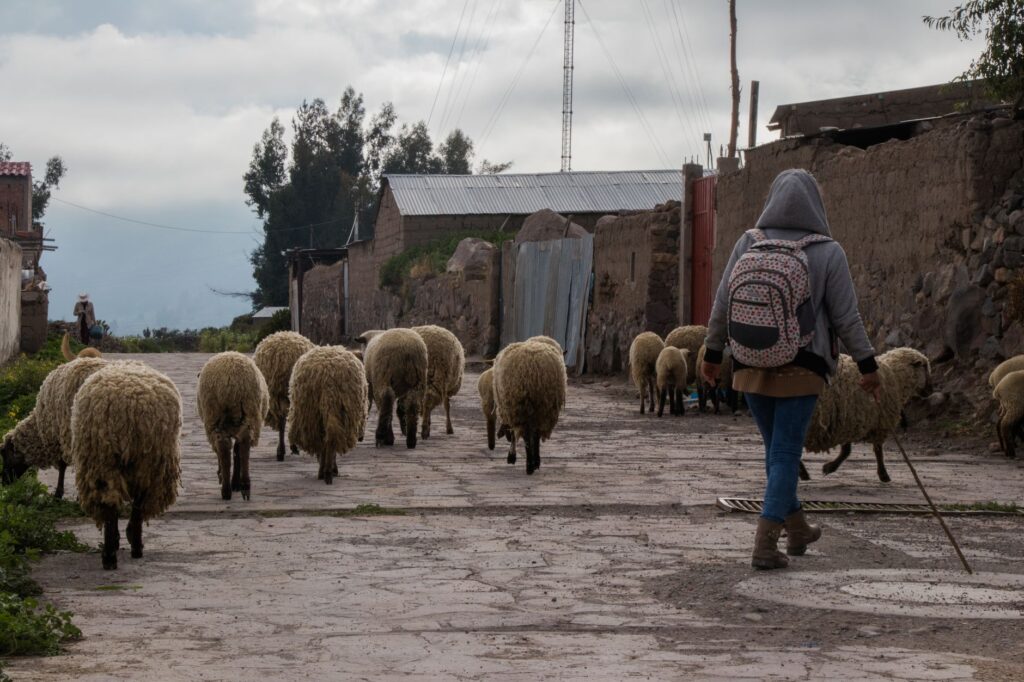
Crossing the provincial boundary to the south, La Sagra and the valleys close to Toledo offer a subtle but evident transition in how the terrain undulates and villages adopt the aesthetics of Mudéjar brick and rammed earth. This region, traditionally conceived as a mere transit zone between Madrid and Andalusia, treasures small urban and landscape-level treasures that deserve a leisurely approach.
Villages like Esquivias, indissolubly linked to the biography of Miguel de Cervantes, preserve manor houses with colonnaded patios where time seems to have stopped in the Golden Age. Here, the traveler can delve into the literary atmosphere that inspired part of the Exemplary Novels, touring rooms that preserve period furniture and parish archives with original marriage certificates of the writer.
The value of these getaways lies precisely in their ability to dismantle geographical prejudices. What from urban distance is perceived as a monotonous plain reveals, upon stopping the vehicle and walking along its rural paths, a complex network of human interactions, agrarian traditions, and microclimates that sustain the pantry and emotional balance of millions of people.
Practical guide
When to go: Spring (April to June) and autumn (October to November) offer the ideal thermal conditions for hiking and cycle tourism, avoiding the peaks of summer heat and severe winter frosts at high elevations.
How to get around: Private transport remains the most flexible option to access dispersed rural settlements, although intercity bus lines operate from hubs like Plaza de Castilla and Conde de Casal connecting to regional centers.
Where to stay: It is recommended to prioritize rural houses with a sustainability seal and small inland hotels that promote the rehabilitation of local architectural heritage over massive new construction.
Territorial gastronomy: Look for local producer markets and establishments certified under the regional agri-food quality brand, paying special attention to extra virgin olive oils from Arganda del Rey and artisan cheeses from Madrid.
The reunion with the lost horizon
In the end, any getaway close to the big city is nothing more than an alibi to recover the human measure of things. When the sun begins to decline over the cereal fields of the Madrid Alcarria or dyes the peaks of Cuerda Larga purple, the traveler understands that physical distance matters less than the internal disposition to look in a different way.
True contemporary luxury does not consist in the accumulation of distant destinations, but in the capacity to inhabit with full awareness the immediate territory that sustains us.
It is not about fleeing the metropolis as a hostile territory, but recognizing its limits to celebrate what surrounds and feeds it. In that blurry border between asphalt and countryside, between the urgency of traffic and the patience of the centuries-old oak, Madrid demonstrates that its true heart beats stronger the further we distance ourselves from its centers of power.
Source in EN: Condé Nast Traveler Spain (https://www.traveler.es/experiencias/galerias/escapadas-a-tiro-de-madrid/675)