The Silent Transformation of Wine Country Roads
The landscape of the Alt Penedès, historically sculpted by millennia of grapevine cultivation and the constant movement of grape-laden trailers during harvest season, is undergoing a profound transformation that goes far beyond the ecological conversion of its wineries. Over recent years, the region has faced a paradox as evident as it is unsustainable: the surge in mass wine tourism, driven by the intensive use of private combustion-engine vehicles, was eroding the very tranquility and landscape quality that visitors sought. The winding secondary roads connecting towns like Vilafranca del Penedès, Sant Sadurní d’Anoia, and Subirats suffered recurrent traffic congestion on weekends, generating friction with local communities and noise pollution incompatible with the slow-paced rhythm of the vineyards.
Faced with this model of motorized overcrowding, local administrations, working closely with agricultural cooperatives and small organic winemakers, have articulated a structural response rooted in soft mobility and smart territorial management. The thesis underlying this transition is clear: the future of tourism and high-quality agrarian economy in the Penedès does not depend on widening asphalt to accommodate more cars, but on restoring prominence to decarbonized displacement, integrating low-impact electric technology with the recovery of historical livestock trails that have structured the valley for centuries. This paradigm shift aims not only to reduce the sector’s carbon footprint but to redefine the traveler’s experience itself, turning the journey between vineyards into a natural extension of the landscape.
The logistical challenge was significant. Unlike major urban centers, where population density justifies massive public transport infrastructure, the Penedès features a dispersed geography dotted with small farmhouses, family-owned wineries, and small population nuclei. Solving this equation required abandoning universal recipes and designing a capillary network adapted to agrarian geography. This response has materialized through a hybridized system combining rail intermodality—leveraging existing commuter rail lines—with shared fleets of all-terrain electric bicycles and green hydrogen shuttle minibuses operating along high-traffic corridors.
The Intermodal Network and the End of Rental Car Dependency
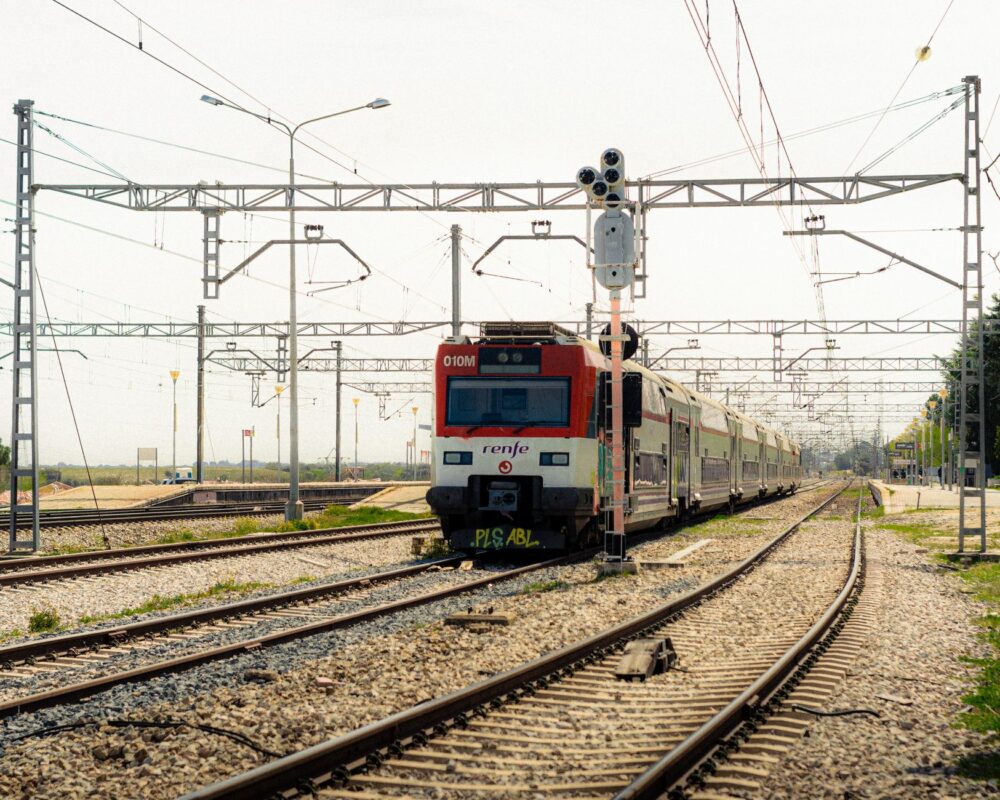
A cornerstone supporting this new regional mobility is the reconfiguration of how visitors arrive. Historically, the vast majority of tourists landing at Barcelona airport or arriving at Sants station chose to rent a car to tour the cellars and vineyards. Today, the regional strategy actively promotes abandoning private vehicles at the origin by consolidating strategic railway stations into true hubs of sustainable mobility. The stations in Vilafranca and La Granada have been transformed into transfer nodes where travelers can step off the train and instantly access a shared transport ecosystem.

This system goes beyond mere vehicle availability; it operates under a unified digital platform managing both assisted-pedal bicycles and temporary access permits for restricted rural roads. Local agricultural cooperatives have played a decisive role, ceding spaces near their facilities to establish charging stations powered entirely by solar photovoltaic panels installed on the roofs of vinification warehouses. Consequently, the energy moving visitors’ vehicles often originates from the very sun that ripens the Xarel·lo and Macabeu grapes defining the designation of origin’s character.
True sustainability in an agricultural territory does not consist of paving new green routes with artificial materials, but of returning historical paths to those who travel them without altering their ancestral rhythm.
The deployment of these shared light vehicles has been accompanied by strict zoning regulations limiting rural road speeds to a maximum of twenty kilometers per hour when encountering agricultural machinery or pedestrians. This peaceful coexistence between traditional tractors and travelers’ electric bikes required deep community dialogue. Local farmers, initially skeptical about the influx of two-wheeled visitors, actively participated in path design, marking sections where pruning or harvesting work demands absolute priority for working vehicles. The result is a mobility map where visitors cease to be motorized intruders and become respectful users of the rural network.
Bridle Paths as Arteries of the Transition
The second major pillar of this transformation lies in the heritage recovery of ancient bridle paths and forest tracks that connected farmhouses long before paved roads arrived. For decades, many of these trails had been swallowed by underbrush or fragmented by land consolidation and the disorderly expansion of industrial and road estates. The path recovery project has involved not only clearing and geolocated signage, but meticulous reconstruction of dry-stone walls and traditional rainwater drainage systems.
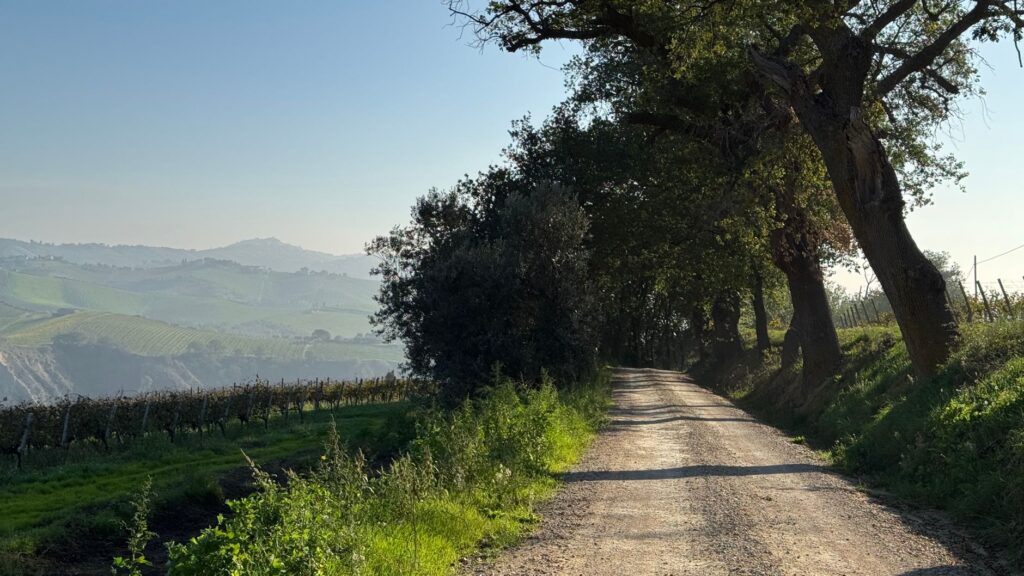
The recovery of these routes responds to an anthropological vision of the territory. Regional technicians and local historians have collaborated to trace paths connecting not only large commercial wineries but also minor heritage sites: forgotten Romanesque chapels, ice wells, stone huts, and historic fountains previously inaccessible to motor vehicles. Shifting visitor flows toward these low-intensity paths relieves pressure on main roads and equitably distributes tourism impact among municipalities traditionally excluded from commercial wine tourism circuits.
Furthermore, these recovered paths function as ecological corridors. Eliminating heavy vehicle and car traffic from dirt tracks has revived biodiversity along vineyard margins, encouraging the proliferation of pollinating insects and steppe birds that had retreated due to noise and air pollution. Preliminary studies by Catalan universities show a notable increase in the stability of agrarian ecosystems adjacent to soft mobility routes, proving that transport infrastructure can and must act as an agent of environmental regeneration.
Agrarian Logistics and Zero-Kilometer Freight Transport
Discussing mobility in the Penedès without addressing the logistical needs of winemaking would offer an incomplete picture. The harmony between passenger transport and freight logistics is the true gear keeping the region alive. During September and October, absolute priority is given to harvesting grapes and immediately transferring them to presses to prevent spontaneous fermentation or oxidation en route. Cooperatives have driven a radical modernization of their heavy transport fleet by adopting trucks powered by biogas derived from grape processing waste (pomace and lees resulting from pressing).
This closed circular economy system ensures that energy required to move harvests from remote plots to central wineries comes entirely from the wine production cycle. Likewise, for distributing finished bottles to logistics consolidation centers supplying the metropolitan Barcelona market, priority has been given to combined rail freight transport from the Vilafranca terminal, drastically reducing daily semi-truck traffic along the AP-7 and C-32 highways.

- Integration of solar charging stations across local agricultural cooperatives.
- Strict 20 km/h speed limits on shared rural roads.
- Recovery of over eighty kilometers of ancient bridle and dry-stone paths.
- Deployment of heavy transport fleets powered by grape-waste biogas.
This logistical deployment demonstrates that rural transport sustainability is not an aesthetic luxury, but an unavoidable operational necessity amid fossil fuel scarcity and climate urgency. Local transporters, far from perceiving these environmental regulations as bureaucratic burdens, have found in regional fleet renewal grants a way to modernize vehicles and secure long-term business viability.
Architecture, Landscape, and Low-Intensity Hospitality
The impact of this transport revolution has substantially modified architecture and hospitality urbanism in Alt Penedès towns. Early 20th-century modernist wineries, originally designed to receive horse-drawn carts, have adapted patios and entrances to accommodate secure bicycle parking and reception points for visitors arriving without private cars. This adaptive architecture exercise has avoided building large asphalt parking lots in heritage settings, preserving the visual integrity of the agricultural landscape.
Local accommodations, from restored farmhouses to boutique hotels in historic centers, have joined the strategy by offering lodging discounts to travelers who prove they arrived in the region by train and completed local journeys via the soft mobility network. This commercial synergy economically rewards committed travelers, consolidating high-quality tourism with longer average stays and lower direct ecological impact.
Hospitality in contemporary Penedès is understood as an exercise in co-responsibility. Visitors are not passive consumers demanding standardized services, but guests expected to understand the constraints and rhythms of a living territory. Wine tastings, for example, are now scheduled in coordination with shuttle bus arrivals and train schedules, avoiding peak crowds and allowing winemakers to dedicate genuine quality time to explaining their biodynamic farming philosophy.

Practical guide
Planning a low-impact trip to the Alt Penedès requires understanding its transport network and rural coexistence rules. Below are the fundamental operational keys for exploring the region sustainably.
How to get there
The most efficient and clean route is Catalonia’s commuter train (R4 line), connecting Barcelona-Sants to Vilafranca del Penedès in approximately fifty minutes, with regular frequencies throughout the week. From Vilafranca station, visitors access the sustainable mobility reception center directly.
Internal mobility
The regional shared electric bicycle platform is recommended, available via mobile app at major train stations and participating cooperatives. For longer journeys between municipalities, low-emission shuttle minibuses operate in coordination with train schedules.

When to travel
Although the harvest season (September and October) offers the visual spectacle of grape picking, spring (April to June) is ideal for exploring bridle paths with mild temperatures and lower visitor density at wineries.
Rural coexistence rules
Shared paths require respecting the priority of agricultural machinery and pedestrians. Venturing off marked bicycle trails is strictly prohibited to protect the vegetation cover of adjacent vineyards.
The Horizon of the Shared Landscape
When evening falls over the slopes of Penedès and the silhouette of the Montserrat mountains cuts against an ochre and violet sky, silence reclaims its legitimate domain over the valley. The constant roar of engines accelerating around tight secondary road curves is replaced by the distant rustle of grapevine leaves brushing in the breeze and the faint metallic hum of an electric bicycle returning leisurely toward the train station. In this reconquered equilibrium lies the true victory of a territory that anticipated its own tourist collapse through collective intelligence, technological sobriety, and unnegotiable respect for the land.
The Penedès experience demonstrates with verifiable facts that the transition toward truly sustainable mobility is not an unattainable utopia, but a demanding political, economic, and cultural decision. By subordinating transport to agrarian ecosystem needs and the well-being of permanent residents, the region has drawn a roadmap replicable for other wine-growing regions in southern Europe currently torn between mass tourism suffocation and the survival of cultural identity. The future of purposeful travel does not hide in distant exotic destinations, but in the capacity to rediscover the nearby through clean, quiet, and dignified shared paths.