
Just taking the MA10 highway is enough to understand that the island is much more than sun and beaches. At every turn, the mountain range reveals endless viewpoints and villages frozen in time, proving that the true pulse of Mallorca beats strongly in the heights of dry stone and centuries-old terraces.
This feature story explores the mountainous spine declared a World Heritage Site by UNESCO, a territory where the Mediterranean Sea constantly dialogues with steep peaks, oak forests, and agricultural benches cultivated for generations.
Asphalt over the abyss: the MA10 highway as a backbone
The MA10 highway is not merely a communication route; it is the guiding thread that stitches together the cliffs and most secluded valleys of the Serra de Tramuntana. Designed with millimetric precision at the beginning of the 20th century, this infrastructure winds along, defying gravity and connecting Andratx to Pollença over more than a hundred kilometers of pure vertigo and beauty.
Driving along this layout demands constant attention. Each turn unveils an unprecedented perspective of the coastline, where the intense blue of the sea contrasts with the silvery gray of ancient olive groves. The engineers who designed it managed to integrate the asphalt into the topography without distorting the landscape, turning the journey into an unmissable experience.
Engineering and landscape in balance
The pavement glides along the edge of dizzying precipices, supported by retaining walls built using the traditional dry stone technique. This method, recognized by UNESCO, allows the infrastructure to breathe and attach organically to the terrain.
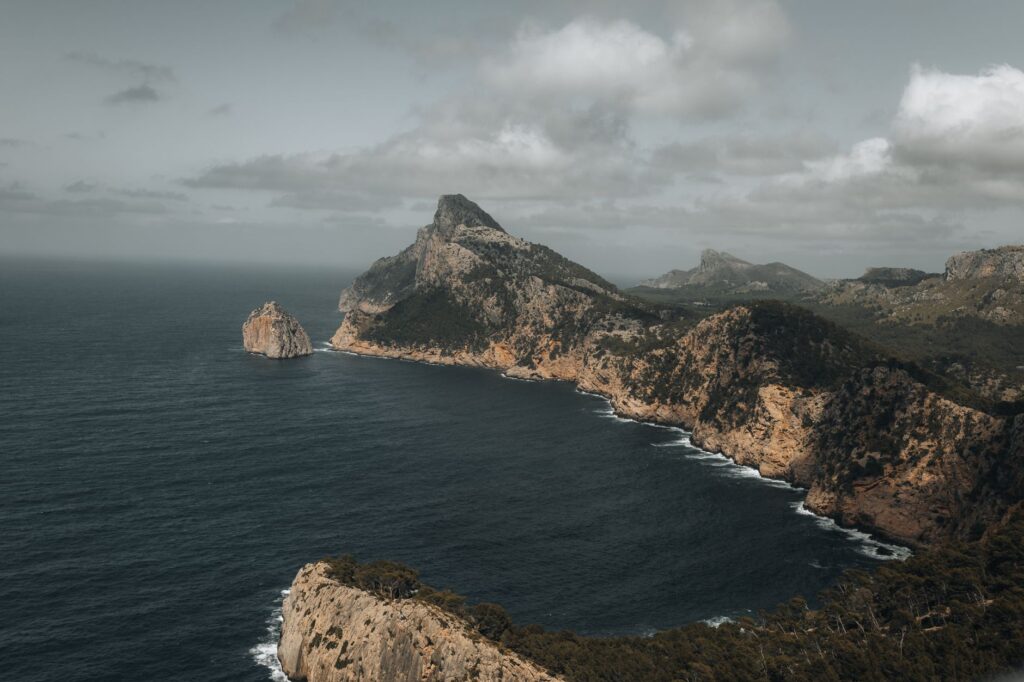
Viewpoints suspended over the Mediterranean
Along the route, several pull-offs allow travelers to stop the vehicle and contemplate the horizon. Points like the ses Barques viewpoint offer an unparalleled panoramic view of the port of Sóller and the cultivated citrus valleys descending toward the coast.
Valldemossa: the artists’ refuge and the Carthusian footprint
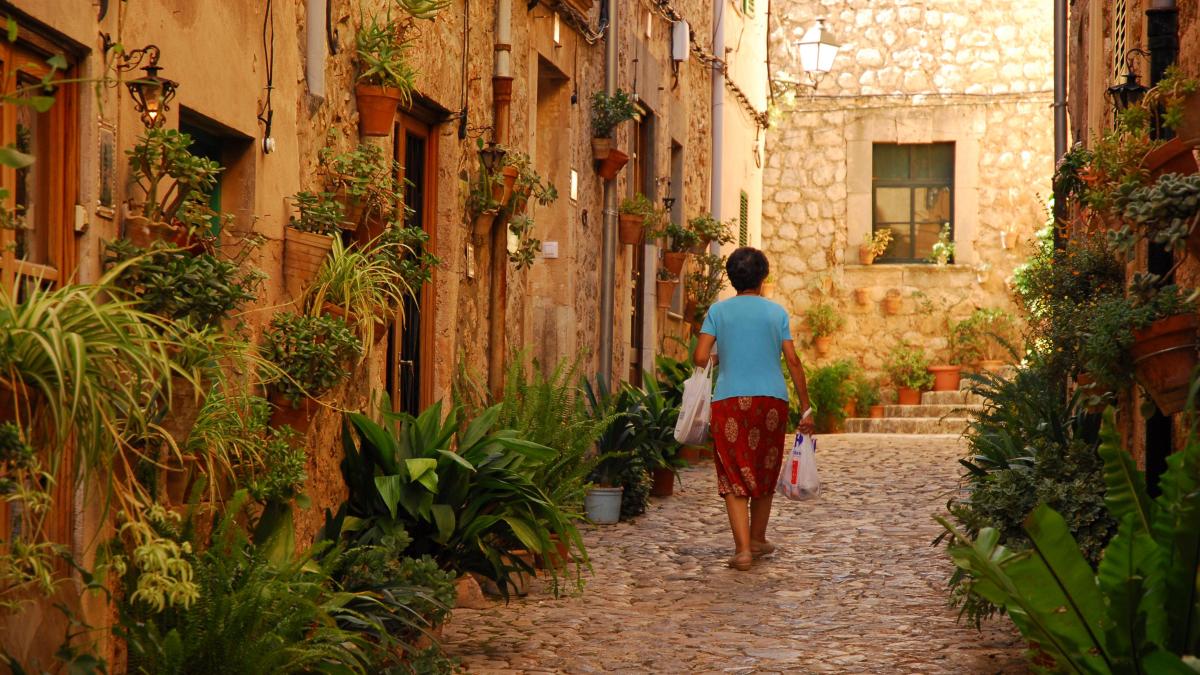
Tucked away in a valley surrounded by dense forests, Valldemossa welcomes the traveler with the unmistakable aroma of freshly baked potato pastries and the respectful silence of its cobblestone streets. This municipality, famous for hosting composer Frédéric Chopin and writer George Sand during the winter of 1838, retains an introspective and literary atmosphere.
The monumental complex of the Royal Charterhouse dominates the village with its characteristic green-glazed tile dome. Within these walls, nineteenth-century romanticism left an indelible mark that is felt in every corner today, attracting visitors seeking to understand the creative refuge the island provided for European intellectuals.
The Tramuntana is not merely visited; it is temporarily inhabited through the silence of its stones and the patience of its inhabitants.
Strolling through its slopes reveals facades adorned with tiles dedicated to Saint Catherine Thomas, the only Mallorcan patron saint. Clay pots overflowing with geraniums dot the noble stone walls, creating a chromatic canvas that invites pause and detailed contemplation.
Deià and the bohemian Atlantic spirit of Robert Graves
Further along, the MA10 leads to Deià, a settlement that seems to hang from the skirt of Mount Teix like a cluster of stone houses with green shutters. Here, British poet and novelist Robert Graves found his permanent home, immortalizing rural Mallorcan life in works such as I, Claudius and transforming the village into a magnet for artists, musicians, and writers from around the world.
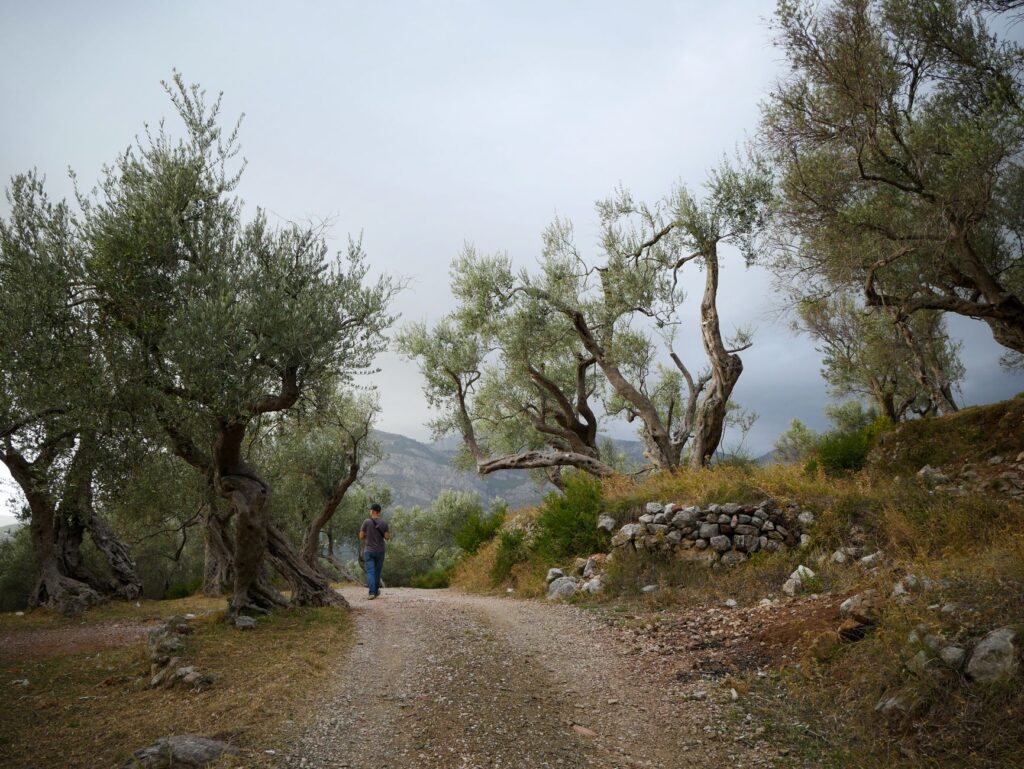
The municipal cemetery, perched high on a hill facing the sea, houses Graves’s simple tomb under the shade of a cypress tree. From this elevated viewpoint, the descent toward Cala Deià winds among olive terraces until it ends in a small pebble cove where the water acquires turquoise and emerald tones.
The cultural legacy at the Robert Graves House
Now converted into a museum and cultural center, the author’s former residence keeps his workspaces and personal library intact, offering a direct window into twentieth-century creative daily life in the heart of the Mallorcan mountains.
The hidden cove and the fishermen’s huts
Down on the coast, traditional fishermen’s huts carved into the rock bear witness to the ancestral relationship between the mountains and the sea, a maritime shelter where time seems to have completely stopped.
Sóller and its valley of orange trees: the architecture of agricultural modernism
The descent into the valley of Sóller brings a radical change in the scenery of the mountain range. Here, the terrain widens to form a fertile natural amphitheater, irrigated by underground springs and historically dedicated to cultivating orange and lemon trees whose fruits perfume the air for much of the year.
The urban center combines agricultural tradition with remarkable modernist heritage, resulting from economic remittances sent by local emigrants who made their fortunes in France and Puerto Rico in the late 19th and early 20th centuries. The church of Saint Bartholomew, with its facade designed by a disciple of Antoni Gaudí, and the Bank of Sóller are clear examples of this golden age.
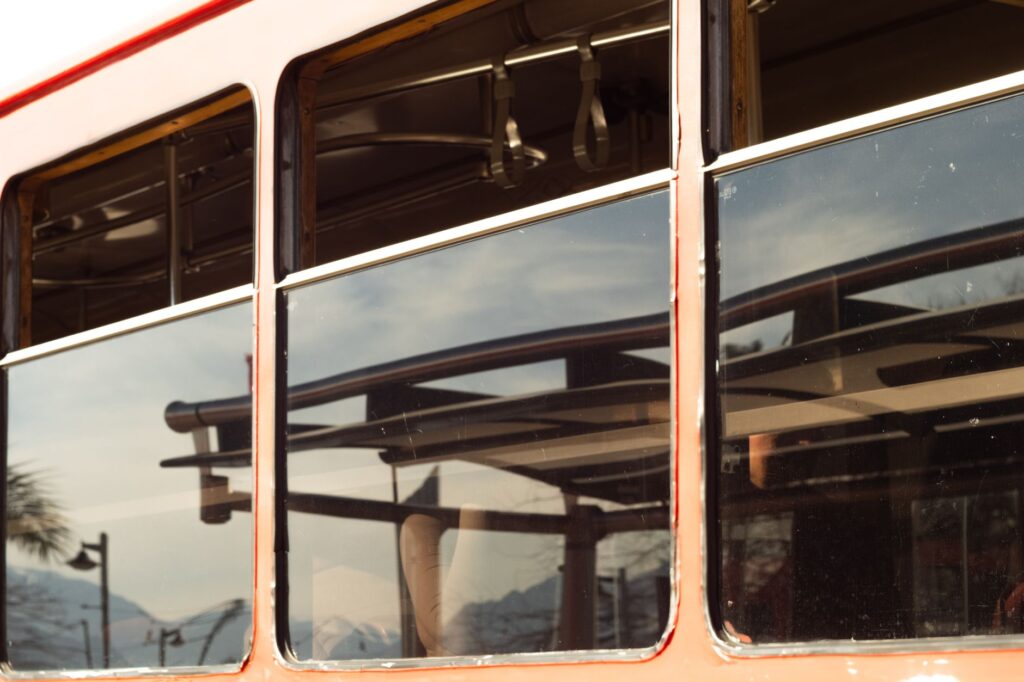
The historic wooden tram
Connecting the town to the port through a route flanked by orchards, the wooden tram inaugurated in 1913 continues to operate with its original carriages, transporting residents and travelers on a journey of railway timelessness.
Commercial exchange with the port
The port of Sóller, an almost enclosed natural horseshoe-shaped bay, served for centuries as the commercial and maritime outlet lung of the region, avoiding the difficult land passage through the mountain range.
The stone spirituality of the Monastery of Lluc
Crowning the most rugged part of the sierra, the Sanctuary of Lluc stands as the spiritual heart of Mallorca. Since the Middle Ages, this enclave has welcomed pilgrims who come to venerate the Mare de Déu de Lluc, popularly known as La Moreneta due to the dark tone of its medieval stone carving.
The monastic complex includes a historic guesthouse, a botanical garden with native species, and the headquarters of the Blauets children’s choir, one of the oldest children’s choirs in Europe. Surrounded by forested mountains and imposing peaks like Puig de Massanella, the place radiates deep mystical sobriety.
The paths starting from Lluc lead deep into the heart of the dry stone territory, connecting with iconic routes such as the famous GR 221 long-distance trail, which traverses the entire mountain range from end to end.
The invisible architecture: the art of dry stone
It is impossible to understand the physiognomy of the Serra de Tramuntana without addressing its most silent and essential heritage: dry stone architecture. Declared a UNESCO Intangible Cultural Heritage of Humanity in 2018, this technique consists of stacking limestone rocks without using any type of mortar or cement to join them.
Over the centuries, Mallorcan farmers shaped thousands of hectares of steep slopes using terraces called marjades, transforming useless slopes into fertile agricultural benches. This system not only allowed the cultivation of olives and cereal but also acts as a natural containment dike against torrential winter rains, preventing soil erosion.
The solidity of a dry stone wall lies in the stonemason’s intuition to find the exact piece that balances the entire assembly.
Snow houses, wells, cobbled paths, lime kilns, and shepherd shelters complete a gigantic heritage catalog that demonstrates a perfect symbiosis between human action and the preservation of the natural environment.
Practical guide
How to get there: The natural starting point is Palma de Mallorca, located about 30 kilometers from the main accesses to the Serra de Tramuntana. Renting a moderately sized vehicle is recommended due to the narrowness of local roads.
When to go: Spring months (April to June) and autumn (September to November) offer optimal temperatures for driving and hiking, avoiding the crowds and intense summer heat.
Where to stay: The territory features a network of small rural guesthouses and boutique hotels located in rehabilitated old agricultural estates, especially in municipalities like Valldemossa, Deià, and Sóller.
Mandatory gastronomy: Taste the potato pastry in Valldemossa, local citrus fruits in Sóller, origin-denominated olive oil, and artisanal sobrasada in the traditional markets of the mountain villages.
The last breath of the sierra
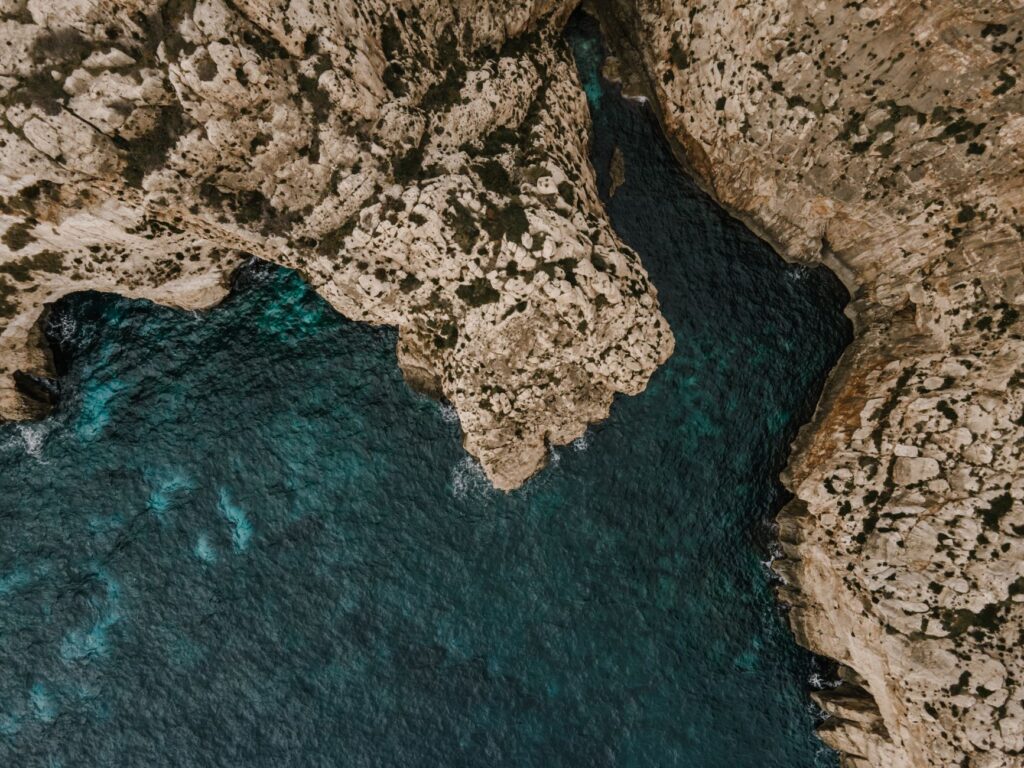
When the sun begins to decline over Cape Formentor, golden light bathes the limestone cliffs of the north coast, dyeing the sea in a copper tone that overwhelms with its silent intensity.
At that precise moment, sitting before the infinite horizon from the top of a solitary viewpoint, one understands that the Serra de Tramuntana is not merely a geographical destination, but an intimate refuge where the memory of stone and water remains intact, resisting the inexorable passage of time with dignity.
Source in EN: La Vanguardia