
For decades, travel literature, cultural anthropology, and the tourism industry have operated on an immovable axiom: the traveler is the active subject, the bearer of the gaze, the observer who records, photographs, and catalogs the world. However, on the margins of sociological theory in the 1990s, a concept began to take shape that dismantles this traditional hierarchy. The neologism travellee emerged to designate the traveler in their condition as observed, analyzed, and measured by the local communities they visit. This inversion of roles is not merely semantic; it poses a profound ethical and anthropological revision regarding the nature of contemporary displacement and who truly holds narrative control within a territory.
In a hyperconnected planet where routes are mapped to the millimeter and local populations have accumulated decades of experience managing foreign flows, the myth of the solitary explorer is unsustainable. Today, tourists do not merely arrive in a place to decipher it; they arrive deeply deciphered in advance. Their consumption habits, aesthetic expectations, silences, and awkwardness are subjected to constant, sophisticated scrutiny by hosts who have learned to read visitors with as much or more acuity than the latter employ in trying to understand their surroundings.
The Genealogy of the Inverted Gaze
To grasp the scope of the travellee concept, it is necessary to trace the evolution of the sociology of tourism in the late twentieth century. Academic researchers began to notice that the traditional dichotomy between the Western observer and the exotic native fell short in the face of the growing self-awareness of host communities. Tourism ceased to be a unidirectional activity and transformed into a complex stage of mutual representation. On this board, travelers discovered themselves under the spotlight, converted into the center of attention of a local gaze that is neither passive nor submissive.
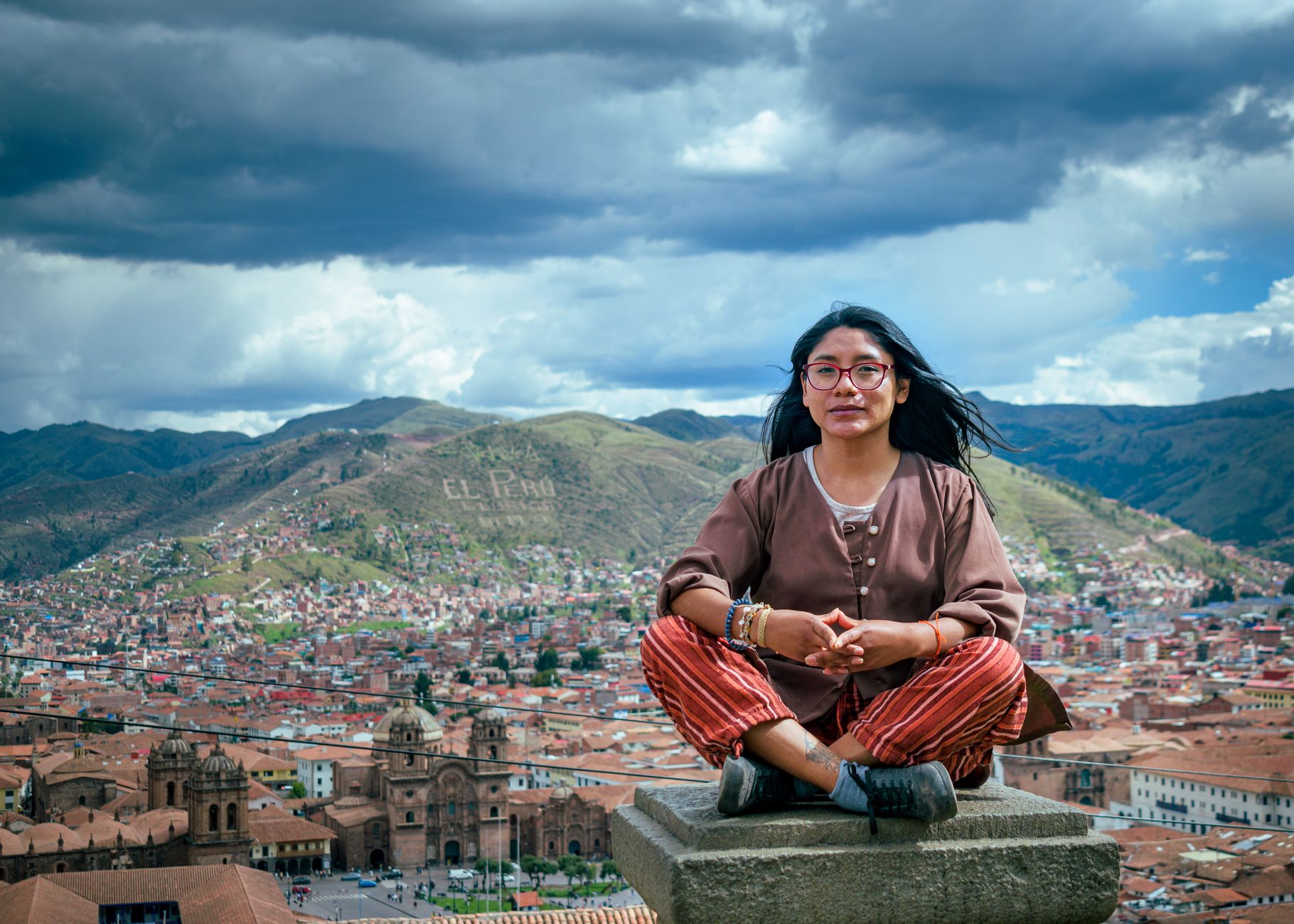
This inversion challenges the purported neutrality of the vacation voyeur. When an outsider walks through a traditional market in Marrakech, the steep alleys of an Andean village, or the periphery of an Asian megacity, they often believe their experience is intimate and direct. Nevertheless, urban sociology demonstrates that local residents instantly decode their clothing, body language, and level of preparation. The traveler is implicitly dissected through cultural codes alien to them, generating a silent yet persistent asymmetry in human interaction.
Architectures of Otherness and Visual Siege
The condition of being a travellee manifests with special rawness in urban enclaves subjected to intense seasonal pressure. In historic cities across Europe or Asia, public space has transformed into a grand theater where roles are strictly assigned. Residents watch the incessant parade of cameras, backpacks, and unfolded maps with a mixture of resignation, weariness, and commercial curiosity. This dynamic turns visitors into visual archetypes, stripping away their individuality to reduce them to mere elements of the contemporary urban landscape.
- The saturation of historic centers redefines the limits of urban privacy.
- Local residents develop passive resistance mechanisms against visual intrusion.
- Travelers often unknowingly assume a choreography predetermined by local expectations.
This visual siege is not limited to major monumental landmarks. It extends to public transport, neighborhood cafes, and food markets, where the outsider’s presence instantly alters the daily rhythm. Side glances, whispers, and modulated tones of voice among locals are unmistakable symptoms that the visitor is being evaluated. Travellees experience, often without fully grasping the keys of their environment, that their presence does not go unnoticed and that their movements are subject to constant collective analysis.
The Commodification of Mutual Curiosity
The travellee phenomenon also carries an inescapable economic and commercial dimension. In many destinations, the ability to observe and anticipate tourists’ desires has become a sophisticated tool for survival and business. Hosts adapt their behavior to fit the image visitors seek to consume, generating a sort of reciprocal theatricality. Tourists observe a culture that, in many cases, unfolds consciously aware of being watched, creating a self-fulfilling loop where authenticity becomes blurred.
Contemporary tourism is not an encounter between cultures on equal footing, but an intricate dance of mirrors where observers discover, with some discomfort, that they have long been the main spectacle.
This commodification of the reciprocal gaze strips travel of its purported innocence. Travelers seeking genuine experiences often ignore that their own quest is the engine driving the transformation of the local setting. Upon feeling observed, travellees must rethink their role: they cease to be neutral guests and become main actors in a commodified representation where every gesture is weighed, valued, and ultimately monetized by the host community.
Daily Scenes in the Host’s Mirror
Observing how inhabitants of a destination watch outsiders reveals much about the geopolitical and economic tensions of the modern world. In impoverished regions, the gaze toward wealthy travelers is charged with a complex mixture of aspiration, resentment, and mercantile pragmatism. In developed societies saturated with mass tourism, that same gaze can oscillate between cold indifference and open urban hostility. At both extremes, travellees confront the uncomfortable mirror of their own privilege, forced to recognize that their presence is not a neutral phenomenon but a disruptive force.
Daily exchanges—a transaction at a grocery store, a request for directions on a secluded corner, or a bus ride—act as micro-laboratories for this tension. In these intimate spaces, the anonymity of travelers dissolves. The way they pronounce a local word, their awkwardness handling currency, or their attire are analyzed with millimeter precision. Travellees then realize that their passage through the territory leaves an intangible yet indelible mark on the perception of those who inhabit the place.
Technology and the Hypervisibility of Outsiders
In the digital era, the condition of being a travellee has been exponentially multiplied by the proliferation of mobile devices, social media, and urban video surveillance systems. It is no longer just the eyes of local residents examining travelers; an entire technological ecosystem records, processes, and projects their image in real time. Recommendation algorithms, digital platform reviews, and the instant sharing of content have turned tourists into hypervisible subjects, constantly exposed to evaluation by both hosts and their own home communities.
This digital overexposure radically alters the travel experience. Outsiders can no longer lose themselves in the anonymity of an unfamiliar street; their journey is marked by digital footprints that anticipate their steps and condition the environment’s response. Local residents, in turn, use these same tools to anticipate, rate, and occasionally veto foreign presence in their neighborhoods. Travellees thus find themselves trapped in a web of total visibility where the spontaneity of discovery yields to constant, mutual hypervigilance.
Toward an Ethics of Travel Reciprocity
Embracing the condition of being a travellee demands a profound transformation in how displacement is conceived. It implies abandoning the arrogance of the omniscient observer and accepting that every travel experience is, above all, an encounter between subjects endowed with voice, gaze, and critical capacity. Mature travelers must learn to look not only outward—toward monuments or landscapes—but inward, recognizing the impact their own presence projects onto the human fabric of the visited destination.
This awareness opens the door to a form of tourism that is more humble, respectful, and conscious of its own limitations. By understanding that they are observed with the same attention they employ to observe, travellees can moderate their behavior, reduce their intrusive footprint, and open spaces for a more symmetrical dialogue with local communities. Travel ceases to be a mere accumulation of visual postcards and becomes an exercise in shared responsibility, where respect for otherness stands as the true core of the journey.
Practical guide
Essential information for understanding and applying the travellee concept in contemporary travel.
- Academic context: The term emerged in sociology of tourism debates during the nineties, driven by theorists questioning the classic asymmetry between the observing traveler and the observed native.
- Ethical implication: Recognizing oneself as a travellee implies accepting that tourists are not neutral entities, but disruptive agents whose behavior is permanently analyzed by the local population.
- Observation recommendation: During your upcoming trips, pay attention to how local residents react to your presence in non-touristy spaces (neighborhood markets, public transport, residential areas).
- Reference readings: Research critical tourism studies and postcolonial theory to delve deeper into the evolution of the tourist gaze and the representation of otherness.
Travel, in its deepest dimension, culminates when outsiders understand that the true mystery lies not solely in the secrets of the visited territory, but in the way their own figure is decoded by those who call that same soil home. At the end of the road, beneath the twilight light of a foreign square, travelers discover that the most revealing gaze is not the one they cast toward the horizon, but the one they receive, silent and piercing, from those observing them from the threshold of their daily lives.
Source in English: Condé Nast Traveler Spain – Travellee: When the Traveler Becomes the Observed