
The Persistence of Isolation in the Cantabrian Summits
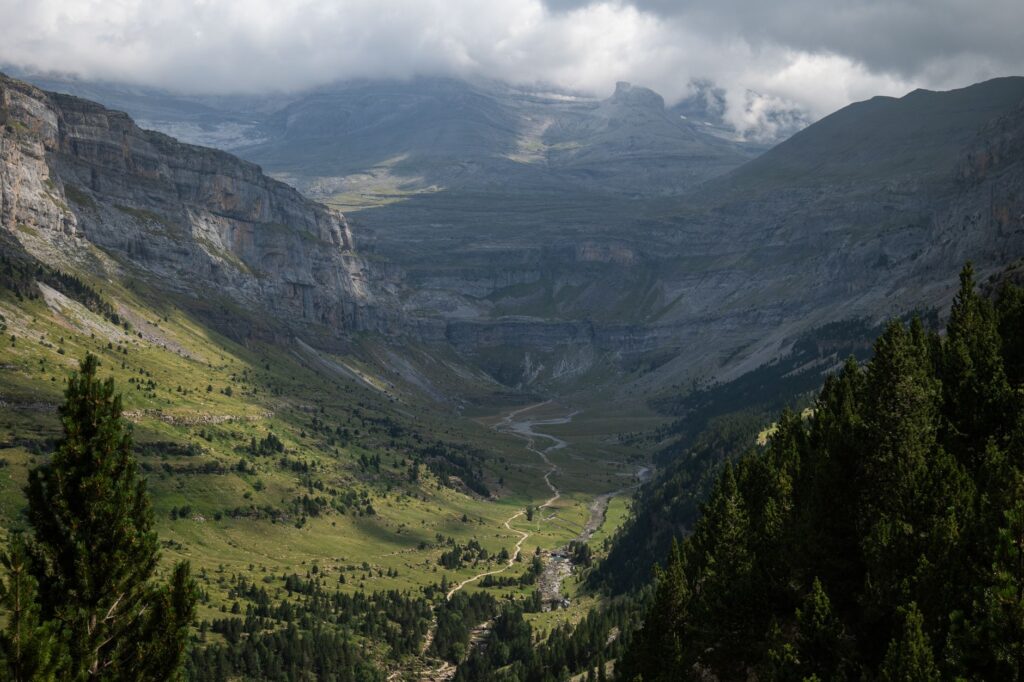
The geography of the Picos de Europa has historically imposed an unforgiving law of isolation upon its interior valleys. For centuries, the sole connection among the pastoral communities of León, Asturias, and Cantabria depended on bridle paths and impossible gorges where conventional road transport was either unfeasible or ecologically destructive. Today, this limestone massif confronts a contemporary paradox: how to welcome a growing influx of visitors without compromising the integrity of its high-mountain pastures or gridlocking the narrow county roads winding along the edges of river abysses.
Faced with this challenge, the transition toward a truly sustainable transport model has shifted from a theoretical aspiration to an operational urgency. Local administrations, in collaboration with civil engineers and neighborhood collectives, have driven a radical transformation of mobility centered on railway intermodality and the progressive phase-out of private vehicles in the access corridors to the natural parks. This strategy seeks to restore prominence to historic rail lines and new low-emission transport systems, redefining the traveler’s experience from the moment they leave the coastal highway.
The Renaissance of the Rack Railway as a Backbone
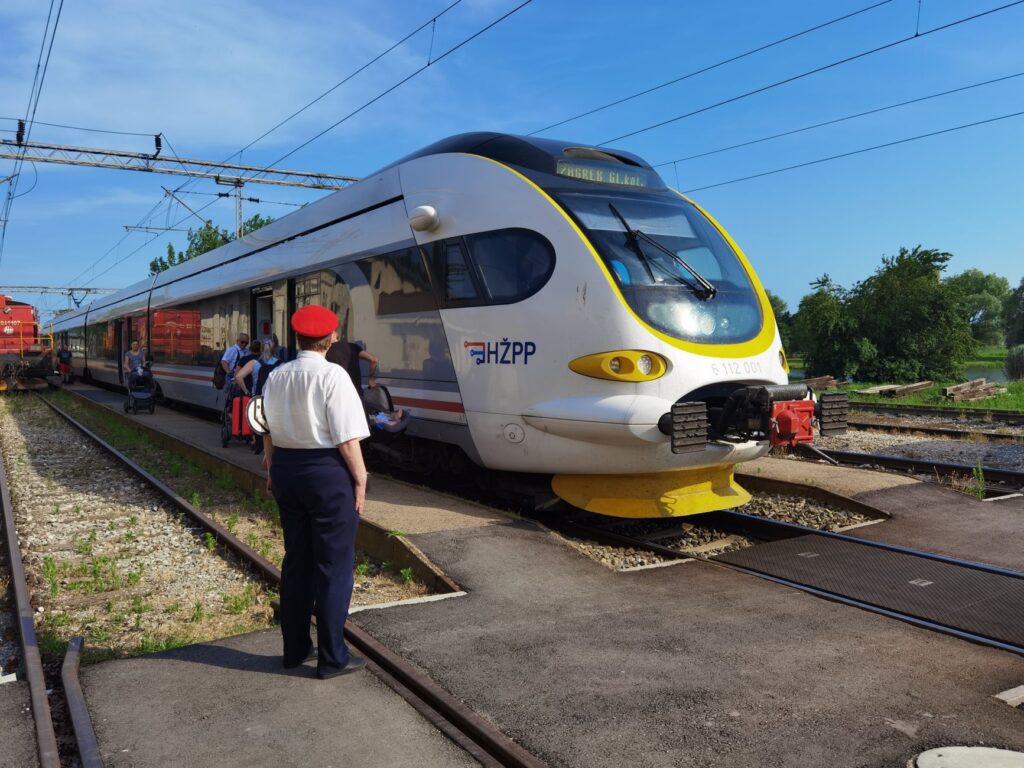
At the core of this mobility revolution lies the modernization and expansion of the historic rack railway ascending from the lower valleys to high-altitude enclaves. This mechanical system, utilizing a third toothed rail to negotiate steep gradients without relying solely on conventional wheel adhesion, moves thousands of daily passengers with a carbon footprint infinitely lower than that of a string of automobiles. The complete electrification of the line via 100% renewable energy sources has entirely eliminated direct emissions in one of the most sensitive biosphere reserves on the Iberian Peninsula.
The integration of this transport mode with the network of electric shuttle buses has optimized waiting times and ordered visitor arrivals at intermodal stations. According to data provided by regional transport infrastructure managers, the use of the rack railway line has prevented the circulation of over fifty thousand private vehicles during the summer months, drastically reducing the acoustic pollution that once disrupted the behavior of native fauna, especially the Cantabrian chamois and capercaillie.
Railway Architecture and Respect for the Karst Landscape
Designing transport infrastructure in a geological environment as fragile as the Picos de Europa requires meticulous precision and profound respect for the karst topography. Engineers tasked with conditioning new stops and track sections have prioritized low-impact construction techniques, avoiding large earthworks in favor of stilt structures and small tunnels bored with low-vibration tunneling technology. Each station has been conceived as a viewpoint integrated into the local topography, utilizing native stone and treated timber to blend seamlessly with traditional mountain shelters.
This architectural intervention demonstrates that the modernization of public transit need not fracture the rural landscape. On the contrary, the recovery of former mining tracks to convert them into high-mountain greenways and bike lanes encourages soft mobility before and after the train journey. Travelers can board their bicycles onto adapted carriages, fostering a continuous circuit where physical effort and electric traction complement each other harmoniously at every stage of the route.
Smart Trail Networks and Car Deterrence
The success of the sustainable mobility strategy in the region relies not only on the rail line itself, but on a complex network of smart restrictions and alternatives for automobiles. P&R parking lots located at the foothills of the massif act as informational filters where variable message boards indicate real-time seat availability on trains and occupancy levels on primary trails. If the carrying capacity of the natural park approaches its daily limit, the system automatically blocks the issuance of new private vehicle access permits.
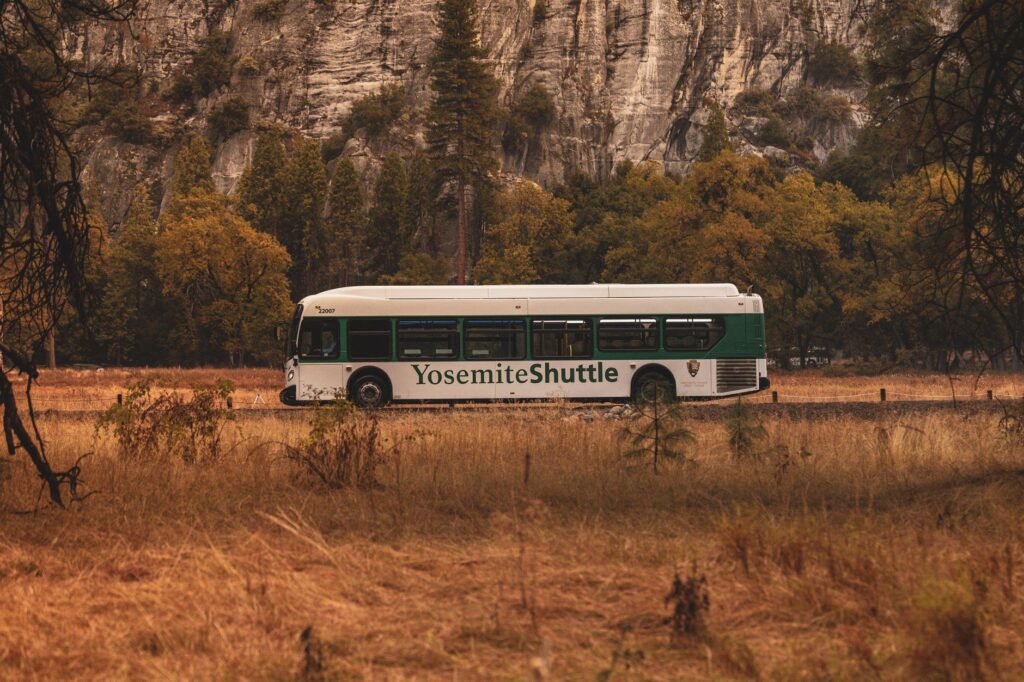
This telemetric control is combined with awareness campaigns driven by local guides and forest rangers, who explain to visitors the importance of utilizing last-mile electric shuttle buses. These heavy-duty electric fleets are specifically engineered to maneuver with agility around the tight switchbacks of mountain passes, ensuring regular and punctual service even under adverse weather conditions, such as the frequent mists and early snowfalls characteristic of the high-altitude Atlantic climate.
Circular Economy and Local Employment in Alpine Transport
Behind every electric train convoy and intermodal station operates a dense network of local professionals whose livelihoods are directly tied to the maintenance of these green infrastructures. Specialized mechanics, signaling system operators, zero-emission bus drivers, and traveler assistance personnel form a labor fabric deeply rooted in the territory, halting the historical depopulation affecting mountain municipalities. Public investment in sustainable mobility is understood here as a tool for social cohesion and economic redistribution.
Furthermore, the valley’s hospitality and restaurant sectors are supplied via short supply chains that also utilize the light freight services of tourist trains outside peak passenger hours. This logistical optimization reduces the transit of conventional delivery vans on narrow local roads, lowering accident risks and ensuring that protected-origin agri-food products reach regional markets with a carbon-neutral footprint.
Technological Challenges Facing Extreme Weather
Operating a high-mountain rail network in northern Spain presents formidable technical challenges stemming from severe winters. Persistent freezes, massive snow accumulation in gorges, and rockfalls triggered by freeze-thaw cycles demand constant preventive maintenance. To cope with these contingencies, operators have incorporated fiber-optic sensor systems along slopes and catenaries, capable of detecting anomalous vibrations and automatically halting trains before any track incident occurs.
Likewise, the energy autonomy of high-altitude stations relies on small micro-hydro installations and solar panels adapted to low winter insolation, backed by high-capacity storage batteries. This technological deployment proves that sustainability in transport is entirely compatible with operational robustness, offering a replicable model for other European mountain systems suffering from the ravages of tourism overcrowding and obsolete traditional road infrastructure.
Practical guide
How to get there: The main access to the Picos de Europa sustainable transport network is via the Cantabrian coast highways leading to visitor reception centers located in Arenas de Cabrales, Potes, and Cangas de Onís, where large park-and-ride facilities are situated.
Internal transport: The backbone of mobility is the rack railway and the coordinated network of electric shuttle buses. Private vehicle access to high-mountain cores is prohibited during the peak summer season and Easter holidays.
Tickets and reservations: It is highly recommended to purchase combined train and bus passes through the official digital park platform weeks in advance to secure seats during peak demand hours.
Soft mobility: Stations allow free bicycle boarding in designated carriage areas, facilitating marked cycle-touring routes that connect river valleys with alpine foothills.
Environmental regulations: Leaving marked trails, littering, or generating noise that could disturb the protected wildlife of the national park is strictly prohibited.
The Silent Heartbeat of Recovered Summits
When the last electric convoy descends toward the valley floor, gliding with no sound other than the soft whisper of wheels against the toothed rail, the Picos de Europa reclaim their pristine dignity. There are no longer roars of engines accelerating around curves nor endless lines of cars searching for an impossible spot on road shoulders. The landscape finally breathes, freed from the suffocation of vehicular traffic thanks to a bold commitment to respectful engineering and high-mountain public transit. In this reconquered silence lies the true victory of sustainable travel: proving that it is possible to admire the vastness of the peaks without leaving any trace other than the grateful memory of the traveler.